
Written by Wally Richards.
APRIL 2019
MARCH 2019
FROST DAMAGE PREVENTION AND GARDENING BY THE MOON
FOOD FOR PLANTS AND HEALTH FOR YOU
FEBRUARY 2019
JANUARY 2019
DECEMBER 2018
THE CHRISTMAS AND END OF YEAR ARTICLE
NOVEMBER 2018
SAFELY OVERCOMING NUMEROUS PLANT DISEASES
OCTOBER 2018
ABOUT HUMATE AND FULVIC ACID ALSO MORE PROBLEMS FOR BEES
SEPTEMBER 2018
AUGUST 2018
TWO TIER GARDENING AND OTHER TIPS
MIXED BAG THIS WEEK INCLUDING SOILING YOUR UNDIES
AUGUST AND IT IS ALL STARTING TO HAPPEN
JULY 2018
STARTING THE NEW SEASON OFF RIGHT.
JUNE 2018
WHAT TO DO WITH THE NEW SEASONS ROSES
MAY 2018
GUAVA MOTH AND CODLIN MOTH CONTROL
CONTAINER PLANTS GOING INTO WINTER
APRIL 2018
BRYOPHYTES (MOSS AND LIVERWORTS)
NEW AND OLD WAYS FOR SNAIL AND PEST CONTROL
YOUR MOST VALUABLE EARTHLY POSSESSION
MARCH 2018
FEBRUARY 2018
JANUARY 2018
DETRIMENTAL INSECTICIDES KILLING OUR POLLINATORS
DECEMBER 2017
MERRY CHRISTMAS & A HAPPY NEW YEAR
NOVEMBER 2017
GARDENING FOR CHRISTMAS PRESENTS
OCTOBER 2017
LABOUR WEEKEND AND CAT PROBLEMS
SEPTEMBER 2017
HOW SAFE ARE NATURAL PRODUCTS?
AUGUST 2017
SOIL DO'S AND DONT'S PLUS OTHER MATTERS
JULY 2017
JUNE 2017
YOUR FOOD AND YOUR HEALTH GO HAND IN HAND
NEW SEASON ROSES NOW IN YOUR GARDEN CENTRE
MAY 2017
APRIL 2017
MARCH 2017
NEW INFORMATION ON THE HERBICIDE GLYPHOSATE (ROUNDUP ETC)
FEBRUARY 2017
JANUARY 2017
DECEMBER 2016
NOVEMBER 2016
OCTOBER 2016
SEPTEMBER 2016
AUGUST 2016
TOMATO/POTATO PSYLLID ADVENTURES
JULY 2016
JUNE 2016
MAY 2016
APRIL 2016
MARCH 2016
FEBRUARY 2016
GARDENING IN THE BEGINING TO NOW
If you would like to receive these free weekly gardening articles just email me at wallyjr@gardenews.co.nz
The arrival of Autumn rains has not let us down and progressively most of the country is enjoying the benefits of water from the sky.
Frost forms when an outside surface cools past the dew point. The dew point is the point where the air gets so cold, the water vapor in the atmosphere turns into liquid. This liquid freezes. If it gets cold enough, little bits of ice, or frost, form.
Your success in gardening begins with the growing medium or soil which you are either going to grow plants in, or are already doing so.
Your pets and chickens also suffer from this poison shortening their life span and affecting their health.
During the week I had a very interesting conversation with a reader from Wanaka, Cassandra Watson.
Sowing vegetable seeds in February is similar to last month except for climbing beans, marrows, pumpkin, melons or zucchini unless you are in an area where unlikely to be any early frosts.
February is our hottest month of the year and this year it is likely to be more so with the heat wave approaching from Australia.
Another interesting year is coming to an end as our thoughts reflect over the past 12 months and focus more onto the festivities of this time of the year.
There is a lot of discussion these days on 'Climate Change' that used to be called Global Warming.
It reads: We were all taught how photosynthesis works in high school… or at least you should have been taught how it works. Photosynthesis is arguably the single most important metabolic process on the planet, and it is from this process that nearly all complex life is sustained.
I remember years ago in a paper called The Sunday Sports News was a favorite column of mine entitled, 'The Truth is Stranger than Fiction'
Here is an interesting story: Many years ago the New Zealand supplier of several products we repackage for the home garden market suggested a product they have sell also.
Garlic Rust has for the third season raised its ugly head to destroy the current crop of home grown garlic. (And some commercial ones)
As a species humans have been on this planet for many thousands of years and during this time many civilisations have come and gone.
Labour Weekend arrives this week and it is the traditional time for gardeners to plant out their more tender plants such as tomatoes, cucumbers and Impatiens.
I have written about Humate and Fulvic acid many times in the past; then this week, two things that were brought to my attention so I thought, its time to give it a spin again.
I read a recent study this week which showed the most commonly used weed killer, glyphosate, is contributing to our substantial loss of honey bees and likely bumble bees also.
'The world’s most used weed killer damages the beneficial bacteria in the guts of honeybees and makes them more prone to deadly infections, new research has found.'
You may ask how does a bee come into contact with glyphosate?
Wow even organic honey is contaminated with weed killer (add that to the list which includes wheat/flour, cotton products/hygiene products using cotton, kumara tubers of white and orange types (sprayed with Roundup pre-harvest so you cant grow them) red ones normally ok.
It is that time of the year that Daylight Savings has kicked in and that means more time in the twilight hours to get things done in your gardens after your work day.
Codlin moth in fruit such as apples can be a problem for many gardens that prefer to grow their own apples.
CODLIN MOTH : Codlin moths attack apples, pears, walnuts, quinces, crab apples and stone fruit such as plums and peaches.
Tomatoes are the second most popular plant for gardeners to grow after Roses.
A new and simple way to grow a tomato plant or a cucumber or a capsicum etc is to use the Wallys Hydro Flow Growing System.
Chemical weedkillers aren't the only option available. There are a number of other products which are handy weedkillers but which don't do as much damage as do the chemical herbicide products.
During the week I had an interesting conversation with a bright young gardener (At my age anyone up to 65 is young, but would think this woman was in her 20's)
My suggestion to all gardeners this spring is to make a conscious decision to nurture your garden soils and growing mediums.
There is a very good reason to look after the soil in your gardens as the produce will be brimming with healthy goodness which you and your family will benefit from health-wise.
For some time now a family of neonicotinoids insecticides have been reputed to be harmful to honey bees, bumble bees and native bees.
Gardeners that have apple, pear and walnut trees that become infested each year with codlin moths should be setting up one or more Pheromone Codlin Moth traps in vicinity of their trees once the fruit has set. (Not in the tree as that attracts them to the tree)
Monsanto suffered a major blow with a jury ruling that the company was liable for a terminally ill man’s cancer, awarding him $289m in damages.
The Internet of all things comes up with some interesting aspects and during the week a title that was on a gardening related site read, 'Soil Your Undies'.
The Soil Conservation Council of Canada is encouraging people to bury their underwear in the garden.
To germinate peas and beans in gardens simply make a furrow deeper than normal and cut the lawn, put the clippings into the bottom of the furrow and compress so a good thick layer about an inch deep.
The reason for pre-mature seedlings going to seed is because the young plant has suffered stress which has threatened its life and so it wants to reproduce itself.
Day light hours extending, spring bulbs start to flower, dormant roses and trees starting to move and the weather is fairly mild as it has been for most of the winter. The most likely original cause of Kauri die back is 1080 poison.
Molasses As Fertilizer: Information On Feeding Plants With Molasses:
Looking for an easy, low cost way to feed your plants? Consider feeding plants with molasses. Molasses plant fertilizer is a great way to grow healthy plants and as an added benefit, using molasses in gardens can help fend off pests.
Using molasses in organic gardening practices is nothing new. The sugar refinement process goes through three stages, each yielding a type of molasses product. Blackstrap molasses is created from the third boiling of sugar in the refinement process.
Unsulphered blackstrap molasses is commonly added to organic fertilizers to give plants the necessary carbohydrates and trace minerals that they need to be healthy. Molasses can be added to organic liquid fertilizers, compost tea , alfalfa meal tea and kelp , to name a few.
Using molasses in gardens has the additional benefit of fighting off pests. Because molasses increases the overall vitality of plants, pests are less likely to attack your garden.
If you would like a good source for Blackstrap molasses and certified organic sugar (golden) along with other interesting products see http://www.biograins.co.nz/
If you would like to try sweetening up your plants here are my suggestions on what mixes to use:
The daylight hours are slowly extending and soon dormant plants are going to wake up and spring will be just around the corner.
Its this time of the year that fruit trees are readily available from garden centres and it is the best time to plant them, as they have the rest of winter and all of spring to establish before they hit their first summer.
Many gardeners have a love affair with roses and if there is one species of garden plant that receives more attention than any other it would likely be roses. (Tomatoes is a likely second)
Recently I was talking to a leading seed potato supplier from the South Island and found out that the new season’s certified seed potatoes were now available through garden centres.
On the 21st of June two very important gardening events take place, the end of last gardening year and the beginning of the new gardening year.
Now that we are into June and heading quickly towards the shortest day, it is a good time to clean up a few things around our gardens, while getting prepared for the coming new season.
Each year in the winter I have been chaffing at the bit to get an early start to the new season because the earlier you can get started the earlier you can harvest the first tomatoes, cucumbers etc.
The Guava moth attacks fruit in a similar way to codling moth but the difference between the two moths is that the guava moth has a continuous life cycle and is almost impossible to control with insecticides because of the short period the caterpillar is on the surface of the fruit.
Winter can be a hard time for container plants both indoors and outdoors.
Two seasons ago most gardener's garlic crops were ruined by a rust.
“ When to plant and harvest: In theory you plant on the shortest day of the year (around 20 June in New Zealand). In reality any time from mid-May to mid-July is good for planting.
Bryophytes and Embryophytes are the botanical names given to mosses, lichen, liverworts, hornworts, molds, algae and slimes.
A reader phoned me during the week and asked if I had a solution to control the small snails that get up into shrubs because putting baits down on the ground does not work for them. ( To identify shield beetles, they stink when you squash them)
http://www.nzherald.co.nz/nz/news/article.cfm?c_id=1&objectid=12035548
Facts: 192m tonnes: the amount of New Zealand soil being lost every year, nearly half of it from erosion.
The phase Winter is Coming was often used in the series “The Game of Thrones” which by the way they have just finished filming the final episode of session 8 to be released in 2019.
New Zealand has its own native root eating grub we call grass grubs and its official name is Costelytra zealandica.
Mow the lawn as normal and that evening before sunset mix Wallys Super Neem Tree Oil at 5ml per litre of warm water and spray the lawn so that the spray will reach the base of the grasses leaves.
Have you every thought about what is your most valuable earthly possession?
It (viable soil) decreased from 0.38 ha in 1970 to 0.23 ha in 2000, with a projected decline to 0.15 ha per person by 2050. potentially arable land. ... on 80 percent of the arable land.
There is a story I heard years ago (that I have never forgotten) which related to the North American indigenous tribes. Back in days when they roamed free (pre- Europeans) and fish were so plentiful.
' The process used to manufacture BIO MARINUS™ is an enzymatic hydrolysis of fish at low temperature.
'Bio Marinus™ is manufactured by the enzymatic hydrolysis of fish offal, blended with humate, seaweed and biology including Bacillus subtilis, Trichoderma, mycorrhizae fungi etc, together with gibberellic acid which promotes growth.
I am a big fan of growing plants in containers and being doing so for more years than I care to remember.
I read about food crops such as wheat being sprayed with glyphosate prior to harvesting to dry out the crop and facilitate easier harvesting. Wheat becomes flour, flour becomes bread then we digest a chemical.
Maybe you may think twice before you spray your weeds with a harmful chemical.
I have written about this subject in the past and recently have come across more information that may be of interests to both aspects, gardening and health.
CANCER: I read an email this morning which was part of selling something in regards to oxygen.
“The cause of cancer is no longer a mystery, we know it occurs whenever any cell is denied 60% of its oxygen requirements” And guess what? There is documentation and proof - showing that oxygen therapy works - going all the way back to the late 1800’s.
50 years ago in our food chain we would have received our body's daily requirement of sulphur, now days there is little or no sulphur in our food chain due to current horticulture practices using man made chemicals.
Oxygenates the blood so that red blood cells can deliver more oxygen and nutrients to the cells.
Warburg continued to develop the hypothesis experimentally, and gave several prominent lectures outlining the theory and the data.
A tree in India named Azadirachta indica, is more commonly known as Neem, nimtree or Indian lilac, is a tree in the mahogany family Meliaceae.
The seeds or kernels of the Neem Tree are collected and cold pressed to obtain the Neem Oil that is a natural insecticide with 3 modes of action: Anti-feedent, growth retardent and repellent.
Hi just wondering. What should I be doing to my roses at this time of year. Some are still flowering. Many are looking tired and worn out.
Hi, Just wondering about using aluminium sulphate to kill slugs.
Hi Paula
Tui Quash using chelate iron would be much more environmentally friendly and also try any Copper sprays which they cant abide by or go over and once again a better solution.
Citrus trees are a common fruit tree for gardeners through out New Zealand, they grow in most areas in open ground or in containers with protection during winter.
Citrus maxima – Pomelo, from the Malay Archipelago
Citrus medica – Citron, from India
Citrus reticulata – Mandarin orange, from China
Citrus trifoliata – Trifoliate Orange, from Korea and adjacent China
From these and through breeding over time we now have many types of citrus and the following are a few of the more common ones grown in New Zealand.
From www.subtropica.co.nz/ (Note catalog is closed for this season open later in the year) you can find; CITRUS Buddha's Hand Citron -
Its an American site which you may find interesting.
February is the last month of summer and unless we have an early winter, we have about 3 good growing months in front of us.
Welcome to the 'traditional' hottest month of the year. February has traditionally the peak hottest temperatures for most areas of New Zealand and this year is breaking some previous records.
S7 Dangerous Poison. And Terrestrial toxicity: Very ecotoxic in the soil environment.
“Who controls food, controls the people, who controls energy controls entire continents, and who controls money controls the world”.
Now I am back to the garden after having a nice shower of rain here....(Saturday 13th Jan 2018)
Another calendar year draws to an end and we are now right in the middle of this gardening year.
The unusual dry times so early in the season has caught a lot of gardeners out.
(Natural News) Have you ever thought of growing your own fruits and vegetables? If not, now is the time to start considering it.
During the week a lady gardener rang with a couple of questions and during the conversation she told me that a friend had given her a freshly cut broccoli out of their garden. That night she cooked the broccoli and added it to the evening meal.
“Who controls food, controls the people, who controls energy controls entire continents, and who controls money controls the world”.
There is no doubt that in most areas of New Zealand we had a wet winter and also a wetter than usual spring.
for a page full of them priced from (Free (just pay shipping) to about $23.00NZ) my pair cost $50.00 including shipping.
Weeds are just another plant growing where we do not want them to grow. Or plants we do not want at all in our gardens because of the problems they cause us.
Extract from the article stated: In the Netherlands, because of the increased use if Wi-Fi over the last few years, a whopping 70% of urban trees are suffering from radiation poisoning, up from only 10% five years ago.
We are quick to blame insecticides which obviously have a contributing factor but micro-waves from Wi-Fi are likely to be a far worse problem. If continual exposure to RF can kill a tree what do you think it is doing to us and our health?
One comment from above says:
We are concerned that the EPA, through its Chief Scientist, appears to be arguing that glyphosate cannot be a carcinogen because it is too valuable as a herbicide. This makes no sense.
This time of the year people are getting outdoors (with weather permitting) to prepare garden plots for planting out seeds and seedlings of flowers and vegetables.
Hi, just a query. Following a rose program with your products maybe not perfectly but trying and have just noticed that there is rust or black soon or something not nice on my rose.
Hoop manure (a mixture of partially decomposed pig manure and cornstalks from swine fed in hoop structures) was the subject of a nitrogen mass balance during the feeding period.
I get very annoyed when pro-chemical people try to make out that safe to use natural alternatives are dangerous where they pretend their harmful poisons are not.
I've been using Neem products for a couple of years now & I just read 'Garden Pest & Disease Control' by Bill Brett.
Interesting, this is not the first time Bill Brett has tried to make false claims about Neem oil and Neem Cake.
ORIGINAL ARTICLE
Methods and Results: Soybean seed was treated with different natural products and fungicide captan and was inoculated with toxigenic strain of A. flavus and incubated for different periods.
http://onlinelibrary.wiley.com/doi/10.1111/j.1472-765X.2006.02011.x/pdf
So instead of being dangerous to food crops the Neem protects against this fungus toxin.
Residues Information: Insecticide products containing Neem have been available in New Zealand for many years. Neem is derived from the oil of the Neem tree berries.
If there was any truth in Bill's claims of health problems and birthing aspects then likely the population of India would be about the same as NZ as they have been using The Neem Tree as the village pharmacy for thousands of years.
Neem cake has an adequate quantity of NPK in organic form for plant growth.
I had a couple of very interesting telephone conversations this week which has given me a new topic to write about.
For those of us that used to listen to radio programs back 60 odd years ago there was in 1958 to 1964 a BBC radio program called "Beyond Our Ken" which used to feature a gardener called Arthur Fallowfield, played by Kenneth Williams.
In the small town of Roseto, Pennsylvania, after changing from drinking mountain spring water to drinking chlorinated tap water, the population went from having no heart attacks to having heart attacks, with no changes to their diets.
Heading into September we are starting to see that spring is slowly beginning to happen.
In the last 15 plus years I have found that Passion fruit vines are difficult to grow outside, but they can do fairly well in my glasshouse in Palmerston North.
In recent articles I have written about the importance of building your soils with natural materials to create healthy soil life and that results in turn with healthy crops, roses and gardens.
There are less damaging ways to control unwanted plants (weeds) some of which enriches the soil as opposed to damaging it.
I learnt some years ago about the importance of sulphur. Sulphur is the third most abundant mineral in the body, about half concentrated in your muscles, skin and bones, and is essential for life.
About 3 years ago I spotted an unusual fruit in the green grocers called Dragon Fruit.
The cacti is a climbing type that puts out basal roots from its long stems and climbs up any available object it can latch onto, so it is best grown on a fibrous pole such as a punga log or in a hanging basket.
It is time to get germinating seeds for the coming season so you gain a head start.
RAIN AT LAST
Rain brings down nitrogen which gives plants a nice growth spurt and as its not full of chlorine like some peoples tap water it allows the soil life to prosper and breed, increasing their numbers to the advantage of the soil and plants.
I have seen in a nice wet spring how the gardens come alive; along with the longer daylight hours and temperatures rising to warm the soil.
As time passes and the rains stops, we then have to start watering and if your tap water is chlorinated then your plants suffer with leaf diseases, also they dont look as healthy and as happy as previously.
Then a summer shower for a day or so and suddenly the gardens perk up again as the soil life, which can have 3 generations in a 24 hour period, respond, assisting the plants by breaking down organic material. Plants obtain great benefits from their actions when their populations are high..
You want great gardens and happy plants then keep destructive chemicals out of them.
Keep your soil viable so that you can grow food crops and your favorite plants.
When you read headlines like this from the UN you start to wonder what are people going to eat in the future?
“Only 60 years of farming left if soil degradation continues!
Generating three centimeters of top soil takes 1,000 years, and if current rates of degradation continue
all of the world's top soil could be gone within 60 years, a senior UN official said.
If you look after your bit of dirt you may have something to leave to your children that will have more value than gold.
The 1000 years period to create 3 cm of top soil is the time it takes naturally in nature.
It can take mankind less than100 years to destroy that 3cm with conventional farming practices.
By using natural methods you as a gardener can build up to 3cm of top soil in ten years.
Not hard to do as all you have to do is feed the soil life.
I read one time that given perfect lab conditions the amount of microbes than can be assisted to multiply could within a fairly short period of time have a mass as big as the planet.
A good start for this is by using our Organic Fish Fertiliser (it contains beneficial microbes) with Mycorrcin and molasses. Add some garden lime into the soil for an alkaline pH and keep moist with non chlorinated water.
Add animal manures and compost teas with Magic Botanic Liquid for the cherry on the top.
(If you are really successful you might have to lift your home higher as the soil level grows upwards.)
Anyway back to reality; with the rain comes a few problems as well as the advantages of our gardens perking up.
Slugs and snails which have been dormant during the dry times will come out very hungry and your seedlings which smell nice will be very enticing.
You do not want to use chemical poisons for slug baits as they are harmful to you and your food crops and to pets/wildlife.
There is a bait that is iron based and not harmful from Tui called Quash.
You could make your own bait using a combination of bran, sulphate of iron and yeast.
The bran is the carrier,. The yeast is the attractant and the chelate sulphate of iron is the killer.
Other ones I saw on a web site are: Cornmeal – Slugs love it and die shortly after eating it. (interesting)
Caffeine – diminishes slugs and snails appetites, very effective slug killer, small amount of coffee with water and the slugs dies within 2 days. spray on or around plants or on the slugs themselves. (not sure about that but try it)
Iron phosphate – Completely disrupts their digestive system and adds iron into the soil while it’s at it. (Yep iron is a good killer)
Copper is a compound/metal that slugs and snails cant abide by and if they come into contact with it they die.
I suggest placing untreated sawdust around your seedlings and the spraying them with Wallys Liquid Copper with Raingard added. Spray the seedling at the same time, repeat two weeks later. Slugs and snails will not go over copper.
This is also a good control for ornamental garden plants that get shredded by the pests.
Copper wire can be used by some as a snail wall but metal copper tends to tarnish and become ineffective.
Powdery Mildew will now be seen on a number of annuals and vegetables plus some ornamentals.
This is normal and older annual plants are likely coming to the end of their days, cubits such as squash, pumpkins and zucchini are also on the way out. Roses are going to drop leaves and winter rest.
It maybe useful to keep a few vegetables going to mature a bit more produce but with flowering annuals there is little point.
The best control for delaying the problem that I have found is spraying the white foliage with Wallys Super Neem Tree Oil. It turns the leaves back to green straight away allowing the plant to gain energy from the sun.
If you have plants unaffected by the mildew then you can protect them by mixing a tablespoon of baking soda into a litre of warm water, add a mil of Raingard and spray the foliage.
Moist times brings out the 'Bryophytes' which are small, non-vascular plants, such as mosses, liverworts and hornworts.
They play a vital role in regulating ecosystems because they provide an important buffer system for other plants, which live alongside and benefit from the water and nutrients that bryophytes collect.
They also can be unsightly and with mosses and algae, slime dangerously slippery when wet.
Where you do not want them or where they can cause a fall such as on steps and paths best to get rid of them.
Wallys Moss & Liverwort control is the most cost effective product to use, cleans up the problem nicely and does not harm plants.
For moss and liverworts mix at 50mils per litre of water and turn the nozzle of the sprayer to a jet and shoot them. A mist or spray does not work as the product has to be forced into the target bryophyte..
For lichen and others a mix at 25mils per litre is usually sufficient and a good wetting spray normally does the trick.
I was talking to a reader this week who told me of a tree that was covered in lichen. I offered the solution but he informed me that his wife liked the appearance and so could not spray it.
Likely it will cause rot in the bark and the death of the tree over time but in saying that lichen can look fairly attractive.
Easter this weekend and if not traveling away a good time to sort out your gardens before winter hits in harder.
TO THE LIST OF ARTICLES
FROST DAMAGE PREVENTION AND GARDENING BY THE MOON
The cells of plants, like our cells, contain water and with frosts settling on plants the water in the cell can freeze.
If cold enough the frozen cells die and as the leaf thaws it turns black. Put a healthy leaf of a cold sensitive plant into the deep freeze and when you bring it out it will likely turn black.
Areas prone to frosts and areas where a cold snap is likely to cause a frost you need to protect your cold sensitive plants from damage starting now.
Frosts can occur when it is a still or cloud-less night and the temperature drops. Cloudy nights trap the heat from the day and also reduce the heat generated by us, heated homes, cars, street lights (before LED's) and animals.
Air movement such as breeze or wind also reduce the possibility of a frost.
Problem arises when you go to bed and it is cloudy or windy (maybe both) so no frost; but while tucked up, the wind drops, the clouds part and bingo you have a good frost. We call it; caught out without your frost cloth on.
The simple answer is to use the Vaporgard spray for Frost Protection.
Vaporgard gives you down to minus 3 degrees frost protection within 3 days of using for a period of up to 3 months.
VaporGard develops a polymerised skin over each spray-droplet which filters out UVA and UVB providing a sunscreen for chlorophyll which is normally under attack by UV light.
This results in a darker green colour of the foliage within a few days of application.
The chlorophyll build-up makes the leaf a more efficient food factory producing more carbohydrates, especially glycols giving stress protection from moisture loss and extra fuel for better growth and faster maturity. Glycols are also anti-freeze.
Thus the plant has its own anti-freeze to protect its cells from freezing.
Using Vaporgard the damage from the frost is slight and not visible.
However if there are two or more frosts in a row, night after night, then the cells do not have time to heal completely and damage will be seen.
When this is likely to happen you need to use Frost Cloth or similar for extra protection.
Apply Vaporgard now to tender plants mixed at 15mils per litre of warm water and sprayed over the top of foliage in full sunlight so the film will set quicker.
This will take your plants through to June when a second spray should be used to cover the rest of winter and early spring.
Also you should now be applying Fruit and Flower Power to your gardens. This achieves two things, it hardens up the plant's growth, makes them more able to survive the cold and wet of winter.
Also the magnesium in the product helps retain the green of the leaves and reduces possibility of winter yellows.
Gardening by the Moon I saw on the Face Book pages of 'NZ Vegetable growers'
There were various comments for and against so not being shy about coming forward I decided to put in my twopence worth. Here is what I wrote about gardening by the phases of the Moon .:
Hi, If you want to know how it works and that yes some gardeners will get better results if they follow diligently the moon cycles in doing the various chores of gardening.
Now you may laugh at this and poo hoo what I am going to explain but there is a connection between your plants and you. Plants will react to your moods and your state of mind; likewise you are also effected by plants and how they feel/relate about you.
This is simple to prove to any real gardener; you have a stressful day or worries are getting you down so you go out into the garden and do a few chores especially watering (with non chlorinated water hopefully)
That is a positive act giving benefits to the plants and soil life which respond and your cares and woes drift away.. Thank You plants..
Now say you are going to sow seeds or plant seedlings you look up your Moon Chart and see that yes it is the right time to do so, thus with a great positive mind set you go out and plant.
You have emitted that emotion which strengthens the resolve of the plants to do well, they feel comfortable that they are going into a safe situation and are encouraged to grow.
People do not have Green Fingers, they have Green Thoughts which is why they are very successful gardeners; they emit feelings that make their plants feel comfortable and if and when you are low the plants will emit feelings/energy to make you feel happy.
There is a easy experiment that you can do to prove this if you are able to focus your thoughts in the right manner.
Take two identical plants in two identical containers in the same situation a couple of feet apart. In all ways treat them identical except each day with one you tell it how wonderful it is and how it will grow to be great and that you love it very much.
The other plant you do the opposite, you tell it to die, you hate it, it is a miserable example of Nature etc. You can watch you words come true.
I remember reading about a guy who was a cacti enthusiast that was able to take a particularly thorny cacti and convince it that its protection of spikes was not needed as he would always protect it from harm, overtime apparently the cacti shed its spikes and became as smooth as some succulents.
You are likely also aware that plants communicate with each other through the soil using the strings of fungi present (if you have a healthy chemical free soil) I call it the Undernet..
As sap moves through plants, blood moves through you and electricity is created which we call a Electric Magnetic Field (some say its a aura)
It is that EMF that plants emit to calm you down and its your EMF (and Voice) that you emit to them; the volume you put out is related to your strength of thoughts and moods.
A similarly is smooth classical music that stimulates plant growth where jarring head banging rock (so called music) causes the reverse.
Now EMF generated by mankind such as Cell Towers, Pulsing Smart Meters, cell phones etc (Not to mention the upcoming worst one, 5G) causes health problems to Nature, Plants and all other life forms including humans, increasing free radicals and other not so nice things.
Use a Moon Chart, it helps focus the mind and your results will be favorable.
A word of caution there is a period of time (no matter where the moon is) that exists at dusk when the last of the suns reflected rays disappear and night falls.
It is a bad time to harm any plants including weeds and any gardening activities should only have a positive aspect to the plants as at that time they apparently have a greater power to affect you.
Your system on the other hand is at a low ebb (Vit C, immune system etc) and you are more susceptible to negative aspects. Might come down with a bad cold. (Or maybe I have a great imagination) ?
An article preface I read this morning which is along the lines of what I have been writing about for the longest time.
Welcome to Degeneration Nation 2019.
Genetically engineered foods and crops, toxic chemicals and factory farmsthe unholy trinity of industrial food and farmingare undermining our very survival.
Public health and the health of the living Earthour soils, forests, wetlands, watersheds, oceans and climateare rapidly being destroyed, collateral damage arising from the "profit at any cost" ethos of corporate agribusiness, Big Biotech, Big Pharma and Big Food.
Cancer, chronic disease, obesity, loss of fertility, mass depression, learning disabilities and reproductive disorders have now become the norm, along with environmental degradation.
The rhythms and cycles of naturethe atmosphere, the soil carbon cycle, the water cycle, biodiversity, the climate and even the integrity of our DNAare unraveling.
Unless we can turn things around, shut down the factory farms, rebuild our soils, restore our watersheds and forests, and get rid of the toxins, GMOs and greenhouse gases contaminating our bodies and our environment, mounting evidence suggests that we may soon,
perhaps in the space of one generation, pass the point of no return.
This makes Climate Change a less important issue as there maybe nothing much left to be effected by climate.
(Or is that a distraction from the real problems?)
TO THE LIST OF ARTICLES
SOIL PROBLEMS
If we have a healthy soil then we have a soil that is full of soil life which includes microbes, fungi and earth worms.
It is our duty as a gardener and caretaker of our bit of the planet to nourish that earth so it is teeming with vitality and life.
Then and only then will we have great gardens, healthy plants and less problems.
Stand back a moment and think of places that you have seen in the past that are natural and have had no interference from mankind.
Native bush where even if its a jungle of plants they are doing very well thank you, left to their own devises to grow as Nature intended and have being doing so for thousands of years.
Some gardeners that think they know best, with their god like attitude, they use chemicals herbicides to clear the land of unwanted plants (weeds) then they use chemicals to force plants to grow.
Ending up having to use more chemicals to control the problems they created in the previous two actions.
I feel sorry for these gardeners as they have been sucked down a chemical trial promoted by the chemical manufactures and their distributors.
It is an ongoing merry-go-round as new chemicals have to be manufactured to overcome the problems that previous chemicals have contributed to.
The new chemical controls work for a while but soon the problems become resistant to the control and then another chemical solution has to be found, then another and another.
We now have hundreds of chemicals to control commercial cropping as well as gardening problems which makes me wonder how we as gardeners over the previous few thousand years ever managed to garden without all these more recent crutches?
Obviously we did, food crops were grown and people ate and prospered with the worst problem being seasonal and weather.
Lets now take a area of soil that has not been cultivated for a long time and it has what we call, laid fallow, it has grown plants many of which we would call weeds.
They have grown, matured, dropped their seeds and then died putting the foliage back into the earth, broken down naturally by fungus, microbes and insects.
They feed the soil life, build humus and create a excellent medium for another generation of plants to grow and thrive.
So the first thing we do is prepare this rich bit of earth to grow what we want to grow in it.
We could use a chemical weed killer to clear the weeds and also harm the soil life.
Or we could dig over the area turning the green material in, bringing up sub soil and exposing the soil life to sun, wind and frost which they will likely not be too happy with.
Or we could cut down the weeds to ground level, sprinkle garden lime and animal manures and then cover with some mature, weed free compost.
Downstairs the soil life will respond to this wonderful bounty of goodness and will get busy multiplying and converting the material to healthy food for your plants that you plant.
The good layer of compost will be ideal to plant either seeds or seedlings into while our friends the soil life enhance the growing strata.
Our seeds and seedlings will need a little help to establish and in particular sufficient water for their needs.
Here is where we may make our next big mistake when we take tap water laden with chemical chlorine at concentration levels to kill bacteria and water the soil.
After all the good work above we are now going to kill the soil life? Dumber and Dumber was a good film, can we draw a parallel to that expression?
If you invest $140 (for a Housing and Filter which snaps onto your hose tap) to turn the chlorinated tap water into non-chlorinated water.
This will give you about 16,000 litres of chlorine free water before you have to spend $40 to replace the filter.
Now when you water the garden you are promoting the soil life with moisture which they need and not killing it.
By the way a recent study that I read about chlorine in our drinking and cooking water showed that over time drinking this chemical poison your chances of succumbing to a cancer is increased by 93%.
The stress on your kidneys also filtering out the chemical does not make for good health and longevity.
The heading of the article was: Chlorine in drinking water first linked to heart attacks and stroke in the 1960s & now cancer … so why is it still in our drinking water?
It stated: This occurs when chlorine byproducts trigger harmful free radicals in the body and inhibit other cellular processes. While drinking water with chlorination causes the most damage, cooking and bathing with it can also expose you to negative health aspects.
Keep in mind, the lungs and skin can be just as sensitive as internal organs.
The article originated from America and a link to it is here
https://www.naturalhealth365.com/chlorine-cancer-2131.html
You can buy bottle water which I find a bit silly as there is nothing wrong with chlorinated water once you take the chlorine out with a carbon bonded filter.
In fact you can fill glass flagons for drinking and cooking from the filter you have for the garden if you dont have a filter indoors for that purpose.
In a natural world there are soil borne diseases and fungi that help break down organic material (rotting) which can unfortunately affect healthy roots of our plants.
If the soil becomes too anaerobic or if the beneficial soil life numbers are reduced from chlorinated water and other chemicals then the pathogens will multiply and cause problems for your plants.
Besides rotting diseases there are many other pathogens in the soil including the dreaded club-root.
There is a natural control that can be used to clean up the soil in your glasshouse and gardens called Wallys Terracin.
Terracin works fast. Firstly by directly attacking any unwanted pathogens by inhibiting the pathogens growth. Then by activating the beneficial soil microbes which act to further suppress the pathogens.
Once the pathogens have been suppressed it is important to re-establish a healthy population of beneficial microbes so 3 weeks after using Terracin you should drench the area with Mycorrcin.
It is also important not to water the area with Chlorinated water as that just kills the microbes and you waste your time and money.
Terracin can even be applied to soils where plants are currently established.
Sometimes we see a line of trees or shrubs well established then one looks poorly and slowly dies while the ones alongside start going the same way. Try Terracin to stop the losses.
TO THE LIST OF ARTICLES
FOOD FOR PLANTS AND HEALTH FOR YOU
Cassandra explained to me the great health and healing advantages of 'Micro-greens'
Most will be familiar with 'sprouts' which are a number of different types of seeds that you consume when they sprout. The vitality of the just germinated seeds is very good for obtaining minerals and nutrition values.
Micro-greens are bigger than sprouts but smaller than baby salad leaves.
To do sprouts you can use one of several devices designed for this purpose or you can use a tray or jar to sprout the seeds in.
Best to use either distilled water or non-chlorinated water to soak the seeds in with a small amount of Magic Botanic Liquid (MBL) added to the water for all the minerals this natural product has.
I would suggest about 5 mils of MBL per litre of water.
Because sprouts are going to be used soon after they have sprouted there is no need to apply any plant food to the water.
You can grow sprouts without a garden or window sill and be able to germinate and use for your health. The sprouts can be eaten as they are, used in sandwiches, salads or sprinkled over food even to decorate a meal.
Micro-greens is the next level where the sprouts are grown on to the first true leaf stage then harvested for eating.
Cassandra said that a tray with water crystals was a good way to germinate and grow the seedlings.
The dry water crystals are covered with distilled or non-chlorinated water that you have added 10mils of MBL to per litre of water.. As you are growing onto a plant stage some good plant food is needed.
My suggestion here is a total food as used in hydro-Flow growing systems and Hydroponics.
Called Wallys Super Plant Food the white liquid is used at only 5 mils per litre of water for micro-greens as they only have a short life before they are harvested.
Because you are growing them to the first true leaf stage they are going to need some good bright light.
A northern facing windowsill would likely be adequate but if you have a glasshouse, green house or conservatory they would be even better as the light is coming from overhead.
Micro-greens are a great way to obtain some really healthy greens even if you do not have a garden or time to do gardening.
They are quick to grow from seed and a few containers started a few days apart and re-seeded after harvesting can give you a daily supply of super healthy greens.
If you have ever studied Herbal Lore you will know that different plants have different virtues and healing aspects.
That knowledge is a great asset to have so that you can heal yourself and reduce the possibility of heredity health conditions from manifesting.
Cassandra has that knowledge and she can supply to you the different types of seeds most suitable for your health. Her email address is casswatson@yahoo.com
Say for instance there is a heredity aspect of heart disease in your family linage then Cassandra can suggest the micro-greens you can grow and you can purchase the seeds from her.
Young plants such as micro-greens have such great energy and power which enables your body to heal itself.
If you read my previous article which we talked about detoxing for health.
By getting the accumulated rubbish out of the cells of your body and then supplying these high potency micro-greens, your body will be able to become very healthy indeed.
Remember the first rule of Medicine. 'Let Food Be Thy Medicine and Medicine be Thy Food'
[Hippocrates of Cos or Hippokrates of Kos (ca. 460 BC – ca. 370 BC) was an ancient Greek physician of the Age of Pericles, and was considered one of the most outstanding figures in the history of medicine. He is referred to as the "father of medicine"]
Up to about a 100 years ago most medicines were plants or from plants and looking back over thousands of years the history of different races/cultures shows that herbs and plants were the corner stone of health and healing.
The old corner drug store with its many jars of various things and a chemist that actually made up medications for their customers has since been replaced by a Supermarket like pharmacy that makes nothing but counts out the prescribed amount of pills supplied by the pharmaceutical manufactures.
If you start knocking the Pharmaceutical/Doctors a lot of people get really upset as they have complete faith in the modern medicine world.
What concerns some people is that the side effects of some medications are to such an extent that further meds have to be taken to over come the side effects. At some point you start to rattle when you walk.
It was explained to me once that a number of pharmaceutical medications are based on extracts from plants.
These plants have properties that are known from the past to be good for certain health conditions. The active ingredient is found and then it is reproduced chemically and prescribed for that medical condition.
Apparently the plant itself has many properties and when taken as a plant the adverse side effects are compensated for by the other properties.
It is too involved and expensive to reproduce all the properties so only the active ingredient is synthesized thus we have side effects.
It is vitally important for our health to have a reasonable amount of really nutritious food in our diet and the most simplest way for this is to have sprouts and micro-greens done with a mineral rich water using MBL.
You dont have to be a great gardener to produce these two healthy foods and even young children can be shown how to and have great success. (Try it. Could be away of getting them to eat their greens as they have grown it.)
Another topic is the soil in glasshouses that may have pathogens which will affect next seasons crop of tomatoes or whatever.
Some gardeners will dig out the soil and replace it with fresh soil which is a lot of work but if you need the exercise then go for it. (Saves on Gym fees)
The easy way is to use Terracin as a soil drench mixing it as to instructions with non-chlorinated water because it has live beneficial microbes in it. (You dont want to kill the goodies)
Then a couple of weeks later apply Mycorrcin as a soil drench and the job is done.
This can be done while crops are in the ground or when soil is bare.
TO THE LIST OF ARTICLES
FEBRUARY GARDENING REMINDERS
Sow seeds of winter brassicas, such as cauliflower, broccoli, bok choy, cabbage and kale.
Keep soil moist and any fertiliser applied now should have a high potash content.
You can use Fruit and Flower Power for this as it will harden the leaves and stems to withstand winter frosts.
Soft sappy growth is at risk when the weather turns cold and soft sappy growth attracts insect pests.
Thin out rows of carrots, parsnip, beetroot and leeks.
Last month to plant Brussels sprouts seedlings.
Plant more salad crops such as summer lettuce, spring onions, radish and beetroot.
Keep planting while day hours are still long; keep well watered and use crop cover to keep insect pests off the young plants in particular white butterfly.
This also helps shade the young plants and retains moisture in the soil better.
You will find that young plants will establish and grow far quicker under the cover than they would do if exposed to the elements.
When buying seedlings check the leaves for caterpillar eggs, when found wipe them off the foliage.
If you are planing to sow a new lawn in the autumn now is the time to start.
If it is a area where it is a shabby lawn then drench it with Ammonium sulphamate at 200 grams per litre of water to turn the existing grass into compost. Use a watering can at about 1 litre to 2 SqM of area.
This will also tend to compost seeds in the top layer of soil.
When the existing grasses have broken down rake the area and water every few days to germinate any weed seeds still viable in the soil. These cant be sliced off while small with a Dutch hoe.
Repeat watering and slicing till you are ready to sown new lawn seed.
It is a good time to sow some flower seeds for colour in the autumn and winter.
It areas protected from frosts sow inpatients and begonia. In open areas sow lobelia, pansy, viola, cosmos and linaria.
Roses: Dead head blooms as they are spent to encourage more flowering.
Another trick is prune back down to just below the previous leaves before the spent flower to encourage new shoots and flowers.
Do not do this if it is very dry and you have water restrictions.
Roses will summer hibernate and survive a drought with just minimal amounts of water.
When the rains come they will spring back into growth.
Spray foliage of roses and the soil underneath with potassium permanganate at a quarter a teaspoon per litre of water to help prevent leaf diseases.
Once or twice a month spray preferred plants such as roses, fruit trees and vegetable with Magic Botanic Liquid (MBL) It will greatly enhance your crops and help keep plants healthy.
Spring bulbs will be appearing in garden shops about now and if you have a desire to obtain some of the newest varieties and hard to get types then dont delay checking out what is available.
It is too hot and too early to plant out most spring bulbs so just store them for planting later.
Try to remember to plant them when things cool down and the autumn rains start to dampen up the soil.
Clumps of daffodils can be lifted now and divided for later replanting.
Herbs are at their best at this time so harvest them and dry out the leaves and store for later use.
In summer with crops being harvested you have a lot of vegetable wastes to compost. If you have already a full compost bin start another one.
Beware about putting grass clippings in the compost as they maybe full of weed seeds.
If you mow your lawn regularly before any weeds flower then it will be fairly safe to add the clippings.
Another way is to get a big plastic rubbish tin with a lid and place the clippings in there.
The heat inside the bin should be enough to kill the weed seeds and if not sure after the clippings have broken down water Ammonium sulphamate over the residue, leave for a few days and then add to your compost.
Container plants outside in full sun can have their roots baked during the day. Move the containers to a place where the pots are more shaded.
Container plants with perennials that are requiring a lot of water should be taken out of their pots and have a root prune (cut off the bottom third of the roots) place fresh compost in the base of the pot and put the plant back in.
It is a good idea if possible to dunk the container plant into a tub of water prior to root pruning.
Hanging baskets dry out even quicker and need to be plunged into a tub of water and allowed to bubble away. Do this once a week.
You will find that they will accept water better next time you water.
Dry spot is a problem in dry times it can happen in gardens but is likely more noticeable in lawns where you will see that the grass in a spot has gone brown.
Likely the grass around the edges will be green and lush.
What has happened is the soil has dried and caused surface tension which does not allow water to penetrate. Water sheers off to the surround that receives all the benefit.
The problem is simply solved with dish washing liquid and a watering can. Fill the can with warm water and give it a few squirts of the dish washing liquid and then lather up with your hand.
Water the soapy water onto the dry spot which will break the surface tension allowing rain or your watering to enter that area.
Do not be fooled into thinking it is grass grub damage as the young grubs are likely hibernating deep down in the dry soil at this time.
Lawns that brown off in dry times such as playing fields are not lost as the grasses go dormant till the soil moistens up then they will start to grow again.
If the conditions are so bad that the roots bake and die in the heat then you will have to resow in the autumn. Plenty to do and a good chance to get some fresh air and vitamin D from the sun.
But only early in the day and again late in the afternoon. Remember the song, 'Only mad dogs and Englishmen go out in the midday sun!'
TO THE LIST OF ARTICLES
PESTS IN FEBRUARY
February is our hottest month which means two things, lots of watering and lots of insect pests.
Both these aspects are difficult to keep on top of and if water restrictions are operating then the problem becomes greater.
When water reserves in catchment areas become low then the possibility of bacteria in our tap water increases so there is also an greater increase in the use of chlorine to prevent the possibility of a tummy bug causing diarrhea.
This in turn would put pressure on the sewerage system and a greater need for water (toilet flushing) Extra chlorine in the water that you use to water the garden adds to the plant's problems as it further damages soil life which is already under pressure from insufficient moisture.
A toxic poison which chlorine is (thats why its used to kill water borne pathogens) puts a greater stress on your health and likely on your kidneys which have to filter out the poison.
A simple answer costing about $140 provides a housing and filter to snap onto an outside tap. The unit removes all the chlorine from the water that you are using on the garden.
It also means from the same filter you can fill containers to use for drinking and cooking giving your kidneys a few more years of use before the expiry date..
Far cheaper than buying bottle water for drinking which I have considered a stupid wasteful expense and the only redeeming factor is in the case of emergencies.
Also water stored should ideally only be stored in glass containers such as the glass flagons of times gone by.
The reason is simple; plastic containers are made from Petrochemicals which can be released into the water especially when exposed to heat or sunlight and these chemicals mimic natural hormones our bodies produce.
This is likely the main reason that we are seeing very early maturity of children to adulthood capabilities with primary school girls in ages from about 9 years and older starting menstrual cycles well before the normal age. Males also possibly been affected developing psychical effeminate aspects.
By getting rid of the chlorine poison from your water supply allows your health and garden to rejoice.
The pest insect problem at this time needs to be tackled as they are sucking the life blood out of your plants and reducing your harvests.
There are some simple ways to handle the problem of large infestations of pests on plants such as tomatoes, capsicum, cucumbers etc.
The worst area of infestation is usually the oldest leaves which are the bottom leaves of the plant. Check these for insect populations, use a magnifying glass if need be. In doing so you maybe amazed at the number of nymphs on the underside of a leaf.
Populations that could rival down town New York!
By simply snipping off these leaves you are not only removing a large infestation you are allowing the plant to use its generated energy for growth.
Put the removed leaves into a sealed plastic bag and leave in the sun to cook.
Do not remove all leaves of the plants (just in case someone does)
It also means there is not the same number of pests to move up the ladder (so to speak) to colonise leaves higher up.
For those that enjoy watering their gardens by hand; provides the next inexpensive control.
While watering you have a excellent opportunity to check plants for diseases and pests.
If you see pests such as aphids or whitefly on a plant then a nice jet of water will wash them off the foliage.
I have used this method for nearly 70 years; taught to me by older gardeners whom I used to see jetting water over their plants and trees while watering the soil.
Sometimes it can work so well that there is no need to spray.
Trees which are often too tall to spray can have the pests dislodged with a good jet of water keeping numbers down till the cold of winter takes over.
Also while hand watering if you see a colony of aphids say on a rose bud you can use the old thumb and finger trick to squash them out.
Pests such as leaf hoppers will need to be sprayed as jets of water just moves them around. The best spray to is a combination of Wallys Super Neem Tree Oil, Wallys Super Pyrethrum and Raingard mix together at the prescribed rates.
These are mixed together into the same litre of water used and only spray late in the day just before dusk.
If you want to promote health of the plants while spraying then add Magic Botanic Liquid to the spray.
The pyrethrum is a quick knock down non-selective spray which will break down the nervous system of the insects obtain ing a quick kill.
Used at only one mil per two litres of water it is very strong formulation. Most fly sprays use the same or similar.
On its own used at Commercial strength which is 2.5 mils per litre of water it can be sprayed under eaves for spiders, indoors for flies and fleas.
Also if you have the likes of crickets in the lawn or beetles that are eating foliage at night then spray them directly late in the day or after dusk.
Pyrethrum is very quickly broken down by UV or sunlight so that is why we use it when the sun has gone down and spray it in places such as under eaves where direct light does not reach. It can then last for weeks instead of a couple of hours.
Neem Oil on the other hand does not directly kill anything as it is not a poison.
Sprayed on the foliage where insects are eating means they get some of the Neem properties into their guts which shuts off their ability to eat and they starve to death over several days.
With the Raingard added means the Neem stays active on the foliage sprayed for about 7 to 10 days not washed off by rain or watering.
Remember when spraying, spray under the foliage as most pests insects are under the leaves because it is safer there.
By using the above methods we can help keep our plants happier.
You need to look at the re-infestation aspect which means that insects on your target plant are being re-populated by the same insect pests coming from other plants in the area which you have not treated.
Sometimes unfortunately its from over the fence you are having to contend with.
It does not mean the sprays are not working just that as soon as you clean up one lot the next lot move in.
Another non spray method is using the Wallys Neem Tree Granules or Power on the soil in the root zone of plants.
This works incredibly well on citrus trees. Normally after application and a occasional watering, the tree is clean of insect pests in about 6-8 weeks and stays clean for a few months if you used the granules that take longer to break down.
The oil seeps out of the Neem and into the root zone so any pests feeding there gets a dose and stop eating. Neem does not affect soil life or worms which actually thrive in it.
The properties trans-locate to the foliage affecting any pests feeding in or on the tree.
When this happens the plant starts converting the properties to carbohydrates but if it is slow and lazy in doing so you get a good result.
If on the other hand they are quick and efficient you dont get much of a result.
You maybe able to over come this by spraying a solution of Black Strap Molasses at two tablespoons per litre of water over the granules. Repeat two weekly.
TO THE LIST OF ARTICLES
A HOT SUMMER
Already I have had some comments from gardeners that newly planted vegetable seedlings have bolted (gone to seed) not long after being planted.
The reason for this is that the plants have been stressed likely through drying out too much in their punnets. Then all the plants want to do is reproduce themselves as quickly as possible as their lives have been threatened.
This aspect can be used to advantage in flowering plants that will not flower for you, give them a hard time such as letting them run dry for a bit and they will get the message and flower.
I remember the old saying (which I better not say it all in case some MeToo reads it) In regards to a walnut tree that wont fruit, hit the trunk a few times with the back of an axe, it will take that as a threat and next season flower and fruit.
Bougainvilleas are a flowering plant that will vegetate (grow wild) when there is ample food and water and not flower. Stop watering till it starts to wilt and hey presto you will get a great show.
There is another problem that occurs with plants such as pumpkin and zucchini only producing male flowers and no females or the other way around.
Male flowers normally appear first in a season which some say is to attract bees to the garden as the male flowers produce nectar. Then under normal conditions a couple of weeks later along come the female flowers and hopefully a few males to do the job.
Now that is a good theory but it would indicate that the female do not produce nectar which I find a bit hard to believe as it is the smell of nectar that attracts bees to the flowers.
Here is what I think is happening and it appears that in Nature; along with other species besides plants, that when conditions are not so good only male flowers (males born) are created. (By in large)
When conditions are very good along come a predominance of female flowers.
The heat we are encountering this summer is also a stress aspect plus plants stop growing when it gets too hot.
“The optimum temperature for photosynthesis is 77°F (25°C). (Plants growing in a CO2 enriched environment thrive in slightly warmer conditions-82°F (28°C.)) Rates of photosynthesis drop off sharply if temperatures rise above these points. It also falls gradually if temperatures are cooler.”
Photosynthesis is the creation of carbohydrates by plants from sunlight.
25 C degrees for most plants is ideal, unless we are naughty and create extra CO2 burning fossil fuels and flying private jets to Davos in Switzerland which will make plants smile and grow still in warmer temperatures.
In my glasshouses on a sunny day we hit up to 50 degrees C and even though the plants are using heaps of water in the Hydroflow systems they are growing in they will be drooping in that heat as they cant move sufficient moisture to the foliage to transpire and cool themselves.
My Bitter Melon vine and the watermelon and rock melon are only producing male flowers now.
Outside in a raised garden my squash plants are thriving; ample water and lots of manure and by far mostly female flowers. In fact I am lucky to find the occasional male to use to hand pollinate the females.
Frustrating to say the least and for those having similar problems it would pay to plant squash, pumpkins and zucchini in different areas of the garden so the conditions are a bit varied and thus male flowers from one can be used to hand pollinate female flowers of others.
Now back yo our vegetable seedlings that you purchase or grow yourself in seed trays or punnets.
When purchasing vegetable seedlings look for the ones that are still on the small side not the ones that are over grown in their containers.
Reason is that the small ones are least likely to be stressed through lack of moisture at some time as their roots are still filling the growing area.
On the other hand big seedlings with a big cramped root zone are more likely to have been stressed and will; given a chance, go to seed shortly after being planted out.
I have even seen seedlings of Pak Choy for sale that have already started to flower in the punnets.
The Chinese cabbage types are very prone to going to seed and are best to grow from seed yourself in the situation where they will mature in. This eliminates the stress of transplant shock.
On the other hand if you are buying annual flowering plants look for the biggest plants as they will have been stress likely and once planted out will soon grow and flower which is what you want.
Now when you purchase your young (too small to plant out) seedlings take them home and place outside in an area that gets either morning sun or late afternoon sun.
Spray the seedlings with Vaporgard which could be called 'Stress Guard' as it puts a protective film over the foliage, helps the seedlings to get more energy from the sun which aids their growth.
Watering is a bit tricky and the ideal is to give them a drink then allow them to dry out fairly much before giving another drink. I like to use the meat trays that you get from the supermarket and sit the punnets in them.
Lightly water the seedlings and fill the tray with water so they can soak that up and create a bit of humidity around them. When the tray is dry pick up the punnet to feel how heavy it is.
If heavy wait longer before watering. If light (it is amazing how light they can be before the plants show stress water signs) then water.
If you water too much too often then the plants become soft and that is bad also.
If you get into the habit of growing your own seedlings you will gain the ability to see at a glance whether they need a drink or not before they show obvious signs of stress.
If you direct sow seeds into the garden or containers where they are going to mature you have allowed nature to do the hard work for you and even though they will still need watering they will fair far better.
This is because they are able to establish a permanent root zone with a tap root that quickly penetrates deep into the soil making available moisture that is not at soil level.
Using Vaporgard on them is still an advantage as they can make more carbohydrates as they are not hampered by UV as Vaporgard acts as a sun shield against UV damage.
Now is the time to sow seeds of vegetable plants for winter harvesting and every two to four weeks a few more should be sown while germination conditions are favorable.
Choose seeds that are what we call open pollinate rather than hybrid types.
Open Pollinates will not all mature at once on the same day so you do not have a glut later on as can happen with Hybrids which is what the commercial growers want, all harvested at once to sell.
Things are looking not so good world-wide and there maybe are some hard times ahead. When things get tough there is nothing better than a garden full of food and a pantry overflowing with preserves and cans etc.
A lot of people do not realise that the NZ Reserve Bank has the following policy: OBR https://www.rbnz.govt.nz/regulation-and-supervision/banks/open-bank-resolution
Squirrel time.. Hoard food, cash and grow food.
TO THE LIST OF ARTICLES
THE CHRISTMAS AND END OF YEAR ARTICLE
We are now in the middle of the gardening year and after the 21st the hours of light will slowly shorten as we head into autumn and winter.
Has it been a good gardening year? A good question but as with most gardening endeavors we have some successes and some failures.
The weather plays a big part and a mild winter will mean more problems of pests and diseases where a really cold, frosty winter will tend to make for less problems in summer.
Which means obviously you need to get on top of problems before they become so bad it takes a lot of effort to get them under control.
On annual plants such as tomatoes and cucumbers pests such as whitefly and psyllids can be reduced by removing older leaves that have been hosting large colonies of young nymphs and sealing these in plastic bags to rot away.
Insect problems on citrus; thrips on rhododendrons, are easy to solve by simply scattering Wallys Neem Tree Granules onto the soil in the root zone.
It takes about 6-8 weeks to clean all the pests off the plants.
If you use the same method on other plants or shrubs/trees and find it is not working so well then make up a solution of Black Strap Molasses and unrefined sugar (not raw sugar) using a table spoon of each dissolved in a little hot water then added to 2 litres of water before watering or spraying over the Neem Granules on the soil.
This gives the plant a boost of sugars which makes the Neem Granules more effective. It also feeds the beneficial microbes in the soil increasing their numbers making for better gardens.
If you water with chlorinated tap water or chemical fertilisers and chemical herbicides then these
knock back the soil life and your plants health is reduced.
'Yellows' are a direct cause of soil health damage from ongoing use of herbicides such as glyphosate killing soil life, reducing a plants ability to feed and placing the plant into stress.
It also allows pathogens (diseases) to multiply resulting in even more damage to the plants.
If you have a disease in the soil including club root then use Wallys Terracin Soil Pathogen Suppression as a soil drench followed up with a Mycorrcin soil drench.
If you want to keep your strawberry plants producing well through the summer spray the foliage with Mycorrcin every two weeks. It makes a big difference.
You can add Magic Botanic Liquid (MBL) to the Mycorrcin or just use it on its own.
Spraying your preferred plants with MBL once or twice a month will amaze you on how better your plants are. A little Black-strap Molasses added to the MBL will take your spray up to the next level of health.
One of the New ways to grow plants; thanks to a fellow gardener from Gore, was the introduction of Wallys Hydro-flow Growing System.
A bit like hydroponics without the returning of nutrient to the holding tank. Using of a special manual valve that opens to flood the tray that your containers are sitting in then shuts off till it is dry and then opens up again.
Using Wallys Super Plant food with MBL added gives the vegetable plants all the minerals and elements they need to easily produce great healthy vegetables in about half the time it would take in the garden.(That is in a glasshouse or similar)
The system is simple; one or more containers connected to a tank of nutrients situated in a sunny sheltered place outside or inside a glasshouse. (Outdoors you need to place a plastic cover over the top of the container to prevent rain water from further diluting the plant food)
It was my Gore Reader that told me about how he planted 10 sweet corn plants into two 15 litre Hydro-flow containers and was able to harvest 4 or more cobs off each plant in half the time it would have taken in the garden.
Talking to the same gardener this week he told me that he had grown a hearting type lettuce in a 8.5 litre Hydro-flow pot and after it grew a nice big head he cut off the head and left the trunk in the container to remove later.
After a few days the trunk sprouted new foliage around the perimeter and now he has a ongoing supply of nice fresh lettuce leaves.
I know brassicas such as broccoli and cabbage will do that in open ground but did not realise the same with lettuce.
It is the continuous rich food diet that makes for prolific growth quickly, for instance my sweet corn seedlings I placed into the system just over a month ago are now 5 plus feet tall and starting to produce cobs while the male tassels are appearing. (They are in a plastic house with 6 plants in a 8.5 litre pot)
I have watermelon and rock melon plants flowering and doing well but have to hand pollinate.
Harvesting cucumbers every day and even the Telegraph cucumber plant I put in 6 weeks ago now have foot long fruit already.
This would have to be the most fascinating method of growing vegetable plants I have ever come upon and one thing about it is that with tomatoes there is no chance of having blossom end rot as long as the tanks are supplying solution.
So if you want to treat yourself for Christmas or someone you know then invest in a one pot or twin pot system which you can try and see how you like the system.
Later you can increase the number of trays and containers and you have a growing system that is going to give you years of pleasure. Once you have run a small system and seen the fantastic fast results, you will be hooked and want to increase the system.
A tip about grapes: I just learnt this week from a reader, whom owns a vineyard, about 'Shaking Grapes'
It is very logical and I should have realised it previously.
When the grapes flower then set the fruit there is a little bit of flower debris left and as the fruit swell this rubbish can get trapped in between the fruit.
As it rots it can spread the rot to the healthy grapes and cause botrytis (rot). The old one bad apple in a barrel of apples rot problem.
So in a vineyard what they do is to have a machine come in and shake the vines to knock off the spent flower petals.
I was told to put one hand under a baby bunch of grapes and shake the bunch with the other hand and see how much stuff falls into your open hand. Yep that works.
So those with grape vines get out there and do a bit of vigorous shaking. I presume a moderate jet of hose water could do the same and wash away the bits that can cause rots later on.
This time of the year I normally take a break from writing the weekly articles so this will be the last one for 2018 and hopefully we can all meet up again later in January to continue the growing season.
As we have no plans to go anywhere other to the house we have just purchased in Marton where the Ammonium Sulphamate is going to come in handy to clean up the jungle of weeds and vegetation that has taken over under some great trees at the back of the section.
So I will be around to answer questions on the 0800 466464 phone number (or leave a message)
and look after any orders you may have.
My compliments of the Season (political response) but I prefer to Wish you an old fashioned (not politically allowed) Very Merry Christmas and wonderful New Year in your gardening and other pursuits.
PS. A quick thought for the New Year if you are dissatisfied with the way things have deteriorated over past few years and have less money to buy necessaries, now becoming relatively poorer than say 10 or 20 years ago; then maybe invest in a Yellow Vest to protest against the few immensely rich while more and more people are becoming poorer and homeless.
Wally Richards
TO THE LIST OF ARTICLES
WAR ON PLANTS?
I am lead to believe that a number of really freezing instances in numerous countries made the term look silly when people were saying 'We have had the coldest winter in living memory'
So we now have Climate Change which if you look at all the known climate history back to the beginning of Earth time there certainly been a continuation of climate change going to all esteems from ice ages to global heat waves.
There is obvious reasons for the changes which civilizations past, had to grin and bear or enjoy. As people had no obvious control over weather patterns other than 'Rain Dances' it was what we called natural cycles.
Unfortunately it appears that we now have a greater ability to manipulate weather patterns and we have a political agenda on Climate Change focused on CO2 emissions from burning of fossil fuels and ploughing land.
I also note that some people get very hot under the collar when any alternative view other than their own arises about Climate Change.
I am not trying to create an argument with those staunch believers in what their interpretation of Climate Change is. But as normally happens after suggesting something that is a bit controversial I get the Unsubscribes and comments about how I know my gardening stuff but should leave other matters in the hands of the know-alls.
I received an article today from 'The Health Ranger' which I have also spoken about in regards to our gardens and plants in past articles and it is nice to see that someone else can see the dangers of what is happening.
I will share some extracts of the article with you and hopefully you can see also that maybe the suggested course of action (that appears to be already used) could speed up the end of plants and as a result the end of us.
You likely will find this either unbelievable or far fetched but I have observed this happening progressively in NZ for several years and its obvious in the way plants are performing (or not performing) compared to how they used to be.
The web site for article is
https://www.naturalnews.com/2018-12-07-science-lesson-environmentalists-declare-war-on-photosynthesis.html
Photosynthesis is a process by which plants produce metabolic energy.
Using this energy combined with
elemental materials pulled from air and soil, they build tree trunks, food crops, leaves, pollen, seeds,
stems and everything you've come to associate with living plants.
Even alga use photosynthesis to
grow and divide, which is why microalgae such as spirulina require sunlight to flourish.
Photosynthesis is the foundation of most food webs on the planet. Any rational scientist would agree
that if photosynthesis were halted, nearly all recognizable life on planet Earth would be
exterminated. This is inarguable.
Photosynthesis has three inputs:
1) Sunlight – a source of light energy
2) Carbon dioxide – an essential source of carbon, used by plants to build almost everything that plants need
3) Water – used by plants to maintain structure, circulate metabolic nutrients, etc.
Why do these three inputs matter so much? Because environmentalists have declared WAR on two out of those three: Sunlight and carbon dioxide.
It seems impossible, but environmentalists are at war with two out of the three primary inputs required to sustain photosynthesis.
First, they’re at war with carbon, and you often hear them talk about the “war on carbon” or “carbon sequestration” a way to bury carbon in the ground so that it’s removed from atmospheric air.
Their goal is the complete elimination of carbon dioxide from the atmosphere an outcome that would exterminate all recognizable life on Earth.
All in the name of being “green,” of course, since virtue signaling is more important than actually supporting living organisms these days.
Environmentalists seem to be utterly oblivious to the fact that all humans, plants, animals and insects are carbon-based life forms.
That’s because nearly every molecule in your body contains carbon. You are made of carbon.
Vitamin C is made of carbon. The anti-cancer nutrients in broccoli are made of carbon.
Burning fossil fuels, by the way, means combustion of hydrocarbons to release energy.
One of the byproducts of burning fossil fuels is the release of CO2 into the atmosphere, providing fresh CO2 that plants are starving to harvest from the air.
CO2 levels in the atmosphere right now are at near-emergency low levels of barely above 400 ppm.
Forests, food crops and indigenous plants across the globe would flourish at double or triple the current level of CO2. If we had, for example, 1200 ppm of CO2 in the atmosphere, the Earth would be greener and more lush.
Waging war on carbon isn't the end of the lunacy of whacko environmentalists. They also think there’s
something wrong with sunlight, another key input for photosynthesis.
They've launched a program of
“global dimming” that seeks to literally pollute the atmosphere by dispersing millions of tons of smog
(sulfur dioxide) into the atmosphere, running 4,000 flights a year over the next 15 years, all in the name
of “geoengineering” the atmosphere.
(These are the same lunatics who said “chemtrails” were a
conspiracy theory; now they've re-named it “Stratospheric Aerosol Injection” and claim it will save the
world.)
In essence, they are terraforming the Earth and making it uninhabitable by humans.
Are they completely insane, or are they prepping the planet for colonization by something that isn’t human? End
An article I wrote a while back explained how sunlight was being reduced by overcast days and hazy days. (I used the term hazy as Chem Trails was a dirty phase but now acceptable as “Stratospheric Aerosol Injection”
Lack of direct sunlight adversely effects plant's ability to grow and function, low levels of CO2 also hampers plant's growth. (We release CO2 into glasshouses to give plants a growth boost)
UV rays not only pass through clouds to heat up the earth surface but with hazy skies the UV is intensified making for hotter temperatures while starving plants of the sun light they need.
Then heat is trapped under the cloud cover's insulating properties.
We used to talk about the possibility of a Nuclear Winter which would have been a cloud of radioactive debris blanketing the planet, blocking sunlight and killing all life forms as a result of no direct sunlight.
Currently there apparently people that want to do this with 4000 air flights a year spewing tons of sulfur dioxide into the atmosphere (That should be great for people with breathing problems)
I suppose the sulphur dioxide will be a change from the aluminium and other things they have been using previously.
Is it not strange, to say the least, that two most important aspects that affect life on the planet, carbon and sunlight should be the focus of the intention to 'save' the world from extinction of Climate Change?
Another stupidity is that they use 1080 to protect our native birds and it actually kills what it is supposed to protect?
Now I can do what I am often told. 'put on my tin foil hat and go back to gardening'
A fellow gardener sent me this today after writing the article above.
Isnt life Strange?
https://prepforthat.com/harvard-scientists-block-suns-rays/
TO THE LIST OF ARTICLES
SAFELY OVERCOMING NUMEROUS PLANT DISEASES
The product builds up the immune system of plants and helps them to overcome a range of diseases in particular wet weather diseases.
I read the studies and trials on the product and decided to stock it calling the product 'Perkfection for Roses'
At that time the product was been sold as a registered fungicide for a range of plant diseases but as it actually has an NPK rating it was also sold at a lessor price as a liquid fertiliser.
The registered product was much more expensive to recover costs. It is expensive and time consuming to register a product with the Govt. Also every disease that it can be used for has to be registered to allow that to be included on the label.
Not only do you have to pay a fee to register and an annual fee to keep the registration current but also you have to have expensive studies done to prove that the use stated will in actual fact work.
Thus in plant remedy products one can often find that a product labeled for such and such may actually do a greater range of conditions which are not stated on the label.
Sneaky people like myself find out that a product is also good for some other condition and we let the cat out of the bag.
Thus we had the same product under two different names, for two very different uses (one a fungicide that was registered and one as a liquid fertiliser that does not require registration)
Commercial growers soon discovered that both products were the same so they naturally purchased the cheaper one and sales of the expensive one fell off and the producer stopped labeling it and canceled the registration. Likely much to the dismay of those that were collecting fees on the product.
Govt regulations state that claims on products must be proven and correct for registration.
This is supposed to protect the public from snake oils and love potions number 9.
Adverse aspects of products should also be displayed on the label for safety reasons so that the consumer can make an informed choice as to whether they use the product or not and what degree of heath risk to themselves and the environment.
I completely agree with an informed safety notices. It is just a pity that often manufactures either do not know, or if they do know, the dangers of the product, they do not reveal this information which would affect sales.
Then some years later, after likely much suffering to peoples health the dangers are revealed. I am thinking of things such as lead, mercury, DDT, and Asbestos.
(I found this out during the week that: Some versions of mastic or bitumen based Pressed Metal Roof Tiles produced prior to the early 1980s contain asbestos.
This means that prior to any work done on roofs of this type, expensive tests need to be done and if they do contain asbestos you are in for a very expensive time)
It is a pity that a popular herbicide does not carry the warning as possible carcinogenic causing Non-Hodgkin lymphoma but I bet my bottom dollar one day it will do so, after hundreds more people have suffered.
Now I have had my little plug for the health of humans lets get back to health for plants.
The active ingredient of Perkfection is ‘Phosphite ion’ or Phosphonic Acid. (Potassium ions are also present).
There is no withholding period when used on food crops.
We have suggested Perkfection for Roses and Other Plants as an alternative to more toxic sprays, for the assistance in recovery from/or prevention of, the following problems,
Black spot, Downy Mildew, Phytophthora Root rot, Canker, heart rot, damping off, crown rot, leaf
blight, silver leaf, late blight, collar rot, pink rot, brown rot, Armillaria, and gummy stem rot.
Now that’s quiet a list of diseases and it also means that many of your disease related problems can be overcome with this safe to use product.
Besides using Perkfection over your roses for the likes of Black spot and Downy mildew you can also use it as a spray over all your fruiting plants and trees including your strawberries.
It can be used also over your potatoes, tomatoes, lettuce, beans, cucurbits (cucumbers etc) lawns, onions, passion fruit, Cauliflowers, cybidium orchids and ornamental plants and vines.. In fact there is no where you cannot use Perkfection to advantage.
Being ‘Synthetic Organic Phosphates’ what you are doing, is placing this valuable material, onto the foliage of your plants, where it is very readily absorbed and transferred through the whole of the plant.
This fortifies the plant’s cells, increases the plant’s immune system and makes your plants less susceptible to invading pathogens.
There is however a down side, as with any good thing, you can have too much and the recommendation is to use Perkfection at 4 ml per litre of spray once a month only and only for about 5 times in a season.
(Note a season is the normal period of time for that crop or plant. Roses are from Spring till Autumn. Most annuals 5-6 months.)
The reason is that, you can over load your plant with organic phosphates causing a clogging of the cells and halting growth until the system clears.
In saying that you can on the first spray for a existing problem use Perkfection at 7 mls per litre safely.
Prevention is better than cure and by spraying your plants in the spring you give the greatest protection to leaves and fruit, autumn spray will give greatest protection to roots and tubers.
I have suggested that on the 1st of the month to spray your roses and other plants with Perkfection, Magic Botanic Liquid (MBL) and Mycorrcin. 14 days later spray with Mycorrcin and MBL.
If insects problems occur then add Wallys Super Neem Tree Oil with Super Pyrethrum added..
All these sprays are compatible. They are all safe to use with them being natural and that’s what we need in this day and age.
Perkfection is marvelous for restoring the health of Buxus that are affected by the Buxus disease.
Simply spray at the 7 mil rate and then for next 3-4 months at the 4mil rate.
If your Buxus is looking good then spray every couple of months at the 4mil rate to ensure better prevention. Use the MBL and Mycorrcin combination also for improved health.
Silver leaf disease on fruit trees and roses was fatal in the past but with Perkfection if you start before the disease gets too far advanced then you can save the tree/rose.
Ideally remove the affected branches that show the disease and do so on a sunny dry day. Protect the wound with a coating of acrylic paint with Wallys Liquid Copper added.
Then spray the foliage remaining with Perkfection at 7 mils then at 4 mils each month for 5 months or till leaf fall.
Start again once a good show of foliage is present in the new season. If the plant has not gone beyond the point of no return then you will likely save it.
I have saved a tomato plant that had caught blight by a few sprays of Perkfection.
Excellent to help recovery of citrus trees and other plants that are suffering from wet feet and root rots.
As a health aspect for your preferred plants and food crops a 2-3 monthly spray of Perkfection will fortify and improve performance.
TO THE LIST OF ARTICLES
CURRENT PROBLEMS
What causes the spread of the rust? Wind and water.
The fungus flourishes when the weather is cool, sunlight is low, and humidity is high. If you live in this type of climate or had a very wet/gray season, avoid watering your garlic plants late in the day, and especially avoid watering the leaves if they do not have a chance to dry out before evening.
Our cloudy or hazy skies is another reason for this disease and another attack on producing our own food crops.
Likely your garlic is either currently free of the disease or badly suffering from it.
Recently I saw a gardener's garlic crop with a fair bit of rust on the foliage. They did not have any of the products that I normally recommend but they did have Wallys Moss & Liverwort Control.
So I mixed up a litre at the 25mil rate per litre and sprayed the plants.
About a week later I saw the plants and there was a number of dried leaves laying on the soil but in the middle of each plant was a set of lovely green leaves.
Interesting as the Moss and Liverwort Control is also a good fungicide as well as one of the best controls for moss etc.
Another gardener a month or so ago told me last season they had sprayed their big crop of semi-commercial garlic with Wallys Liquid Sulphur and Raingard added every 2 weeks.
That kept the plants from being attacked and they sold their cloves on Trade Me for a very good profit.
I see some web sites suggest spraying the garlic with copper which is basically a waste of time as copper sprays do not do much in controlling rust.
Sulphur sprays is the one to go for or sprays of potassium permanganate (quarter a teaspoon per litre of water with Raingard added)
A combination of Wallys Liquid Sulphur and potassium permanganate with Raingard added would be even more potent.
Also your may recall the suggested spray of those 3 products with Wallys Liquid Copper added for protecting stone fruit against brown rot. Another successful remedy as long as you spray every 2 weeks till harvest.
Apple trees are either flowering currently or coming to the end of flowering so the prevention of Codlin Moth damage needs to be looked at.
Sprinkle Neem Tree Powder under the apple tree from trunk to drip line and lightly water it down. (The powder is faster acting than the larger particles of Neem Granules)
The reason for this is to confuse the codlin moths when they emerge out of their cocoons under the tree as the smell of the powder overrides the smell of the tree and young fruit.
While the moths are sitting on the ground waiting for the tree to come along hopefully birds will eat them during the day.
Encourage birds to the trees by scattering some bread or grain.
Once the flowering has finished you can set up a Codlin Moth Pheromone trap on a stake near your trees. This attracts the male moths and tells you that it is time to start spraying the apples (not the tree) when you catch some moths.
Use Wallys Super Neem Tree oil at 5mil per litre with Raingard added. Spray the young apples so there is a coating of oil over them. (Repeat every 7 to 10 days till no more activity in the trap for a month.)
What happens is this: The female lays her eggs on the leaves, the grubs hatch out and crawl to the nearest apple and take a bite to eat their way in.
With Neem Oil being present means the grub get a bit of Neem in their gut preventing any further eating so they starve to death.
You end up with a pin prick scar on the mature apple. (Note similar will work on Guava Moth grubs)
The potato and tomato psyllid which I have written about several times and now is the time to protect these two plants and others that can be affected such as tamarillos, egg plants, capsicum, chill and okra.
What we are going to do is to make the plant's cells super tough so that when the psyllid nymphs hatch out they cannot piece the plant's foliage to feed and so die quickly breaking their life cycle.
It does not matter a hoot how many thousands of adult psyllids are in your garden and how many millions of eggs they lay because when their short life is over there are no new generations of psyllids to carry on.
There are three products to use; firstly a soil drench which is called Wallys Silicon and Boron Soil Drench. Mixed with water, you drench the planting area or the root zone of the plants. This is repeated one more time 2 weeks later.
No more for the season as too much boron can cause problems.
The boron assists the plant to take up the silicon.
Next we have two sprays; Wallys Silicon Cell Strengthening spray which actually contains silica in the natural form of Diatomaceous Earth and Wallys Silicon Super Spreader (used at only 1mil to 5 litres of water) this drives the silicon into the plant's foliage.
Repeated every two weeks till plant has reached full maturity and then once a month.
Now an unusual thing will happen (besides getting a crop to harvest) the foliage and the fruit will be much bigger than normal. Reason? Silica increases the plants ability to gain energy from the sunlight.
Now one final thing; a young gardener asked me if using potassium permanganate would kill weed seeds in the garden. The answer is no. Then he asked did I have anything that would do so?
After a short think I realised that yes we did it is called Wallys Compost Accelerator.
The compound Ammonium sulphamate breaks down compost and woody material in the compost and drenches of this would not only break down your compost faster but also kill the weed seeds.
This is always a problem in home made compost if you do not generate sufficient heat to kill the seeds.
Now on this bases why not break down the weed seeds in the soil before planting?
This is my thoughts on how it could be done on a garden free of preferred plants.
Dilute the Ammonium sulphamate at the rate of 200 grams per litre of water in a watering can and water over moist soil at the rate of about 500 mils per sqM. (One litre per sqM would be likely better but could be over kill)
Leave for a couple of days and lightly water to sink deeper into the soil.
Repeat a light watering again 2-3 days later and then after the same period give the soil a good soaking to flush any of the compound away.
Now what I do not know at this point is if planting seedlings into the treated area whether there maybe any damage to their roots if there is still some residue left.
So do not disturb the soil instead lay some newspaper or cardboard over the area and cover with some purchased weed free compost.
You should be able to plant seedlings into the compost without any problems and likely even sow seed into the compost.
Anyone that may try out this great idea please let me know the results to confirm my thoughts.
Two interesting items this week. Firstly: Bayer Stock Crashes After Monsanto Cancer Verdict Upheld By Judge; Analyst Estimates $800 Billion In Future Liability.
The judge decided to reduce the punitive damage award from the original total of $289 million following a verdict reached earlier this summer, down to $78.5 million.
A decision which concerned jurors who decided on the higher award amount in order to send a clear message to Monsanto that they deserve to be punished for covering up the dangers of their herbicide.
A commercial produce grower I was talking to during the week told me that NZ flour mills are now refusing to accept wheat for milling to flour if the grain crop has been sprayed with Glyphosate prior to harvest.
This is a great move to improve our health as our bread will be Roundup free and much safer to eat.
Likely the mills are avoiding possible law suits in regards to the flour that they sell and likely other industries will also wake up to the health aspects of Glyphosate.
That includes retailers who do not advise their customers of the possible health risks of Glyphosate.
TO THE LIST OF ARTICLES
A HISTORY OF CULTIVATION
In different parts of the planet population numbers were largely determined by the climate conditions of the place. From frozen wastelands to tropic equators humans carved out an existence.
Now I am going to take the liberty of a broad stroke look at civilisations in the past to present.
In tribal situations we saw a nomadic aspect where the tribe would move from place to place related to seasons, called hunters and food gatherers which is an appealing thought but likely also a hard life.
Lower populations and a great expanse to roam back and forth on can sustain a number of people but always on the move.
Planting of crops such as corn allowed a greater permanency and the storage of the harvest for food during the winter allowed for less travel.
It was soon found that the first crop would give a good harvest but later crops would become poorly due to the fertility of the soil been used up.
So many adapted a slash and burn program going to a virgin area, cutting down the vegetation burning it and planting into the rich ashes their seeds.
After harvest they could move on to a better place for the winter and to a new area to repeat the slash and burn in the spring. After a period of 7 years they could go back to the original area and repeat as the soil will have regained its goodness.
People in Egypt had a mighty river called the Nile which each year would flood the plains bringing down rich silt from Africa which would provide rich soil for planting the crops.
This allowed the people to settle down and build cities the result of which their populations grew greatly having ample food.
But as the population grew an over population problem arises plus the Nile was not consistent on how large the floods were each year.
The greater the floods the larger the area to cultivate; small floods caused famines as not enough food available for storage to winter the larger population.
People living in the tropics because of long daylight hours, ample rain and warm to hot temperatures were best off as long as they respected their environment and not allow their numbers to decimate their resources they could happily hunt and food gather for ever.
If they were near the coast they would also reap the benefit of the food from the sea. Its a balance of resources to human numbers.
To enable more structured living humans had to learn a important lesson about soil, what you put in allows what you can take out.
The Chinese and likely some other Asian people learnt this lesson to a remarkable extent by using all natural methods and recycled organic matter to not only replace what has been taken out but to actually make the soil even more fertile than it had been after each crop.
The Chinese did not look for short term benefits as Western people tend to do; instead they invested in the future to ensure that their children's children would be as well off if not better than themselves.
In the west and other places different methods were used and one of these was to allow each seventh of the land to lay fallow for one year while applying organic material to the cropping land.
An element was lacking in this replacement practice and that is having sufficient phosphate to replace that which had been used.
Bird and bat droppings are a rich source of phosphate and called guano.
So sailing ships would travel the planet to obtain guano for cultivation.
Reactive rock phosphate is a easiest source of phosphate but it takes many years for it to weather down and be available to plants.
In the early 1800s, there were two important figures in the new science of agricultural chemistry.
The first was a French chemist, J. B. Boussingault, who around 1834 began an innovative series of experiments on his farm in Alsace.
He created a nutrient balance sheet, comparing the total nutrients applied to a crop with the total taken up by the crop.
The second was Justus von Liebig, a German chemist, who patented an original, artificial manure. However, this failed in practice because the manufacturing process made the phosphate unavailable to plants.
These two threads of research soon came together, leading to the invention of superphosphate.
In 1843, entrepreneur and agricultural chemist John Bennet Lawes used Boussingault’s methods on his Rothamsted estate near London.
Aware of Liebig’s failure, he made his own phosphate manure using a process he had patented in 1842. This involved treating mineral phosphates with sulfuric acid to make superphosphate.
In this form, phosphate is rapidly released into the soil, where it can be used by plants. The fertiliser was first advertised for sale on 1 July 1843.
A major break through with a very big down side as the acid kills the microbes in the soil leading to infertile dead soil.
I wrote about Superphosphate in NZ in my book, Wallys Down to Earth Garden Guide. Extract:
“In NZ a fertiliser company called East Coast Bay Fertilisers set up a plant to produce Super phosphate outside of Napier many years ago.
Super was sold to the local farmers and over time soil scientists of the company came to realise the damage that Super was doing to the farms , the soil and the health of the animals as well as the environment.
A moral decision was made by the owners and they stopped Super production.
Later on the company was sold and the new owners immediately started the production of Super again. Ravensdown purchased the old company.
Gardens and plants need phosphate which we sell as Organic BioPhos.
Biophos is reactive rock phosphate broken down naturally by microbes so it is readily available to the plants without damaging the soil.
In fact BioPhos contains millions of beneficial microbes which are still working to breakdown the phosphate so you are adding more microbes to your soil.
Sometimes gardeners tell me that when they first use BioPhos they can notice an improvement to their gardens soon after application.
Obviously the plants were needing some phosphate.
Some rose growers and rose societies recommend using BioPhos for better, healthier roses.
BioPhos contains phosphate, potassium, sulphur and calcium at the rates of P10:K8:S7:Ca28. BioPhos is Bio Certified for organic growing.
It is pH neutral and used at the following rates; For new beds work in 100 grams per square metre, the same with lawns but water in to settle.
Side dressing plants; seedlings 8 grams (a teaspoon full) around base of the plant or in the planting hole. Same for potatoes (which do well with phosphorus)
Sowing beans peas etc sprinkle down row with seeds. Roses and similar sized plants 18 grams or a tablespoon full around plant or in planting hole.
Established fruit trees etc, spread at the rate of 100 grams per square metre around drip line or where feeder roots are.
Apply to vegetable gardens in spring and a further application in autumn if growing winter crops. Can be applied to container plants also.
Apply to tomatoes when planting or side dress existing plants.
TO THE LIST OF ARTICLES
LABOUR WEEKEND
Even planting out on Labour Weekend can often be too soon for tender plants if a late frost happens. So what can one do to reduce the damage and be able to plant out?
What I do is spray the plants three days before planting out with Vaporgard. This does give frost protection down to minus 3 for up to 3 months on the foliage sprayed.
It also does another important thing in so much as it shields the foliage from UV which means the plant grows more vigorously as it is able to capture more energy from the sun.
The film over the foliage also means the plant requires less watering, reduces transplant shock and gives a degree of protection from pests and diseases.
Ideally with tomatoes you should not plant out all the plants you wish to grow in one hit.
Plant a few now, wait a month and plant a few more. I keep doing this right up till February which means a constant supply of fresh tomatoes right into winter.
If you find that by the end of November you cant buy any more tomato plants, no problem, just strike the laterals (side shoots) off your existing plants as cuttings.
The best way to do this is to spray the side shoot, a few days before removing, with Vaporgard and then strike as a cutting in moist sand.
Many gardeners lose their tomato plants during the season to stem rot.
What happens is that the plants get up to about a metre tall, looking really great with flowers and fruit forming and next thing the plant starts to droop. The collapse quickens over the next few days and bye, bye tomato plant.
A disease has entered the plant, likely when you removed laterals, leaves or it was damaged in the wind.
The disease attacks onto one part of the trunk where the area becomes darker as the rot sets in, cutting off the transfer of moisture from the roots and energy from the sun back down.
Aerial roots will often form as little bumps above the affected area where the plant is desperately trying to produce new roots to save its life.
The solution to the problem is to only remove laterals on a sunny day when the air is dry, not humid.
Spray the wound immediately with Wallys Liquid Copper to protect.
Interestingly I had a gardener last season that told me that as soon as he noticed the darker patch on the trunk he painted undiluted Wallys Liquid Copper on the area and was able to arrest the disease.
Worth a try if it happens to you and the disease has not got too far advanced. Spraying the tomato plants once a month with Perkfection can also assist in prevention.
If blights start to occur spray the plants with the Perkfection (monthly) and also spray Liquid Copper with Raingard every 14 days till the disease period is past.
If growing tomato plants in a glasshouse or indoors (must be in full sun) you may need to, on a nice sunny day, tap the plants to cause a little vibration so that the pollen will move to set the tomatoes.
Hormone sprays for setting fruit such as Full-Set are no longer available.
To overcome whitefly problems sprinkle Neem Tree Granules around near the base of the plants and repeat every 6-8 weeks with a little more. I have found by doing this, that I have no whitefly problems on my tomatoes in the glasshouse or outside.
Start as soon as you plant.
This will also assist in control of the new pest, the tomato/potato psyllid. An occasional spray of Neem Tree Oil will be advisable especially as summer progresses.
If the populations of psyllids has become so great in your backyard that it is not practical to grow tomatoes/potatoes/tamarillos any more; now we have a solution: Wallys Cell Strengthening kit.
It make the plant's so tough that when the nymphs hatch out they cant feed. One season of use cleans up your backyard for several seasons to come.
Another important thing is to keep the soil or growing medium moist but not wet. If growing in containers and the mix dries out too much you will get a problem called blossom end rot where the base of the tomato goes black coming towards maturity.
It is caused by a lack of calcium at the time the fruit was setting, as a result of insufficient moisture to move the calcium to the fruit set.
Using Wallys Hydro Flow growing system solves this problem as there is always sufficient moisture in the trays for the plants needs. (As long as the holding tank does not run dry)
There are several different tomato foods available, some better than others and there is my own, ‘Wally’s Secret Tomato Food with Neem Granules’ which a number of gardeners have high praise for.
The important aspect is that tomatoes need adequate potash and magnesium and often these are lacking or insufficient in some other tomato foods.
Apply Fruit and Flower Power once a month if using other tomato foods to make up the required amounts needed by the plants. (You obtain a far better flavour.)
This also applies to citrus fertilisers as you will note with the yellowing leaves, lack of juice in the fruit and thicker skins. The last thing in the world I would give my citrus trees would be citrus fertiliser.
Instead I just give mine a mulch of chicken manure, a yearly dose of Ocean Solids and a monthly sprinkle of Fruit and Flower Power.
Alternative to the chicken manure would be a good dose of Blood & bone, sheep manure pellets and cover these with a layer of compost. You can also place wet sheets of newspaper down before the compost to assist in worm activity.
Roses, not matter how healthy they are, will attract some aphids about now so a spray of Wallys Super Neem Tree Oil with Wallys Super Pyrethrum added, applied late in the day just before sunset will take care of these pests.
Another interesting aspect with Neem tree Oil is if you spray the foliage of the roses every couple of weeks it tends to prevent diseases such as black spot, rust and mildews.
Possums and rabbits will also leave the plants alone if you live in the country and have problems with these animals.
Two things will assist in giving you better crops and flowers and that is, an annual dose of Ocean Solids which provides all the minerals and elements from the sea.
A three monthly soil drench (Spring, Summer and Autumn) of Magic Botanic Liquid (MBL) and a two to four weekly spray over the foliage of the same.
The key to great gardens is the use of natural products and the total avoidance of chemical foods and sprays. The last thing plants want in their food chain is chemicals and this also applies to ourselves.
It is not actually being organic, it is being sensible and healthy.
Have a great Labour Weekend.
TO THE LIST OF ARTICLES
ABOUT HUMATE AND FULVIC ACID ALSO MORE PROBLEMS FOR BEES
In fact it was this morning while talking to a gardener from Whakatane and she told me about her success with the product.
Last season she grew two broccoli in two separate areas of the garden one was sprayed every two weeks with a diluted solution of Humate and Fulvic acid the other was not.
Both plants grew to maturity but the difference in size between the treated and the other one was considerable. Her words, 'the treated plant was really big, about twice the size'
The other instance was a email advert selling Fulvic acid as a human health product coming from NZ fossilized flora which grew many thousands of years ago.
It reminded me that I used to have a local lady who come and buy 5 litres of the Humate and Fulvic acid from me every couple of months or so. One time she said 'I dont use this on the garden you know'?
Of course I said what do you use it for then?
I was told she added it to her horses feed and that she had rescued a very sick horse sometime ago which the vets had said should be put down.
Instead she looked after the horse and gave it Humate and Fulvic acid every day in its food bag. It took about 3 months she said for the horse to regain full health and she was able to ride the horse there after.
I was also told there is a vet product that is Humate and Fulvic acid but very expensive when comparing the price of our 5 litres.
Sometime ago another gardener read an article I had written about germinating seeds and using Humate and Fulvic acid to assist.
He told me that he soaked some pumpkin seeds overnight in a solution of Humate and Fulvic acid and planted them next morning.
The following day the seeds had germinated and he had baby pumpkin plants. Yes it promotes fast germination of seeds.
A story that I have told more times than I can remember was from an Auckland gardener who is keen on growing roses.
He sprayed them two weekly with Humate and Fulvic acid from the start of a season and by January/ February when we talked, I was told his roses were looking better than they had ever done previously for that time of the year.
Some of the roses which never had perfume previously now did have!
He said the neighbors roses next door were finished for the season due to humidity, temperature and leaf diseases.
Where his roses had only a little leaf disease, lots of new buds and ample flowers with heady perfumes.
The following year he won the street gardening competition due to the regular spraying of Humate and Fulvic acid according to him. (The following year he was banned from entering the competition as his garden was too good no one could compete)
Its a tough world when your a gardener that use only natural things such as Humate and Fulvic acid and everyone wants to know your secrets.
Humate and Fulvic acid? Did I forget to say? It is Magic Botanic Liquid (MBL)
You need to use it as a foliage spray 2 weekly over your food crops and preferred plants such as roses during the season.
You can add any other plant sprays to it such as Mycorrcin, Bio Marinus™ fish fertiliser, Wallys Super Neem Oil, Wallys Super Pyrethrum, Wallys Perkfection, Wallys Liquid Copper and Raingard.
If you want to really see some interesting plant reactions try this: Dissolve a table spoon of Black Strap molasses into 500 mils of non-chlorinated hot water add to another 1.5 liters (1500 mils) of non chlorinated water.
To this add 20 mils of MBL and 10 mils of Mycorrcin, shake to mix and spray a few preferred plants such as tomatoes or roses. Repeat every two weeks.
Ideally have a similar plant nearby that you do not spray to be your control. You should see a significant difference within 3 or more applications.
ANOTHER CHEMICAL AFFECTING HONEY BEES
See the Guardian article here: https://www.theguardian.com/environment/2018/sep/24/monsanto-weedkiller-harms-bees-research-finds?CMP=share_btn_fb
And: “Other research, from China and published in July, showed that honeybee larvae grew more slowly and died more often when exposed to glyphosate.
An earlier study, in 2015, showed the exposure of adult bees to the herbicide at levels found in fields “impairs the cognitive capacities needed for a successful return to the hive”.'
The new study can be seen at http://www.pnas.org/content/early/2018/09/18/1803880115
Simple; the chemical has a long soil life so plants growing in the areas previously treated with glyphosate take up the chemical through the roots and translocates through the plant and to the nectar in the flowers.
The bees collect the nectar and their health is affected.
Clover is not killed by glyphosate but the weed killer maybe used where clover is growing. The most common honey in NZ is clover.
I wonder how much glyphosate is in the honey we consume?
See http://naturallysavvy.com/live/even-organic-honey-contains-toxic-glyphosate-study-finds
Cut flowers from florists which are soaked in a solution of Roundup after harvest so you cant strike cuttings from them in particular fancy rose flowers and carnations.
You have on your table a vase of Roundup flowers that die much quicker than untreated flowers)
There is a basic common sense aspect (remember common sense?) that is: A Poison is a Poison which is a poison. It kills living things or makes things very sick.
Poisons designed to kill humans in war such as chlorine is used to kill bacteria in water you drink when dosed with chlorine. (Kills soil life also)
One of the most deadly poisons manufactured by mankind is spread the length and breadth of New Zealand to supposedly protect our native birds against predictors (which it also kills according to the people that witness the results of aerial drops.
I dare say that flowering trees that bees visit in drop areas are also affected for weeks or months later along with native insects, soil life, kauri and other native trees now also suffering signs of die back.
A poison is a poison it kills all life forms when deadly enough and if not makes them very sick.
I know that the official reason for the use of this insidious poison is that there is no better alternative.
Really? I read the following and have no doubt that it is correct in fact I have had it collaborated.
Tuhoe in the Urewera National park have refused to use 1080 and are winning against introduced pests through trapping and baiting, using their unemployed warriors.
The land there is some of the most inaccessible in the country – Makes you wonder if there is not a proven alternative?
TO THE LIST OF ARTICLES
SOIL BIOLOGY
I dont know about you, but I find pottering around the garden after a stressful day of working is like a breathe of fresh air, invigorating and most satisfying.
It is the cherry on top of a hard days work Very relaxing..
A visit to your local garden centre at this time of the year with all the new season's plants and seedlings available is a insight to what you could grow and try this season.
Recently I picked up two varieties of figs to grow in 100 litre plastic drums (200 litres cut in half) as the one I planted a couple of seasons back has produced some excellent ripe figs.
I also picked up a cannon ball watermelon which I will put into the Hydro Flow system in one of my glasshouses to see how it will preform knowing that I will need to pollinate the female flowers by hand.
A black passion fruit vine was another purchase which I will also grow in the Hydro flow in a small lean to glasshouse I have. The idea will be to allow it to trail outside along a wire fence.
I have been most frustrated with getting a passion fruit vine to preform here in Palmerston North in recent times.
I remember 30-40 years ago I had a excellent vine growing outside against a metre high punga fence and in the winter I would throw a couple of sacks over it for frost protection. In the summer it would produce a good crop of fruit, no problems.
Back then we had hotter summers and a lot more blue skies from spring through to autumn and hard frosts in winter. Now days mild winters, hardly a frost and miserable cloudy or hazing skies from spring till autumn. Grrr.
Never mind 'we will never give up' (quoting Winston Churchill) The true measure of a gardener; we will grow against all odds.
Now we are into a new season for real let us not forget that the most important aspect of the garden is the soil and how we look after it and what we put into it.
We may not be able to control the weather, including what comes out of the sky and the amount of sunlight the plants receive but there are ways and means as I am discovering all the time.
First rule in soil care is not to apply anything to the soil that is harmful to the soil food web.
This means no chlorinated tap water, no chemical herbicides, no chemical sprays, no chemical fertilisers (a little of some good slow release ones can be an advantage without doing damage)
Now that has just about eliminated all but a very small section of the shelves of products in a garden centre. (Those products left will likely have the Brand name Wallys ) Here is a little ditty, Dont be a wally use Wallys. (It pays to blow ones trumpet now and then)
So what are we going to use in our gardens? Garden Lime where we grow our vegetables and if you want to be more into real health aspects then use Wallys Calcium and Health which contains a blend of serpentine (rich in Magnesium) and high quality AgLime.
With Boron, Potash, Phosphate, Selenium & Sulphur added for your health. Ideal to use with your vegetable plants and fruiting plants to increase the health benefits for you and your family.
Where you plant tomatoes use Dolomite tomatoes and for potatoes use gypsum as neither of these change the pH but still supply the calcium needed by the soil life and the plants.
Blood & Bone is a great gardening favourite which you incorporated into the soil or cover with a layer of compost. Do not leave on surface as it just bakes.
Another tip if you have raw meat the blood can be used in the garden. Also how about burying a bit of ox liver in the ground where you are going to plant?
Uise sheep manure pellets and any other animal manures and especially chicken manure. If you cant source chicken manure use Yates Dynamic Lifter.
Bio Boost is a great product available from the likes of Farmlands and PGG Wrightsons and a few switched on garden shops. It is inexpensive, slow release and a great basic NPK.
Then we have Bio Marinus™ that is manufactured by the enzymatic hydrolysis of fish offal, blended with humate, seaweed and biology including Bacillus subtilis, Trichoderma, mycorrhizae fungi etc, together with gibberellic acid which promotes growth.
Designed to provide a high quality, cost effective fertiliser. I highly recommend this organic product which is going to put new life into your soils and stimulate the existing soil life.
Mycorrcin which complements the above by providing additional food for the soil life/plants.
Warning after mixing the two together use soon after do not store in a plastic container as it will blow up like a balloon as the microbes build up their populations into the billions.
You can even increase this aspect by diluting some black strap molasses into the soil drench. (Do not use chlorinated water)
If you suspect you have some diseases in the soil such as club root or root rots from the wet weather then apply Terracin soil pathegon suppressor. Natural and can be used at any time.
Then for minerals; a soil drench with Magic Botanic Liquid (MBL) will make a great difference to the health of soil and plants. All of the above can be applied together as required. (Terracin seperately then later the others)
If you would like to know more information about soil life and can even have your soils tested for microbial activity then have a look at http://www.soilfoodweb.co.nz/
Extract from the site says: Although not apparent to the naked eye, a healthy soil is a dynamic living system that is teeming with life. Most of the organisms that live in the soil are beneficial micro-organisms such as fungi, bacteria, protozoa and nematodes.
While seemingly insignificant, they are represented in the millions in any given soil, providing a range of important services that promote plant growth and vigor.
The collective term for all of these organisms is the ‘soil foodweb’.
The interactions amongst these organisms can provide plants with many of the requirements that they need to survive and flourish, which includes the availability & retention of nutrients, disease suppression, and the building of soil structure.
However soil biology is an aspect that has been largely over looked with many growers preferring to settle for something delivering a quick short term fix.
The use of chemicals to kill pathogens and pests can also kill the beneficials. The result is a sterile environment conducive to further disease and nutrient deficiencies.
The quick fix often leads to a grower’s dependency on more and more chemical and artificial fertilisers to maintain his crops.
I could not have said it better myself.
The 'Quick Fix' is what has ruined what is called the conventional food chain delivering poor nutritional values while packing a smorgasbord of chemicals in what is jokenly sold as 'Fresh Produce'
These toxins build up in your body, draining energy levels and leading to health issues often of a terminal type.
There are simple ways to remove the toxins and regain health and vigor then if you complement that with some healthy home grown produce you will be a new person.
For your children and grandchildren whom these days suffer from various malays rarely seen when I was their age.
Why? Because back then we had a far superior food chain than current and there was not the chemicals that are used today.
Which are roughly 9,000 environmental chemicals on the market that end up in our foods, including food additives, colorings, flavorings, pesticides, and food-packaging chemicals.
There is over 1000 of these which have never been tested for food safety!
TO THE LIST OF ARTICLES
CODLIN MOTH and LEAF CURL
The early settlers were very keen apple tree growers and they had an amazing range of varieties some of which are still available as heirlooms.
The reason that early settlers favoured apples was because they could be stored easily for winter use.
I often have gardeners that contact me to say they have an old apple tree on their property which has lovely apples but often ruined by codlin moth grubs.
There are several methods that can be employed to control the problem but often gardeners not familiar with them get them mixed up and apply the right methods at the wrong time.
In my book, Wallys Green Tips For Gardeners, I wrote the following about the subject:
The females lay their eggs on the foliage near a young fruit and when the grub hatches it crawls to the fruit and eats its way inside.
Once inside it is very hard to control.
After a period of time of feeding it emerges and forms a cocoon in the loose bark or under the tree where it will winter over to emerge as a moth in the spring/summer and start the cycle again.
A female moth can lay up to 300 eggs during her short life.
There are numerous ways to control the pest and for bad infestations it is worth using several of them.
The interesting thing is that you can have an apple tree, as I have and never have the problem.
This will be the case if you plant a tree in a situation which is of a good distance from any other infected tree/area. The only chance of a non infected tree becoming infected is to have a female blown in from an infected area.
Recent Hint: Place a tin partly filled with treacle in each infected tree early in the season when the tree starts to flower.
Top up the treacle as need be. The best way is to place the tin in an onion bag and hang from a branch at a height where you can easily monitor it.
The treacle gives off a pheromone smell similar to the female codlin moth and attracts the males where they will come to a sticky end.
This achieves two aspects; if all the males are caught then they cannot fertilise the females and dud eggs will be laid. Secondly by monitoring the treacle every few days you will be able to determine when the moths are on the wing and take further action.
Once a number of male moths are noticed, spray the young apples with Neem Tree Oil with Raingard added about every 7 days till activity in the tins stops. (You need only spray the apples, not the tree)
Some gardeners have also informed me that the scattering of Neem Tree Granules under the apple tree at the very beginning of the season has reduced damage considerably.
The granules need further applications about every 4 to 6 weeks till activity has finished for the season.
(I think its the smell of the Neem Granules that works in this case)
Older methods include; wrapping corrugated cardboard around the trunk of the tree and on main branches in summer into which the emerged grubs can crawl to pupate and winter over.
New types of corrugated cardboard like products are not so suitable. The down side of this is that some grubs will not crawl down the tree, instead drop to the ground on a silken thread.
The cardboard is removed in winter and burnt.
Placing grease bands around the trunk to catch and stick the moths crawling up the tree in the spring/summer period.
The sticky band has to be one that stays sticky and currently I don't think there is one on the market that does that.
Not all moths will climb the tree and a number will fly up so once again not foolproof.
If you have chickens then in the winter let them free range under the affected trees so that they can scratch out and eat the cocoons in the soil.
In the winter treat the soil under the tree with Wallys 3 in 1 for lawns to kill the grubs in their cocoons..
Pheromone traps with sticky pads are sold by garden centres to do the same job as the tin of treacle does.
If you clean up all the codlin moths from on and under an infected tree then you will be free of the problem till re-infestation occurs from elsewhere.
While listening to Radio Live a lady rang in with the following recipe.
1 ltr warm water 100g sugar 1 tsp marmite
1/2 Tbsp cloudy ammonia 1/2 Tbsp vanilla.
Mix well and divide between 2 plastic milk or soft drink bottles. Punch holes just above the level of the mix and hang in tree.
The person reporting it said: I did this just as the tree was starting to flower and am amazed to see the bottles full of the darned things.
Now this could be a great way to control Guava moth also.........
Now would be the right time to sprinkle Neem Granules under the tree from the trunk to the drip line.
When the tree has just about finished flowering use the treacle or other recipe as a trap.
Then when activity is noted spraying can commence.
Stone fruit such as Nectarine, Peaches and Peacharine that have suffered damage from the disease called Curly Leaf in the past will likely suffer again this season.
Now is the time to start a spray program of diluting potassium permanganate at quarter a teaspoon (spoon supplied) into each litre of water adding 1mil of Raingard per litre.
Spray the young leaves for protection and repeat every 7 to 10 days for the next couple of months.
Sprinkling Ocean Solids under the tree to just beyond the drip line has proven to help with control also.
Likely the raw salt is killing the disease spores in the soil as well as proving extra minerals for the tree as it is coming out of dormancy for the summer.
The problem with the disease is when the tree loses too many leaves its catchment area of collecting sunlight is reduced and the number of fruit that has set will reduce because insufficient energy to sustain the full crop.
In severe cases no fruit for that season.
TO THE LIST OF ARTICLES
SECRETS TO GROWING TOMATOES
I wrote that in my first book called Wallys Down to Earth Gardening Guide first published 2006.
Some exserts from that chapter: The key to very successful tomato growing is to give them full sun, good protection from wind, UV and chills, they do best with even warm temperatures, ample moisture and the right foods.
These conditions are best found in a glasshouse in the early and late time of a season. Or outside in the garden, during a warm to hot summer.
Heat traps, where, because of walls and fences, facing north and protected from chilling winds, are the ideal spots to grow tomatoes in the early and late season times outdoors.
Dark brick or concrete type walls or fences absorb heat during the day and release this heat at night till they cool. Iron fences also do this but cool down faster.
I prefer to grow my early tomato plants in pots in the glasshouse. Starting off with small pots and gradually repotting into larger. The largest size that I use is a 45 litre container which is ample for producing a good sized plant, with a good crop.
A point to note is that with the large fruiting Beefsteak type tomatoes, you will always get the biggest fruit off Beefsteaks, if grown in open soil rather than in pots.
(Now days I prefer to grow in Wallys Hydro Flow Growing System)
The best producing pot grown tomatoes for good sized fruit are the dwarf types (Determinate) such as Scoresby Dwarf, Enterprise, Roma and Romadore F1 Hybrid. Russian Red is also very good in a pot.
No staking is needed as with tall growing Indeterminate types but some support maybe needed for heavy fruit.
For early season production or for winter growing you need a tomato type that will set fruit in cooler temperatures. Many tomato types will flower in cool conditions but will not produce pollen to set the fruit.
You need to obtain a variety that will set in lower temperatures or else you are wasting your time.
The smaller cherry type or bite size tomatoes, are the fastest to grow and ripen. These do well in a container but need staking because of their height. Nice for using the fruit whole in salads etc but I prefer the bigger fruit producing plants.
When transplanting seedlings always plant them deeper up to about the first leaves of the plant. The reason for this is that the plant will produce roots right up the trunk making for a much bigger root system and hence better results.
Tomatoes and potatoes both have this aspect (same family)
Perkfection gives great internal protection against blights and botrytis. Magic Botanic Liquid (MBL) and Mycorrcin provide minerals and food for beneficial bacteria as well as the plant.
It is a good practise to keep a monthly spray program of the three products going till the plant is finishing for the season.
One aspect that has always amused me is that when a tomato plant gets to the stage where it has its first ripe fruit and with a number of green fruit on it, people often stop feeding the plant.
This is silly as I have seen tomato plants growing in hydroponics (where they are fed constantly) months old, grown to near the roof of the glasshouse, then along the wires, some reaching lengths of 12 to 20 feet.
The last few feet having green and ripe tomatoes, where the rest of the plant is void of fruit and most leaves.
If you maintain a good constant source of food you are likely to get several more weeks of cropping.
As soon as the plant starts to show signs of going backwards and not producing more new healthy growth then stop feeding. (Use Wallys Secret Tomato food with Neem Granules)
When a tomato grows, it produces laterals or side shoots. When these are left on the plant they become branches which will produce flower trusses and more side shoots.
You can control the way the plant grows by removing some or all the laterals.
In the case of dwarf tomatoes, which are low growing and naturally bushy, you leave all the laterals on.
On tall growing types, (Indeterminate) if you leave all or most of the laterals on you need a number of support stakes.
I sometimes do this and have one strong centre stake and then place a roll of strong open netting around the plant about 3 foot in diameter.
The laterals grow out through the netting giving a reasonable amount of support. Some extra stakes maybe needed when the fruit becomes heavy.
A lot of energy is used by the plant in producing both foliage growth and fruiting growth.
This results on the larger beefsteak tomatoes are smaller fruit when compared to the plant that has its laterals removed, leaving only a few fruiting trusses.
The energy then is directed into the fruit rather than the foliage. You choose what way to go or have a combination of both methods.
There is a great danger of disease entering the plant when you remove laterals. This is often botrytis which causes a collar rot somewhere on the main trunk of the plant.
When the disease starts the rot on the trunk, you will notice that the top foliage goes droopy during the day to recover later in the day.
Then you notice that the tops do not recover and progressively the plant wilts till its dead.
A darker area on the trunk will be seen where the rot is happening, blocking the flow of moisture and nutrients from the roots.
The little bumps of aerial roots will often appear just above the rot area.
If there is foliage below the rot part, with laterals, then the top can be cut off and the good part allowed to grow.
If you don't remove any laterals you will likely avoid this disease unless the plant is damaged by rubbing on a stake or similar.
To help prevent the problem you should only remove laterals when they are very small. (Which means checking every day or two) Only remove on warm days when there is low humidity.
Spray immediately the area where the lateral is removed with Wally’s Liquid Copper.
(You can make up a solution in a 250ml trigger spray bottle and it will keep well for sometime, just shake before spraying)
Removing older leaves can also allow the disease to enter the plant. Only do in low humidity conditions and spray to protect.
Humidity levels will often be much higher in a glasshouse and so special care must be taken by opening up the house, to remove the air moisture, before taking off laterals and lower leaves
The removal of the older bottom leaves can be an advantage as insect pests are attacking the early leaves as the plant is growing so later on removing these leaves may mean you are removing lots of baby insects feeding on the plants. Destory these leaves..
Tomato plants tend to come fairly true from seed, even hybrid and special types, some which can be fairly expensive to buy in either seed form or plant form.
The logics of this is if you have a tomato that you really like whether you brought the tomato in a produce shop or grown the plant yourself, you should keep a few seeds for next season.
Just scoop a few seeds out of the tomato and place on a paper towel. Allow the seeds and pulp to dry and then store in a sealed glass jar in the fridge, with the information to identify them.
I have kept tomato seeds this way for over 20 years and found that they still have over a 20% germination rate.
Tomato seeds kept off a Supertom type tomato will not be Supertoms unless they are grafted.
Another way of obtaining extra tomato plants is to take laterals that are about 2-3 inches long and strike them as cuttings. On some of the expensive special tomato plants (not grafted) this is a way to have a number of plants for the price of the first one.
Seeds gathered from the crop can then be saved so you don't have to buy again next season.
If you don't remove laterals off tomato plants and let them run wild you will get a monster plant with untold fruit. (smaller fruit than normal for that variety).
Branches become very heavy and if you allow some of these to lay on the soil they will root up. You can assist this by covering with more soil. The new roots will help a monster plant produce better.
If you have problems with the psyllid insects affecting your ability to grow tomatoes then use Wallys Cell Strengthing Kit.
This comprises of a soil drench used only twice when starting off followed by the important 2 weekly sprays.
What it does is makes the cells of the foliage so tough that the baby psyllids cant feed after they hatch out so you break the cycle. Works a treat.
Now here is an interesting thing my gardening friend in Gore who grows using Wallys Hydro Flow system told me last season he grew some sweet corn which he had never done before and had no idea how they should be grown.
Having a punnet of 10 plants he divided them between two 15 litre pots (5 in each) Now any one would know that you just do not plant 5 corn plants so close together in the garden and in particular in a 15cm pot and expect much at harvest time.
He told me he looked up on U-Tube to find out about them and learnt that they had to have the silks pollinated from above to set the cobs.
So every few days once the silks were out he vigoursly shook the plants.
I said ok but you would not get much in the harvest? He said heaps of cobs on every plant average 4 per plant! That is very impressive and the plants grew over 2 metres tall.
The reason is that being in the Hydro Flow solution the corn, which is a gross feeder had all the food and moisture they needed and exceeded by far any grown in any other way. I am going to do that this season in the Hyrdo flow system. Amazing stuff.
TO THE LIST OF ARTICLES
BETTER GROWING
This week we are going to look at two ways to obtain much more from your gardening and plants plus a simple way to grow plants such as tomato, cucumber, capsicum or chili and others very simply and easy.
First for any preferred plants in your garden a bit of Magic we call Magic Botanic Liquid (MBL)
MBL is actually Humate and Fulvic acid which has been manufactured from our own native fossil coal in NZ. (You could call it prehistoric compost tea from when the world was mineral rich)
How does this relate to you and your garden?
There are many applications that MBL can be used for, some of the most interesting include; Unlocking chemicals in the soil.
(If you have been using fertilisers in your garden for sometime you will have a lot of fertiliser locked up in the soil.) Drench the soil with MBL and these will become available to plants.
You could have a lot of dollars locked up in your gardens and lawns.
It will also clean up many undesirable chemicals in the soil and in one trial, contaminated land was transformed into certifiable organic in 12 months.
MBL is a growth booster for plants, it makes for much bigger root systems, stronger and healthier plants.
Benefits include; Aids and speeds up germination of seeds. Helps to release locked up fertilisers from past applications especially phosphates.
Helps increase availability of chemical fertilisers and organic foods for plants. Helps reduce many common plant disease problems.
Helps clean up many toxic compounds, chemicals and oil spills in soil.
Helps to establish plants in areas where they cant or struggle to establish. Stimulates growth of soil micro organisms. Increases root respiration and formation. Increases availability of micro nutrients.
Can increase permeability of plant membranes, which will enhance nutrient uptake.
Increases vitamin content of plants. Improves seed germination. Accelerates root development.
Stimulates plant enzymes. Contains a number of trace elements such as Si, Mg, S, Mn and more.
Increases ability for photosynthesis. Contains silica which strengthens cell walls, helps block disease and regulates cell temperature which increases drought and frost tolerance.
Increase pH buffering properties of soil. Retains and releases water soluble fertilisers for plants when needed. Increases soil aeration. Improves soil structure. Makes soil more friable.
Has a capacity to detoxify chemical residues and heavy metals. A powerful, natural chelating agent.
Improves taste and shelf-life. Fulvic acid can promote prolonged production, as it tends to delay the aging process. Fulvic acid increases the metabolism of proteins.
Used at the rates of 20ml per litre as a soil drench as required and 10ml per litre as a foliage spray once or twice a month. A must for roses, tomatoes and all vegetable and fruit crops.
Green keepers are using it for better turf so onto the lawn for better healthier lawns.
If you have brown patches on the lawn where dogs have urinated use MBL to help restore or re-establish grass.
Use on your flowering annuals for bigger displays and you will need less plants to fill beds. (with balanced NPK or organic mulches etc)
Can be mixed as a foliage spray with most garden sprays to advantage.
I believe this is one of the greatest gardening products since we invented the spade.
Because it has so many uses and advantages, was why we called it MAGIC.
Available from many garden centres in 500ml or 1 litre if you shop does not stock it then available on line.
Start of with either a one pot or twin pot system and see how you can grow superior plants hassle free.
This is ideal for people that have no garden or limited gardening space but would love to grow say a tomato plant so that you can harvest your own home grown even if you live in an apartment, rest home, flat, home unit or an apartment with a balcony.
Excellent for all year round growing in a unheated glasshouse.
You can start with a one 15 litre pot or a twin 8.5 pot unit and in the future add to them as room permits. The basic kit comes with either of the above, a polystyrene pad to sit the tray and pot on and a sheet of Panda Film for under the above.
A 20 litre recycled plastic tank with a 13mm fitting and tap to connect to 4mm pipe that is on the automatic value which regulates the flow of nutrient to the tray where your pots sit in. Wallys special Plant food and MBL completes the basic requirements in the kit.
All you do is buy a tomato plant (or whatever you wish to grow) and place into the pot which already has the choir fibre inside for planting up. Mix up the food and MBL and fill the tank with it and water.
Turn the tap on and the value opens and allows the tray to fill with solution then automatically shuts off until the tray is dry and then operates again. No electricity needed as all automatic.
Set up in a sunny sheltered situation such as a porch and watch your plants grow.
Tall plants will need support such as a tepee frame (I saw a neat wire type one in a garden shop recently perfect for a tomato or capsicum plant or to train a cucumber up it)
Growing tomatoes in containers they are often damaged with blossom end rot caused when they run out of water while setting fruit. This Hydro Flow system overcomes that problem and can only happen if you forget to fill the tank when empty.
One tank full can last for weeks or several days dependent on time of year and growth rate of plants.
A tomato will use more moisture as it grows bigger and it depends on temperatures also.
But with the tank full you can be away for a few days and no worries about watering.
If away longer simply add another tank to the pots.
Once you have a system you will have years of growing so a great long term investment; all you need to do is clean up the equipment at the end of a growing period and start a fresh when conditions are favorable.
If you have a glasshouse or conservatory then you can be growing crops of most plants all year round by choosing the right cultivars for the time of the year.
I have also found as the system has a high potency food with the MBL added that in any of the pots you can over-plant. Say have a tomato growing in the centre of the pot and a couple of mini cucumbers growing out from two corners of the same pot.
I have placed a strawberry plant into each corner of the pot and they are doing incredibly well (they are in a small glasshouse) The first fruit will be ripening soon while the ones outside are not looking like flowering much yet.
How about growing a rock melon or a cannon ball water melon out of a pot with a tall growing plant in the middle. Over plant with a herb like parsley or sweet basil.
There is no end of combinations that you can have as the roots of the plants growing in the system are not massive like in a ordinary pot or in the garden. Reason is that they get all the food and water they need without having to go looking for it.
Simply Magic. See at https://www.0800466464.co.nz/49-wallys-hydro-flow-growing-materials The one pot system is $135 and the twin pot is $140 There is no discount but we offer:
Price includes shipping all NZ but not to PO Box, Waiheke, Stewart and Great Barrier or any rural delivery address as package is too bulky. Can deliver to the Nearest Toll Transport dept or a town/city address.
WARNING: Garlic growers your plants are likely looking good with a nice amount of leaves and it is a bout the current conditions that allows the dreaded rust to strike.
Make up a spray of Vaporgard at 15 mils per litre of warm water and if you have potassium permanganate add that at ¼ a teaspoon per litre or if you have Wallys Liquid Sulphur add that.
Spray the plant on the first sunny day to protect the current foliage from future damage.
TO THE LIST OF ARTICLES
ALTERNATIVE WEED CONTROLS
Oils added to water and sprayed over the foliage of plants in certain conditions will dehydrate or bleach the foliage, destroying everything growing above the ground.
Thus any cheap cooking oil mixed with water adding the same amount of dish washing liquid as oil then sprayed over weeds on a hot sunny day when the soil is on the dry side, the foliage of the sprayed plants will begin wilting very quickly - within minutes even.
If it is applied in cooler weather, or when the soil is moist, the killing action will take longer, and might not even work at all.
Ratio to use will depend on several factors you could start off say 100 mils of used cooking oil with 100mils of dish washing liquid into a litre of water. That may dehydrate some weeds and other weeds may need a stronger solution. Of course you can spray it undiluted for maximum effect.
Plants are at their most vulnerable in sunlight on hot sunny days when moisture levels in the soil are low.
It is then that the roots of the plants will be gathering moisture as fast as possible to send upwards to replace the moisture lost through leaf transpiration.
When water is being lost from the leaves faster than it can be replaced, plants will be seen to wilt or droop.
This is most noticeable on hot sunny days, when leaves wilt during the day but come right as the sun goes down and the moisture level of the plant's cells is replaced.
Foliage that remains starved of moisture for too long will dry out and is unlikely to recover.
You might notice that only parts of a leaf will be affected, perhaps only the tip or the edges. When oil is applied to the foliage in these conditions, all the leaves and stems are likely to wither and die, effectively killing the plant's foliage.
If the plant is an annual, this will deprive the root system of energy, and it too will wither and die.
If the plant is a perennial, it will have the ability to send up new foliage from it roots, tuber or bulb, and it may well survive.
But if we keep spraying new foliage as it appears, doing the work in ideal hot sunny conditions, the roots or the bulb will eventually run out of energy and fail completely, causing the plant to finally die.
By adopting this method, we're simply applying the basic principle that no plant can survive indefinitely without foliage as it loses its ability to gather energy from the sun.
If we simply keep cutting the foliage at ground level (as soon after it appears as possible), the plant will eventually die. The well-known Dutch Hoe, with its sharp edges, was designed for just this purpose.
Used against weed seedlings, the hoe would be placed just under the surface of the soil and then pushed forwards so that its sharp edges sliced off the weeds just under the surface, killing annual weeds and knocking back perennial weeds.
The fallen foliage is left on the soil to be reabsorbed back into the soil.
The latter may need a further treatment or two using the same method to finally finish them off.
If the hoe is used when the weeds are very young, it will successfully kill both annual and perennial weeds which have grown from seed. The older and more established the perennials, the more treatments will be required to get rid of them.
There are several common household products which can be used for non-selective weedkilling, including any salad or cooking oils, vinegar and salt plus bleaches and acids.
(I spoke to a old farmer recently who told me they used to use sulfuric acid to remove the potato crop foliage prior to harvesting the tubers. Said it worked very quickly but could not remember the strength of the solution)
ou need only to experiment a little with various dilution rates to see what works best for you.
Good old common table salt, purchased in bulk or in kilo bags, is probably the cheapest natural weedkiller available to everyone.
Use it at the rate of 240 grams (about 12 heaped tablespoons) to a litre of warm or hot water to dissolve it, and then spray it on the foliage of the weeds, again in sunny dry conditions.
Then stand back and watch the plants shrivel over time. Annuals will be seen going off quite fast, with perennials probably needing further salt treatments.
If you are finding that you are not getting the kill coverage you want, then increase the amount of salt to about 500 grams to a litre of water.
You will find that a little trial and error will indicate the level of salt needed to do the job well, without using too much. Applying extra amounts of salt over an extended period of time will eventually harm the soil.
If you are spraying only the foliage, and at the above rates, there will be, little residual damage done to the soil.
To make absolutely sure, give the area a good watering after the weeds have died. Adding Raingard to the salty water at a rate of 1ml per litre of water should also help the salt adhere to the surface of the foliage. Salt can also be applied dry on cobbles to kill weeds in joints or cracks.
Another home product which is useful is white vinegar. It is made from ascetic acid which, in its undiluted state, can be quite dangerous to play with if you don't know what you are doing.
Only small amounts of ascetic acid, probably about 100ml to 1 litre of water, are needed to make a strong white vinegar.
If I remember correctly, it becomes a good weedkiller if diluted to the rate of about 15-20% acid. Salt is certainly much safer to use, and can be purchased cheaply in bulk.
Many years ago, and probably still today in some places, many people did their own oil changes on their vehicles, primarily to save on the cost of having a garage do it.
The old oil from the sump would then be poured over areas where gardeners didn't want plants to grow - it was often applied to grassy areas of parks to mark out the lines for football fields and the like.
The strip over which the oil was poured would be bare of grasses for a long period of time. Diesel, at about $1 .30 plus a litre, (price varies) is a very good weed killer, used either as a spray to knock out weeds with a short-term residue, growing in waste areas, or as a drench for longer term control.
Likewise, salt applied directly to the soil in reasonable quantities will also give a long-term control, depending on the amount applied to an area. Simply apply the salt and leave it to get all those unwanted plants out of our cobbles or pathways - it's a cheap and easy solution.
Sulphate of ammonia (which is another type of salt with nitrogen), was once another very popular weedkiller for spot control. It was also relatively inexpensive if purchased in 25kg bags from stock and station agents.
All that's required is about a tablespoon of sulphate of ammonia powder placed onto the crown or centre of a weed. Left alone, the dry salts will burn out the crown of the weed, killing it outright.
As it is nitrogen, the control residue level lasts only for a short time. Some gardeners use this product on flat weeks in lawns - and indeed it can be a reasonably successful lawn weedkiller if mixed in with sand to get an even spread over the lawn.
This is called Lawn Sand, and here's how to make your own.
Take 5kg of sharp sand (plasters sand preferably - don't use river or beach sand as it can contain weeds of its own), together with 700 grams of sulphate of ammonia, and 300 grams of sulphate of iron.
The iron aids in making the area more acidic, and helps to burn mosses. Mix this all well together, and apply at a rate of 30 grams per square metre.
Do it ideally in dry weather conditions when rain is unlikely - if it does rain soon after application, the Lawn Sand will be less effective. Grasses which come into contact with the Lawn Sand will turn brown, but should bounce back after a week or two.
A similar compound called Ammonium sulphamate mixed at 200 grams per litre of water and sprayed over weeds is also a very effective way of getting rid of them as they quickly compost down.
That is why it is sold as a Compost Accelerator.
TO THE LIST OF ARTICLES
TWO TIER GARDENING AND OTHER TIPS
She explained to me about her using a trellis suspended flat above a raised garden to grow the likes of pumpkins or cucumbers on too it keeping the fruit and foliage off the ground.
It reminded me when I was also a young gardener in my 20's while living in Te Kuiti and I did a similar thing which I called back then two storey gardening.
A simple thing to do as you place posts into the soil so the tops are about 50cm above the soil level.
You need about 6 posts one at each corner of where you are going to lay the trellis on and one on each side in the middle to support the centre of the trellis.
You then plant pumpkin or cucumber plants at either end and train the plants up onto the trellis to grow over it.
Now here is the good part; underneath is an ideal place to grow hearting lettuces in summer.
Hearting lettuce like the Great Lakes type, hate strong hot sun light in summer and can get a complaint we call back heart. The lettuce looks ok but when you pick it the outer leaves fall in as the centre has cooked in the summer sun.
Hearting lettuce are best grown in the shade in summer for this reason
Growing under the canopy of the trellis with the foliage overhead is a nice cool and shaded area for the lettuce to do well. You could find large leaf cabbages would also fare well under there also.
Your trellis only wants to be about a metre to a metre and a half wide.
Another one I came across while researching the Wally's Hydro Flow Growing System was a photo of cucumbers and tomatoes growing inside a glasshouse growing up to just under the glass ceiling where they were then growing over a frame of concrete reinforcing steel with its large squares.
The foliage was up near the glass while the fruit hung down ready for harvesting.
I found steel reinforcing for DIY from a chain store that was a metre wide and about 2 metres long.
Being steel it would quickly rust so had them spray painted so they would last for many years. Colour? White to reflect light.
I will, use one bent to give support from the Hydro Flow Containers on the ground up to the frame suspended from the glasshouse frame. The glasshouse frame must be strong otherwise the weight of the plants would cause damage to the structure.
Alternative is some 100 x 100 square fence posts with the frame stapled to the tops of them at the right height. Placed in the centre of your glasshouse you have an excellent frame for growing your cucumbers and trailing tomatoes over.
Next idea: if you want a weed free vegetable garden that deters insect pests then after preparing the soil and adding into it animal manures, blood & bone, sheep manure pellets, Neem Tree Granules etc.
Then take a length of Panda Film (that is white one side and black the other) and starting on one side of the vegetable plot lay the film white side up and peg it down with the U wires used for securing weedmat.
Secure the mat at far edge side. Next take a metre wide strip of weed mat and place about 30cm under the Panda film under the other side and secure with the U pegs.
Take another length of Panda Film and place over the weed mat leaving sufficient weedmat exposed as a walkway. (about 30-40 cm) So we now have a metre wide Panda film, a strip of exposed weedmat then another metre wide strip of Panda Film.
You can continue with more weed mat and Panda film till the whole of the vegetable plot is covered.
Looks like a zebra crossing. (oops old term so try; like a pedestrian crossing)
Now down the centre of each strip of Panda Film you can make small holes to plant the seedlings of brassicas and non-hearting lettuces or similar at the right spacing for them. Zucchini is another possibility, trailing plants such as cucumbers.
Bush tomato such as Russian Red or Scorsby Dwarf as they dont grow tall and thus no staking needed.
You may work out how to do dwarf beans and other plants by a bit of imagination.
The reason for the weed mat is to allow the soil to breath and not become stale and to allow water to penetrate into the roots under the Panda Film.
The reflected light off the white film will give the plants a greater amount of light (reflected) and hence they will grow better.
That light will deter some insects also who do not like to be exposed to light and hide under the foliage of plants. Also in dry times your watering will keep the soil moist long due to less evaporation.
Talking about tomatoes when you come to plant them, plant them deep up to the bottom leaves of a seedling. The reason being is that tomatoes will form roots on the trunk if buried deeper into the soil and that means a bigger root system and a greater crop.
When the plant has set about the second truss of fruit it is a good idea to remove the very bottom leaves and bury them in the compost or elsewhere in the garden.
Reason being is that insects that attack the plant initially will firstly attack the lowest leaves, they can become quite heavily infested with young insect pests such as white fly and psyllid nymphs.
By removing them and destroying, you have taken away a lot of sucking insects robbing your tomato of growth energy.
As the plant grows taller more lower leaves can also be removed. Never take too many as the plant needs its leaves to gather energy from the sun.
Try this also take a tablespoon of Blackstrap Molasses and a tablespoon of unrefined sugar dissolve in 2 litres of hot water and when cool give a light spray of the foliage of the plant. (Call it Wallys Growth Juice)
You can add Magic Botanic Liquid (MBL) and Mycorrcin to the spray. Repeat about two weekly and see what happens.
Always spray at end of the day just before sunset. You can spray the soil underneath also to stimulate the soil life.
Now if in the previous seasons you have had a problem with psyllids on your tomato plants, potatoes, tree tomatoes then this year if you want to get back to having great crops again then use my cell strengthening products.
It is a simple program that starts off with a drench of Silicon & Boron soil drench prior to or at planting time of your tomatoes followed by another application two weeks later.
This gets silicon into the soil to be taken up because of the addition of boron. Only two applications as too much boron causes a problem of toxicity.
Now at the two week point after planting we make up a spray of Wallys Silicon Cell Strengthener with Silicon Super Spreader added (1 mil to 5 litres of spray) which drives the Strengthener into the plant's foliage and trunk.
You repeat this every two weeks till the plant has reached maturity then once a month at your discretion.
The silicon you have forced into the plant has made the cells so tough that when the psyllid nymphs hatch out they cant piece the plant to feed and quickly starve to death.
You have broken the cycle and it does not matter how many adult psyllids are around their off spring will never ever become adults and you will clean up in one season your local problem.
Another interesting aspect of this treatment is the leaves of the tomato plant will become larger than normal and also the fruit will be larger and more tasty.
Thats because the silicon aids the plant in gathering more energy from the sun and thus the larger growth. Give the plant a spray with the Wallys Growth Juice and use my Secret Tomato food in the root zone and have some of the best tomatoes ever.
Dont tell your gardening friends your new secrets as it is nice to be the envy of them for a while.
TO THE LIST OF ARTICLES
MAKING A GOOD SPRING START
Now likely many of you have been doing that for sometime and would have found the many incredible benefits. Tremendous crops of vegetables and fruit along with roses and flowers to die for; much to the envy of other gardeners that do not understand this simple process.
I will give you one example from my past to make my point and in this case it was to do with roses.
Several years ago a chap phoned me up to thank me for an article I had written in a community paper that he had come across when visiting relatives in another town.
He told me that on the farm property his parents had collect over the years hundreds of different rose varieties, a collection that they were most proud of.
In the beginning the roses were feed manures off the farm and all was healthy and well.
Then at one time they thought they would try some man made Rose Fertilisers which they did and the roses responded and looked great.
After a couple of seasons of replacing the natural manures with Rose Fertiliser some minor problems began to appear such as insect attacks and black spot.
After another season or so the problems had only got worse so it was time to try and restore them to how it used to be.
They were told that a spray called Shield would fix the problems so they started spraying the roses with this chemical insecticide and fungicide. (Now since been banned)
Initially yes it did a good job and the aphids and diseases disappeared.
The roses had not returned to their former glory but the problems were controlled as long as they sprayed every few weeks.
It was about that time that the parents were in their declining years and so the son took over the task of feeding, spraying and pruning the roses
Unfortunately the health of the roses kept declining so a new spray was introduced call Super Shield, that too worked for a while but it was not long before the roses became worse.
The parents past on and the son said he persevered with the maintenance of the roses in memory of his parents.
The state of the plants got so bad that he had made up his mind to plow all the plants into the ground with the tractor the coming spring if they were still poor specimens.
It was at that time he read an article I had written on natural rose care and how to restore roses to their full beauty.
He did what the article said, no more Rose Fertiliser, No more Nitrophoska Blue, no more chemical sprays, no chlorinated water; instead fed them manures, drenched the soil with Magic Botanic Liquid (MBL) and sprayed the plants with the same two weekly with Mycorrcin added.
Once a month sprayed with Perkfection beginning when the foliage was out and also a side dressing of Fruit and Flower once a month.
Doing what was suggested the following season there was a noticeable improvement in the health of the roses.
The following season the improvement was remarkable and after another season of looking after the soil biology the once shabby, sick roses had returned to their former glory. That is what I was thanked for.
If the fertiliser companies and the chemical companies had to pay for fixing the damage that their products do to the soil and the environment they would not make any money.
Fertiliser runoffs cause blue-green algae blooms that kill marine life and are hazardous to humans (as an example)
Now for a wee bit of common sense: for thousands of years the planet and all living things on it did fairly well.
In the last 50 years or so this has changed dramatically we are losing species, killing the oceans and now we see 9 million humans die each year as a result of pollution.
See https://www.usnews.com/news/world/articles/2017-10-19/study-world-pollution-deadlier-than-wars-disasters-hunger
There is also the interesting aspect of something called Food Security which means if you find it hard to buy food at least you have your own home grown, highly nutritious produce.
Think about this: 50 – 70 years ago we grew produce, we had our own chickens, we bottled fruit, made jams, pickled vegetables, made chutneys and we had cupboards full of preserved foods going into winter.
We had no Supermarkets and everyone was much more healthy than we are today.
Today though medical advancements we are living longer but we are living sicker, so which one is better option? Can we can what we have lost to chemicals?
How do we do this? Simple start by stopping the use of chemical plant foods and sprays that only harm the soil life.
Invest in a housing and filter for your garden tap to remove the chlorine.
Now make a list of natural foods for the plants and soil. Start with any animal manures, sheep manure pellets, Bio Boost, Yates Dynamic Lifter, Blood & Bone, fish and sea weed fertilisers.
Make your own liquid manures and compost teas.
Drench your soil with Mycorrcin, MBL and Bio Marinus Liquid Fish Fertiliser Plus. (this fish food has already beneficial microbes in the mix to increase the soil biology in your gardens as long as you keep the chlorinated water out)
You can further enhance the soil condition quickly by dissolving Blackstrap Molasses and unrefined sugar in non chlorinated water and watering that over the soil.
(Raw sugar is refined sugar coloured to fool you as being unrefined).
I did find in the Supermarket this week Chelsea Dark Cane Sugar and a table spoon of that and a table spoon of the molasses dissolved in a litre of hot water and then added to say another 4 litres of non-chlorinated water into the watering can and over the soil.
Add to that Bio Marinus because: The process used to manufacture BIO MARINUS™ is an enzymatic hydrolysis of fish at low temperature.
This retains the proteins, amino acids, naturally occurring vitamins, 7% to 10% fish oil (including Omega 3), and 7% to 10% hydrolysed fish bone.
The addition of both seaweed and a carbon extract of humic/fulvic acid to this blend increases beneficial bacterial and fungal activity and plant nutrient availability of both calcium and magnesium.
When you weed your gardens just lay the weeds onto bare soil where they will quickly break down recycling the goodness they took from the soil back into the soil and then they put back more than they took out.
A six monthly dressing of BioPhos, Rok Solid, garden lime or/and gypsum, dolomite also will give the soil life the calcium they need which is the fire in the furnace so to speak.
For the vegetable and fruit areas use Wallys Calcium and Health which we have added vital minerals such as boron, sulphur and selenium.
The answer is in the soil
TO THE LIST OF ARTICLES
MAJOR RETAIL CHAIN REMOVING CONFIDOR; REPUTED HARMFUL TO BEES AND MONSANTO FINED BIG TIME PLUS CODLIN MOTH TIME.
Now Mitre10 stores has taken the great step of clearing the products that contain this harmful chemical from all their outlets as from 1st November this year.
In the mean time the products such as Yates Confidor and Yates Lawn Pest Control are reduced in price to clear before the November deadline.
I have written many times that these chemicals should not be allowed to be used in the home garden market as the residue in plants sprayed can last for months causing harm to bees later on when in flower.
For instance Confidor has a withholding period of 90 days for human consumption as stated in the Nova Chem Manual.
That is 3 months after young cabbages are sprayed with the chemical are deemed to be safe to eat. If those cabbages get stressed and go to seed/flower in that time they are deadly on pollinators such as honey bees.
Bees love the brassica flowers; I know as I often allow a plant or two go to seed. How long does it last in other plants? Weeks? Months? A trap for our pollinators in the home gardens that use this insidious poison.
Now it is time for other garden suppliers to follow the great example Mitre 10 has taken which includes all garden shops, Supermarkets, Farmlands, The Warehouse and Bunnings.
After hearing the news I posted the information on NZ Vege Gardeners Face Book page and within a day 10% of the 63,000 members had likes and commented.
Thats 630 odd gardeners that are please to see this harmful poison removed. When next in a Mitre 10 Thank the staff for being a true supporter of our environment and gardens.
Codlin Moths
Also spread Neem Tree Granules under the trees at this time as it helps confuse the moths by diquising the tree's smell.
The traps work on a scent lure, that attracts the male codlin moths to the sticky pad in the trap. This gives the gardener two advantages, firstly every male codlin moth caught reduces the number of males available to service the females.
If in theory all males were caught then the females would only be able to lay infertile eggs and thus there would be no codlin moth damage to the fruit.
Its not a perfect world so this is unlikely to happen, hence the second advantage.
By monitoring the traps every few days one can quickly see when there is a influx of males caught.
This indicates that the moths are on the wing and laying eggs on your fruit trees and you know it is a desirable time to spray.
Spray with Super Neem Tree Oil and add Raingard to the spray mix to give you 14 days protection. A further spray application should be made after 14 days or when the next influx of moths are noticed in the trap.
The Pheromone traps give you the right time to spray and saves you time and money spraying when there is no activity.
One trap will cover the trees in about a 10 metre range so for many gardeners one trap is all that is needed.
The traps have all the information on when to replace the lures and sticky pad and there are also refill kits available so you do not have to buy a full new kit every season.
Last season I had some very favourable reports on Neem Tree Oil sprays for controlling codlin moth damage. Trees were sprayed with the oil every 7 to 14 days while the moths were active and the young grubs were hatching out.
The only damage found at maturity was a small scar on the surface of the apples where the grubs had tried unsuccessfully to enter the apple prior to dying.
Thus it is important to ensure there is a film of Neem oil over the young apples during the period of activity. If the grub gets into the apple then its too late to prevent major damage.
ROUNDUP DAYS ARE NUMBERED?
Dewayne Johnson, a 46-year-old former groundskeeper, won a huge victory in the landmark case on Friday, with the jury determining that Monsanto’s Roundup weedkiller caused his cancer and that the corporation failed to warn him of the health hazards from exposure.
The jury further found that Monsanto “acted with malice or oppression”.
Johnson’s lawyers argued over the course of a month-long trial in San Francisco that Monsanto had “fought science” for years and targeted academics who spoke up about possible health risks of the herbicide product.
Johnson was the first person to take the agrochemical corporation to trial over allegations that the chemical sold under the brand Roundup causes cancer.
In the extraordinary verdict, which Monsanto said it intends to appeal, the jury ruled that the company was responsible for “negligent failure” and knew or should have known that its product was “dangerous”.
“We were finally able to show the jury the secret, internal Monsanto documents proving that Monsanto has known for decades that ... Roundup could cause cancer,” Johnson’s lawyer Brent Wisner said in a statement.
The verdict, he added, sent a “message to Monsanto that its years of deception regarding Roundup is over and that they should put consumer safety first over profits”.
This is very similar to the tobacco industry that knew nicotine was a health hazard but deigned this for years.
There are in America over 5000 cancer suffers waiting to sue Monsanto for failing to advise them that their glyphosate herbicide is a probably carcinogenic.
The World Health Organisation WHO stated that glyphosate was a probable carcinogenic back in 2015 .
The most thoroughly researched link is the one between glyphosate and non-Hodgkin lymphoma. This blood cancer affects the lymph nodes and tissues, and sometimes even bone marrow.
If the other 5000 plus claimants against Monsanto were to be awarded similar then Monsanto/Bayer has a compensation bill of about 1.455 Trillion Dollars.
Total assets Monsanto Aug 31 2017 was US $21.33 billion. Bayer now owns Monsanto and their total assets are 75.087 billion (end 2017) If Bayer was found liable that would bankrupt both companies.
This is also a big word of warning to other brands of herbicides that have glyphosate in the formula, Label the products Probably carcinogenic.
If I was a retailer I would be putting a little sign up saying the same words to protect my business from possible future legal action.
The law states if you are knowingly selling something that you have been made aware of that it is possibly harmful, then you must inform your customers of this possibility to safe guard yourself against prosecution.
TO THE LIST OF ARTICLES
MIXED BAG THIS WEEK INCLUDING SOILING YOUR UNDIES
Certainly an attention gaining title so I just had to read the article thinking that maybe this is a twist on the past Chinese use of human manure use as fertiliser in the garden. Like ' bury your soiled panties grow a lettuce'.
Actually I was not far wrong but a different use of the same words:
This comes as part of national soil conservation week and the Soil Your Undies Campaign.
The campaign is based on a scientifically recognized test that was developed by one of the council's member organizations in Ontario.
They found that by burying undyed 100 per cent cotton underwear for two months, farmers and gardeners will get a good indication of how much organic matter exists in their soil.
If there is a good amount of organic matter in the earth, after the underwear is underground for two months all that should be left is the waist band.
If they come out intact it means the soil doesn't have much life.
This is a easy way to find out if you have good soil microbial activity or not.
Use white cotton briefs or cotton material that is old or has been wash a few times to ensure that there is no chemicals from when the cotton was grown or in manufacture of the material.
You may not be aware that about 85% of the cotton products these days contain glyphosate (Roundup or other brands) this is because much of the cotton gown is GE Roundup Ready Cotton or if not so; Monsanto suggests descanting the crop with Roundup pre-harvest to enable ease of harvest.
Think about that for a moment; it means hygiene products such as pads and menstrual cotton made vaginal inserts could well contain weed killer unless organic certified cotton.
Medical cotton products for wounds? Cotton clothes? Cotton undies? You get the picture I am sure, so old cotton well washed other wise you are going to kill the microbes in the soil when you do your 2 month test.
(Note we have panty liners and hygiene pads certified organic in our mail order web site)
When you dig up your cotton panties if there is not much left of them you get a star for being a great gardener. If they are fairly much intact then you need to do something about the health of your soil.
Apply the likes of natural manures, Mycorrcin, our Bio Marinus Liquid Fish Fertiliser Plus (which already contains beneficial microbes) drench soil with a weak solution of molasses and unrefined sugar.
Avoid using tap water that contains chlorine, all chemical weed killers, chemical sprays and be very sparing on the use of any man made chemical Fertilisers as they are acidic.
As a Lawyer would say, 'Thats your Briefs for Great Soil'
Every now and then I have a wee look at what is happening on Face Book pages of NZ Vege Gardeners and just recently I commented on a few items which are currently seasonal.
One was a picture of a cat sleeping on a seedling tray which was in front of a window inside the house.
The seedlings had sprouted, this is what I noticed: Hi the problem is not the cat sitting on the seedling trays look at the seedlings... they are stretching to the light coming from the window.
This has already made them weak and likely it would not be many days before they damp off. Seeds can be successfully germinated indoors but as soon as there is a show they must go out to where they are getting overhead light such as in a glasshouse.
If you do not have a glass house then the easiest way is to have a deep drawer which you put the trays into and a sheet of glass over the drawer (keeps cats off also) and then outside so they do not stretch.
Do not over water at this time of the year in fact they should be a little on the dry side.
I find meat trays (supermarket meat trays) are ideal; sitting the punnets or peat pots in and just place some water in the tray in the morning and mist the seedlings if need be.
Unfortunately too many do not realise the importance of over head light for seedlings.
Obviously the seedlings would not be any good and the cat was doing the owner a favour.
A question was asked about germinating seeds in the garden at this time of the year:
Sprinkle some soil or compost over the grass clippings (about another inch layer) and place your seeds into the layer and if you have it spray them with Magic Botanic Liquid (MBL) then cover with more compost.
The heat from the decomposing grass below will warm the moist seeds and they will germinate very quickly. Water to keep moist but dont over water. To know when is the best time to germinate tomatoes outdoors?
Do this at the end of the season; leave a ripe tomato in the garden and in the spring when you see some young plants appearing then you know its is time.
You can carefully lift these seedlings when they are big enough to handle and plant them out.
I have yet to find any tomato that does not come true to form even hybrids. (Likely because they are self pollinating)
Remember when you plant a tomato plant plant it deep as then it will root all the way up the soil covered trunk making a bigger stronger root system.
If you have tomato psyllid problems you will need to use the Cell Strengthening kit we have to harden up the plants cells with silicon.
Grape Pruning: If you prune grapes about now as the sap is starting to rise then the cuts will pour liquid out. Pruning is always done in winter not spring. If you have not done so then do a thinning later on after fruit set.
A gardener was complaining that their recently planted Pak Choy was going to seed prematurely:
It could have happened in the nursery where it was grown or more likely in the garden shop while waiting for a customer to buy and during that time the following could have happened.
Not hardened off before leaving the nursery, allowed to dry out too long before it was watered, became soft in the garden shop and was not hardened off when you got it home.
Also I often see vegetable plants on sale in punnets or cell packs which have already over grown their current growing space.
That means they dry out too quickly and droop. That is stressed to max for a baby seedling.
When buying vegetable seedlings that do not fruit always buy the smallest seedlings possible as they are unlikely to have been stressed.
You grow them on in a sheltered sunny place at home and do not let them dry out but also do not over water.
When big enough to handle they can be potted up or planted out. With any flowering or fruiting plants it is actually an advantage if they have been stressed as you want then to flower.
Fianally a lady gardener emailed me with a list of products and asked which ones see should be giving to her Buxom. (Dont you hate those PC spelling checkers that change words) I suggested that likely it was Buxus rather than Buxom!
TO THE LIST OF ARTICLES
AUGUST AND IT IS ALL STARTING TO HAPPEN
The increase in phone calls and emails from gardeners I am receiving also shows that the new season is now underway.
A word of caution though as you can never tell whether a cold snap will take place in the next couple of months or not. This means with warm loving plants dont plant out unless they are well protected or in a glasshouse or similar.
I always like to get an early start with a tomato or two which should be available from garden shops about now and if you lose them there is not much lost, but if they are not damaged by late frosts then you have a very early start.
Using my Wallys Hydro Flow Growing System I had the privilege of eating the first ripe tomatoes this week from plants started in April.
They are in a glasshouse and they have grown well though the winter producing a number of trusses of fruit which are slowly ripening.
This amazing way to grow plants such as tomatoes, cucumbers, capsicum, egg plants etc can be used by people that do not have room to gardening such in retirement villages, apartments and flats.
Once set up all you have to do is fill the holding tank with the special plant food as needed and pick the fruit.
Support is needed for taller growing plants and vines.
If for instance you lived in an apartment and had a balcony facing in a more northerly direction, your in business. If a storm was coming you simply bring it all inside till the weather is favorable again. Containers easily portable and just need plants to be given sufficient support.
An email from a lady this week about Dahlias read: Good morning Wally
Could you please tell me how to prepare my dahlias.
Every year they start flowering beautifully and
then suddenly all the buds start to go rotten, or only open part way. Thank you; Edith
My reply: I presume you lift the tubers?
The correct way to grow is not to plant the tuber but to layer them in a tray of sand or potting mix.
Once there are spouts up about 3 to 5 inches lift the tuber and par off the sprouts taking a bit of the tuber and the roots that have developed.
You plant these not the tuber.
So now you have fresh young plants and then throw away the possible diseased tubers.
If during the season the flowers start to get damaged then spray the plants and flowers with Condys Crystals and later on with Perkfection. See how that goes.
Planting the shoots is the best way to re-grow the dahlias and then throw away the old tubers.
If you have not lifted your dahlias then keep an eye on them and when they have produced new growths you can then lift them and do the above.
Freshen up the soil with blood & bone plus sheep manure pellets then plant some shoots that you have pared off the old tuber.
You will have better blooms and plants plus likely more dahlia plants for planting in other areas or pop them into little pots and give them away.
Strawberries will be starting to move and so a two weekly spray of Mycorrcin can be started now.
This will increase the amount of fruit you pick during the season by 200 to 400% !
When the first fruit have formed then if you would like bigger juicier fruit apply a little of Wallys Secret Strawberry Food but not till you have a good show of fruit.
I took some young strawberry runners and popped one into each corner of the Hydro Flow containers with a tomato seedling in the centre.
As they are in a glasshouse the plants have started flowering early and it will be interesting to see how big the fruit will get in the system.
Under planting of containers is a good way to use as much growing space as possible.
On my 100 litre (cut in half 200 litre drums) that I am growing fruit trees in; I under plant them with parsley, silverbeet, radish, lettuce etc, why waste that space?
I see my garlic are up and away showing nice clean foliage. I have sprayed them a couple of times with Wallys Liquid Sulphur with potassium permanganate and Raingard added to help prevent that garlic rust from ruining the crop.
Soon I will spray the leaves with Vaporgard to further protect them with the film of Vaporgard.
Now is a great time to get early potatoes in if you have the garden room to do so as you can have them mature in November before the psyllids get going in the summer and ruin later planted crops.
Leaves on stone fruit trees will be starting to emerge soon and then curly leaf will strike.
Start a 7 to 10 day spray program using a quarter a teaspoon of potassium permanganate per litre of water with 1 mil of Raingard added to each litre of spray.
Spray both foliage, trunk and soil.
While doing that also include your roses and garlic.
Plums that also have curling leaves later on is caused by the plum aphid attacking the baby leaves when they are starting to grow. Spray with Wallys Super Neem Oil with Raingard added every 14 days.
When your apple tree starts flowering is the time to sprinkle Wally Neem Tree Granules from the trunk to the drip line to reduce Codlin moth damage.
Going off topic here but a matter that concerns everyone that believe that our native species should be protected such as the great Kauri.
After reading some past science reports and putting two & two together I think I might have found the reason for Kauri Die back:
How did that happen?
Well in the soil you have beneficial microbes and pathogens and in a healthy soil environment the beneficial microbes far out number the pathogens competing for the same food source (carbohydrates) which the plants supply.
Now when you kill off the beneficial microbes the pathogens quickly take over and affect the roots of plants stealing the carbohydrates and reducing the trees ability to obtain moisture and nutrients from the soil.
It is shown that 1080 not only kills animals, insects but also soil life.
Once the pathogens build up numbers into their millions they are soil borne and the likes of trampers, pigs and birds can carry these microscopic pathogens to other areas and spread the disease (Which DOC realises; we call it a soil borne disease)
So 1080 has likely taken out our kauri forest dwellers for ever.
There is ways of reversing this damage but from what I hear the DOC people have no idea which is fairly obvious for them using 1080 in the first place.
It is like the myrtle rust disease they could not figure why one side of a infected plant was infected and not the other.
Is 1080 poison toxic to plants? The answer is yes according to the label!The warning label on 1080 states "Very toxic to terrestrial animals and PHYTOTOXIC to many plants". (Phytotoxic means toxic to plants.)
A scientist who did not wish to be named because of “commercial sensitivity” said to assess this possibility of 1080 and kauri dieback being related a mathematical correlation exercise comparing 1080 drops with PTA-affected areas would be needed.
He doubted if such a correlation (between 1080 drops and PTA outbreaks) existed.
“But maybe someone should do it just to check. I don’t know if DOC or anyone else have tried correlating PTA outbreaks with other possible environmental causes but I would have expected them to do so.”
He said he had not heard any plausible theories about what was causing the latest outbreaks but there was always the possibility that chemicals such as 1080 could cause ‘ disturbances”, weakening soil micro-organism activity which in turn allowed the die-back.
Sometimes we need to wonder why such a toxic substance is allowed to be used in NZ as it is banned in most countries?
TO THE LIST OF ARTICLES
SWEETEN UP YOUR GARDENS
During the week I had a conversation with a reader who has a lot to do with biologics and in particular with soil biology.
(Soil biology is the study of microbial and faunal activity and ecology in soil.)
The reader who is also involved in landscaping and looking after botanical gardens where he uses our Neem Tree Granules to assist in reducing pest insect problems in trees and hedges that are difficult to spray.
I talked about my experience and other gardeners in the aspects that the smell of the Neem Granules breaking down confuses some pests in finding their host plants and also that the residue properties of the Neem that leach into the soil which then are taken up by the plant's roots.
These properties can translocate through the plant to the canopy having an effect on any pests feeding thereon. This works great on some plants such as citrus, tomatoes and cabbages but little effect on cucumbers and beans.
The reason is that plants taking in foreign properties which are not needed; the plant will convert them to carbohydrates (sugars) which they use as energy to grow, flower and fruit.
My reader friend said he overcame this problem by spraying diluted molasses and raw sugar mix over the Neem Granules after application.
This does two things; increases the soil biology production of beneficial microbes and fungi.
It also gives the plants a bonus feed of carbohydrates which would appear to allow the Neem properties to translocate through the whole plant more efficiently to the downfall of the pests feeding on it.
This means you can possibly have better insect pest control by using Neem Granules in the root zone of plants onto the soil then with a simple spray of dissolved raw sugar and molasses over the Granules you are then cooking with carbohydrates..
Later on I got to thinking about this and how plants normally obtain energy by photosynthesis which is the process used by plants and other organisms to convert light energy into chemical energy
(carbohydrates or sugars in plants) that can later be released to fuel the organisms' activities (energy transformation).
Now if we apply sugars in the form of diluted raw sugar with molasses to the soil and the foliage of plants we are going to give them a bonus supply of energy that they have not had to convert from sunlight to obtain.
In this regards, sugar cane in tropical regions have done the work and we in our cloud ridden skies, which block sunlight from reaching our plants, have basically short circuited that aspect.
I then recalled a conversation I had with a Filipino who told me that they had a Jack Fruit plant which the fruit was dry and not nice on maturity.
They sprinkled raw sugar onto the soil when the moon was full for two moon cycles in a row and after that the fruit was nice and juicy.
I am not sure about the full moon significance but the extra sugars to the plant made for juicer fruit as an increase in the plant's energy.
I then did some research and found that spraying molasses/raw sugar over pastures was very beneficial to the grasses, the soil biology and the stock feeding on the grasses.
This is a practice that some farmers in NZ are doing which likely means they do not have to buy in feed so often for their stock.
Now if we are losing the required amount of direct sunlight onto our garden plants as a result of cloudy/hazy skies; we are going to have to make use of ways to increase the availability of what sunlight our plants get (Vaporgard and Panda Film) and sweeten them up with introduced sugars.
So today I went out onto the internet of all things (IAT) and found the following:
What is Molasses?
Molasses is the by-product of beating sugarcane , grapes or sugar beets into sugar.
The dark, rich, and somewhat sweet liquid is commonly used as a sweetener in baked goods, as a natural remedy for many ailments, and added to animal feed.
Even though it is a by-product, molasses is full of vitamins and minerals. As a result, molasses as fertilizer is possible too.
Feeding Plants with Molasses:
Blackstrap molasses is high in calcium , magnesium , iron and potassium . It also contains sulfur and a host of micronutrients. Using molasses as fertilizer provides plants with a quick source of energy and encourages the growth of beneficial microorganisms.
Types of Molasses Fertilizer:
When molasses is added to organic fertilizers, it provides food for the healthy microbes in the soil. The greater amount of microbial activity in the soil, the healthier plants will be.
Add molasses at a rate of 1 to 3 tablespoons to 4 litres of fertilizer for best results. (Or to non chlorinated water)
Molasses can also be added to water and sprayed on plant leaves or poured on the soil. When the molasses is sprayed directly on plant leaves, the nutrients and sugar are absorbed quickly, and nutrients are immediately available.
Pest-Free Gardens:
Use a molasses and water mixture every two weeks, in addition to your molasses fertilizer, for best results.
Molasses plant fertilizer is an excellent non-toxic and cost effective way to keep your plants happy and pest free. End
Foliage spray: one tablespoon of Blackstrap molasses and one tablespoon of raw sugar dissolved in one litre of hot non-chlorinated water and added to another 3 litres of non-chlorinated water before spraying over foliage just prior to sunset when it is not going to rain for 24 hours.
You can also add 20mils of Mycorrcin to the spray or any other products such as Neem Oil if required.
Soil Drench: 3 tablespoons of Blackstrap molasses, three tablespoons of raw sugar dissolved in one litre of hot non-chlorinated water, when it cools down add 150mils of our Bio Marinus organic liquid fish fertiliser
(It contains beneficial bacteria which will increase the beneficials in your soil) Add the combined to another 4 litres of non-chlorinated water. 10 mils of Mycorrcin can be added also.
Apply over 10 Sqm of soil or water some into the root zone of the plants you wish to treat.
If using the fish fertiliser then this should be applied to the soil soon after mixing, Do Not Store as it is breeding microbes and in a sealed container it would balloon the container and then break it.
Can be applied to a moist soil at anytime and does not matter if it rains soon after.
A sweet garden means sweet plants and sweet healthy you...
TO THE LIST OF ARTICLES
STARTING THE NEW SEASON OFF RIGHT.
Already I have been receiving phone calls from gardeners starting off seeds on their heat pads to have young plants to plant out in a month or so time. (Time waits for no one especially gardeners.)
One gardener told me that seed raising mixes she has tried were expensive and not much good and I totally agree.
The gardener said she preferred to sieve potting mix and obtain the fines to use as a seed raising medium.
I told her go a step better and buy a good compost and sieve that for the fines.
I use either Daltons Compost or Oderings as neither of them use green waste in their compost so no herbicide residue to harm baby plants.
If preparing a seedling tray I firstly place a layer of straight compost in it to about half full; then onto that a sprinkling of Rok Solid after which I sieve more compost over that to create a nice bed of fine particles.
Then I place the seeds which I spray with Magic Botanic Liquid (MBL) mixed at 20 mils per litre of non-chlorinated water.
Once the seeds and the medium have received a good wetting I then sieve more compost over to cover, or sometimes prefer to use sharp sand as the cover.
The cover is sprayed till nice and moist then onto the heat pad. The seedling tray needs to be sprayed 2 or 3 times a day to keep the medium moist. An easier way is to use peat pots.
You first soak the pots (expandable ones to expand and the other type you fill with compost as for a seedling tray then soak use the MBL in water..
The meat trays that you get from the supermarket are ideal to sit the peat pots on. Place the trays with the peat pots onto your heat pad and once a day you pour some non-chlorinated water into the dry tray. Best done each morning.
The heat pad by the way should be sitting on a thickness of polystyrene sheet so all the heat is driven upwards and not wasted downwards.
Dependent on the seed type there is soon a show of germination as soon as that happens out into the glasshouse on the bench so the seedlings get overhead light and thus do not stretch and die.
Now you need to be very careful not to overwater or to dry out completely.
Off the heat pad the seedling likely only need a misting once a day to keep them happy and the best time to do this is in the morning and check them late afternoon before tucking them in for the night with a little lullaby.
(Try adapting the words from Row, row, row your boat. Gently down the stream. Merrily, merrily, merrily, merrily. Life is but a dream. Change to: grow, grow, grow you seedlings, gently during the day. Merrily, merrily, merrily Life is a real great plant.)
You maybe surprised at the results!
Light is so important to plants because that is what they use to make carbohydrates (sugars) which is their life blood to grow. Insufficient sunlight and plants suffer badly, they become weak, attacked by insects and diseases and likely die.
A little trick that I had forgotten about from commercial growers and in particular hydroponic growers and that is Panda Film. Panda film is a 125mu film that is black on one side and white on the other.
The black side is laid on the soil with the white side facing upwards so it reflects light up into the plants.
This does several things such as laid on soil it suppresses weeds and the white increases the amount of light the plant receives and in this case to under the leaves.
This means that the top of the leaf and the underside can both work to create energy for the plant's growth. (You have greatly increased the energy gathering area of the leaf)
Another advantage is that a number of insect pests hate the bright light from below and tend to be less a problem on your plants.
The new growing system which I will write about this month that I have called Wallys Hydro Flow Growing System will have Panda Film supplied with the kits.
The film is 600mm wide and I can see a general use for it in your vegetable garden for some plantings.
Either in 600mm wide strips pegged down with small X cuts in the middle to plant a seedling of say brassica, tomato, capsicum etc or cut into 300mm wide strips to go on each side of a row of plants.
A 200mm strip would be perfect to plant strawberries into cut X in the middle.
(If you are interested in obtaining the Panda Film we now have it on the Mail order web site at
www.0800466464.co.nz it is the last category called "Wallys Hydro Flow Growing materials"
which the new systems will be placed soon. The Film is $1.50 a metre length.
With too many cloudy skies these days (caused by the irrigation systems in agriculture that pump thousands of litres onto paddocks most of which evaporates in to the sky to substantially increase cloud cover and reduce direct sunlight; (my theory)
Actually there is a karma effect here as the increased cloud cover means the grasses do not have the high energy levels that they would with ample sunlight.
Last spring farmers had lots of grass here locally due to ample rain but found they had to buy in feed as the grass was sorely lacking and milk production was poor.
We need to find ways to get more light to our plants in particular our food plants.
Talking about Strawberries they are starting to wake up now so it is time to start spraying the foliage 2 weekly with Mycorrcin.
This will get the plants producing fruit earlier, obtain bigger better fruit and keep them fruiting longer than otherwise.
You may also like to give them a little of Wallys Secret Strawberry Food about every two months which will give bigger berries and better flavor.
Curly leaf in stone fruit trees such as nectarines and peaches is always a problem and you need to be diligently spraying about every 7 to 10 days as the leaves are emerging in the spring.
Copper is the traditional spray to use with Raingard which prevents the copper particles washing off with rain; which it is the time that the disease gets onto the foliage.
I would suggest to add quarter a teaspoon of potassium permanganate to each litre of copper spray and use Wallys Liquid Copper as it is a new formulation using copper sulphate rather than copper hydroxide or copper oxychloride.
The copper sulphate formulation controls a far greater range of diseases when compared to the other two forms.
For brown rot on stone fruit a 2 weekly spray after the fruit is formed using 4 products, Wallys Liquid Copper, Liquid Sulphur, potassium permanganate and Raingard. Repeat till harvest.
Plum trees that have been getting a curly leaf problem for some gardeners is actually caused by an insect called the plum aphid.
It only attacks the leaves as they are emerging; you do not realise it is happening and later the leaves become distorted as the reach maturity.
Once the first sign of leaf emergence spray with Super Neem Oil and Raingard and repeat every week till in full leaf.
It is also a good time to clean up trees that may have lichen on the branches.
Left too long these fungi like growths can damage your trees. Use Wallys Moss & Liverwort control at 25mils per litre of water.
Spray the lichen to obtain good coverage. This product has fungicide properties as well as controlling moss, slime etc so with your fruit trees it may help prevent some of the diseases you have had in the past by killing the spores on the tree and on the soil. Never mix any other sprays with this product.
Use it on paths for algae at 25 mils per litre, on gardens and buildings for liverwort at 50 mils per litre and adjust spray nozzle to make a jet and shoot it into the liverwort. Same applies for moss. Does not hurt plants.
Garlic should be up and away at this time and one semi-commercial grower told me this week he has been using Wallys Liquid Sulphur with Raingard last season every two weeks to prevent the rust.
Had great results and up till recent he has been selling his bulbs by the kilo on Trade Me.
It is a new season started and there are plenty of things to do when the weather permits.
TO THE LIST OF ARTICLES
FRUIT TREES NOW AVAILABLE
I love fruit trees and other fruiting plants, having gathered a nice collection of various types, over a period of time.
When choosing what fruiting plants you are going to grow it is important to select the types of fruit that you and your family most enjoy and then to pick the cultivator that is most suitable and productive for your locality.
It is a waste of time buying say an apricot that needs a cold winter followed by a warm spring if these climatic conditions don't exist in your region.
It is better to buy one that bears well without a real winter chilling.
A number of fruiting trees require a suitable pollinator to obtain good crops, which means you need to buy two different cultivators to ensure that you have a good fruit set.
Now days we can find plums for instance that have a double graft, meaning that two varieties of plums will be produced on the same root stock.
The varieties chosen for the grafting will often be the pollinators, so only one tree is needed but two types of plums will be harvested.
For a time some nurseries were producing triple or more varieties onto the same root stock.
These were more difficult to produce and often one graft would fail in preference of the other two. Even if the three did take nicely it would mean some complicated pruning to ensure that the three parts preformed equally and in many cases one would ultimately fail.
I not sure if these multi-grafted trees are still available and in many ways they can be a waste of time and effort.
Even with a twin graft one has to monitor the two aspects to ensure both are growing equally well without one superseding the other.
In the likes of apples and some other grafted fruit you may have the choice of the type of root stock such as MM106 etc.
The root stock type will help determine the ultimate size of the tree and thus the amount of fruit it can bear.
These are MM106, 4-5metres MM793, 3.5-4metres and EM9 2.5-3m The later is also referred to dwarfing root stock. This can be a great advantage for people with smaller sections.
Some types maybe labeled ‘Self Fertile’ which means you have no need for another tree as a pollinator. Others may have their name on the label along with recommended pollinators.
These are important aspects to consider when you are buying any fruiting tree.
Self fertile will produce good crops but better again if there is a second suitable cultivator or the same species planted nearby.
Another tip, because of the lack of feral bees in parts of New Zealand, if you plant your fruit tree down wind (prevailing wind) of your pollinator, you will likely have a better fruit set due to pollen been breeze carried.
I now grow most new fruit trees as container plants using 200 litre drums with the top cut off or cut in half for a 100 litre container..
These 200 litre plastic drums are hardy and I have been using some for many years with no sign of UV breakdown. Companies like my own often have these drums available for a small price such as $25.00 making them a bargain.
There is many advantages to containers, you can grow many more trees in containers than you could ever grow in open ground.
The containers restrict the root system making for smaller trees, no matter what root stock they are on. Smaller trees are easier to manage, spray, and been in a container, less loss of nutrients from leaching away.
Crops are smaller but minimal wastage, as you tend to eat all the fruit produced.
They are easier to protect from birds as the fruit ripens. If you move house you can take your fruit trees with you without too much of a hassle.
For those that are interested in this method here is how I do it. If you cant find 200 litre drums then choose the largest plastic rubbish tin you can find. (About 76 litres)
Avoid black plastic ones, as they can cook the roots if in strong direct sunlight.
Drill about 40-50mm wide holes in the sides of the bin about 100 mm up from the bottom for drainage. This leaves an area at the base, for surplus water in the summer.
You can partially dig into the soil and if you want the roots to enter into the soil, place about 4 holes 40-50mm wide in the bottom as well as 4 at the cardinal points on the sides.
(If you move you can easily wrench the tree and container from the ground) I have used this part buried method in the past, for my citrus trees and passion fruit vines to avoid root rots in winter.
Now for a growing medium to fill the containers, don't waste your money on potting mixes as they lack the long term goodness that a tree needs.
Instead use a manure based compost. There are organic mulches and composts available from most garden centres, that are made of bark fines, composted with animal manures.
Add to this a few handfuls of clean top soil, mixed or layered through. I also add in worm-casts and worms from my worm farm.
The worms help keep the heavier composts open and also supply a continuous source of nutrients. You add in sheep manure pellets and Rok Solid.
Plant up your tree so that the soil level is about 100mm below the rim of the container. This allows for easy watering and feeding.
I mulch the top of the mix in spring with old chook manure and apply Fruit and Flower Power (Magnesium and potassium) once a month during the fruiting period.
Other foods can be applied as needed. If the roots are not allowed into the surrounding soil, you will need to lift the tree out of the container every 2-3 years and root prune by cutting off the bottom one third of the roots with a saw.
New compost and a bit of soil is placed in this area vacated and the tree put back in the container. This is best done in winter when the tree is dormant.
Another interesting thing to try is making a grape vine into a column or weeping vine.
I saw these a few years back, where grape vines had been grown in containers and pruned so that they were just a upwards growing pole-like plant (when cut back in winter)
These grapes stood about 2 metres out of the containers and had trunks up to 100mm in diameter. The new laterals would appear off the trunk in the spring and with the weight of the grapes made a nice looking weeper covered in grapes.
To achieve this, simply obtain a grape vine that has a reasonably tallish trunk and leader. Secure these to a suitable stake and remove all other laterals while its dormant.
The following winter prune side laterals to two or three buds and repeat every winter.
As mentioned before, garden centres now have their range of fruit trees in. If you cant find a particular specimen there, have look for nurseries on the internet.
Another idea is if you have a grass verge in front of your home then why not plant a few hardy fruit trees into the verge?
I suggest feijoa, citrus, guava, persimmon and cranberry none of which are too root invasive and if lots of people did this then children walking on their way to school could have breakfast.
Spend $30 odd dollars and fed a lot of kids for many years.
If you have guava moth problems then read my earlier articles on helping to control the pest.
TO THE LIST OF ARTICLES
WHAT TO DO WITH THE NEW SEASONS ROSES
When the new season roses arrive, the garden centres, awaken from the autumn/winter lull and become alive with keen gardeners and newbies seeking a rose (or several) for containers and gardens.
New roses are a rewarding plant as they will establish quickly and provide in a few months time the glorious blooms that make them features in any garden. You don't have to be a specialist to grow a rose but you do have to have a bit of knowledge and understanding to grow a healthy rose.
In the past all new roses were sold bare rooted, this means that a rose is cut back and lifted from its home of open ground, in a nursery and the bare roots wrapped in shredded wet paper or saw dust and sent off to the garden shops.
We still see this practice in some of the cheaper roses found in chain stores.
The best rose growers moved away from this practice a few years back and placed their roses into planter bags or plastic pots because it is fatal for rose’s roots to dry out.
It adds to the end retail price of the rose but it ensures the gardener that the rose has a very good chance of growing and preforming well.
A few garden centres still buy their roses in bare rooted and pot them up themselves to keep the retail price lower. It is a big saving on freight as bundles of roses with their roots correctly wrapped will travel in a lot less space than potted ones.
You may pay a bit more for a potted rose in a garden centre but you are assured that the rose is going to grow and if by chance it does not then it will be replaced.
Roses that have their roots wrapped can dry out when on display and if not, they need immediate attention to ensure that they will grow. On the other hand potted roses can be taken home, left outdoors for weeks in their bags (with a moist mix) till you are ready to plant them.
When all roses were sold bare rooted in bins of wet sawdust one would buy their roses and go straight home and heel them into a spare bit of garden.
The named roses you select to buy will be based on the colour picture of the rose, the information on the label such as health, fragrance, ultimate size and type.
You can spend a good amount of time selecting the varieties you feel are most suitable for your gardens and containers.
When you find a named variety you fancy then look at all the ones with that name.
Here you are looking for a rose that has ideally 3 strong canes or more that radiate out from the crown in a balanced manner. Its these initial canes that will bear the growth and flowers this coming summer.
So its the first in that will obtain the best specimens if you know what to look for.
A rose with only two good canes can be good in years to come with a bit of pruning and a season or two under its belt, so don't despair if that is all thats left for you late comers.
Bush and standard roses will do well in a container that is about 30cm by 30 cm.
Make up your own mix for planting into a container using a purchased animal manure based compost that is open (if not open or a heavy compost, then mix bark fines through it)
For instance mushroom compost is good with about two thirds compost and one third bark fines. When you have just about enough for one container, mix into it about a handful of clean top soil.
(You can clean or sterilise soil in the oven or microwave but it will smell a bit when doing so) Clean means free of weed seeds and sufficient heat will kill the seeds.
Partly fill the container to the level where the roots of the rose will just touch the top of the mix and the root stock base will be about 2-3 cm below the rim of the pot.
Next sprinkle a table spoon of Gypsum and about a handful of sheep manure pellets onto the mix.
You can also place a table spoon of BioPhos, a table spoon of Rok Solid and one of Neem Granules as well. (The BioPhos gives natural phosphate, Rok Solid about 90 minerals and elements, then the Neem with its natural healthy attributes and insecticide properties.
Then place the rose bare rooted with the temporary mix removed (it will likely fall off the roots when lifted out of the bag) and back fill with your new mix.
Now the same process can be used when planting in the garden by digging a bigger and deeper hole than needed and using the mix made at the base and filler (no need for the handful of top soil).
If the soil is dry when you dig the hole fill the hole with water and leave to disappear before planting. After planting in soil or containers water in with a solution of MBL (Magic Botanic Liquid).
Thats fairly easy isn't it, and your rose will grow well.
Now the secrets of having a really healthy rose. Two important points, don't use any chemical rose fertilisers or chemical sprays.
They kill the natural soil life and weaken the immune system of the rose allowing diseases and pests a field day. High nitrogen fertilisers attract aphids and other pests it was found in controlled trials.
When talking to gardeners I often ask the question do you use rose sprays and if you do, do they solve the problems? The answer is just about always no.
I know gardeners in places such as Auckland where growing roses is more difficult because of the climate and black spot/rust problems.
They have solved these by simply spraying the roses every couple of weeks with Mycorrcin and MBL.
They feed the beneficial micro organisms that live on the foliage and diseases cant get any room to establish.
(The chemical sprays kill the beneficials) During the growing season; for food use sheep manure pellets, Blood and Bone along with good compost laid on the soil or mix.
Sprinkle a little Fruit and Flower power under the rose every month for the magnesium and potassium.
BioPhos once a year. Neem Tree Granules or Powder every 3 months.
Spray foliage and soil every 2 to 4 weeks with Mycorrcin and MBL.
If you have a existing rose that always has disease problems spray it with Perkfection every month, as well as doing the above.
For pests control use Super Neem Tree Oil diluted in warm water late in the day after the sun is off the garden. Any of the other above mentioned sprays can be added to the Neem spray.
Novice gardeners that have followed the above advise have produced roses that are the envy of Rose Society Members.
You see when you work with Nature you get excellent results, when you work against Nature you lose every time.
TO THE LIST OF ARTICLES
NEW SEASONS POTATOES
In fact I also learnt that the specialist growers of seed potatoes now days do one big planting a year and when the crop is harvested and graded, the seed potatoes go into cool stores which prevents them from sprouting.
This means that certified seed potatoes can be available all year round (unless a variety runs out before the next crop)
Having potatoes in cool store for a period of time is both a good thing and a bad thing.
It is good in so much as once the potatoes come out of the cool store to warmer temperatures, they will start to initiate sprouts and if you find the bags of seed potatoes with the beginnings of sprouts at your garden centre, you have a good buy.
The other side of the coin is if these bags of seed potatoes sit in the warmer conditions too long the sprouts will develop and grow long and weak, easy to break off when handling and not a good buy.
It has been noted that in some chain stores where the staff do not rotate seed potatoes in the bins and put fresh stocks on top, that the bags on top can be great and underneath the bags are too far gone to be of any value planting.
A novice gardener not knowing better could buy these potatoes with big sprouts, plant them and have a poor harvest months later. Not good.
I find that certified seed potatoes from the South Island growers are more likely to produce good harvests than North Island grown ones. Why?
This is likely the harsher conditions in the South Island which mean less pests and diseases. The same also applies with fruit trees which I would rather buy a South Island grown tree compared to a North Island one.
The South Island ones take off, coming to warmer conditions in the North Island and always appear more hardier.
So when buying your seed potatoes look for bags that say grown in the South Island and for potatoes that have not sprouted much.
Then you simply take your seed potatoes home place them with their little sprouts up, in a wooden tray and put in a frost free situation that gets direct sunlight such as a glass house, under a car port or on a porch.
They can sit there for a couple of weeks as they ‘green up’ with the sprouts growing and hardening up.
When you plant out is dependent on frosts which will affect the exposed foliage if unprotected.
Once the sprouts are firm you can further speed up the growing by covering the potatoes with moist untreated saw dust or damp sand. The potatoes will quickly form roots and then you can plant out.
If you do this ensure you check the potatoes every few days as it does not take long for them to root up too much and damage can happen when you separate them.
As seed potatoes are planted deep (because the new potatoes will form up the stalks and in a sense, the deeper, the more potatoes) they are covered over as the foliage comes through; which protects them against frost.
This is repeated and then later mounded so there can be a good period of time that frosts will not affect the potatoes as the foliage is covered by a thin layer of soil.
Later you can spray the foliage with Vaporgard for frost protection and use covers as well if need be.
The potatoes are going to be slower growing till the ground warms up. Never dig a deep trench and cover completely over, in the early part of the season, as the seed potatoes are likely to fail and rot out.
Dig a deep trench by all means but just cover the seed potato with soil and repeat as it grows upwards.
There is also another great advantage of growing very early potatoes and that is less chance of damage to the crop from insect pests.
The Hadda beetle which looks like a ladybird but different colouring and the potato psyllid which is very difficult to spot but will prevent the tubers from growing bigger than marbles if allowed to get a hold.
There are other pests also but these two new ones are the worst by far.
When you plant out your seed potatoes place about a tablespoon of Neem Tree Powder under each potato along with what ever other manure/fertiliser you like to use.
(My preference is Neem Granules, sheep manure pellets or Bio Boost, a teaspoon of Rok Solid and about half a teaspoon of BioPhos along with a tablespoon of Gypsum.)
Later on when you have finished mounding up the potatoes then is the time to sprinkle some more Neem Tree Granules onto the soil surface near the tops and give the tops a occasional spray of Neem Tree Oil all over.
Later in the season as summer approaches and with later crops, the sprays of Neem Oil should be increased to say weekly or two weekly.
Weekly for late crops planted say December onwards and repeat applications of the Granules every 6 weeks. Note, the same pests like tomato plants too so do not plant any tomato plants near your potatoes and treat the tomatoes likewise with the Neem products.
You will find also that there are three categories of seed potatoes which are 1st Early such as Swift Maturity: Approx 60-70 days Tuber Shape: Round Skin: White Flesh: Cream
General: Waxy potato ideal for boiling, salads, casseroles & soups. High yielder.
2nd Early such as Ilam Hardy Maturity: Approx 70-80 days Tuber Shape: Oval round Skin: White
Flesh: White General: Floury potato ideal for mashing, baking, roasting, chips and wedges.
Then there is Main Crop such as Rua Maturity: Approx 100 days Tuber Shape: Round to oval Skin: Fine white Flesh: White General: Good all rounder for roasting and boiling.
The difference between early and main crop is the maturity times not that they should be planted early or later. You can plant Rua early and say Swift late in the season (which is not a bad idea anyway)
The type of seed potato you buy and plant should be ones that suit your cooking and eating needs.
For instance what is the point of growing a potato that is best for baking or chips when you just about always mash your spuds.
If you are going to store potatoes for winter make sure that the type you grow is a good keeper.
Home grown potatoes will taste superior to most commercial grown spuds; they also often hold together better when boiling.
Note even with potatoes suitable for boiling you should not over boil and don't have the temperature up too high, they are best lightly boiled or even better steamed.
There is also the health aspect about growing your own potatoes as you control what chemical sprays and fertilisers are used or not used.
With commercial growers that are not organic certified, you can expect their potatoes to contain a percentage of herbicides, insecticides, fungicides along with man made fertilisers to force growth and reduce nutritional value.
With the new pests mentioned potato growers are spraying their crops every 7 to 14 days and that is a lot of poison.
I found out recently that coloured potatoes have added health benefits and one of the best ones of these is Purple Heart Maturity: Approx 80-90 days Tuber Shape: Oval and shallow eyes, Skin: Deep purple and smooth Flesh: Purple toned General: Great for salads, boiling and microwaving Health: Strong in antioxidant benefits.
TO THE LIST OF ARTICLES
NEW SEASON
It is all to do with day`light hours, nothing to do with temperatures even though some of the coldest temperatures are still in front of us.
We celebrate the shortest day and the start towards the longest day by planting shallots and garlic for harvesting about the longest day.
For those that are keen growers of potatoes it also heralds time to plant that very early crop to harvest about Labour Weekend making the ground ready for the summer vegetables.
Over the last 2-3 months has been the silly time to plant seedlings of brassicas and several other vegetables.
The reason is that as the day light hours shorten and the temperatures drop the plants do not grow much in fact often stay fairly dormant.
This is what we call a 'check' in growth, those plants will in the next month or so with extra light each day start to grow and because of the check they have had; with their live threatened, they will go to seed or as we say 'bolt'.
If you were unfortunate to make the mistake of planting 'out of season' then treat the plants as a green crop and dig them in before they set seeds.
If you have a glasshouse and because of the protection it offers you may mature those vegetables with a bit of luck as they had been grown in the protected environment.
Gardeners that are keen should invest in a glass/plastic structure for growing preferred plants and with a new method of growing; which I will be talking about in the near future called ' Wallys Hydro Flow Growing' when used in combination with a glasshouse you are going to have some amazing results.
Potassium permanganate commonly called Condys Crystals is an inorganic chemical compound and medication.
As a medication it is used for cleaning wounds and dermatitis. It has the chemical formula KMnO and is a salt consisting of K and MnO ions. It is a strong oxidizing agent.
It is very useful in gardening to control diseases such as rust, black spot etc.
Fungus diseases such as rust have microscope size spores that wait for the opportune time (moisture and temperature) to rise up and set up new colonies on their host plants.
During the spring summer period 2 seasons ago garlic rust devastated crops of garlic through much of NZ.
Last season once again the problem reoccurred likely because of the amount of spores from the previous season.
This year when we plant our garlic we are likely to once again find a problem later on.
The area that you are going to plant garlic should be sprayed with a solution of potassium permanganate at a quarter a teaspoon per litre of water. It could also be drenched instead of spraying.
I have another suggestion to help obtain a decent crop of garlic this season. Spray the foliage with Vaporgard later on when there is a good show of foliage on the garlic, before the rust strikes.
Used at 15ml per litre you could add some potassium permanganate to the spray for added protection.
The idea here is to place a film over the healthy foliage of the garlic so that the rust cannot get to the leaf surface and set up a colony.
As the foliage is growing it would be ideal to do a repeat spray about once a month.
This does two things it not only puts a film over foliage sprayed for up to 3 months but it also acts as a sunscreen against UV which allows the plant to gain more energy from the sunlight.
This means a bigger and better bulb even if the plants still gets a bit of rust on the foliage.
Due to last season garlic problems it is harder to find good cloves to plant but I see in green groceries/supermarkets you can find some good bulbs to use the cloves for growing.(Not the Chinese garlic)
Do not store left over Vaporgard spray in the spray bottle, store in another suitable bottle and rinse sprayer out after use to prevent jet blockages.
If you grow roses then to reduce diseases on the plants also spray them and the soil around them with the potassium permanganate now and later on in the spring when they start to move.
Curly leaf on stone fruit is another disease that this compound can be used to reduce the problem by spraying the tree and the soil now and repeating when the leaves begin emerging in the spring at which time you would add Raingard to the spray.
If you want to grow an very early crop of potatoes now; here is how I would suggest you go about it.
Obtain some potatoes and sprout them indoors where it is warmer. Once a few sprouts develop at the eyes then pop them out into a protected sunny spot to 'green' them up.
Dig a trench two spade depths in a very sunny area and leave open till you are ready to plant the tubers.
When you are ready to plant you then mow the lawn with a catcher on to collect the clippings to spread these along the length of the trench about 4 to 5 cm thick.
Cover this with about 1-2 cm of soil and then sit your sprouted potato on top of the soil with the sprouts looking at the sky.
Under each potato place about half a dozen sheep manure pellets, a teaspoon of BioPhos, a teaspoon of Rok Solid, teaspoon of gypsum and a teaspoon of Neem Tree Powder or granules then lightly cover with soil before sitting the seed potato on the pile..
Cover the potato with soil so it is just covered. The heat from the decomposing grass clippings will warm the soil and promote growth. As soon as the shoots break through the soil surface cover with more soil.
Check each afternoon to see that no leaves are showing and if there are sprinkle more soil over them.
This gives complete frost protection. Once you have progressively filled the trench to the level of the surrounding soil you then start mounding soil over the emerging shoots.
Keep doing this till you have a mound about 12 to 15 cm tall.
If done correctly you should have new potatoes forming from near the bottom of the trench right up to the top of the mound which is a lot of potatoes.
We need to protect the foliage from frost after we stop mounding and to do this; obtain some alkathene ridged pipes, cut to make hoops about a metre tall in the centre over the row of spuds.
Over the hoops we are going to put crop cover which will keep late frosts off the foliage.
About Labor Weekend you should have a nice crop of new potatoes to dig if you get started soon.
The trick of using grass clippings to heat the soil for germinating seeds early such as carrots, onions and beans is good value. Even if planting seedlings they will be helped with the underneath heat.
One gardener told me he used this method in the bottom of a kumara bed and had a great crop of kumara in the autumn.
Likely about a 15cm layer of grass clippings in the bed mixed with sheep pellets, BioPhos and Rok Solid covered with 5cm of soil to plant your kumara shoots in.
If you want to grow kumara then look for a few smaller kumara in the shops and starting to shoot.
The red type will shoot but the yellow and the orange will not; likely they were sprayed with glyphosate prior to harvesting so they cant be grown.
(Those two coloured varieties are likely protected to prevent you from growing them. The easy way to prevent sprouting of the tubers is to spray the foliage with Roundup before harvest.
It puts a load of weedkiller into the tuber which will prevent it from growing. Makes those Yellow and Orange Kumara a big health risk when you eat them)
Layer the tubers in compost in a suitable box in a warm place like a glasshouse and just keep them a little moist. Once the sprouts get up about 12 to 15 cm tall then they can be harvested for sowing.
If you only want to grow a few plants you could sit the kumara in top of a glass jar of water on a windowsill. The bottom of the tuber sitting it the water and the sprouts to grow upwards.
Also can be used as a trailing pot plant.
The kumara leaves are also good to eat when steamed. They have excellent health benefits.
By the way yams can also be grown using methods described.
TO THE LIST OF ARTICLES
CLEAN UP TIME
Deciduous plants such as roses and a number of fruit trees, have either lost their leaves or in the process of doing so.
Often trees get lichen growing on them and even though this can look interesting/attractive it is not good for the tree as it can potentially ring bark the area it is growing on by damaging the bark.
It also is a great place for disease spores and pests to hide in during the winter.
Using Wallys Moss & Liverwort control at 25 mils per litre of water will kill the lichen and clean it up. At 50 mls per litre of water it will kill any liverwort growing on the tree or plants.
You need to adjust the nozzle of your sprayer to make it more of a jet rather than a spray as the product needs to be forced into the target plants for best results.
Wallys Moss & Liverwort has fungicide aspects which means it will help control and kill disease spores that maybe lurking around to cause you problems next season.
I can think of things such as black spot, rust, brown rot, curly leaf, bladder plum which will have spores on or under your tree/rose/plants waiting to establish new colonies later on.
If we eliminate the spores now; then our troubles will be fewer later on.
Any pathways that have slime or moss on should also be treated with the same product for safety.
With bush and standard roses I suggest that you cut back all the growths to half.
This means if the bush roses are about a metre tall bring them back to half a metre.
At the same time remove any dead or diseased wood along with spindly stems.
Pick up all the bits and debris on the ground and then spray what is left with the Moss control.
This does two important things, it reduces the amount of plant that you are going to spray and it makes the rose ready for final pruning later in July.
If you have had problems last season with diseases then you could later, in the beginning of July, make up a solution of Condys Crystals (about quarter a level teaspoon to a litre of water) and spray the plants and soil underneath with this.
This would be an additional treatment to the Moss Control and done about a month apart.
With climbing roses just firstly tidy up the plants then do your spraying.
Remember that Silver Leaf disease is about in winter when its cool and damp so any cutting back and pruning should be done only on sunny days when the soil is on the drier side.
Wet times brings about a number of unwanted growths as mentioned above such as moss, moulds, slimes, liverworts and lichens.
These growths are unsightly and can in some cases be dangerous where one walks such as paths and steps.
ACC might look after you but its not worth the pain and discomfort you have to endure especially seeing a simple spray or two will remove the problems.
Moss in lawns does cause problems for the grasses and should be controlled if you want a nice lawn.
Don't waste your money on treatments of Sulphate of Iron as it only burns the top of the moss which soon reappears again.
Use Wallys Moss and Liverwort Control that will assist in control of these growths without damaging your lawn or garden plants.
Just follow the instructions on the bottle for best control and use.
Winter is also the season that you have more spare time when the weather does not allow you to garden and this non gardening time can be put to good use by planing and studying aspects related to your gardens.
During the season you can be so busy actually doing things in the garden that you don't have the time to research a problem.
There are problems you had last season such as potatoes that did not produce good size tubers, only ones the size of peas. (Potato Psyllid)
You know what your problems were, so now is the time to research them so you have answers ready for the coming season.
Guava moth is another problem for our more Northern gardeners with fruit trees and Wallys 3 in 1 for lawns can help kill the moths in cocoons underneath the tree.
Then there is grass grubs and black beetle grubs that are eating the roots of your grasses at this time.
If your lawns have suffered damaged in the past from these pests then lift some turf and check in the past damaged areas for the grubs.
To do this take a spade and cut a square in the lawn, the sides of which being the width of the blade.
Slip you spade under one side of the square and lift. Examine the hole and the underside of the grass lifted for the grubs. If you find a small number like 1-3 no need to treat unless you want to.
If you find more then treatment is a good plan as each year there will be a lot more.
Areas near where street lights or other lights are operating at night will likely be where the worst affected areas are. You have two options treat with Wallys 3 in 1 for lawns or Neem Tree Powder.
Place your square of turf back and trample down level with surrounding lawn.
Do test lifts in other areas and you can soon gauge what needs to be treated and what does not so you dont waste your time or products.
Leaf falls are valuable if turned into leaf mould so simply rake up all the leaves then either place them whole into black plastic rubbish bags or shred them first by running over with a rotary mower.
As you stuff them into the bag spray them with either Mycorrcin or Thatch Busta to aid the break down into compost. Alternative Spray with Ammonium sulphamate sold as Super Compost Accelerator.
(Tie off bag, punch small holes in it all over and place in sunny spot)
A Gardner recently told me that he mixed Super compost Accelerator at 200 grams per litre of water and sprayed the weeds on his driveway. He told me that he now knows why we called it Super Compost Accelerator as it turned the weeds to compost in a day or two.
Environmentally friendly as after its action it ends up as nitrogen so not harmful residue in soil etc.
We have a warning on the label not to use on or near preferred plants as it will very likely damage them.
Any questions just phone me to help with advise to overcome any problems that happen in your garden each season and enjoy the relaxing time of winter.
Just received and of interest if you have a dog: “In a pilot study, we noticed that dogs’ glyphosate levels were, on average, 50 times higher than people’s,” said Dr. John Fagan,
chief scientist at HRI Labs and former researcher at the National Institutes of Health. “Recent biomedical research suggests harm to health at these levels, and even lower,” he added.
The question to ask is why that could happen as I dont see dogs out there spraying weeds with herbicide
in fact their pee is a fairly good weed and lawn killer anyway. (Roundup in their pee?)
The higher amount of glyphosate they may have is likely from commercial pet foods. (Maybe that is why they have on the label not for Human consumption)
The study was from America and likely we have a lessor problem here though a lot of the ingredients in dog foods used maybe imported.
TO THE LIST OF ARTICLES
EARLY SEASON START
To enable you to do this you need a glasshouse or a sunny conservatory, a heat pad then you can start an time now.
We are now just 4 weeks from the shortest day on the 21st June after which slowly the day light hours will extend and that is what plants want, increasing days of sunlight.
The first thing to do is to select what seeds you are going to buy and grow for the early season
You have a range of seeds in garden shops, mail order through the likes of Egmont Seeds and Kings Seeds.
Starting with tomato seeds you need to pick a type that will set fruit in the cooler temperatures of spring when they reach flowering stage. Egmont seeds has 'Heirloom Russian Red' which is not a tall growing plant more a bush type with medium size fruit.
Kings Seeds also has Russian Red plus Tomato Sub Arctic Plenty a special tomato bred for the US Greenland Military bases to endure extremely cold climates. Produces concentrated clusters of small, good flavored, red fruit that ripen almost simultaneously.
A very small plant ideal for a pot with a compact habit.
I purchase a plant of this last season and it is responding well to the cold in one of my glasshouses with small ripe fruit each week.
Once you have established a plant then it grows well from seed collected from the ripe fruit.
Another one that I have enjoyed and had success with early in season and late season (in fact I have 5 plants growing in glasshouse currently and doing very well. Possibly they will survive the winter to come into a new lease of life later in spring)
This is cucumber Iznik Mini F1 Hybrid which produces shiny finger cucumbers with smooth skin and intense taste.
A very early maturing plant that is littered with 10cm long fruit well before other varieties.
The plant is Parthenocarpic meaning it does not require pollination to set the fruit which is great for growing in a glasshouse.
It can therefore produce high yields even under adverse conditions and without bee activity.
Ideal for pot growing and some support is likely as mine are currently about 3 metres long growing up to near top of glass then along wires fruiting as they grow.
I planted 5 into two special pots (which I will talk about in a future article)the plants have yielded about half dozen fruit daily till recent, slowed down to about that number per week with the colder weather.
Leaves started to get powdery mildew so sprayed them with Super Neem Oil and that has brought them right. The seeds are available from Egmont Seeds on line.
To germinate seeds this time of the year you really need a heat pad which is going to cost you about $50.00 this is a small outlay as I have heat pads which are over 30 years old and still going strong.
Some garden centres will have heating pads for sale otherwise you should be able to find a pad on line.
About the best for price and size was at https://www.gearbest.com/heat-pad-_gear/ at $42 plus shipping. Brew shops are another possible source of heat pads.
I always place a thickness of polystyrene under the heat pad as this drives all the heat upwards.
Seeds can be grown in peat pots, small punnets (half punnets) cell punnets or small pots using a sieved purchased compost such as Daltons.
The reason to sieve is to remove the big bits and end up with a nice fine product.
I prefer to have just one seed per pot/small punnet and if you only have five seeds in a purchased packet such as the cucumbers above you dont want to have to try and separate the seedlings for planting.
Fill the container ¾ full with sieved compost and moisten down with sprays of Magic Botanic Liquid (MBL) diluted at 20mls per litre of water. Place one seed in the middle and spray that with the same to wet. Cover with a little more of the mix and spray that also.
I look to set this up in the kitchen on a table in front of the window, not that light is important but so I dont forget it as with a heat pad you need to spray the mix two or three times a day as the heat will dry it out.
First thing in the morning, last thing at night and once in the middle of the day.
The MBL help speed up germination. I do not like the propagation units with covers over them as too much humidity can cause fungal diseases and you may forget to spray thinking the moisture is trapped inside.
In Nature no one comes along and sticks a plastic cover over where seeds are going to germinate.
As soon as you see movement and the first embryo leaves have lifted and opened then your seedling and container goes out into your glasshouse to sit on a bench.
This is very important as to obtain a good seedling you must have it sitting where it is going to get light from overhead such as inside the glasshouse on a bench. Light through a window on the sill will make the seedling stretch to the light, weaken and likely die.
The seedling will need to be moistened still, just enough moisture to moisten mix to stop it from drying out completely. Too much water and a cold night will cause loses.
As the plant grows and obtains more true leaves, being in the small container or punnet it will need increased amounts of water and also start applying a liquid plant food which is ideal for both hydroponics and medium grown plants called Matrix Reloaded used at only 10mils per litre of water.
I like to add a little of the MBL to the same litre say 5 mls. Give a little drink of the mix as the growing medium starts to look dry. It is best to do this during the morning or early afternoon so the mix is not so damp as evening approaches.
The combination of the two liquids is a super food and it will certainly get your plants growing.
Have the made up solution in a bottle that you can shake prior to using each time.
Two interesting news events this week (Well interesting to me)
First: “ Monsanto is showing some clear signs that they’re getting nervous as their dishonest practices come significantly closer to being brought to light on a grand scale.
Last week, the peer-reviewed manuscripts of the pilot phase of a study known as the Global Glyphosate Study were revealed at a European Parliament press conference, and it’s all bad news for the maker of the world’s most popular glyphosate herbicide, Roundup.
In the short-term pilot study, glyphosate-based herbicides were shown to change some very important biological parameters in rats at exposure to the level set by the Environmental Protection agency as “safe” of 1.75 mg/kg per day.
Some of the parameters that were altered relate to sexual development, the intestinal microbiome and genotoxicity.”
Second: Email read: “I am absolutely thrilled to advise you that Federated Farmers has made the decision to drop cases before the courts, which saw them challenging the rights of communities to determine the use of GMOs in their own districts and regions.
Thanks to the loyal support of our valued Soil & Health Association members, many of whom have contributed a great amount both financially, and in giving their own personal time in to fighting our case, WE HAVE DONE IT!!
This is a significant milestone for us in our commitment to a GE-Free New Zealand, and we are over the moon with the announcement today.
TO THE LIST OF ARTICLES
GUAVA MOTH AND CODLIN MOTH CONTROL
There are two moths in NZ that attack fruit, Codlin Moth into apples, pears and walnuts then the Guava moth which is into most fruit.
Guava moth (Coscinoptycha improbana) is a small black and white speckled moth. It lays its eggs on the fruit surface and the caterpillar burrows into the fruit.
The caterpillar leaves rotting, brown patches, excreta and mould inside the fruit, making it inedible and it causes early fruit drop.
In the upper North Island these pests have become a big problem to the extent that all of some crops are completely ruined.
There are reports of the guava moth damage happening across the North Island from Taranaki to Hawkes Bay and as moths can adopt to cooler climates then you can bet your bottom dollar they will turn up every where as time goes by.
For those that do not have guava moth problems yet will likely have codlin moths and the following article can apply to both pests.
From a Rural web site is the following:
Early caterpillar damage is hard to find – much of it only becomes apparent once the fully-grown caterpillar chews its way out. Infestation is usually at the bottom end of the fruit. Early fruit drop can be a first indicator of the problem.
Myth – Guava moths start affecting fruit at the flower stage.
Fact – Female guava moths lay eggs on fruit as it starts to swell and ripen. Infestation by guava moth larvae causes fruit and nuts to drop prematurely.
Fact – Not all fruit are attacked by guava moth all of the time, every year. Some years it will be plums, another perhaps feijoa or citrus.
Fact – First ripening fruit is more likely to be infested by guava moth – often close to 100%. Later maturing fruit on a tree escapes infestation by guava moth.
Fact – It is not known how far guava moths fly.
Fact – No insecticides are registered for use against guava moth.
Myth – Pheromone traps hung in fruit trees reduce guava moth infestation.
Fact – Pheromones are “perfumes” produced by female moths to attract male moths and do not control guava moth.
Myth – Light traps (solar powered or otherwise) reduce guava moth infestation.
Fact – Light traps or any traps containing attractants (such as vegemite, yeast or ammonia) do not reduce guava moth infestation.
Most of the moths trapped are not guava moths. One trial showed that only one guava moth was caught per week in a light trap and guava moth infestation of the fruit was not reduced.
Fact – Removing rotting infested fruit from around the base of trees lowers numbers of guava moths.
Fact – Removing loquat trees or loquat fruit from trees in spring reduces guava moth numbers. A single large loquat tree in your neighbourhood can produce 2000 guava moths ready to infest your Christmas plums and peaches.
Fact – Wrapping fruit on branches in fine mesh material (such as curtain netting) as they are ripening, prevents guava moth females laying eggs on the fruit.
Fact – No guava moth predators or parasitoids have been found attacking guava moth in New Zealand. Guava moths are rare in their home country, Australia, as they are kept under control by predators/parasitoids or excluded from fruit and nuts by other insects such as fruit fly (it is a similar situation as possums in New Zealand compared to Australia).
That is about the best knowledge available on the Guava Moth which is not a lot but has some salient features.
The adult moths are hard to eradicate and the grubs are only vulnerable for a short time before they eat their way into the fruit.
The early season fruit will be a host to initial new season populations which will instar to adulthood to greatly infect mid season fruit.
Weekly sprays of Super Neem Oil over the forming/maturing fruit with Raingard added will prevent the grubs from eating into the fruit and greatly reduce your own populations;
but not so the next door's unless they also implement a control program also. If you have no near neighbours or ones that have no fruit trees then one or two good control periods will make for good harvests again until re-infesting happens.
One of the points is that the grubs pupate in the soil or litter under the tree as do codlin moths so this a time when in their cocoons they are vulnerable.
There is the product called Wallys 3 in 1 for Lawns which is Eucalyptus and Tea Tree oils used for the control of insect pests in the soil. (Grass Grubs, Porina, Nematodes, Mealy Bug, slugs, earwigs, etc)
Application rate is 500mls into 10 litres of water applied to 25 SqM of lawn.
This can be done by using a Lawnboy, fine rose watering can or spray unit.
Leave for 24 hours then lightly water deeper(applying another 10 litres of water)
Leave for 48 hours and water again. Re-entry for pets then allowed.
Now; when a crop of fruit has finished for the season and that crop has had Guava moth or Codlin Moth damage then under the tree there will be a population of cocoons ready to emerge in the future and lay eggs.
They are vulnerable and that is why they dig down into the soil for protection and are normally difficult to kill.
The Wallys 3 in 1 will penetrate into the soil and soak their cocoons in oils so they never emerge to do damage.
So to re-cap: Early fruit infestation in winter/spring (loquat) either remove all fruit or as fruit is swelling towards ripening spray the fruit weekly with Wallys Super Neem Tree oil with Raingard added.
When crop has been harvested if any fruit has damage then treat the soil under the tree with Wallys 3 in 1 for Lawns. (It will take out grass grubs etc as well this time of the year)
Do this to every fruit tree soon after the crop has been harvested if any fruit has been damaged.
If all fruit are clean then no need.
Pests in Nature are lazy and will never travel further than they have to for their host plants which means populations are going to be localized and every season will become a greater problem unless controlled.
Once controlled then you may have a few seasons where you dont have to do anything what is as long as any fruit trees in proximity are treated also. So get along side of your neighbours and clean up the neighborhood.
Moths find their host fruit at night by the smell from the maturing fruit so the final prevention to stop moths from trees nearby is to disguise the smell of your tree.
Wallys Neem Granules under the tree and bags made of curtain netting with Wallys Neem Tree Granules hanging in the tree will camouflage the fruit smell.
Another is smell barrier would be Wally Cat Repellent placed/hanging in the tree in weather proof little shelters. (Thats is naphthalene which in times of our Grandmothers used under the name of moth balls to keep moths out of the woolens.)
TO THE LIST OF ARTICLES
CONTAINER PLANTS GOING INTO WINTER
Indoors the amount of natural light they receive is reducing daily to the shortest day, thus most indoor plants tend to hibernate during the winter. This means that they do not require much moisture in their root zone and over watering can be fatal.
The key is to give little drinks only to just slightly moisten up the growing medium.
Heating, heat exchangers, wood burners dry out the atmosphere inside the room which can cause damage to the foliage of ferns and palms and some other indoor plants.
So we have a situation where the growing medium needs to be kept a little on the dry side but the air around the plant a bit on the humid side.
Misting the foliage regularly would help but also a chore and easy to forget.
The old double pot method is likely one solution where you place the container into a slightly larger container but with a couple of spacers (blocks) at the bottom of the larger container which your pot is going to sit on lifting it higher than the saucer the larger pot is sitting in.
Now we place a bit of wet sphagnum moss in the bottom of the larger pot between the spacers.
Place the plant's pot inside the larger pot sitting on the spacers and then stuff some damp sphagnum moss between the two pots. (In days gone by we would have used cotton reels as spacers now children's blocks up to 3cm would do or similar for spacers)
Once settled down you can then place water into the saucer which will keep the sphagnum moist and through capillarity action may also moisten the plants growing medium.
The sphagnum between the pots will keep a nice level of humidity around the foliage through evaporation.
If this is too much trouble then get some water beads and once swollen up with water place them on top of the mix. Lightly water them every few days to keep them swollen with water.
Another way is to put some spacers in the saucer under your pots, charge up water beads and place them in the saucer then every few days add water to the saucer. (Most simplest method)
Small leaf indoor plants (like maidenhair ferns) and flowering plants such as cyclamen should be placed in front of a good light window so they get ample light keeping them happy and not having to stretch towards the light.
Once a week turn the plant 180 degrees to keep growth even..
Cyclamen, by the way, are best sitting on a window sill where they will not suffer from a heated room and have plenty of light to maintain flowering.
If you have visitors by all means use the plant as the centre piece of the table but later back to the window sill or even onto a porch outside.
Do not over water plants in winter...
Now outdoor plants: in winter; if in the open these plants will be rained on and if the drainage is not excellent then root rots can easily happen.
Pots sitting on the ground or in a saucer will not allow water to escape which means they will be water logged.
Plant's roots can only hold their breathe for so long then they drown and rot.
You overcome this problem by removing any saucers (which were very handy in the summer for retaining water) and lift the containers off the ground so there is an airflow under the pot.
A few slats of wood are ideal for this.
Alternative is to drill about 4 small holes at the cardinal points in the sides of the container about 2cm up from the base. Side drainage holes will weep water out allowing the mix to dry out quicker.
Now here is an interesting thing and it is called 'the drip line' Let me explain. When a tree or shrub and some plants are growing in open ground their foliage create a natural umbrella like formation.
Rain comes down and the leaves direct that rain to the outside ring of leaves then to the soil on that ring.
That is where the feeder roots of the plant are and that is where the plant will get a drink from the rain besides what it absorbs through its leaves. Rain also brings down nitrogen out of the air and that is why plants get a growth boost after rain.
Underneath the tree it maybe fairly dry unless it is windy which breaks the umbrella effect and sheds water more under the tree.
If you have a container plant that has the umbrella effect then likely most of the rain will be shed outside of the pot.
This means even though its raining the mix may be getting very little water and needs watering after it stops raining.
There are two types of plants that can be grown outdoors in containers, annuals and perennials.
As annuals are for one season all you need to do is use a good purchased compost for planting up the container
(Dont waste your money on potting mixes or shrub and tub mixes, they are expensive and not worth the money plus a poor substitute for a good purchased compost)
Add some goodies to the compost such as Rok Solid, Neem Tree Granules, blood & Bone, animal manures, chicken manure, Bio Boost and sheep manure pellets.
Any three or four of this selection would be great. Plant up your annuals whether they be flowers or vegetables and outside of watering when needed thats all you need to do.
When they are finished remove from container, half empty mix into a wheelbarrow and put some more goodies in and then fill with mix removed; adding more fresh compost if needed to top off before replanting.
Perennials are a different ball game as they are going to be going on for years and will after a year or two become what we call pot bound. Left in the same container they will become so root bound over a period of time that they will die.
This means that every 1 to 3 years they need to be lifted out of the container and laid on the ground so you can saw off the bottom third of roots.
Then you place fresh compost into the bottom of the container up to the level of where you cut off the third and add goodies (see above) to this before putting the plant back into the container.
Winter or any time on from now is a good time to do this on your outside containers.
With potted roses they should be done like this every winter if you want a good performance next spring/summer.
Indoor house plants should have a similar treatment but not until spring or early summer as less chance of over watering in winter.
Pot plants can be done about every 3 to 5 years which we call root pruning.
The same procedure is done to Bonsai plants to keep them alive for untold years, some well over a hundred years with the bonsai trees.
When you take your plants out of their containers you may notice some wispy like cotton wool on sides of the containers these are root mealy bugs.
If seen add some Neem Powder to the fresh compost and also a little on the mix on top of the pot. Cover the powder with a little more mix and with watering it will flush the Neem properties down over a period of time to control the soil pests.
TO THE LIST OF ARTICLES
GARLIC PLANTING AND PROBLEMS
The technical rust's name is Puccinia allii. It’s a fungal disease of plants in the Allium family, which include leeks, garlic and onions, among others.
The disease initially infects the foliar tissue and can result in stunted bulb formation if the plants are heavily infested. Also known as garlic rust disease, preventing puccinia allii rust can enhance your garlic crop significantly.
Last season once again many gardeners had problems with garlic rust but some were fortunate as the rust only struck about a month or so before harvest thus a good size bulb had already formed and they had reasonable cloves to use.
Others not so lucky had the disease strike before the bulbs had grown much and thus the end result was a bulb about the size of a small clove and not much use.
Once the crop becomes infected you have basically lost any future growth of the bulbs and cloves.
For years in NZ there has not being any rust problem with garlic; at least none brought to my attention.
It was the weather conditions in 2016 spring/summer when the problem arose and the very strange aspect is that it was not isolated to an area and spread out from there like the Myrtle Rust problem.
It affected the whole country (just about) in a few weeks; most unusual.
Firstly lets look at what the experts say about growing and harvesting garlic (they have had rust problems in the last two seasons also) From NZGarlic.com :
Where to plant: A sunny sheltered spot seems to be ideal. Garlic loves frosts so no covers are required.
How to prepare the soil: Just dig it up well and if you have some compost, blood and bone and dolomite lime dig some in.
How to plant: Plant with about 10cm between seeds and 15cm between rows. Plant each seed with the pointy end facing up, deep enough that the top of the seed is about 2.5cm / 1 inch below the soil's surface.
Mulching: After planting and before any weeds spring up, put a good layer of mulch on. Garlic loves mulch. Mowed leaves are ideal. Chip mulch, pea straw or even grass clippings are good too. Make a mulch layer about 5 to 10cm thick.
Weeding: Keep the area between the garlic bulbs free of weeds.
Harvesting: Many people harvest on the longest day of the year (around 20 December). We recommend harvesting after the leaves start to go yellow, but while there are at least six green leaves on the plant, which often happens around mid-January.
Harvesting earlier might mean the bulbs aren't as big as they could be.
Harvesting later might mean the bulbs split, or in extreme cases start to deteriorate.
To harvest, use a garden fork or something similar to loosen the soil, and just pull up the plant up gently by its base.
Storing: Leave the leaves on, because during the drying process the goodness from the leaves goes in to the bulb, increasing its size and making it even more yummy and nutritious.
Clean off the dirt from the bulb and dry it for a few days lying on a dry surface in a dry area such as a carport, then store it by hanging in a dry place out of the sunlight.
Tying clumps of five or ten together by the leaves and hanging under a carport or shed roof works well.
Once dry, the plant tissue is very absorbent and will even absorb moisture from damp air and turn mouldy.”
So back to me: Store in a dry shed or similar.
Note the spacing recommended when planting 10cm apart and if in rows the rows 15cm apart. This allows good circulation of air around the leaves and it is moisture on the leaves that allows the rust spores to set up shop and ruin the crop.
Water in the morning not in the late afternoon so that water on the foliage can dry during the day.
In this respect it is better to water the soil not overhead onto the foliage.
If you plant in a row then you can make a furrow beside the row and into this you pour your water in the morning. Its an old trick and likely one many either dont know about or have forgotten.
Planting the cloves 2.5cm deep followed by a mulch 5 to 10cm deep puts the seeds fairly deep under soil and mulch. Also note that it is dolomite not garden lime to use when preparing the soil.
You could use Wallys Calcium & Health which is serpentine lime with additives for health.
Now what to do about the rust? If you had the rust problem last season on garlic, leeks, onions then you have the spores waiting to happen again.
You could sterilise the area with potassium permanganate to kill the spores by dissolving ¾ a teaspoon with 3 dessert spoons of salt into a litre of hot water to dissolve.
Add this to a further 9 litres of cold water and use about 1-2 litres of the mix per sqM. With a watering can.
Once you have a show of foliage then you can spray with a ¼ a teaspoon of potassium permanganate per litre of water with one mil of Raingard added.
The idea here is to protect the foliage from spores which the potassium permanganate should neutralize as it is an oxidizing agent.
Spray would be every 2 weeks of the above.
I also have an alternative that could possibly work to kill the rust that is starting to establish and that is a spray of Wallys Moss & Liverwort Control which has very good fungal control properties.
These two controls should not be used together and about 2 weeks apart if alternating.
Now here is the final protection that should be used once a good leaf structure has grown.
Spray the garlic foliage all over with Vaporgard at 15mils per litre of warm water on a nice sunny day.
You could add a ¼ tea spoon of potassium permanganate to this spray to increase the protection.
Using the Vaporgard does two things firstly it puts a film over the leaves which on leaves sprayed will last for 3 months. This could well be right up untill harvest.
If a lot more leaves develop after using then you could spray again to protect the new leaves.
The film prevents moisture from sitting on the leaf so the disease cant establish.
I have recommended the same for Buxus disease and it works a treat.
The second advantage is the Vaporgard is UV screen protecting the plant from UV which allows the plant to gain more energy from sunlight and that in itself will help produce bigger bulbs and cloves.
Thus even if the plant has had a bit of damage to the foliage which reduces the amount of energy it can collect from the sun; you have increased the collection potential of the other leaves.
If you plant a fair number of gloves then plant in 3 batches, a third about now, a third about mid June and the last third about mid July.
This staggered planting may help to obtain some if not all the plantings.
One final aspect is when the first leaves appear if you have Perkfection Supa and Magic Botanic Liquid then mix the two together at the recommended spray rates and spray the young plants.
This will help fortify them making them more resilient to attack.
One final word: Good Luck..
TO THE LIST OF ARTICLES
BRYOPHYTES (MOSS AND LIVERWORTS)
These are primate plant-like forms which were the first land type plants on the planet, millions of years ago. It was as a result of these primitive plant forms that began the process of building soils from rocks splitting and powdered by the action of water and ice.
Members of this diverse plant family are found all over the world, many growing in places where no other types of plants could grow, so in a sense they are still creating growing conditions for higher plant forms to grow.
Many bryophytes are very attractive with feather or fern like structures where others look more like something from a alien landscape.
When bryophytes grow in places we do not want them to grow they become a nuisance just like weeds.
Lichen and liverworts appear to be able to grow on most surfaces including glass, public footpaths, fences and roof tiles which are favorite spots for them. Vertical glass is difficult for them but glass roofs of glasshouses are not.
Algae and mosses growing on paths make for a slippery condition when wet and dangerous to those that can occur serious injury if they slip and fall.
Lichens that colonise on the trunks and branches of plants and trees look unsightly and can lead to rots and losses.
Mosses growing in lawns are another problem, not only making the lawn unsightly but also suffocating our preferred grasses.
More often than not, wherever bryophytes appear, it means a war to eradicate and control. When action is not taken they prolificate, spreading out to cause more harm.
Bryophytes cannot be controlled easily by scrapping off, as residues will be left that allow them to re-establish.
In lawns many gardeners use sulphate of iron to burn off mosses, which is only a very temporary fix as the acidity of the iron only burns off the top of the moss, allowing it to re-establish again fairly quickly.
There are various products advertised to clean up bryophytes such as ones that are sprayed on, then left for weathering to remove. Many of these are fairly expensive and bryophytes are like ants, you can never eradicate them as they will always come back .
Bryophytes multiply by spores of which they create vast numbers, carried by water and air they will always return.
Some years back a chemical called benzalkonium chloride, which was used in the medical industry for sterilizing instruments, was discovered to be a boon in the control of bryophytes without harming other plants.
Benzalkonium chloride is an interesting chemical been an aqueous solution and used as a detergent, fungicide, bactericide, and spermicide.
The first product to use benzalkonium for the control of mosses etc was branded, Surrender and the writer picked up on this many years ago and introduced its use to gardeners in Palmerston North though the garden centre I was operating at that time.
It became very popular but was only available in the commercial pack of one litre.
The product is formulated at 500g / litre benzalkonium chloride in the form of a soluble concentrate and used at the rates of 25 to 50 mls per litres of water making the 200 ml bottle able to produce between 4 to 8 litres of spray.
Not a lot if you have a big area to cover and the need to re-apply when the problems reappear.
Many mosses and liverworts need the 50 mls per litre dosage to have effective control where some other bryophytes such as lichen and algae can be controlled successfully at 25 mls per litre.
A product is available from some garden centres or by mail order using the same formulation and called Wallys Moss and Liverwort Control. Available in both 200 ml and 500 ml containers making it more affordable in comparison to the previous brands.
When using on moss and liverwort it is very important that you adjust the sprayer's nozzle so it is a bit of a jet not a spay mist as the product has to be driven into the target plant.
In recent times I have had the thought that as the chemical is used as a fungicide in some commercial preparations then there is an off label use for in for gardeners in helping to control some fungal diseases.
One that comes to mind is the devastating rust that decimated many gardeners garlic crops over the last two seasons.
A spray over the foliage at the very first sign of rust at say 25mls per litre to start with and then upping to 50mils if the lessor rate does not appear to be doing the job adequately.
As we know that the product does not affect plants when sprayed over them while treating lichen and liverworts so I dont see that it would damage the leaves of garlic either. Besides the leaves are being severely damaged by the rust colonies.
I recently had a conversation with a lady gardener from Tauranga who has a property which was one of the first places in the area known to be attacked by myrtle rust.
They have lost all of their myrtles and now their Syzygium smithii (is a summer-flowering, winter-fruiting evergreen tree, belonging to the myrtle family Myrtaceae.
It shares the common name "lilly pilly" with several other plants, however in New Zealand, it is commonly known as 'monkey apple'.) is now being attacked.
I have suggested they try this product and will be interested to hear what results are.
In the meantime with the wet weather ensure your walkways are kept clear of slippery moss and algae.
TO THE LIST OF ARTICLES
NEW AND OLD WAYS FOR SNAIL AND PEST CONTROL
Simple just spray the plants harboring them with Wallys Liquid Copper with Raingard added.
Slugs and snails cannot handle copper and when they come into contact with it they either shy away or die.
This same method can be used on fences where they maybe hiding behind shrubs or under objects on the ground.
Hostas are a wonderful food for both slugs and snails so my suggestion here is to sprinkle untreated sawdust on the ground around the plants and then spray the sawdust with the copper/Raingard mix.
While the copper is there they will not venture over it to the plants.
The same can be applied when planting out seedlings to protect them and while spraying the sawdust spray the plant as well for extra protection.
Some gardeners suggest placing a dish of beer in the soil buried up to the rim of the dish.
The smell attracts the slugs and snails and they likely get drunk and drown; if it is going to work.
Some would also say this is a waste of good beer.
Instead you can make a very effective and safe slug and snail bait by obtaining some chelated iron in a powder or liquid form or even some sulphate of iron. Add to water to obtain a solution of liquid iron.
You need some bran which you are going to mix the iron solution with and add any cooking yeast to the mix.
The yeast will attract the critters, the bran will be the carrier of the iron and that is what the snails/slugs will eat, then they dehydrate and die.
If you dont care to go to the trouble of making this cheap bait up yourself then you can buy the product called Quash slug and snail bait.
There is another pest which is called the cherry slug or pear slug, a black looking slug that eats the leaves of the mentioned fruit trees and also the leaves of plum trees in summer.
Spray the tree with Wallys Liquid Copper and Raingard and they will fall out of the tree dead.
So easy and not damaging to the environment when used sensible and not harmful to pets.
Slugs live in the soil and often there are lots of them in lawns.
When it is wet they will emerge out of the soil at night, when its safe from birds just like the snails do.
There is a natural treatment that you can use called Wallys 3 in 1 for Lawns
It consists of Eucalyptus oil and Tea Tree oil along with a natural plant food in the form of manure and seaweed/fish extracts, plus a wetting agent.
It is applied at the rate one 1 litre to 25 litres of water to cover 50 square metres of lawn.
(Diluted at the above rate; 200mls to 5 litres of water applied to 10 square metres of lawn)
After application the lawn is further lightly watered with the hose or a sprinkler to wash the oils off the grass and down into the top 6 to 10cm of the lawn. It is there that it does its job.
Ideal for control of Grass Grubs, porina, black beetle grubs, root mealy bugs, nematodes etc.
Other than lawns it can be used over gardens with or without existing plants but use only just before sunset and lightly water plants to wash oil of them.
(Mind you if there are insect pests on the plants it will certainly give them a hurry up)
After application to lawns or gardens then a few days later if it has not rained give the area a moderate watering to wash the oils deeper into the soil. Also the area to be treated should already have moist soil so the product can be absorbed better.
It is an excellent spray to use over garden plants for the control of most insects but being an oil only use just before sunset.
There are a number of pest insects such as earwigs and wire worm that can be controlled also with Wallys 3 in 1 for lawns.
My understanding from some trials done was that it is not harmful to earth worms as they tend to go deeper after the product is used.
I had a lady gardener a couple of weeks ago tell me of an interesting way to get rid of shield beetles.
You need an aluminium pot and some slices of cucumber which you place in the pot so that the slice is in direct contact with the aluminium bottom. Then you place this on the ground under where the shield beetles are and they go away.
I was assured that it works well and solved her shield beetle problem.
How and why it would work I can only guess; maybe the acid from the cucumber interacts with the aluminium and causes a toxic fume which the beetles dont like.
Another thought is if you have the fluoridate chemical in your tap water then by dipping the cucumber into the fluoride water before laying on the aluminium pot may increase the effectiveness by 800%
Tin foil does not work it has to be an aluminium pot. Yes the harm/damage/health risk of aluminium
and fluoride is increased by 800% according to a study I read.
Also studies find that Alzheimer/dementia related problems have aluminium affecting their brains.
If you try this shield beetle control let me know what happens.
I received the following today: Another report that clearly states how damaging farming is for our environment has been released, is it time to end big Dairy in NZ?
“Nearly 200 million tonnes of soil are being lost in New Zealand every year - an out-of-sight problem that could pose far-reaching consequences for our environment and economy.
A major Government report out this morning also found nearly half of that loss was coming from pastures, at a time when dairy intensification was packing more cows into paddocks.
The quality and quantity of soil is crucial to the overall health of our land and wider environment, storing water, carbon and nutrients, growing food, breaking down contaminants and hosting an abundance of species.
It's also vital for our economy: half of New Zealand's export earnings come from primary industries that use half of our land and depend on productive soils.”
If you would like to read this report from the NZ Herald 19th April it is here:
• 42 per cent: the increase in the area of land used for dairy between 2002 and 2016, in which time the area used for sheep and beef fell by 20 per cent
• 83 per cent: the proportion of our native birds, bats, reptiles and frogs classified as threatened or at risk of extinction.
• 71,000ha: the area of native land cover lost between 1996 and 2012.
• 10 per cent: the increase in the total size of our towns and cities between 1996 and 2012.
It is obvious that our country and water is being destroyed by bad conventional farming practices and urban sprawl.
During the week I was talking to a reader from Tauranga whom belongs to a group of motor bike enthusiasts; on a recent run through local dairy farm country they were overwhelmed by the smell/stink of urine and excrement coming off the dairy farm paddocks they were passing.
They thought it may ave been caused by the amount of rain the area has had in recent times.
It was a situation that they had never experienced in the past.
My view is that the soil has been so badly damaged that it is inert and unable to cope with the chemicals and effluent anymore.
I think we have a major economic/food/health problem on our doorstep.
TO THE LIST OF ARTICLES
WINTER IS COMING
For us in NZ winter appears to becoming a bit sooner than normal, according to several gardeners, about a month earlier.
Another thing that has surprised me is that the Winter-less North is not so winter-less anymore as I observed when in Northland in May, 2016.
They had experienced a couple of reasonable frosts while we were up there that year.
Also I have had a few northern gardeners inquiring about using Vaporgard on their sub tropical plants. This is because frosts which hardly ever happened in the past are now not uncommon.
Makes one wonder about 'Global Warming' which is it? Cooling or Warming I would love to know the real truth of the matter, but I suppose we shall learn which it is in time to come.
For instance the winter in the Northern Hemisphere for period 2017 though to 2018 is recorded as the following: Europeans longing for spring will just have to be patient for awhile.
Indeed this winter has been a harsh one across the northern hemisphere with record cold temperatures being set from Siberia to North America to Japan. Also a number of places have seen record snowfalls.
The European Alps have had one of the snowiest winters in years as snow continues to pile up meters high.
Hmmm it does not bode well for us in the Southern Hemisphere where here in NZ we have already had a very early cold snap and often we have a similar pattern each year as our northern neighbors.
Winter weather means that we need to protect more tender plants in our gardens from both cold and wet.
Frosts can cause a lot of damage to tender plants and also hardy plants with new tender foliage.
Nitrogen promotes soft sappy foliage which can easily be damaged with a reasonable frost.
Thus stop feeding plants with nitrogen fertilisers instead provide them with potash (sulphate of potash or potassium sulphate) this element hardens up foliage and makes plants more cold resistant and less susceptible to wet feet.
If you apply Fruit and Flower Power to your preferred plants you are giving them a dose of 55% potassium and 45% magnesium.
This is very beneficial at this time of the year as magnesium increases the amount of the element in the plant, which helps keep the foliage green.
Magnesium is involved in chlorophyll production, which converts sunlight into sugars and is involved in activating enzymes.
Because of its role in chlorophyll, the first symptoms of magnesium deficiency show up as yellowing, usually between the veins of the older leaves. In severe deficiencies, the entire leaf will turn yellow or red and then brown, with symptoms progressing up the plant.
There are numerous plants that show this tendency, citrus, Daphne, rhododendrons, tomatoes, passion fruit, roses to name a few.
The cold weather of winter tends to lock out magnesium uptake when there is low amounts of this mineral in the soil. A monthly application helps to overcome this and the plants can gain a better energy return from the reduced hours of sunlight.
Frosts occur when its a calm night and a cloudless sky.
It is easy to get caught out as in the early evening it maybe windy or a cloudy sky so not much chance of a frost.
Later on after going to bed the wind drops or the clouds clear and you have a frost when you get up in the morning.
Using a Spray-on Frost Protection called Vaporgard gives you the first line of defense against frost damage.
You simply mix 15 mils of Vaporgard per litre of warm water and spray that over the foliage of plants to protect them. This should be done on a nice sunny day.
The sun helps dry the film of Vaporgard quicker otherwise it can be tacky for a day or two.
One spray lasts for about 3 months giving down to minus 3 degree frost within 3 days of application.
The film helps with protection by being there but the real protection is: VaporGard develops a polymerised skin over each spray-droplet which filters out UVA and UVB.
Providing a sunscreen for the chlorophyll, which is normally under attack by UV light.
This results in a darker green colour of the foliage within a few days of application.
The chlorophyll build-up makes the leaf a more efficient food factory producing more carbohydrates, especially glycol; glycol is anti-freeze so the plant is able to protect its cells with its own anti-freeze.
The cells still can freeze but no damage is noticed normally.
If another frost occurs the following night then damage will be seen as the foliage has not had time to heal completely before it is hit again.
So if you have two or more frosts in a row you need to provide extra protection such as frost cloth.
If there is a frost every few days then the Vaporgard spray of frost protection will normally prevent any noticeable damage.
If you have tender plants in containers then move them to places such as under the eaves, evergreen trees , porch or a car port. Still spray them with Vaporgard to be sure, to be sure.
A spray about now will take you to about the end of July when a further spray can be applied to take the plants into spring.
Wet feet in winter is another problem and with plants such as citrus that can easily die when the soil is too wet for too long. So you need to take some precautions.
Firstly if you have placed a mulch under them this should be removed now as you want the soil to dry out as quickly as possible after rain.
If the area is prone to ponding or just holds water in wet times then you should go out just beyond the tree's drip line and dig a trench about a spades depth.
This allows water to drain into the trench where wind and sun will evaporate it quicker.
The final precaution is to spray the tree now with Perkfection Supa which helps build up its immune system so it can overcome root rots diseases and wet weather diseases better.
Spray at the 7mm rate first time then a month later at the 4 mil rate and repeat this for the following months it total 6 months in all.
If you have used Vaporgard on the same plant previously within the 3 month period then you need to add Raingard to the Perkfection so the two films merge allowing the Perkfection to enter the foliage.
You can spray Vaporgard and Perkfection mixed together.
Only use the Perfection monthly and the Vaporgard 3 monthly.
TO THE LIST OF ARTICLES
GRASS GRUB TIME
Before European settlement grass grubs were contently feeding on the roots of native grasses and other nice tasting roots. Native Kiwis which used to be in good numbers would consume lots of grass grubs each night which keep the grub population at bay.
The Europeans arrived and colonised NZ.
We upset the apple cart by clearing native bush and planting grass to feed the stock we also introduced to NZ. The populations of Kiwi declined and if I remember correctly when I was a boy 70 odd years ago that some people thought that the Kiwi were extinct.
Gone the way of the Moa.
This is an excellent example of mankind changing the goal posts and changing the balance that Nature strives for.
Thousands of acres of grasses meant that grass grubs had so much food and no Kiwi to eat them up that their population then grew rapidly.
The damage done to pasture and lawns became a curse for both farmer and home owner so an equaliser had to be found.
Along came DDT (Dichlorodiphenyltrichloroethane; a colorless contact insecticide, toxic to humans and animals when swallowed or absorbed through the skin, that was banned overseas (USA in 1972)
In NZ; DDT was used extensively for agricultural use in the 1950s and 1960s to control grass grub and porina moth. It was also used on lawns and for market gardens.
Some 500 tons was being applied annually by 1959. By the 1970s its use was restricted and it was finally banned in 1989.
That was 17 years after USA banned it, the reason being that farmers had no other chemical as effective to control grass grubs.(By the way Monsanto was one of 15 companies producing DDT)
Interestingly other chemicals have since been used to control grass grubs in lawns and paddocks and each one has gone the same way as DDT and have been banned.
Lindane, Arsenic of Lead, Diazion and the most recent being Confidor which also should be banned also because of the harm it does to bees.
There were three natural non-chemical ways of dealing to grass grubs when they are near the soil surface in autumn.
You may remember tractors with massive big stone or steel rollers on playing fields?
The purpose was not so much leveling the field but to squash the grubs in the moist soil.
Farmers applied a similar method by placing a lot of cattle into a confined area so their weight would squash the grubs in the soil.
The third method was to flood the area to force the grubs to the surface so birds will eat them.
Birds will often tell you when there are grass grubs or porina caterpillars in your lawn as they will rip the grass out to get to the grubs.
You can find grass grubs in the lawn and gardens at any time of the year but the main lot are currently working towards the soil surface eating the roots of your grasses.
Here is their life cycle..A Female grass grub beetle lays between 20 to 40 eggs in clusters about 70 to 200mm below the soil surface late spring to mid summer dependent where you are and what the season is like.
Larvae hatch in 16-21 days dependent of soil temperature. They immediately start feeding on the roots at this depth for about 3 months before moving upwards to feed in the top 60mm of soil for 5-10 weeks.
The last stage they are feeding at 20-30mm of soil and that is the time they are most vulnerable.
They are present in this area from about April to June dependent on where in NZ.
By cutting a square with a spade in your lawn you can lift the turf to determine their numbers.
If a few then not to much damage will occur but if a good number in the square cut out then they are going to greatly harm your grasses.
In areas where there are lights at night such as street lighting, security lighting or near windows emitting light, that is where your worst infestations will be seen.
Also if not a light situation to attract the beetles then your main problem will be the same area each year as the beetles tend to return to where they emerge from if not attracted away by light.
Once you find that you have grass grubs near the surface you can treat for them.
The safe way is to sprinkle Neem Tree Powder over the lawn at 100 grams per sqM where there are heavy infestations and at 50 grams per sqM on lighter infestation.
The lawn should have recently been mowed before application and the soil below a bit moist.
After spreading the Neem powder then lightly water to wash the powder down onto the soil at the base of the grass.
If you have a roller then roll the lawn to press the powder into the soil.
Next time you mow, if you have a rotary mower, then lift the cutting height up a couple of notches so you dont suck up the powder.
If you do not use a catcher for the grass clippings then only lift one notch.
The Neem Powder will stop the grubs feeding and they will die of starvation.
One of the interesting aspects of this is at the same time you are likely to control root nematodes in the grasses as well.
Most gardeners do not realise they have nematodes in their lawn and its only after they treat an area and notice the treated area has more life than previous they know. This is because the nematodes have been controlled.
Some areas suffer from damage by the native porina moth caterpillars.
The Neem Powder can also help to control this pest but the best and most simplest way is this:
A lawnboy if available is ideal for this.
This means later on when the caterpillars come up out of their tunnels to feed they will get a dose of Neem Oil and starve to death.
In areas where porina are a real problem them repeat the above every 3 months. Otherwise once or twice a year should be fine.
If you want to de-thatch the lawn then add Wallys Thatch Busta to the Neem Oil.
If you wish to use a lawn herbicide for weeds that can be added also as all 3 products are compatible.
Do the spade test of lifting some turf and have your Neem Powder ready to use.
While you are about it sprinkle some powder under your citrus trees as it will clean up any pests in the tree.
TO THE LIST OF ARTICLES
YOUR MOST VALUABLE EARTHLY POSSESSION
After some thought you may come up with your health and yes that is a very valuable procession to have good health and maintain it for a very long time but I think it is second most important.
You might say your loved ones but they are not processions as they cant be owned.
Things become more valuable the less there are of them and overtime they will increase in value.
Example would be say diamonds, little small bits of them that decorate rings adding up to a gram have a small value but a very large diamond has eminence value.
The largest cut diamond is: The Cullinan diamond is now mounted on the head with sticks Cross, and is the largest rough gem-quality diamond ever found, at 3,106,75 carat with 621.35 g.
Polishing stones from the largest gems named Cullinan I or Star Africa First, and at 530.2 carats (106.0 g).The price of this diamond is about $ 400 million.
Its value is only hypothetical because if you happened to be the last person on the planet and you had this diamond I am sure you would swap it for some food and water as they would be far more valuable to you at that time.
I am going to suggest to you that the most valuable procession you have is that bit of earth where you live and have control over. It is likely to be a fairly fertile bit of earth and is able to grow plants without much problem as the weeds growing there will tell.
The point to realise is that your bit of fertile dirt is increasing in value every year because there is less and less fertile dirt every where else in the world.
From the Internet: The world has lost a third of its arable land due to erosion or pollution in the past 40 years, with potentially disastrous consequences as Global demand for food soars, scientists have warned.
New research has calculated that nearly 33% of the world’s adequate or high-quality food-producing land has been lost at a rate that far outstrips the pace of natural processes to replace diminished soil.
The University of Sheffield’s Grantham Centre for Sustainable Futures, which undertook the study by analysing various pieces of research published over the past decade, said the loss was “catastrophic” and the trend close to being irretrievable without major changes to agricultural practices.
The continual ploughing of fields, combined with heavy use of fertilizers, has degraded soils across the world, the research found, with erosion occurring at a pace of up to 100 times greater than the rate of soil formation.
It takes around 500 years for just 2.5cm of topsoil to be created amid unimpeded ecological changes. (Thats just an inch in 500 years)
Now you can see why your bit of dirt is likely to be yours and your family's most valuable procession?
Here is another stat from those that know:
Irrigated agriculture produces 40 percent of the world's food crops on the remaining 20 percent.
We see this in NZ where high density cropping/farming over a few years has changed fertile soil that was alive with microbes and soil life to inert soil lacking in life and only producing crops/grass because of high fertilser rates.
Its like a hydroponic system in a sense, where plants are forced to grow in a high chemical environment making for weak unhealthy plants that are attacked by every pest and disease under the sun. (Cattle detest the poor quality grasses.)
To ensure that the plants look good on the Supermarket shelf's they are sprayed regularly with toxic chemicals to kill all the pests and diseases. In some cases such as Cucumbers (so the NZFSA tables tell us) 23 different chemical sprays are inside that cucumber you are going to eat with your salad.
Then one chemical which is called glyphosate is not even tested for.. Its going to be in there as well if the grower sprayed weeds before planting within about the last 12 months.
New study says most wines now have been contaminated with glyphosate as many vineyards spray weeds between rows with the chemical. Dean Martin would turn in his grave.
Now if you own valuable processions such as expensive rings or a collection of gold coins you would do all in your power to ensure their safety. Such as you would buy a fire proof safe, bolt it to the floor and place your valuables inside. Safe from fire and burglary.
The value of the contents of your safe will vary with time, and if disaster happened they maybe useful to buy you some food and water to survive for a while.
But once they are gone you have a problem.
Your bit of dirt is another story, if it is healthy and growing plants nicely you can increase its value every year by promoting its health.
This means it will grow healthier plants every year and if disaster happened you have the means to supply yourself with a continuous supply of food.
If there is no disaster you have an even bigger advantage as your crops of home grown food is going to keep you fitter, healthier and younger looking for as long as you garden.
Just about every week I have the privilege of talking to people in their 90's by phone from all over New Zealand. These very senior citizens have all their marbles, strong clear voices, are very active, grow
a lot of their own food and are happy.
Their only dread is not being able to continue as they are and have to go into a rest home or village.
I seldom ever get a phone call from anyone in a rest homes or a village.
It is a fact that people that grow as much of their own food in a natural manner, are far healthier and younger (in all ways) than those that do not.
Their most valuable possession is their land, raised gardens and containers.
They have learnt one of the most valuable lessons one can every learn during their life time.
Look after your Land and your Land will look after you.
Chemicals and poisons should be banned which includes chlorinated water.
Natural products such as Wallys Earth Builder, BIO MARINUS™ Liquid Fish Fertiliser and BioPhos all of which will add beneficial microbes to your soil; as will animal manures (fresh if possible)
Minerals should also be added by using Rok Solid, Ocean Solids and Magic Botanic Liquid.
Mycorrcin and calcium is also a must to increase the bio-activity in the soil.
In a season you can greatly increase the value of your most valuable possession.
.
There is no other investment on the planet that is going to give you a higher return.
Health, Youthfulness and Happiness as there is great pleasure in working in the soil and Nature.
As one 96 year old gardener said to me during the week, 'If I didn't have my garden I would die.'
As the stupidity of your fellow mankind in their greed, destroy their land trying to eek out the last dollar they are inadvertently increasing the value of your fertile land; yearly.
Take a plot of about 10sqM and you can grow sufficient food towards about half of one persons needs each year. Smaller or larger areas supplemented with containers or raised gardens you are talking lots of food. Add in a glasshouse and you are very rich indeed.
TO THE LIST OF ARTICLES
RICH PLANT FOOD FROM FISH
When they planted their corn seeds: a whole fish would be buried in a hole, covered over and one corn seed planted on top. After the corn seed germinated it would root down into the decaying rich food source making for a great corn plant.
Once the corn plant got up about a metre tall then a climbing bean seed would be planted into the root zone. This bean would germinate and climb up the corn stalk.
Once the bean had started its journey upwards a gourd or melon seed would be planted between the growing corn plants. The idea here is that the large leaves of the gourd or melon would tend to reduce competing plants (weeds) and also reduce moisture loss from soil.
The climbing bean had a natural stake to climb and produce while the corn plant produced cobs of corn.
Another interesting point is: if you plant corn plants about half a metre apart they will produce a multiple of corn cobs not just 2 to 4 when planted close to each other.
The reason I think we plant so close to each other is lack of growing area and the idea that the pollen from the flower heads will pollinate the tassels below.
This is wrong as the pollen will travel some distance on air currents and breezes which is the reason you do not plant different types of corn any where near each other. (Sweet Corn/Maize/pop corn/ornamental corn)
Now days the practice of placing a fish underneath corn or any other plants we grow is wasteful and not practical.
Recently I had a phone call from a gentleman called Mark who is a sales Manager for a fish Industry company in Christchurch.
Mark asked me if I would be interested to have a look at one of their products that they market for fertilising pasture and commercial horticulture land.
The product is so good that he felt that the home gardeners would greatly benefit from it also.
There are a number of 'Fish' type plant foods already available so to be competitive this product had to have some features that similar products may or may not have.
I have not done a check on all the other types available but I think this one called Bio Marinus Organic Liquid Fish Fertiliser would be hard to beat.
It is firstly Bio Certified so cleared for the use by those that are growing organic certified produce and also for home gardeners that like the assurance that it is as organic as possible.
It has a NPK rating of 2.2-1.55-0.28 which is nice and mild.
The company says:
This retains the proteins, amino acids, naturally occurring vitamins, 7% to 10% fish oil (including Omega 3), and 7% to 10% hydrolysed fish bone.
The addition of both seaweed and a carbon extract of humic/fulvic acid to this blend increases beneficial bacterial and fungal activity and plant nutrient availability of both calcium and magnesium.
We believe BIO MARINUS™ Liquid Fish Fertiliser is one of the most complex and complete biological fertilisers produced in New Zealand. This is all designed to provide a high quality, cost effective biological fertiliser for use in agriculture and horticulture.
Biologically active soils have the ability to retain moisture and release nutrients ensuring greater production, faster rotation and more rapid recovery from stress. To build a healthy biological soil we need products that can feed living organisms.
Increasing public awareness of the environmental impact of using chemical-based fertiliser has created a demand for a safe, natural and environmentally friendly fertiliser.
Biological fertilisers increase nutrient availability and feed important soil organisms, such as earthworms and microorganisms (fungi and bacteria) – all essential for plant and soil health.
Soil health and soil fertility requires much more than a NPK fertiliser. Without the right biology, plants and animals cannot reach their full potential. Biology is essential for the recycling of nutrients and the fixing of atmospheric nitrogen.'
Now here is a part that really impressed me:
Designed to provide a high quality, cost effective fertiliser.'
What this means is you are not only getting a great plant food you have highly beneficial microbes and fungi that is going to bring inert soils or poor soils back into life.
There is (because of this) a warning on the bottle not to store the product in a diluted form because the microbes etc would grow and expand a plastic container till it burst.
For soil application add 150ml (10 cap fulls) to 5 litres of non-chlorinated water into a watering can, mix well to cover about 8 to 10 SqM. Apply before planting.
Now as long as you only water with non-chlorinated tap water (Put a filter on tap to remove chlorine from the water) the beneficials will multiply in the soil and change your gardens into a rich growing medium over a period of time.
Great for problem soils such as clay and sandy types.
Only use natural foods such as animal manures etc to feed the soil and avoid all chemical herbicides, insecticides and fungicides as they do not do any good to soil life, your plants or you.
Use as a foliage spray by placing 15mls (a cap full) into non chlorinated water, mix well and spray to run off over foliage.
Repeat two weekly for best results. This helps prevent leaf diseases and reduces insect damage.
Other natural products such as Neem Oil, Pyrethrum, Perfection Supa etc can be used with Bio Marinus.
As there are live microbes in the product store in a cool dark shed or cupboard.
If you want to really help increase the beneficial elements of this product then add 1 tablespoon of sugar per each litre of non-chlorinated water; dissolved and mixed with product before applying to soil.
This will speed up the breeding of microbes and fungi to give you better results faster.
Once again I repeat the fact that chlorinated water is really bad for the soil life as well as your health.
The final big feature is: this product is extremely well priced and one would expect to pay about twice the price for all these benefits.
But as my Mum used to say, The proof is in the Pudding so try it and see what you think.
Bio Marinus available by Mail Order at https://www.0800466464.co.nz/15-plant-nutrition
THE ART OF CONTAINER GROWING
Originally it used to be growing indoor plants which we called pot plants; but now days likely that name means growing a specific type of plant called Pot.
Growing plants in containers has some advantages and some disadvantages which we will look at both of these aspects.
To grow house plants or in door plants for decoration and to help purify the air inside your home you need to use containers unless you have a specifically designed home and have an indoor garden.
Indoor plants are a challenge to grow successfully because of the light levels aspect and the humidity problems.
Various types of house plants have different light level requirements and a good indication of this is the leaf size.
Small leaf plants such as maidenhair ferns need a good strong bright light but not strong direct sunlight from a north facing window (if close to the window)
Large leaf plants such as philodendrons will tolerate a much lower light level once they adjust to it.
Houses do not have natural light from overhead instead natural light is only through windows.
This is sideways light which means plants have a tendency to grow towards the light and stretch.
Even on a north facing window sill a recently germinated seedling will stretch to the window and likely spoil.
North facing windows will have the strongest light levels as long as outside trees or other structures are not blocking the direct light. Suitable for bright light plants including indoor flowering plants.
South facing windows will only be getting reflected light. There it is only suitable for low light plants.
East facing windows receive early morning direct sun only where west facing window receive only afternoon sun directly. Suitable for low to medium light plants.
The further away from the window we go the great is the reduction of light and in fact the area directly in front of the window and within the first metre of the window is the ultimate light level from that window. Beyond a metre the light intensity drops sharply.
Next problem indoors is the time of the year as during winter the amount of light during the day drops to about 8 hours and the strength of that light is also reduced.
In the height of summer we can have up to 16 hours of light much of which is strong, but overhead not directly all day long through our north facing window.
Many indoor plants go into a semi dormancy during the winter, have minimal growth (if any) and do not require much water in the root zone but in rooms that have heating they may suffer from dry leaf tips and edges because of the low humidity.
To overcome this we can create humidity around the plant by putting wet sphagnum moss on top of the mix and re wetting it every few days when it dries out.
Putting the container inside a larger container with wet sphagnum moss between the two containers or by placing the pot's saucer into a larger saucer and having the outer saucer filled with water.
Heat exchangers are the worst for drying out the air next would be fire burners.
Thus one of the reasons that your expensive palm has dry tips the other reason is the chlorine in the tap water.
A plant that does well near a window in summer may not be so happy in winter because of lower light level and dry air and if you then overwater it, you can say good bye as you watch it die.
Growing indoors is not an easy thing but by choosing suitable plants for the places you want plants and being careful about your watering during the year you will find that plants will tolerate the conditions fairly well.
Whether indoors or outdoors container plants eventually become what we call pot bound.
That is when the root mass becomes so great that the plant has virtually all roots in the pot with no mix left to talk of. We can go to a bigger container and do a bit of root pruning when we repot.
Now this is very important and here is an example outdoors when you buy a shrub in a plastic bag or pot and its root system has fairly much filled the bag and is spiraling around the bottom of the bag.
You pull the bag off and put it into your freshly dug hole and plant.
Then you spend the next few years wondering why the plant does not grow much.
Reason is it cant make new roots because all its roots are in a tight ball which it has difficulty breaking out of.
In the nursery when we 'Bagged up' which means going from one bag size to another larger one we would take our secateurs and cut through the bottom spiral roots a cut at the four cardinal points.
The cutting of these roots allowed the plant to growth new roots quickly into its new bag home.
This is what you should be doing when you plant an established plant into your gardens.
Some people try to tease the roots out, that can help a bit but really a waste of time.
Alternative with either a sharp knife or cross saw you slice off the bottom third of the root system and repot or plant.
Doing the later means you can go back into the same container with fresh compost at the bottom to fill the area you have cut off.
On perennial plants (trees shrubs & roses) grown in containers you need to preform this root pruning about every 2 to 4 years dependent on the plant.
I like growing fruit trees in 200 litre plastic drums after cutting tops off and placing drainage holes not underneath but a few inches up from the base.
Alternative is to make 100 litre containers by cutting a 200 litre drum in half.
Use a good compost such as Daltons (they dont use green waste so no herbicide in the compost) and add in goodies such as Rok Solid, blood & bone, animal manures or sheep manure pellets, Neem Granules etc.
Do not fill container up to the top leave about 10 cm gap to top to allow easy watering. Drainage holes on side about 4-5 cm from base to give a reservoir of water.
After planting you have a nice growing area between the tree's trunk and the sides where you can plant parsley, lettuce, spring onions etc.
This also tends to reduce moisture evaporation and its easy to see when you need to water again as the top growing plants will be the first to droop.
Polystyrene boxes used to transport fresh fish to shops are often free to take away.
These are ideal for growing a few vegetable in and can be moved around as you please.
In a future article I will soon be writing about what I have found to be an amazing new way to grow some food crops. You are going to love it as I am.
NOTE: The recent article about glyphosate possibly being in most cotton products including feminine hygiene products because of GE cotton which are Roundup Ready (Sprayed for weeds during growing without killing cotton plants and those crops not GE are often sprayed prior to harvest to fascinate easy harvesting. In my mind cotton products containing the herbicide are not good for your health or body.
It is a problem and so I have found an excellent solution that is not only chemical free but is negatively ionized to make it superior to normal feminine products.
Manufactured overseas branded DRION:
Drion sanitary pads and panty liners are organic and are made up of layers of non-allergenic, non-woven paper (non-recycled therefore no bleaching), super absorbent organic polymer and is kept together with glue/adhesive that is made from natural starch so is food grade (not made from synthetic chemicals).
The pads are completely biodegradable, unlike many other feminine hygiene products which have a high environmental impact.
They are also free from dyes, artificial colouring, bleaching or chemical additives making them sensitive to your skin.
We have 3 Drion products on our mail order web site if you are interested.
see https://www.0800466464.co.nz/47-natural-pantiliners-and-menstrual-pads
WEEDS and UNWANTED PLANTS
Gardeners have two types of plants to contend with, preferred plants which are the ones that we want in our gardens and then the unwanted plants which can loosely be described as weeds.
Some gardeners actually grow various 'weeds' as they are beneficial for health, for composting or for making composted plant teas/food such as Comfrey.
The true definition of a weed is a plant growing where you dont want it.
Many years ago before we had chemical herbicides to kill unwanted plants; (the fact is that people have been gardening on this planet for thousands of years without chemical crutches.)
Back then numerous gardening methods actually encouraged weeds as these would be composted or layered to increase soil fertility.
The only obvious difference is labour intensive weed management compared to an easy spray job and also more healthy compared to less healthy.
Various herbicides have over the years been found to be dangerous and then banned from use, two quickly come to mind being paraquat and agent orange, (It is a mixture of equal parts of two herbicides, 2,4,5-T and 2,4-D.
In addition to its damaging environmental effects, the chemical has caused major health problems for many individuals who were exposed.)
There is a pattern that has occurred over many years, a new chemical herbicide (or another type of chemical rescue) is introduced, it is deemed safe by the manufactures, it is widely used and then problems start to appear and in particular the health of the users.
Independent scientists do studies and find health problems with the chemical.
The studies are peer reviewed and agree that they should ban the chemical.
The manufactures fight back with their paid for scientists and Universities and lobbyists of the manufacture go to work on the Govt and Govt departments to prevent banning.
Lobbyists submit studies that are the paid for results to pooh hooey the Independent Science studies. Arguments are used such as if the farmers and horticulturalist dont have this chemical they will be handicapped in production and affect the economy.
Where possible bribes can be used which can mean that a Govt person that holds the power to give thumbs up or down will have the future benefits of a cozy highly paid job when they leave the Govt.
In an industry where the annual profits are measured in millions and billions it is not hard to ensure their chemical keeps on selling for many years even if they actually know it is dangerous and a very big health risk to the users and the consumers.
They can pay for editorials in newspapers, magazines and industry related publications and if a paper is published which shows studies of the detrimental aspects of the chemical, that publication loses a big chunk of income from advertising from the chemical company.
Grants to scientists and universities disappear if they produce anything that may harm the chemical companies bottom line.
Thats how it works and thats how it was with the tobacco industry same game. SSDD.
Glyphosate is likely to take top place as the most controversial herbicide ever.
Monsanto with its very profitable Roundup is a shining example of how the system can be used as they fight tooth and nail to protect their profits while independent research produces studies that relate to the dangers of the chemical.
The biggest health issue is the amount of the chemical in our food chain which our Govt through NZFS will not test for and make public. The reason is likely they are too scared to do so as to what they may find and have to report.
This week I received an article from a scientist that has been studying the chemical glyphosate and here are some extracts:
According to research scientist Stephanie Seneff, PhD, autism – which she calls “the most pressing disease in the world today” – could affect 50 percent of the children born in the United States by
the year 2025.
And, although many in the corporately-controlled scientific community roll their eyes at such a warning, Dr. Seneff believes that glyphosate has a lot to do with the problem.
To arrive at her chilling prediction, Dr. Seneff reports that she merely extended the exponential curve that the U.S. Centers for Disease Control and Prevention (CDC) has employed in their research on rates of autism spectrum disorder over the past three decades.
In 2014, the CDC released data on the prevalence of autism in the United States, reporting that the condition affects one in 68 children.
Dr. Seneff maintains that skyrocketing autism rates are linked with glyphosate, the toxic herbicide in Monsanto’s Roundup.
In addition to autism, Dr. Seneff reports that glyphosate has been linked to a plethora of diseases and conditions, including ADHD, food allergies, asthma, leaky gut, IBD, Alzheimer’s disease, dementia, heart disease and cancer.
Glyphosate’s effect on human health, says Dr. Seneff, is nothing short of “devastating.”
Glyphosate, which has been classified as a “probable carcinogen” by the World Health Organization (WHO), was originally developed as a heavy metal chelation agent, intended to clear pipes. It was then patented as an anti-microbial agent – before eventually being employed as a weed-killer.
Dr. Seneff warns that glyphosate disrupts hormones, interferes with the metabolism of cholesterol, impairs the liver’s ability to detoxify the body and disturbs the vital balance of the gut microbiome.
To make matters worse, glyphosate causes red blood cells to maintain low levels of vitamin C – leading to atherosclerosis and heart disease. It also causes fatty liver disease by disrupting fructose metabolism, as well as disrupting sulfate synthesis.
By interfering with a specific pathway used by beneficial microorganisms in the intestinal tract, glyphosate can cause deficiencies in amino acids and affect the function of neurotransmitters.
These can include serotonin, dopamine and melatonin – chemicals needed for stable mood and a better night’s sleep. End.
Cotton crops are mostly sprayed with glyphosate pre-harvest; (except for certified organic cotton) now think for a moment; cotton is used for hygiene and medical products.
Extract:
To assist with a glyphosate detox, an experienced integrative healthcare provider may also recommend sulfur-containing supplements, such as alpha-lipoic acid and MSM (methylsulfonymethane). End.
There are better and safer ways to kill unwanted plants without putting your health at risk.
Also in your food chain try and avoid products such as oils that are produced overseas from GE crops that are Roundup-ready meaning they can be sprayed with Roundup to kill weeds while growing without killing the crop.
Current Roundup Ready crops include soy, corn, canola, alfalfa, cotton, and sorghum, with wheat under development.
All of the above are in our Supermarkets imported in food products and it would be great if the public knew how much glyphosate was in them such as soy and canola cooking oils.
It is very difficult to completely avoid harmful chemicals so the best you can do for your health is continually remove these chemicals from your body by detoxing..
In the garden find alternative ways to remove weeds without using harmful chemicals.
There are some that work better & quicker than glyphosate and not harmful to your health and environment in comparison.
TO THE LIST OF ARTICLES
SULPHUR/SULFUR
Sulphur is the tenth most common compound found on the planet.
Sulfur is a part of some of the amino acids in your body and is involved in protein synthesis, as well as several enzyme reactions It helps with the production of collagen, which is a substance that forms connective tissues, cell structure and artery walls.
I am told that our bodies need a daily amount of sulphur as unlike plants we do not store it for later use.
We should be getting our body's daily sulphur needs from our food chain but as a result of modern agriculture practices the normally required amount is not available or non-existent (as it is with many other vitamins and minerals we need for good health.)
People that grow plenty of the their own food crops naturally and consume them should be getting their daily sulphur dose and have no need for a supplement.
Sulphur aids in the moving of oxygen through the body to all the cells which aids them to get rid of any rubbish they have collected including heavy metals.
My common sense mind tells me these days there is no way you can avoid the chemicals we are exposed to; not only through our food chain but also in the water, air and environment.
If our body takes these impurities in we need to get them out and not store them up till they cause us health issues.
Sulphur that is extracted from plants and in this case pine trees in the pulping process is called DMSO.
From DMSO it is distilled three times to obtain white sulphur crystals called MSM.
MSM is a food supplement which a small amount is taken twice a day. Initially people experience a detox after which they find they have more energy, sleep better, improved memory, complexion, hair nails skin and some health issues such as pain and mobility may improve.
If you are a keen gardener and grow a good amount of your food then you could take MSM till the cows come home and it would make no noticeable difference. I have not met many people in that category.
In the garden you should apply gypsum which is natural sulphur and calcium with a neutral pH. To ensure that your produce has sulphur available as they are growing.
This week I received some information in regards to sulphur and from what I read then researched could mean something as simple as having sufficient sulphur in your diet or as a supplement could reduce dramatically your chances of some life threatening conditions including Cancer!
Here is what I found and posted onto my Face Book pages:
The first lines grabbed my attention which read: Back in 1931, a man named Dr. Otto Warburg won the Nobel Prize for work proving cancer is caused by a lack of oxygen in your cells.(See end of this for a scientific explanation)
In fact, he stated in his book, “The Prime Cause and prevention of cancer” that…
Then on another web site it says about oxygen and cells:
Researchers studying our body oxygen transport mechanisms are even declaring this lack of natural sulfur/DMSO/MSM in our diets as a major contributing factor to disease.
Sulfur transports oxygen to our cells. (I knew that)
Without enough dietary sulfur our cell walls become inflexible, they harden and can't 'breathe.' Increasing loss of cell wall permeability means low oxygen transport into and low waste removal out of the cells! Our cells collect waste and cant clean out and thus health issues! End.
MSM is sulphur distilled from DMSO which is extracted from Pine Trees during the pulping process.
From a web site: "MSM is so important in maintaining good health and flexibility in the tendons, mussels, ligaments, skin and nerves and serves so many other vital functions in the body. Just to name a few:
Improves the lung and all cell permeability to increase lung capacity and increase oxygen intake to the body.
Helps neutralize allergenic reaction to pollen, different types of foods, animals and fat allergies.
Increases bile-function and has a cleansing effect in the digestive tract.
Protects against the harmful effects of toxins, radiation, and pollution.
The blood, resists bacteria and protects the protoplasm of the cells.
Helps to normalize, allergic reactions, stress, drug hypersensitivity, inflammation of mucous membranes, and inflammatory disorders including all forms of arthritis, muscle cramps, and infectious parasites of all kinds.
Is excellent in maintaining flexibility in arteries, improving oxygen flow and keeping the arteries clean and clear of arterial plaque from forming.End.
I have been importing MSM and using it for over 12 years and the first thing I noticed after having the initial detox was that my memory improved significantly. (I was able to walk into any room and know why I went there.)
My health improved, aches & pains disappeared, complexion improved and I can honestly say in my 73rd year I am far healthier than I was in my 40's and 50's.
Now if a simple thing such as having a food supplement of MSM twice a day can improve your health, complexion, memory, energy level and well being then that is common sense.
Scientific explanation; From wikipedia: Warburg hypothesized that cancer growth is caused by tumor cells generating energy (as, e.g., adenosine triphosphate / ATP) mainly by anaerobic breakdown of glucose (known as fermentation, or anaerobic respiration).
This is in contrast to healthy cells, which mainly generate energy from oxidative breakdown of pyruvate. Pyruvate is an end product of glycolysis, and is oxidized within the mitochondria.
According to Warburg, hence, cancer should be interpreted as a mitochondrial dysfunction.
Cancer, above all other diseases, has countless secondary causes. But, even for cancer, there is only one prime cause. Summarized in a few words, the prime cause of cancer is the replacement of the respiration of oxygen in normal body cells by a fermentation of sugar.
Otto H. Warburg,
Warburg findings were pooh hooyed by the pharmacy/medical complex by stating: mutations in oncogenes and tumor suppressor genes are thought to be responsible for malignant transformation, and the metabolic changes Warburg thought of as causative, now are considered instead, to be a result of these mutations.
But a recent reevaluation of the data from nuclear/cytoplasm transfer experiments, where nuclei from cancer cells are placed in normal cytoplasm and where nuclei from normal cells are placed in cancer cytoplasm, more strongly support Warburg’s original theory than the somatic mutation theory for the origin of malignant transformation and cancer.
So maybe a very simple thing like sulphur can make a big difference to our well being.. No wonder its not big News.
Note MSM is a food supplement and legal for that use in NZ.
DMSO is illegal if sold for medical use on humans but ok for use on animals by vets.
DMSO can be used as a solvent which was its original use and can be purchased for that legal use in NZ.
TO THE LIST OF ARTICLES
NEEM CAKE AND A BIT ON ROSES
Suited to full-sun or partial-shade sites with well-drained soil, the Neem tree grows quickly to 50 to 75 feet tall and wide. In NZ they are lucky to grow a few inches a year.
Various parts of the Neem Tree have been used in Indian Villages for hundreds of years and sometimes it is called the Village Pharmacy.
NZ Food Safety had at one time the following on their web site: Neem has been determined to be of very low toxicity.
Extracts of Neem have been used historically in parts of Asia for skin and dental treatments for what has claimed to be over 2000 years. Parts of the Neem tree are consumed in certain Indian and Southeast Asian dishes.
Neem is used in human medicine for skin and acne treatment and for the control of scabies and head lice. The active component azadirachtin has also been demonstrated to be of very low toxicity.
Neem and azadirachtin do not represent a dietary intake risk from consumption of residues on treated food commodities. End..
The most effective of the three is stopping pest insects from feeding on plants and once affected by consuming a little Neem they startve to death. Neem is not a poison.
If there were any harmful aspects of Neem in regards to the enviroment or peoples health these would have appeared in India from hundreds of years of use and be documented.
Every now and then some person in the pay of the chemical companies which make toxic insecticides try to throw a bad light on Neem. Fortunately most gardeners know the diiference between a safe to use product and a poison.
After the Neem Oil has been extracted from the kernels the residue left over is call Neem Cake which is imported and sold as Neem Tree Granules or Neem Tree Powder.
The only difference between the two is the particle size which the powder is uniform at about 1-2mm the Granules can range from 1mm to 30mm lumps.
The advantage of the powder is that it is ideal when planting seeds such as carrots against carrot fly attack, when used in planting hole of seedlings such as brassicas against caterpillar damage and on lawns to prevent damage from grass grubs and nematodes.
The powder is quck acting and can be effective for about a month to 3 months dependent on soil types.
The Neem Granules are ideal for placing under trees, shrubs and roses to deter pest insects.
For instance the Granules used under citrus trees will in about 6 weeks rid them of whitefly, mealy bug, scale and borer.
Neem Granules should last for about 2 to 6 months slowly breaking down.
The smell/repeal or camaflarge aspect of the granules under fruit trees to confuse the grava moth and codlin moth can help prevent damage to the fruit.
I also suggest that the smell of the Neem Granules which hides the smell of the fruit can not only be laid under the tree but also by making little bags out of screen curtain type material then filled with a bit of Neem Granules to be hung on the tree, will increase the smell deterant effect more.
Another example of these two useful products is the detering of possums, rabbits and hares from eating garden plants. Firstly you spray Wallys Super Neem Oil and Raingard onto the foliage of the plant being eaten.
Along comes a possum who smells the Neem but when he takes a mouthful of leaves the taste is so bad he relates the smell to the taste. Then all you need to do is scatter some Neem Granules and create the smell for several months saving your plant from being eaten.
The Super Neem Oil has a safe emulisifier (an emulsifier is used so the oil mixes with water) which means the oil can be used on childrens heads for lice, on pets and animals for fleas, nits, fly strike etc.
Some use it on their horses, cows and sheep in preference to chemical poisons.
Natural products with many uses to advantage.
An email question from a reader asks:
I need to build the garden up a bit as am taking out some plants but I am assuming now isn’t a good time to put compost in and around them? I would appreciate your help thanks Karyn..
My reply: Thank you
Yes the season is closing down as the daylight hours shorten and your roses will react to this.
Dead head them to promote the last flowering for the year.
Yes; you can feed with say Blood & Bone, Sheep Manure pellets and Rok Solid in the root zone covered with layer of compost.
A sprinkling each month with Fruit and Flower Power will help to strengthen the plants heading into winter.
I would not worry too much about leaf diseases at this time as the leaves will fall off later but if you have potassium permanganate then a spray with that will reduce disease carry over into next spring.
Another reader asked:
Have you tried it? Kind Regards Paula.
My reply:
I heard that it was a supposed to be an organic solution to slugs and snails which surprised me as its not
such a nice compound.
Here is a Safety Data Sheet on it.. http://msds.orica.com/pdf/shess-en-cds-020-000034422701.pdf
You could make up your own bait using bran, yeast and sulphate or iron or iron chelate.
Regards
Wally
TO THE LIST OF ARTICLES
LIGHT
There are two sources of light; sunlight and man made artificial light, normally these days from electricity using Incandescent light bulbs, Halogen, fluorescent and more recent, LED lighting
(Which according to them that know has a blue light spectrum band/frequency which overtime can cause cataracts and blindness.) see https://opto.ca/health-library/blue-light-is-there-risk-of-harm
Plants can grow in artificial light dependent on the spectrum such as a combination of cool white fluorescent with a Incandescent light bulb (which are harder to find these days) or Grolux Tubes.
Plants need light to preform photosynthesis by which green plants and certain other organisms use the energy of light to convert carbon dioxide and water into the simple sugar glucose. In so doing, photosynthesis provides the basic energy source for virtually all organisms.
Oxygenic photosynthesis functions as a counterbalance to respiration; it takes in the carbon dioxide produced by all breathing organisms and reintroduces oxygen into the atmosphere.
So here we have two of the most important aspects of plants, they need/use light (sunlight) to produce carbohydrates (sugars) to grow and produce food for most living species and also convert CO2 into oxygen for all breathing creatures on land or in the sea.
Imagine what would happen if we did not have sunlight? Our food sources and our oxygen would disappear and then goodbye world.
Readers of my articles over the last few years have noted that I am very concerned about the amount of sunlight that our plants are getting and the affects this is having.
(Stunted growth, larger leaves, no flower buds, no flowers, no nectar in flowers, predominately one sex only flowers, few or none of opposite sex, crops lacking taste, low sugars, smaller fruit)
Plants want sunlight but UV hampers their ability to photosynthesis. There are three types of UV, UVA, UVB and UVC.
Sunlight spectrum is from 400-700 nm and is termed Photosymthetically Active Radiation (PAR). This light is in the blue (400-500 nm) and red (600-700 nm) spectrum.
When we look at a plant and see green, it is because the chlorophyll molecules in the plant absorb blue and red light and reflect other colors, resulting in the green color we see.
Through experimentation, it has been determined that red light has a stronger impact on the rate of photosynthesis than the same intensity of blue light.
UV spectrum's are UVA 400 nm - 320 nm : UVB 320 nm - 290 nm : UVC 290 nm - 100 nm
UVA rays, which account for 95 percent of radiation that reaches the earth's surface; clouds and hazy only reduce UVA a little.
UVB is rays reaching the surface can be reduced by 70 to 90% on a really overcast day. But on a partial cloudy day they can be increased by 40% from reflection and refraction.
Hazy skies from aerosols or pollution increases UV levels that reach the surface.
The intensity of light is important for maximizing the rate of photosynthesis. The optimal light level for photosynthesis is 10,000 lux.
Lux is a unit for measuring light intensity. Low light intensity lowers the rate of photosynthesis. However, after reaching an intensity of 10,000 lux, there is no increase in the rate.
The rate of photosynthesis may in fact be lowered as chlorophyll is bleached from the chloroplast and the plant’s stomas are closed to slow down water lost through respiration.
Another aspect is radiation passing through clouds heats the earth's surface but the clouds prevent that heat from dissipating into the atmosphere.
Example of this is in winter; if its a cloudy sky at night little chance of a frost but if a clear sky heat escapes and a frost settles.
Hopefully I have made my case; Plants are receiving much less than the ideal (10,000 lux) of sunlight, UVA and UVB are reducing the plant's ability to convert the lessor light to carbohydrates.
Plants are not growing as they used to do in the past. (And the skies are very different to those of my young years)
Examples of insufficient light levels include male flowers on cubits such as pumpkins and zucchini, corn crops that are stunted, farmers complaining that their grass has not sufficient goodness for the stock and have to supplementary feed.
I grow snake beans which need lots of sunlight to flower and they have not flowered this season or last but the years before they did and hence I had long beans to harvest..
This week I received an article that talked about Sun Dimming or Global Dimming so I looked it up on the net.
Global dimming is the gradual reduction in the amount of global direct irradiance at the Earth's surface that was observed for several decades after the start of systematic measurements in the 1950s.
The effect varies by location, but worldwide it has been estimated to be of the order of a 4% reduction over the three decades from 1960–1990.
Global dimming is thought to have been caused by an increase in particulates such as sulfate aerosols in the atmosphere due to human action. (Geoengineering) Most patents taken out in regards to Geoengineering state sun or Global dimming!
The idea presumably is to reduce global warming by reducing sun light reaching the Earth's surface.
In fact the reverse applies as it traps more heat and thus increases more evaporation which increases more cloud cover, then later resulting in the crazy weather patterns we now are having including downpours and extreme flooding.
More heating of oceans resulting in hurricanes.
Independent research in Israel and the Netherlands in the late 1980s showed an apparent reduction in the amount of sunlight, despite widespread evidence that the climate was becoming hotter.
The rate of dimming varies around the world but is on average estimated at around 2–3% per decade.
At that rate is have lost a total of between 10 to 13% of the sunlight since 1990. (4% then).
I also found another aspect to this as some say that the sun is actually turning off and that this completes a Biblical prophecy see http://www.cuttingedge.org/news/n1998.cfm also see (Matthew 24:29)
Now if that info on the web site has an element of truth in it and the sun is dimming down to turn off point and if there are aerosols causing less direct sunlight; for this to continue unabated its going to make not only gardening difficult/impossible but also life as we know it as dead as the Dodo.
A very serious matter and it puts the CO2 aspect into a not very important prospective.
There are a number of people that think the CO2 thing is just a distraction and money making play for the super rich 1% anyway.
Changes in our climate maybe a natural cycle or as a result of Geoengineering; maybe a combination of the two things.
One thing is for sure is; whenever mankind tries to fiddle with Nature the outcome is never good......
Powdery mildew; to change the subject is starting to appear on susceptible plants which as it spreads will finish them off for the season.
I have found that a spray of Super Neem Tree Oil with Raingard added wipes out the white powdery residue and makes the leaf greener again.
That allows the plant to continue getting energy from the sun and maybe allows a few pumpkins to reach full maturity or similar with some other crops.
TO THE LIST OF ARTICLES
SO MANY CITRUS TYPES
Citrus trees cross very easily which has over many years created lots of types.
The genus Citrus appears to have originated in Southeast Asia with the following types:
Citrus aurantifolia – Key Lime, Omani Lime, from India
Kumquats, Clementines ( have thinner skins than oranges). Lemons, Grapefruit, Tangelo, Ugli Fruit,.
Meyer Lemon, (Most common NZ lemon), Satsuma, Tangerine, Kaffir Lime.
The following are some citrus available from Nurseries in New Zealand that are a bit different:
The fruit is named for its resemblance to a many-fingered hand, and is truly weird looking. A great talking point in the garden. The tree is medium-sized and highly aromatic and the fruit can be used for candied peel.
CITRUS Cipo Pineapple Orange, An attractive weeping tree that produces large fruit with a slight pineapple tang ready from July till November, after most other citrus have finished fruiting. Ideal for planting along a fence or retaining wall. Grafted variety
CITRUS Kaffir Lime, This is the lime whose leaves are used in Thai cooking. Wonderfully aromatic, they will give an authentic flavour to Asian meals, or use them in place of lemon peel in casseroles and stews.
Grafted trees. These are grafted stock, so will be better able to withstand the NZ climate, but all the same they will need a warm environment.
CITRUS Kaipara Lemon, This heirloom variety [also known as Maori lemon] has juicy, knobbly lemons that can be eaten skin and all. They are cutting - grown plants and will bear fruit after 2 - 3 years.
CITRUS Moro Blood Orange-Very tasty, sweet and juicy. The fruit has a characteristic red blush on the outside and the inside. Matures Sept - Nov. Grafted onto dwarfing rootstock so the plant will only grow to about half the usual size, with all the fruit.
Ideal for containers or open ground.
CITRUS Tahitian Lime - This is the Bears variety of Tahitian lime. It produces loads of tangy limes and is a reliable fruiter in our climate. Ideal for growing in a container or hothouse, but will do well outdoors as well. Matures April-Sept.
From the Incredible edible nursery we have a number of citrus that have been breed in New Zealand and are available by order from most garden centres.
Citrus Cipo Orange, Large orange fruit with a few seeds but very juicy and sweet.
Habit - This weeping standard, moderately vigorous with a few thorns has a densely compact habit. Ideal for container or the small garden. Size - 1.5m x 1.5m. Pollination - Self-fertile. Grafted trees start bearing 2-4 years after planting. Harvest - Long harvest from July to November.
Citrus KiwiCitrus Gold ™, Habit - Attractive evergreen shrub originally selected as a commercial variety. Bred in New Zealand for New Zealand conditions. Size - Growing to the size of 3 x 2 metres
Pollination - Self-fertile. Grafted trees start bearing 2-4 years after planting. Harvest - Harvested between September to October
Citrus KiwiCitrus Sunset ™ Medium sized easy peel Mandarin/Tangerine hybrid, with a distinctive orange skin, with darker orange stripes.
Exceptional flavour which is both very sweet and very juicy. Low acidity. Habit - Attractive evergreen shrub originally selected as a commercial variety. Bred in New Zealand for New Zealand conditions. Size - Growing to the size of 3 x 2 metres
Pollination - Self-fertile. Grafted trees start bearing 2-4 years after planting.
Harvest - Harvest between September to October
Citrus KiwiCitrus Sweetie ™, Sweetie is a medium sized Mandarin/Tangerine hybrid with easy peel fruit which has an exceptional flavour which is both sweet and juicy.
Habit - Attractive evergreen shrub originally selected as a commercial variety. Bred in New Zealand for New Zealand conditions. Size - Growing to the size of 3 x 2 metres
Pollination - Self-fertile. Grafted trees start bearing 2-4 years after planting. Harvest - Harvested between June to August.
Citrus KiwiCitrus Zest ™, Zest is a medium sized Mandarin/Tangerine hybrid with an excellent flavour, which is rich and tangy but also juicy and sweet. Habit - Attractive evergreen shrub originally selected as a commercial variety.
Bred in New Zealand for New Zealand conditions.
Size - Growing to the size of 3 x 2 metres, Pollination - Self-fertile. Grafted trees start bearing 2-4 years after planting. Harvest - Harvested between July to November, a long fruiting season.
Citrus Limequat, Heavy crops of small oval lemon coloured fruit, the flesh is juicy and acidic. Use as a lime substitute. Habit - Hybrid between west Indian lime and Kumquat.
Attractive evergreen shrub. Cool climate lime. Size - Growing to the size of 3 x 2 metres. Pollination - Self-fertile. Grafted trees start bearing 2-4 years after planting. Harvest - Nearly ever-bearing.
Citrus Tahitian Lime, Small almost round pale greenish yellow fruit with yellow/green juicy pulp. Distinct lime aroma and flavour. Habit - Vigorous hardy tree with drooping branches. Medium sized leaves.
Nearly thorn-free. Cross between Mexican lime and citron or lemon. Almost as cold tolerant as lemons. Size - 2 x 4 metres, Pollination - Faintly fragrant flowers are self-fertile. Pollinated by bees and insects. Harvest - May and June.
There are likely other types available in New Zealand so you have ample to choose from.
Citrus trees are available most of the year while nursery stocks last and can be planted at any time but best planted in the autumn or spring.
In open ground they must have excellent drainage and if you are not free draining then the trees should be grown on a good size mound so much of their main root system will be above the surrounding wet soil.
I have successfully grown citrus trees in 50 plus litre containers, partly buried in the soil, in a area prone to surface flooding in winter. I also grow them in 100 litre containers sitting on top of the soil.
The larger the container the better the result sooner.
A reader suggested a web site for children related to gardening which is
https://www.avasflowers.net/the-study-of-plants-and-flowers-a-botany-guide-for-kids-and-stude
TO THE LIST OF ARTICLES
ITS NOT TOO LATE
Daylight hours are progressively decreasing which means shorter growing days as the weeks roll by.
(Thats better than saying 'Going Forward' )
The first priority is two weekly or monthly plantings of winter vegetables getting the first small lot in as soon as possible and as summer crops are finished planting more seedlings of vegetables for winter harvesting.
If you grew corn through the summer then your crop of sweet corn has been harvested and the stalks are still standing.
Cut the stalks off at the base and lay them across the bed and do the same with any weeds that are growing between them.
Then spray them with Wallys Super Compost Accelerator at 40 grams per litre of water. You can increase this to 80 grams for faster breakdown.
(If you have a chipper you could run the stalks through that and lay the mulch over the bed. Alternative if you chop up the stalks with secateurs they will break down faster, then spray with above)
Leave for a week then cover with chicken manure or any other animal manure you may have available.
Over this sprinkle garden lime, blood & bone, sheep manure pellets, Rok Solid, BioBoost and a little BioPhos. (Some or any of those items are good value)
Finally cover all with a good purchased compost such as Daltons Compost, the reason is because they do not use green waste and it is weed free.
Sweet corn is a gross feeder and you need to put back into the soil what has been taken out plus a bit more. Using the corn stalks and weeds is recycling them with the other natural goodies added to ensure your next crop is going to be great.
Now you can plant your seedlings. If planting brassicas such as cabbage, broccoli etc check purchased plants for white butterfly eggs on the leaves. (Little yellow looking eggs)
Wipe them off with your fingers. In the planting hole place a little Neem Tree Powder and also sprinkle some of the same around the soil surface.
Because white butterflies are really prolific at this time, I make a few hoops out of rigid alkaline pipe to go over the plants, placed about 50cm apart and about 60 to 90cm tall in centre.
Over this place Crop Cover or as some retailers call it, Bug Mesh.
On one side and at the ends use earth to hold it down. On the final side bits of old 50x 100 or stones which you can easily remove to allow you to tend the plants as needed.
This will keep butterflies out and create a micro-climate which will encourage better growth.
Silverbeet, spinach and lettuce are good hardy plants for growing now as seed or seedlings.
If planting hearting type lettuce at this time plant somewhere which only gets morning or late day sunlight. Planted in all day sun can cook the inside of the lettuce head which causes it to rot.
When the weather cools then plant winter lettuce in full sun areas again.
Carrots, parsnips and onions seeds can be sown now but remember with any seeds sown that the area must be kept moist by watering regularly so it does not dry out during establishment.
With carrots and parsnips sprinkle Neem Tree Powder along with the seeds and when the tops are up about an inch or so then side dress the row with the same. This helps reduce or prevent carrot fly damaging them.
Broad beans can be planted now but I prefer to leave them till later about May or June as you need bumble bees around to pollinate them when they flower, plant too early and its still winter when they start to flower and no pollination as no bees around.
If you like to grow peas or sugar snap peas then do so on areas where you are not going to use for growing other winter crops.
They are then used as a cover crop or fodder crop with the advantage of having peas to harvest before you turn the crop in.
Gardeners who live in warmer areas or have the advantage of a glasshouse can have an extended season of growing more sensitive plants such as tomatoes and capsicums.
Capsicums and chilies are perennials not annuals and it is only the cold or frosts that can cause them to fail in winter. If grown in containers they can easily be moved to a sunny, protected place or into a glasshouse for winter.
If growing currently in open ground then you can lift and put them into a reasonable sized container.
To do this without knocking them back too much spray the plant with Vaporgard on a nice sunny day.
Endeavor to spray the whole plant under and over foliage as this takes stress off the plant and facilitates transplanting.
Do this as soon as possible while there is still good growing time and pick all fruit that is usable before spraying and transplanting a few days later.
As I am fortunate to have 4 glasshouses I have just sown some tomato and cucumber seeds to grow into the winter period. Ideally the tomato varieties should be cold tolerant such as Russian Red.
Cold tolerant will produce pollen in lower temperatures compared to heat loving varieties which will flower but produce no pollen.
If you have suitable tomato plants growing then you can strike new plants quickly from the laterals.
The quick way to do this is spray laterals on the parent plant with Vaporgard , leave for a day or two then nip them off at the base/junction and put into a small pot with a compost mix.
Keep mix moist and they will soon root up and produce new growth. Once the plant has filled the allowable root zone of the container repot into a large container that is 20 litres or more.
Plant the young plant much deeper as they can produce roots all the way up the trunk making for a bigger, better plant faster.
Use my secret tomato food to ensure steady growth and you should be able to have set a number of trusses with fruit to mature as we go into winter.
This will provide you with a late crop at a time when the cost of tomatoes has increased.
As the weather cools you have to be very careful with your watering allowing the mix to dry between waterings and not to apply too much water at any one time.
Cold weather and wet feet will bring an end to the life of a heat loving plant very quickly.
If you have dug up a capsicum or chili plants and potted them up go extra careful with watering as the earth mix will retain a lot more moisture between waterings in winter.
If you are successful in keeping these plants alive through winter then in the spring you can cut back and repot and have a mature plant to give you a big head start in the new season.
TO THE LIST OF ARTICLES
GARDENING IN FEBRUARY 2018
Water restrictions makes gardening more difficult and people that store water during times of plenty are squirrel-wise.
Collecting rain water and storing is an obvious solution especially if you are metered on your water use.
Storage tanks of 1000 litres used once for liquids such as liquid soaps, washed and cleaned inside a metal cage can be purchased for as low as $50 on Trade Me.
You would have to obtain a transport company to pick up and deliver to you and if you pick a business selling them in your part of the country then freight is not going to be expensive.
Tanks like that have a tap at the base but need to be lifted off the ground for ease of use.
Once again not difficult to do with a number of concrete blocks sitting on their bottoms to lift by the height of the length of the block.
They need to be on firm ground or on a area of good concrete because filled full of water they will weigh one ton plus.
If you made a connection off your down pipe from the gutter to the top of the tank you can fill for free when it rains. You also need a second pipe back to your storm water so when the tank is full surplus water can be returned.
If you want to store more than 1000 litres then get two or more of these cheap tanks and near the top of each connect together by another pipe so when the first is nearly full the water will go into the second tank and so on.
These tanks are ideal for collecting water for your gardens.
If you do not want to collect rain water as described then when there are no water restrictions you can fill the tanks with tap water.
As they are white plastic I would cover them with a dark plastic tarp so that sunlight does not fall on the tanks to possibly cause algae inside.
Besides being ideal for watering the gardens they will supply you with an emergency water source which can be used for washing, bathing, flushing toilet and with boiling or treating a supply of the stored water, for drinking and cooking.
You never know what is around the corner and the more prepared you are for any eventuality the better off you are.
I dont know about NZ but overseas in some places they have made it illegal to collect rain water because it affects the profits of water companies. Likely at sometime this will possibly happen in NZ. The world is quickly heading to less freedoms and more controls.
The news this week is about Christchurch contaminating one of the best sources of natural pure water with the chemical poison Chlorine; without any public consultation is what some would call a totalitarian action.
Their excuse is: Well Heads being old could cause a problem and that effluent from stock could leach into ground water and even more likely because of sudden deluges of rains.
We can blame over use of man made fertilisers and overstocking in current farming practices for that possible eventuality.
Lets put this into prospective; many years ago when I lived in Te Kuiti each summer the reservoir would get low and every one in town would have a tummy bug and some diarrhea for a few days while our metabolism and immune system adjusted and we would then be fine till the following summer.
Mind you this was King Country and we were a lot tougher (example Colin Meads)
Another example is this: you as a towny visit and stay at a farm where they are on tank water.
Into the tank off the roof goes bird droppings and maybe a possum has drowned in the tank.
You drink the water you have a tummy/diarrhea situation and after that you can drink the water no problems just like the people that live there.
If those farming people visit you with your chemically treated chlorinated tap water they will complain about taste and smell.
Recent study found people drinking chlorinated water over a period of time have a 50 to 100% chance of cancer. ( Likely the straw on camel's back added to all the other chemicals we are subjected to)
I posted a pic I saw on face book that said The chances of being diagnosed with Cancer in 1900 was 1 in 30; in 1980 1 in 5; in 1990 1 in 4; in 1995 1 in 3; now in 2000 1 in 2. Caption read; We are doing something fundamentally wrong. Let's start with your plate.
The Safety Data sheet for Chlorine states: Poisons Schedule (SUSMP):
See an SDS at http://msds.orica.com/pdf/shess-en-cds-010-000031098201.pdf
A Extract: Once used as a chemical weapon in the World War I, chlorine gas has long been known for its pulmonary irritant properties.
Many chlorine exposures are the result of accidents at swimming pools and mixing of household agents. Ref: https://www.ncbi.nlm.nih.gov/pmc/articles/PMC2908650/
If municipal agencies were concerned about our health and the environment then they could treat water with UV which is far more effective in killing all pathogens than chlorine.
Already I have had inquiries from Christchurch in regards to filtering this poison out of their tap water both for sake of their gardens and personal use.
A lot of gardeners have complained that their pumpkins and zucchinis are only producing male flowers which is caused by weather related stress on the plants including lack of direct sunlight.
I note in my case where I was going to pull the vines that finally some females are happening so if the season is long there is still time. I think after this summer is over we maybe in for a very cold winter.
An interesting development this week in Germany: In a shock announcement Friday [Jan 12], Angela Merkel’s Christian Democratic Union of Germany (CDU) and the Social Democrats (SPD)
have agreed on a blueprint for formal grand coalition negotiations, which includes a complete ban on glyphosate herbicides. Details of the suggested ban are yet to be announced.
This could have happened already across the EU but for: German Agriculture Minister ChristianSchmidt recently admitted that he acted alone in ordering officials to vote in favor of renewing the controversial weedkiller glyphosate in Europe without consulting Chancellor Angela Merkel.
Schmidt’s move in November meant that a qualified majority of EU member states agreed to the European Commission’s proposal for the renewal of the approval of glyphosate for five years.
However, there has since been a huge political fallout for Schmidt, who had hoped to sweep the glyphosate issue under the carpet.
He in fact has now unintentionally made glyphosate herbicides one of the main focuses during the attempted formation of a new German government.
Poetic or divine justice?
This will be a big hurt for Monsanto and Bayer and a lot of other companies selling glyphosate weed killers.
If we think back to pre-glyphosate days (Roundup started being sold in NZ in the 1970's)
The world and Gardeners have survived weeds for several thousands of years and we have grown crops and plants all those years.
The Railways in NZ used to use a compound called ammonium sulphamate which was far safer and environmentally much more friendly on their railway lines to control weeds.
If you have had a nice amount of rain in your area then now is a great time to start planting those winter vegetables and flowers. Happy Gardening.
TO THE LIST OF ARTICLES
DETRIMENTAL INSECTICIDES KILLING OUR POLLINATORS
The demise of honey bees and bumble bees is a fact of life, it is also a fact that without bees to pollinate numerous food crops and clovers the amount and variety of our foods would reduce significantly and the cost of our food would increase substantially.
Whether people like it or not, all life forms including ourselves are totally dependent on other life forms; start removing any from our planet and other life forms suffer and also disappear unless they adapt to a new set of circumstances.
There are natural events that can cause the loss of a species but when mankind deliberately does things which puts a beneficial species into jeopardy then we are absolute fools.
That is what we have done in regards to a chemical family called neonicotinoids which are systemic insecticides (means they are absorbed by a plant's foliage and move through the whole plant to all foliage, flowers and roots system. (Neonicotinoids are developed from Nicotine)
Any insect feeding on or taking pollen/nectar from the plant thus infected by the chemical will die.
For pest insects this is great you spray the plant (or coat the seeds of the plant) with these neonicotinoids and any insect feeding on the plant weeks or even months later gets a dose of the chemical and dies. That is an insidious poison.
Lets look at how long this chemical can stay active in plants.
According to my NZ Novachem Agriculture Manual (The Bible of Chemicals use in Agriculture)
Confidor used on brassicas (cabbage etc) applied to seedlings 1 day before transplanting into the field.
Withholding period for human consumption 70 days!
70 Days from spraying a little seedling to about the time the cabbage has reached maturity for harvest it is not deemed safe for humans to eat it. That gives you some idea of the toxicity of these chemicals.
The question in my mind how much longer before an aphid can have a bite of the treated cabbage and not die or be very sick? Maybe never?
Now if those cabbages get into stress before they reach maturity they will prematurely go to flower.
In the past I have at times allowed a brassica go to flower to collect the seeds.
Back then when there was still plenty of honey bees and bumble bees around they loved the little yellow flowers for the nectar and pollen.
If I had been ignorant of the harm of neonicotinoids and had at sometime sprayed with Confidor all those bees that had visited the flowers would have suffered.
The Novachem manual does not have any information about use of Confidor on your garden plants which flower; or about how long the chemical stays active and effective on say roses and any other flowering plants. Days, weeks months?
Who knows but bees will find out unfortunately.
Say in the spring you spray your roses with Confidor because they have an infestation of aphids on new growths but no sign of buds or flowers at the time. (Recommended by Yates)
Then a short time later buds will appear and then a few weeks later flowers will be open, along comes Mrs bumble bee and then bye bye bumble bee.
The saddest thing I saw in the spring was a young female bumble bee tucked inside a rose flower just before sunset as her life force ebbed away.
She had obviously been forging in some nearby garden, had been affected by an insecticide, could not find her way back to the nest and settled in one of my rose flowers to die.
Great News during the week was announced in the NZ Herald (January 14th 2018) head line read, 'Bunnings to pull Yates pesticide allegedly link to bee deaths'
It read; A controversial pesticide allegedly linked to bee deaths will be pulled from Bunnings' shelves in Australia and New Zealand by the end of this year, a spokesman has confirmed.
The canned product Yates Confidor is a class of pesticide which some studies suggest affects bees' navigation and immune systems, resulting in colony death.
Bunnings made the decision in November last year to remove the product from its UK and Australian stores amid declining British bee populations, however admitted their decision was based on precautions rather than scientific evidence. (More like Common, Practical Sense)
There was a petition organised by concerned gardeners and bee caring people that reached over 25000 signatures within 3 days which show how concerned people are.
Next the organisers are going to petition Mitre 10 (NZ) and Woolworths (Australia)
You would think that a responsible company marketing the products to garden shops would voluntarily withdraw the product when there is such public concerns.
Yates withdrew Benlate (fungicide) some years ago when pregnant council workers had complications after using Benlate in the botanical gardens in Christchurch.
I know we had to remove it from the shelves in a hurry as from the instruction by Yates. When companies put profit over responsibilities its a sad state of affairs.
Talking to a garden centre operator this week I was informed by them that a sales rep was claiming that if Confidor was used correctly there would not be any problem with bees being harmed.
'Poppycock' (for those that are unaware of this words meaning: nonsense, rubbish, garbage, claptrap, balderdash.
Yates Complete Lawn Pest Control contains 15 g/L IMIDACLOPRID, 3 g/L BETA-CYFLUTHRIN and they say in the precautions: ' DO NOT spray if bees are feeding on flowering plants. Will kill bees. DO NOT feed lawn clippings to poultry or livestock. ' (Even keep children off lawn)
Ok; so you use on your lawn when there are no flowers but it is systemic therefore it is in the plants and weeds sprayed so a bit later on dandelions or clover or other weeds flower, bees visit; RIP Bees.
Even if you fully read label and obey all the instructions thereon it can still harm bees because there is no information as to how long it will remain active in plants up to flowering time. (Brassicas we know is 70days for human consumption)
Most people do not read the whole label only what amounts to use over a given area and dilution rates. Consumers are unlikely to look up Safety Data Sheets and read them also.
Safety information is basically there to protect the seller who can say 'The warning is on the label, did you not read it?'
There is another aspect that applies to a lot of things that can be harmful such as poisons, medications, treated water and vaccinations which many people believe that if they were really dangerous or harmful our protective Government and Government departments would never allow them for use.
If you believe that I will start selling you titles of land on the dark side of the moon.
After writing last week about the clever observation of a reader about how naturally grown, home grown vegetables only last for a short period of time in the crisper draw of the fridge, before they start to wither and go off.
Where purchased Supermarket vegetables stored the same way will last for weeks and as one person said carrots for months., (Likely its the glyphosate in carrots that keeps them preserved)
An other reader brought up an interesting point in so much as when we die our bodies take far longer to decompose that they used to. Then two days later on National Radio I heard the same.
So during our lives on a conventional food chain of untold chemicals, stored in our bodies is going to preserve us for a long time.
I hope that crematoriums have safe guards in place as the pollutant affect of those chemicals being burnt into the atmosphere is very dangerous.
My advise is BEE Friendly to nature and your own bodies.
Let us hope other retailers will follow suit and ban these toxic poisons for the home garden market and then maybe I will be able to enjoy seeing honey bees and bumble bees foraging in my Bee Friendly Gardens like they used to do.
TO THE LIST OF ARTICLES
GARDENING IN JANUARY 2018
This current gardening season has produced some very unusual problems of which I can only conclude are weather related created by either Nature or human intervention. Maybe a combination of both.
What happens in one part of the country may not happen in all other parts so some problems are only localised and others maybe more general.
One I experienced first hand this year is a problem with strawberries which started sending out runners in the late spring when they should have been producing fruit.
Normally the plants send out runners in the late summer early autumn and with most varieties the trigger for this is the shortening daylight hours.
Strawberry runners are properly called “stolons.” The word “stolon” comes from the Latin word “stol ” meaning a shoot, branch, or twig springing from the root. Stolons are produced by virtually all summer bearing strawberry plants and most ever bearing and day-neutral strawberry varieties.
So in my case I have 'Mother' strawberry plants which started producing runners, few flowers and most fruit small as all the energy was going into foliage and stolons.
I might have to go into the business of selling strawberry plants in the winter.
Last year a gardener told me about unusual strawberry plants for sale on Trade Me.
I looked it up and it had a picture of a round strawberry fruit that was white (like Alpine Strawberries) but with red raised spots. Most unusual so I just had to buy it.
What it turned out to be is Duchesnea Indica which is a quick growing, ornamental plant that spreads quickly to serve as a good ground cover.
Popularly known as Indian Strawberry or Mock Strawberry, Duchesnea Indica bears ornamental foliage and fruit – both resemble the foliage and fruit of real strawberry plants, however the fruit of Mock Strawberry is quite tasteless.
A very hardy plant and a good ground cover fruit are the same as the picture I saw but red all over not white and red. It certainly spreads quickly given good growing conditions and roots in on its runners making for new plants. Might have to start a nursery.
Another unusual thing is; I have several pumpkins growing, healthy plants lots of flowers which are all male flowers.
I have only spotted two females which because of the lack of bumble bees did not get pollinated and my late hand pollination was too late and the fruit failed.
I have also had a few gardeners questioning me in regards to their Zucchini plants once again all male flowers.
There has been a few also who complain about all female flowers but no males to pollinate.
If I am correct in this statement then:
In Nature when conditions are not so favorable then the tenancy is to produce more males, when conditions become favorable we then see the females appearing along with some males.
I presume when conditions are extremely favorable you get mostly or only females.
I saw a thing on TV recently where there are concerns about a turtle species; where they lay their eggs in the sand, the sand temperature is higher than normal temperature (30degrees) the result is only males hatching. With this happening each year means that the species will become extinct.
The same point is; give a 'stress' situation and predominately males are produced.
For instance: A curious shift occurs during and right after a war: more boys tend to be born than girls.
It's been documented for decades in many nations, especially during long conflicts with many troops deployed. The cause of this boy boom has long flummoxed thinkers and scientists.
Wars are a very anxious time with lots of stress for those that go to fight and those that stay at home.
So maybe we are affected just like other species and plants in Nature.
Then I had some self sown sweet corn seeds germinate which I transplanted to correct spacing.
These plants only grew about 30 to 40 cm tall when they started producing their male tassels then a little later the female silks started to appear.
Now this is on plants under half a metre tall which in normal conditions should be 1800 cm tall or taller!
Normally the plants would be getting near 1800cm before the male tassels appear.
That means a lot of foliage to capture energy from the sun to produce nice big cobs.
It also means it takes sun light in the early growth to create growth plus foliage to gather more energy.
Reduce the direct sunlight exposure that the plants have and you have stunted growth, stress and strange predominance of male flowers.
Same as my previous articles on this subject, too much cloud cover and if not cloud cover then its hazy skies blocking the direct sunlight.
Both these situations allows UV through which traps heat and unnaturally heats up sand so you have male turtles being born.
I want to know; 'Where are to bright blue skies I grew up with and the wonderful milky way of stars I used to see at night gone?'
Moisture and temperatures either hot or cooler lead to fungi diseases happening.
Powdery Mildew (that white powder on the foliage of pumpkins, cucumbers, pansies etc reduces the effectiveness of leaves to gain energy from what direct sunlight they are able to receive.
Normally a symptom of later in autumn but some gardeners are noticing it happening early.
My best solution is simply a spray the foliage with Super Neem Tree Oil.
It neutralists the mildew and makes the leaves green again.
While talking to a gardener on the phone this week she made a very interesting observation which like a lot of things that are in front of us we don't see them till pointed, out like Hazy Skies!
They told me that they grow a nice amount of their own vegetables naturally, and if harvested and put into the crispy drawer of the fridge they wither within a couple of days or so.
But vegetables purchased from the Supermarket can keep for well over a week without any signs of spoiling.
Normally we pick and eat and dont fridge our own produce but when we cut a home grown pumpkin from our garden and put in fridge its not long before it goes off. Purchased ones however can be good in fridge cut for over a month?
The question is then; why does your healthy, natural home grown produce go off so quick in comparison?
My thoughts are that there is some many chemicals in conventionally grown commercial crops that the chemical combinations act as preservatives preventing bacteria from establishing.
In other words there is sufficient poisons in these vegetables to kill bacteria that attack the vegetables and we are eating these supposed to be healthy for us produce?
It would be nice if this chemical protection carried on into our bodies delaying diseases and aging process but unfortunately I think the reverse applies.
Reduced nature direct sunlight is affecting our food crops making them more expensive but they will keep longer as a result of chemical poisons used while they are growing.
Is that a Catch 22?
It reminds me of: Kissinger’s infamous saying in the early seventies:
TO THE LIST OF ARTICLES
MERRY CHRISTMAS & A HAPPY NEW YEAR
To us older people there is a saying, 'The world has moved on' and it certainly is nothing like the world we grew up in.
Weather patterns have greatly changed and whether you relate to CO2 global warming or other factors which are naturally affecting weather patterns, or weather manipulations for nefarious reasons (maybe a bit of all three) it certainly does not always make for great gardening conditions.
The price of produce in the Supermarkets is very high for this time of the year and that is a direct result of supply and demand; not so much supply and the normal demand.
Food security is something that gardeners can make happen by ensuring that they have their gardens producing ample crops.
I can remember while growing up the amount of vegetables and fruit that our quarter acre was able to produce.
What we couldn't eat would be preserved. No deep freezers in those times instead beans would be salted down, onions and cabbage pickled and fruit bottled.
When peaches, pears, nectarines were cheap and plentiful, boxes of them would be purchased and bottling would be the order of the day.
The expression food security was not used then, we called it financial survival. Parents that had known hard times and depressions were great at making sure they had good stocks of food fresh or preserved all year round..
I wonder how prepared many people are today in the event of some calamity?
My mum used to say; Better to be safe than sorry and that is very good advise.
Now that we are in the middle of the gardening year it is the time to start sowing and planting your winter vegetables.
The reason for this is because as from the 21st December the hours of light are going to decrease so as the saying goes, Make hay while the sun shines.
Vegetables such as brassicas and leeks are germinated from seed now for planting out about the end of January.
If you prefer then you can start planting leeks as soon as the plants come available and then plant some each month with last planting in March.
Usually nurseries are late in producing good leek plants which is a waste of time as the plants are too small and do not make for good size leeks in winter.
With brassicas (cabbages etc) a monthly planting of a few seedlings is ideal till March then forget it.
In April or even May final plantings of hardy lettuce can be done.
One of the problems with brassicas is that they are going to be growing through the summer when the white butterflies are very active.
The best solution is some larger hoops made from plastic piping and Crop Cover over the hoops with the plants protected inside. This is also called Bug Mesh.
Late crops of dwarf beans, sweet corn and potatoes can be started now also an early planting of broad beans.
While there are still tomato plants and capsicums available you can pot a few up to grow into the winter and shelter later on a porch or similar to keep them going through the winter.
With tomatoes you can use the laterals as cuttings to strike (root up) for new plants.
The best tomato plants for winter production are the cold tolerant ones such as Russian Reds.
It is also the time to start off winter flowering annual plants.
While there are still good long hours of light you can get plants well on the way before growth slows in winter time.
Late plantings of vegetables in say April, May, June and July means they don not grow much, stop growing during the winter and then go to seed in the spring without maturing.
Broad beans are an exception to this and planting them during those months will be beneficial.
Sugar Snap beans are also another good winter crop. Parsnips and carrots can be sown now but ensure the plantings are kept very moist.
Watering over the next period will be the challenge for many gardeners and we wrote about that in the last couple of weeks.
Garlic once again has proven to be a problem this year with rust once again attacking the plants resulting in poor bulb development.
If the rust attacked late then your bulbs may have reached a good size and even though the foliage has been damaged you will get to harvest a reasonable crop.
I have an idea that the product we sell for Moss and Liverwort control could be ideal also for controlling rust used at the 25ml per litre rate at the first sign of the disease.
I would like to hear of results if you happen to try it.
If direct sowing seeds into gardens at this time you need to water twice a day to ensure the seeds germinate and establish otherwise they dry out and fail.
A way to help with the moisture retention is to take shredded newspaper and place in the furrow and wet it down before sprinkling soil over it. Water again and then place the seed.
If you have Magic Botanic Liquid then spray the seeds with that prior to covering. Keep area moist with likely two waterings a day.
If plants are suffering from lack of moisture during the heat of the day then water the soil in the root zone rather than the plant's foliage.
You can also spray the plants all over with Vaporgard to reduce their water needs.
Those with problems on tomatoes caused by the psyllid remember to spray the plants two weekly with the two cell strengthening products.
Strawberries in some areas have not liked the weather conditions and I notice that a number of my plants have created runners very early which means they suffered stress earlier on.
Two weekly sprays with Mycorrcin may help.
This is my last article for 2017 as I take the next couple of weeks off writing but still available to take emails and phone calls with any questions you may have over the next few weeks.
Products available from most Garden Centres and Mitre 10 otherwise by mail order.
Wishing you all a Happy Christmas and New Year, drive safely and garden on.
Regards
Wally Richards
TO THE LIST OF ARTICLES
DRY TIMES AHEAD
The weather over the last 9 months has being very unusual to say the least. A very wet winter and into spring but lack of direct sunlight due to too many cloudy days or hazy days trapping UV heat but wrong radiation for plants to use for energy.
Then suddenly dry air, low humidity and moisture sucked away so fast that every thing was dehydrating.
Now we have drought conditions in November/December which would be more common for February/March. At least at the normal times we can look forward to the autumn rains and dew.
Many areas could currently be without any significant rain for a few months or a great chance of a deluge of rain causing flooding as water cant be absorbed into the parched soil.
We waste a lot of water from our washing machines, baths, showers and sinks which is used water referred to as Grey water.
Greywater may contain traces of dirt, food, grease, hair, and certain household cleaning products.
While greywater may look “dirty,” it is a safe and even beneficial source of irrigation water in a yard. Keep in mind that if greywater is released into rivers, lakes, or estuaries, its nutrients become pollutants, but to plants, they are valuable fertilizer.
Aside from the obvious benefits of saving water (and money on your water bill), reusing your greywater keeps it out of the sewer or septic system, thereby reducing the chance that it will pollute local water bodies.
Reusing greywater for irrigation reconnects urban residents and our backyard gardens to the natural water cycle.
The easiest way to use greywater is to pipe it directly outside and use it to water ornamental plants or fruit trees.
Greywater can also be used to irrigate vegetable plants as long as it doesn’t touch edible parts of the plants. In any greywater system, it is essential to use “plant friendly” products, those without salts, boron, or chlorine bleach.
The build-up of salts and boron in the soil can damage plants.
Water from our washing machine is easy to collect as it is pumped out into the washing sink or into a pipe to the sewage system.
You can either put a plug in the sink to collect the pumped out water or into say 20 litre Jerry cans. (Which if you are in Palmerston North or nearby phone me I have plenty of used ones to give away)
A big word of warning on either of these; Do Not Leave Unattended your washing machine when pumping out or you will likely regret it with a big mop up job.
If you need to leave the wash house turn off your washing machine.
Bath water or showers above baths are also easy to collect by just plugging the plug hole to collect the water and bucket it out.
Grey water should never be stored and used within 24 hours if not before.
Another bit from this web site.. https://greywateraction.org/greywater-reuse/
Greywater is different from fresh water and requires different guidelines for it to be reused.
Don’t store greywater (more than 24 hours). If you store greywater the nutrients in it will start to break down, creating bad odors.
Minimize contact with greywater. Greywater could potentially contain a pathogen if an infected person’s feces got into the water, so your system should be designed for the water to soak into the ground and not be available for people or animals to drink.
Infiltrate greywater into the ground, don’t allow it to pool up or run off (knowing how well water drains into your soil (or the soil percolation rate of your soil) will help with proper design. Pooling greywater can provide mosquito breeding grounds, as well as a place for human contact with greywater.
Keep your system as simple as possible, avoid pumps, avoid filters that need upkeep. Simple systems last longer, require less maintenance, require less energy and cost less money.
Install a 3-way valve for easy switching between the greywater system and the sewer/septic.
Match the amount of greywater your plants will receive with their irrigation needs.
Another method is where your grey water comes out of pipes into the sump, you maybe able to place a elbow pipe over the straight outlet pipe to direct the water upwards into another short pipe to lift the water to a level over the rim of the sump.
Another elbow pipe and you have the water heading away from the sump. Now a combination of pipe, reducer and garden hose can direct the grey water to ornamentals such as roses, fruit trees and vegetable gardens.
With vegetable gardens you need to make a trench between the rows of vegetable plants so the grey water can be directed into the trench and thus to the root zones of your vegetables.
In days gone by we always planted out vegetables in rows and had a trench between rows.
This was use to water the plants in summer with either tap water or grey water.
The foliage of the plants growing over the trench would help keep the moisture in the trenches from evaporating in sunlight or wind.
Grey water applications can help keep some moisture in the soil and prevent soil building up surface tensions which makes water shed off the area applied.
The possibility of soaps in the greywater will greatly enhance this aspect.
That means when you water or it rains the water will go where it does the most good, into the root zone of your plants.
This is very important as a heavy rainfall during dry times means rain cant get into the soil instead it causes flooding.
While allowed to water you should only use a hand held watering wand with adjustable nozzle to make a nice wetting pattern. Once an area has allowed water to penetrate then a light watering daily or at the worst every second day will maintain a moisture growing medium.
Dry times is time to sacrifice your lawn as grasses will brown off but not die unless the soil becomes so dry and the roots bake.
You will have seen in summer playing fields that are totally brown with the exception maybe of some hardy weeds. They look dead but it does not take much rain to bring them back to green.
Some insects love dry times such as spider mites which can bred at very high rates. When seen spray them with Liquid Sulphur it cleans them up quickly.
TO THE LIST OF ARTICLES
Save the earth and better yourself: 8 reasons why growing your own food is the best decision you will ever make.
During the week I received an email article from Natural News.com which echos much of what I have been encouraging people to do for many years.
The following is what they have to say:
It may seem tedious and overwhelming, but in reality it is actually easy and simple. You can start by growing them in your backyard, or if you do not have any yard, consider container gardening in your balcony, patio, or on a windowsill.
Still not convinced? Here are eight reasons on why you should start growing your own food.
1/ Have a healthier family – Nothing can beat the freshness of fruits and vegetables that are homegrown.
Serving your family fresh fruits and vegetables is one of the most valuable things you and your family can do to be healthy.
Fruits and vegetables grown in your backyard are the best because you harvest them straight from your garden and eat them fresh.
Another proven health benefit of homegrown produce was shown in a study published in the Journal of the American Dietetic Association.
Results of the study showed that preschool children who almost always ate homegrown produce were more than two times likely to eat five servings of fruits and vegetables per day than those kids who rarely or never ate homegrown produce.
2/ Spend less on groceries – Growing your own food will help you save money and ensure you food security as you will not have to buy fruits and vegetables from the supermarket.
Most fruits and vegetables from the supermarket have already lost their nutritional value as they have been stored for a long time. With less than a dollar, you can buy a packet of seeds and start planting your own produce.
3/ Help the environment – By growing your own produce, you are already helping the environment in different ways. One way is growing your food without using pesticides and herbicides.
This lessens air and water pollution. You will also help reduce the use of fossil fuels. Moreover, pollution from the transportation of fresh produce from around the world to the supermarket will also be lessened.
4/ Increase your physical activity – Since you will be doing all the planting, weeding, watering, and harvesting, you are also exercising at the same time. Remember to warm up and stretch your muscles before and after gardening though!
Exercising also helps you relax, de-stress, refresh your mind, inhale fresh air, and get vitamin D.
5/ Indulge in more tasty food – Nothing beats the freshness of picked out fruits and vegetables straight from the backyard. A study found that homegrown tomatoes are sweeter and richer in nutrients than those sold in the supermarket.
6/ Have a sense of accomplishment – Witnessing the seed you planted grow and become the food that you and your family can enjoy is satisfying. Home gardening helps you thrive, nourish your family, and improve health.
There is a sense of accomplishment and self-satisfaction in growing your own food.
7/ No more worries on food safety – Because you know how your plants are grown, you don’t have to worry about food safety. With backyard gardening, you have control over the chemicals and products used during the growing process.
8/ Reduce food waste – You are less likely to throw away food. You’ll only pick what you need. And, you wouldn’t want your time, effort, and hard work go to waste, right? End
Her husband wanted to know what the name of the delicious vegetable that looked like a broccoli was.
He could not remember ever eating any vegetable that tasted so good.
He was told it was their friend's Home Grown Broccoli. He wished that they were able to buy vegetables that tasted that good.
Goodness equals Taste, you grow a few vegetables without chemicals in your garden using only natural plant foods and minerals and picked fresh the taste is amazing.
Not only is the taste amazing your body is getting the minerals and nutritional goodness that you need to be healthy.
Your savings are immense, no need to purchase sauces and condiments that you need to put into your meals to make the bland food appear tasty. (they are just chemical sugars, salts and fats anyway and bad for your health)
You save on health related costs, doctors, pharmacy products, time off work or school and possible hospital costs. Often children with behavior aspects will improve.
Besides you cannot put a cost on poor health which is the ultimate cost of eating a food chain that lacks in fundamental goodness replaced by a list of chemical poisons likely as long as your arm.
Our conventional food chain is Insidious. If you are not familiar with the meaning of the word it is: proceeding in a gradual, subtle way, but with very harmful effects.
Conventionally grown produce not only lacks in taste and goodness it goes off far quicker than natural home grown produce. The reason is that it is already going off before it was even harvested.
They are weak plants having grown and sustained by chemical poisons.
Example strawberries conventionally grown look great, big berries but bland to the taste so we have to slice them and sprinkle icing sugar over them to make them taste good.
Home grown and they are sweet as; picked ripe off the plant. Plus they are full of minerals and antioxidants to make your immune system strong and you healthy.
Tomatoes conventionally grown lacking in flavour and bland need salt to make them appealing.
Home grown wow taste the difference.. Now thats a real tomato.
Another important aspect is that home grown produce is very filling and you dont need to eat much before you feel satisfied.
The reason is because your body has received its requirements and is happily utilizing the bounty of nutrients to fortify your organs and immune system.
Conventional food chain you eat a big meal and afterwards you still feel hungry.
Its not long before you are munching on some chippies or something to try and satisfy your hunger feelings.
Reason is your body has not received its list of needs for being healthy and is calling out for them so you stuff some more rubbish in and the best you achieve is being over weight and sickly.
You would excise to get rid of the fat but you dont have the energy (except for the sugars you consume) and besides you feel lethargic with the poisons your body is trying to cope with.
Not feeling so good best see the doctor who can prescribe some pharmaceutical chemicals to your Pandora's box of chemicals.
Once upon a time the medical person would have inquired on your diet and likely suggested more fruit and vegetables but that was 50 odd years ago when the commercially grown produce had a lot more goodness than today.
Wallys formula: The more goodness (nutritional values) equals greater taste. Home grown using natural elements means very healthy you and family.
You can beat the Big C.
At this time with any mail orders from our web site at www.0800466464.co.nz we are giving away signed copies of my book, Wallys Gardening & Health which show how to grow vegetables even if you are not a gardener and dont have gardens.
TO THE LIST OF ARTICLES
REDUCING DROUGHT PROBLEMS
It would appear that we are in for a drought over most of the country during this growing season.
There is a web site called weather New Zealand .com which gives you the areas and main cities/towns to see what the weather is likely to be over the next 14 days.
Scanning through it is very noticeable that cloud cover of 100% dominates many areas low humidity and low wind activity.
That means not much direct sunlight, dry air and just mild breezes for many areas on NZ.
Dry air causes moisture to be sucked out of the ground which makes for a drought even if you dont have direct sunlight and wind to help evaporation.
If anyone has the knowledge of why it not the normal patterns for much of NZ ? To have it so dry after a wet winter and having so much cloud cover(well the water has to go somewhere I suppose)
It does not bode well for our gardens and plants or for farmers/agriculture/orchards/grapes etc.
Insufficient direct sunlight that plants need to gain energy from the sun is severely hampered by continuous cloud cover or hazy skies..
You have heard of the saying a nuclear winter? That is when the sunlight cant piece through the fallout in the atmosphere and it can become fairly dark during daylight hours.
Volcano eruptions also can cause the same conditions and if too little sunlight for too long plants cannot survive. Vegetables at very expensive which means there is a shortage of them and thus high prices for this time of the year.
Most unusual which makes me reflect on the following: Kissinger’s infamous saying in the early seventies:
Weather controls have greatly advanced since the second world war so who knows?
While water restrictions are still low you have to take precautions now to protect the plants and garden areas that you do not want to see damaged or lost in the event of a long term drought.
If you wet down soil and then trap that moisture by reducing evaporation from happening you have improved the situation.
If you harden up your plants so that they can withstand low moisture problems they will fare better.
If you reduce the amount of moisture your plants require then their water needs will be lower.
So how are we going to achieve this?
The first step is to harden up the plants by applying Wallys Fruit & Flower Power granules to the root zone.
This does two things: Magnesium is involved in chlorophyll production, which converts sunlight into sugars and is involved in activating enzymes.
Because of its role in chlorophyll, the first symptoms of magnesium deficiency show up as yellowing, usually between the veins of the older leaves.
In severe deficiencies, the entire leaf will turn yellow or red and then brown, with symptoms progressing up the plant.
Once the yellowing starts to appear then already the plant is having problems and even when
magnesium is supplied, it takes several weeks before the lovely dark green colour is restored.
During this time the plant is weakened, as the chlorophyll is not working to its full potential which
makes the plant more susceptible to diseases and pests.
During drought conditions, plants suffer and one important aspect to assist in this is Potassium.
It regulates water absorption and retention, influences the uptake of some nutrients and helps to increase disease resistance.
Repeat the applications of Fruit & Flower Power every month.
Next we need to reduce the amount of water the plant requires and the major factor concerning the plant's water requirements is the moisture loss through the foliage.
During low humidity times plants pump water from the roots up into the leaves to keep them from drying out. The moisture is sucked out of the leaves by the dry air around the plant and the roots have a big job taking ground moisture up to the leaves.
You will have noticed in summer on a hot sunny day that plants such as tall tomatoes in the heat of the day, the top foliage will droop. Later when it cools down that foliage stands up again (if not damaged during the dry time)
The ground may have ample water but the plant cant lift water up to the top leaves fast enough because of the moisture they are losing.
You will also notice that the foliage all over a plant will droop when the plant needs moisture and there is insufficient in the soil.
The plant has closed down a lot of its growing operations and instead is trying to conserve what moisture is present and trapping soil moisture with its foliage.
If we spray the plant's leaves under and over with Vaporgard we can reduce the moisture loss through evaporation out of the leaves by about 40%
That can make a big difference and also the Vaporgard film which lasts for about 3 months on foliage sprayed helps the plant gain more energy from what direct sunlight it receives.
Plants use approximately the 400nm to 700nm part of the light spectrum for photosynthesis (we call this the PAR Photosynthesis Active Radiation).
UV light is below 400nm and is not used for photosynthesis. Clouds reduce light levels but do not prevent UV from passing through.
(That is the reason you can get skin burnt on a cloudy day) UV also interferes with photosynthesis and the Vaporgard film acts as a sun screen against UV allowing the plant to operate better.
The cell strengthening kits which we have to make the plant's cell tougher will also help the plant gain more energy from what sunlight it receives. When sprayed onto foliage after having used Vaporgard you need to add Raingard to the spray so the films merge.
Trapping moisture in the soil after it has been deep watered.
If the soil is very dry then break surface tension by adding dish washing liquid to warm water in the watering can, lather up and soak the dry soil. Then water will penetrate.
Then place several layers of newspaper over the pre-soaked exposed soil up to the trunk of existing plants; wet it down before covering with a layer of compost.
For planting of new seedlings do the above and then after spraying seedlings with Vaporgard plant them through the compost/newspaper layer. An alternative to newspaper can be cardboard.
Panda Film can also be a temporary solution and used to advantage to not only reduce moisture loss out of the soil but to reflect light upwards.
Panda film is likely available through hydroponic outlets; it is a plastic film that is black on one side and white on other. Laid down with white side upwards.
This could be a good way to grow some crops such as brassica season after season. Lay the panda film across the bed and cut small x's into it at the right spacing for brassicas and plant seedling in each hole.
After crop is harvested lift the film, wash, dry and put away for next season.
In the area it was placed should be limed and prepared for another type of crop without panda film so the soil can breathe.
Two interesting aspects this week; while watering the other night I saw a young bumble bee sitting and dying in the middle of a rose flower. His last sanctuary after being poisoned with sprays such as Confidor.
While I was visiting a garden centre, the manager told me they had sold $1600 worth of vegetable seeds to one lady that day.
Reason? Survival.
TO THE LIST OF ARTICLES
RAIN AND WATERING
Here in Palmerston North we were getting a period of rain about every second day or night which means the gardens and container plants should be fairly moist and the need to water would be confined to inside my glasshouses.
I was very surprised about a week ago when I decided to root prune one of my container grown feijoa trees. It was the first time that I had taken any notice of their condition and was surprised to find new foliage withered and dry and a great amount of leaf drop.
Once I got the tree out of its container I found the growing medium and root zone was very dry which is amazing considering it had only being raining the day before.
A check of other containers and raised gardens showed also signs of very dry growing mediums and dehydrated plants.
Now this is most strange and totally unusual to have had months of wet weather and for it to dry out so quickly.
I then realised that my dogs were drinking more water than normal having to fill their drinking bowls more frequently. Clothes were drying very quickly after washing and my dehumidifier instead of it running all the time till full, it hardly goes at all because its showing the humidity is down to about 50%.
During the week on Wednesday I googled 'Humidity Palmerston North' and got an answer of 51%.
Next day I Googled again and then got 46% (No need to take your sinuses to Arizona at that level)
When you look up the humidity averages for Palmerston North I see Mean relative humidity (at 9am) in Palmerston North; Mean monthly value for 1981–2010 November, 78 % Provider: NIWA
Yet 46% and 51% and on Friday 55% are a .long way from 78% average November.
It is like a great dehumidifier in the sky is sucking out all the moisture.
Maybe you could do a bit of research daily for a while in your area. Just google you place/city and the word Humidity to find what it is currently. I checked on Saturday and only Invercargill and far north such as Keri Keri had high humidity.
In the last few months we have had lots of cloudy days and only a few periods of direct sunlight which means its not the sun drying out the air and ground. Wind also not a lot; and its usually a cool wind to cold wind not a hot drying wind so cant say the wind is causing the dryness.
Traveling around I see the grass on verges, lawns and playing fields showing brown areas where the grass is already browning off as if it was January to February drought period.
In Palmerston North Water Restrictions has already kicked in.
From conversations with gardeners from other areas of NZ it would appear that the problem is very wide spread and the country is having some strange weather/drought happenings.
I am now watering my containers and raised gardens daily to keep some moisture into the growing media.
Plants including weeds can sense when a dry spell is coming and to save their species survival they will go to seed prematurely. Normally with weeds you see this about January; they may only get a few centimeters tall and they have gone to flower and seed.
If your recently planted vegetables have gone to seed then this is the likely reason.
When growing medium gets too dry; whether it is soil or compost etc then a surface tension happens which prevents water from penetrating down.
Instead water sheds off to where it can penetrate or it simply evaporates back into the atmosphere.
In lawns you can have dry spot which means an area of grass goes brown then around the perimeter the grass is lush and green because they are getting all the water.
The same can happen with container plants when you water the water tends to go to the sides of the pot and then run out the bottom without giving the plant/mix much of a drink.
To overcome this problem you simply fill a watering can with warm water and squirt into it dish washing liquid and then lather up. Water this over the dry areas or containers to break surface tension.
Next time you water or it rains then the water will sink in where it is needed.
Another thing to remember is this; A shrub or tree growing naturally in the soil will have what we call a drip line which is the area around the perimeter of the foliage's, outward limit.
In rain, the plant's leaves act as an umbrella to run the rain off into the drip line.
It is in this area that the feeder roots of many plants are situated for this very purpose, getting a drink.
So when you water by hand, plants in the ground you need to apply the water to the drip line area where its going to do most good.
If the same plant is in a container and its leaves are directing rain to the outside of the container then after rain the growing medium will still not be wet and you may need to direct water into the container with the hose.
Surface watering causes another problem which once again is best explained with grass.
If a lawn is given a light watering every couple of days then most of this water will only be in the top couple of centimeters of soil. The feeder roots of the grasses will tend to grow into this top area of soil because that is where the water is.
Unfortunately it is the top area of soil that dries out quickest and if a regular amount of water is not applied then the soil dries, the feeder roots wither and the grass browns off.
This is why we recommend deep watering to get the water down deep \so the roots will be deeper and able to survive drying times better.
Drought like conditions currently means farmers and agriculturalists are irrigating extensively taking out ground water and river/stream water onto their land.
Problem being is that their land does not hold the water and most of it is sucked up into the atmosphere to end up as clouds then rain some where else.
They have to pour tons of water onto their land just to keep grass or plants going a bit longer while wasting most of the water used.
This means more water in the atmosphere as clouds which means more clouds and less direct sunlight onto the grass and plants. We then have less growth and as farmers are saying there is not much goodness in the grass. Reason is; lack of sunshine to create the carbohydrates through photosynthesis.
Stock do not get the goodness from the grass they need to produce milk so they have to be fed supplements.
Have we got a spiral effect working here?
If the weather conditions keep on as they are we are into an early drought so look to do some deep soaking while you dont have full water restrictions yet and then a good layer of mulch over the soil to retain moisture.
If you are preparing new ground for planting incorporate Wallys Earth Builder into the soil to help retain moisture.
If planting up containers use compost only and after covering bottom of the pot with compost spread either a few thickness of newspaper over it (or cardboard) then the next lot of compost with Earth Builder mixed in.
Same with hanging baskets and every week plunge them into a tub of water so they bubble all the air out and can accept water again.
Apply Wallys Fruit and Flower Power around your gardens to harden up plants to become more drought resistant..
You can also spray plants with Vaporgard under and over the foliage this will reduce moisture losses by about 40% and also allow the plants to gain more energy from what sunlight they receive.
TO THE LIST OF ARTICLES
INSECT PESTS
Warming weather that we are finally starting to see brings out a number of insect pests which include; grass grub beetles or bronze beetles, codlin moth, whitefly, leaf hoppers, spider mites, aphids and many more.
The later four when left without control, will quickly build up their populations making for a real problem later in summer.
The first two will be worse next season if allowed to breed and in the meantime they will do lots of damage to plants and fruit.
Codlin moth attack apples, pears and walnuts ruining the fruit they are able to infest.
My suggested controls are; hang a small container of treacle on a stake near each tree using an onion bag.
This attracts the male moths and by monitoring the trap you can determine when the pests are on the wing.
Within a few days of finding an influx of moths in the treacle spray the young apples (or other affected fruit) with Super Neem Tree Oil for total coverage. Repeat this every 7 days till activity in the trap stops.
Grass grub beetles are on the wing early in the evening and they will eat the foliage of roses, citrus and a number of other plants. Each female beetle is capable of laying 300 eggs during the few weeks they are active which means lots of grubs to ruin your lawns.
In my first book, Wally’s Down to Earth Gardening Guide, I gave this excellent control to kill the beetles;
‘You can set up a grass grub beetle trap by placing a trough, such as the one used when wall-papering, directly underneath a window near a target area.
Fill the trough with water to about two-thirds of its capacity, then place a film of kerosene on top of the water. Put a bright light in the window at dusk, the beetles are attracted to the light; hit the glass and fall into the trough.
The kerosene acts as a trap, preventing the fallen beetles from climbing out. (do this in the early part of the evening prior to dusk and left in operation till activity stops)
You can extend this method to areas away from the house by using a glass tank, such as might be used for an aquarium.
Place the empty tank into a tray containing several inches of water (and the kerosene), and position a light inside the glass tank.
By adding a sheet of ply or something similar over the top of the tank, you will ensure that the light shines only through the sides of the tank above the waiting water and kerosene.
It is better to use a dome-shaped battery-powered light rather than an ordinary torch for this job as the bigger light makes the trap more effective.
If the tray and tank are raised off the ground and placed on something like a table, you will get an even better result.’
What to do with the beetles caught? Feed them to the chickens or flush them down the toilet.
Another solution when you find the foliage of plants such as citrus or roses is been eaten, in the early part of the evening, is to go out with a torch and check the plants for beetles.
If you find a number of them then spray the beetles directly with Wallys Super Pyrethrum.
Leaf hoppers will damage a number of garden plants and if not controlled early they will be a real menace later in the season. Often you can have an ongoing problem if you do not check all the plants in your garden to find out where the pests are.
For instance you can spray and control the leaf hoppers on your passion fruit vine only to find that they have re-infested the plant a few days later.
They maybe breeding on other vines or ferns and becoming a menace, spray all areas where found with Super Neem Tree Oil and repeat a couple of times or till controlled, every 7 days.
Whitefly can infest tomato plants, cucumbers, citrus and a number of other plants.
A number of sprays, several days apart, with a combination of Super Neem Tree Oil and Super Pyrethrum, these should be applied just before dusk when they have settled for the night.
Spray under and over the leaves of effected plants. Neem Tree Granules sprinkled on the soil in the root zone of tomatoes will help keep the pests under control. These should be placed there at planting time and repeated about every 6 weeks.
The same method applies to cabbages and other brassicas for white butterfly caterpillars.
Aphids can be sprayed with a combination of Super Neem Tree Oil and Super Pyrethrum or alternatively with soapy water made from the old cake sunlight soap.
Spider mites are another pest that quickly build up populations and can be noticed by the small fine webs they make on plants. A spray with Liquid Sulphur will stop them in their tracks.
Scale insects can be controlled with sprays of Super Neem Tree Oil, spray for total coverage of the plant affected.
Mealy bugs not only are found in the foliage of plants but also in the root system.
Spray the foliage with Super Neem Tree Oil and sprinkle Neem Tree Granules under the the plant in the root zone. These can also be sprayed with the oil to increase their effectiveness.
Citrus tree borer and borer in other plants can be controlled be controlled by sprinkling Neem Tree Granules in the root zone and then with a solution of Super Neem Tree Oil made at 10mils per litre of warm water, watered across the granules. Repeat the oil application a month later.
Thrips in rhododendrons can be controlled by using the same method.
In fact the application of Super Neem Tree Oil and Granules often works well in many plants for insect control without the need to spray.
This is a great advantage as larger plants with denser foliage are very difficult to spray.
The real secret of insect pest control is to get started early in the season before their populations start to build up. This means checking your plants every week for any sign of problems and taking action.
You may see a couple of whitefly adults flying when you disturb a plant and think there is not a problem, but a week or so later there will be a lot more and the populations will build quickly from that point and become a major problem as summer progresses.
The other aspect is to control all the places where the pests are breeding otherwise they will only keep on re-infesting the plants you are spraying or treating.
When a large population of pests have built up on a neighboring property you have an on going problem unless they are controlled at source.
Get permission from the neighbors to treat the problem on their property, if you don't you will fight all summer in your own garden and even start to believe the control methods are not working.
Start early and check all breeding areas as well.
For psyllids see my past articles on using the Cell Strengthening kit.
TO THE LIST OF ARTICLES
GARDENING FOR CHRISTMAS PRESENTS
With Xmas quickly looming up one’s mind turns to sorting out what gifts and tokens we will give to family and friends.
Most readers of these columns are gardeners or budding gardeners so we tend to look for suitable gifts that would bring us pleasure and hopefully the same for the recipient.
For a long time I have firmly believed that it is the thought and effort that goes into a gift that makes it most memorable.
For instance if you pop down to your local garden centre and pick out a nice container, plus a feature plant such as a bush rose and a couple of punnets of cascading lobelia or similar plus a bag of compost; you have the makings of a gift that you have thought about and made a nice effort to achieve.
When you get your goodies home you simply place some of the compost into the container to the right height for planting the specimen plant, ensuring that there will be a gap of about 2-3cm between the top of the mix and the rim of the container. (This allows ease of watering)
You can add some Rok Solid, blood & bone and sheep manure pellets to the compost for enrichment.
After removing the specimen plant from its pot or bag check to see if the roots
have spiraled around the bottom of the old container. The more roots means the longer it has been growing in the old pot.
If there is a mass of roots then with a pair of secateurs cut a 2cm slash into the bottom roots in the four cardinal points.
This allows for quicker root establishment. If the plant has been for a long time in the old pot it will have a massive root system and be what we call pot bound.
If this is the case then you take a cross cut saw and cut off the bottom one quarter of the roots which will remove all those spiral roots.
This method is applied to all perennial potted plants every 2-3 years and allows the plant to be repotted back into its original container, with some fresh compost at the base, to replace the area where the roots have been cut off.
Back to our Xmas present, . sit the plant on the bottom mix and fill the space between the plant’s mix and the side of the container with more compost. It is in this area of back fill that you will plant your lobelia seedlings.
The reason that I have not suggested to use potting mix or shrub and tub mix is because they are inferior to using a good friable compost.
Potting mixes are great for indoor plants where the extra expense is justified, they are also good for seed raising and cutting propagation. For container plants outdoors you want a growing medium that has some guts and a friable compost has animal manure with bark fines or similar.
Potting mix is only bark fines or peat moss with some slow release fertiliser added, it dries out too quickly, can be difficult to re-water and lacks goodness that healthy plants need, outdoors.
Once you have your Xmas gift all potted up, place it in a sheltered spot where it only has early morning sun or late afternoon sun. Water to keep moist but do not over water.
You can grow a number of plants as above for friends and family to show your appreciation of them at the festive time.
A lady gardener I was talking to sometime ago, told me that she purchased a small tree for her young grandson as a gift a few years back.
He was told that it was his tree and he helped in the planting of it in her garden. Every time he comes to visits he runs down to see how his tree is and tells all that it is his tree.
What a great idea for a young person and this could be extended by giving and planting a fruit tree so not only does the child get to watch the progress of their tree but they will, in years to come, enjoy the fruits as well.
We need to get our children and grandchildren involved in nature and gardening plus this is a simple and interesting way to do so.
Gardening Gift Vouchers are a very acceptable gift for novice and seasoned gardeners alike. Gift Vouchers give the receiver two lots of pleasure, the initial receiving of the voucher and then the pleasure of shopping for a garden product or specimen.
As the Gardening Gift vouchers come in several nominations you can slip a $5 or $10 voucher in with a Xmas card as a neat inexpensive gift.
At Xmas times, my books such as ‘Wally’s Down to Earth Gardening Guide’ prove very popular with gardeners that received a copy as a gift. Copies are available through a number of garden centres and by Mail Order, at $28.95 it is informative and a good read to boot. (so I am told)
My more recent book called Wallys Glasshouse Gardening for NZ is ideal for those with or contemplating a glasshouse. I autograph the books and can place a suitable personal message.
Another gift suggestion that comes to mind is bags of compost, gardeners always need and use compost for planting, mulching and conditioning soil so a few bags dropped off for a family member or friend that loves gardening will always be appreciated.
Another good one for children that would like to give a gift to their young friends is to take them down to your garden centre and let them pick out a few ‘Colour Spots’ (flowering annuals in pots or bags) these can be potted into inexpensive larger plastic pots and gift wrapped for their friends.
The key to giving any gift, is the thought that goes behind the gift.
The one thing that really annoys me is people that give a Xmas present without any thought.
You have ample time to think about what to give family and friends this Xmas, think of what they need and want then work to fill those aspects.
One final suggestion, why not drop off a bag of Dog or Cat Biscuits to your local SPCA to assist with their looking after all those unwanted pets at this time of the year.
There is great pleasure in giving.
Happy Xmas shopping.
TO THE LIST OF ARTICLES
SAFE PEST CONTROLS
A few weeks back I wrote about using a electric mosquito zapper for pest control outdoors and in particular in glasshouses for insect control or for guava/codlin moth control outdoors on apple and other fruit trees.
I purchased 3 of these devices from a mail order web site at www.wish.com
Now that I have started off plants in two of my glasshouses for the season; I plugged these Zappers into my off-the-grid solar power supply and the first night they zapped an incredible number of night flying insect pests.
I dont think they zap much during the day as sunlight fades out the UV light that attracts the pests.
At night time they shine out a highly attractive blue/purple light and when the insects fly to the light they get blasted by static electricity to end up dead on the wire grid.
There are so many pest insects caught that I have to turn off the power every couple of days and clean the grid to allow room for the next execution.
Inexpensive but the downside you need 230v power to run them and the power plugs they come with are either US or EU so you need an adapter to plug them into our 3 pin power sockets or into a extension cord.
Also you are dealing with 230v so care needs to to exercised such as you dont squirt the hose at it when watering or where you have an irrigation system and where it can be rained on.
If you have power to your glasshouses already then its a perfect solution to much of your insect control.
You could have it on a timer to come on at night only which would save a little power.
Having a solar power system its free power during the day and the off-the-grid battery storage means free power all night.
A garage or shed with power that was not too far from fruit trees under attack by either codlin moth or guava moths would entice them to visit the light and be zapped for their trouble.
You would need to ensure it was protected from weather.
We have an alternative for day flying pests with our large sticky yellow white fly traps.
These can be hung inside a glasshouse or outside off a wire run between a couple of stakes near the plants you want to protect.
Like the electric zapper these also catch hundreds of pests and using the two systems for control covers both night and day pests.
More gardeners are contacting me in regards to the psyllids which attack tamarillos, tomatoes and potatoes then to a lessor extent capsicum, chili, egg plant, okra etc.
My experience with this pest is that weather and temperatures are the best control as they dont get into gear breeding till weather settles and temperatures are in the 20's or there about.
Once conditions are right they are prolific breeders and then very hard to control.
Each season your problems will multiply as more adults winter over in the soil and elsewhere to emerge when conditions are favorable.
In the early seasons of low local populations Neem Granules/power and Super Neem Tree Oil with Super Pyrethrum will help control and allow you to have responsible harvests.
Then they will not be able to keep up with the thousands of psyllids infecting your plants.
When we found out about how strengthen the cells of the plants with silicon so that the baby psyllids (nymphs) cant piece the plant's foliage to feed after they hatch out, so they quickly die of starvation.
You have broken the cycle at a critical point; the adults can lay eggs still during their short life time but no prodigy to continue their damage.
Also any new adults flying in from next door will have their babes terminated after birthing.
A total win for control with another extra bonus; the regular 2 weekly silicon spray treatment not only toughens the plant against psyllids but also allows to plant to gain more energy from the sunlight making for greater foliage and bigger fruit.
The cell strengthening kit has a silicon and boron soil drench which is used prior to or after planting and again two weeks later. No more till next season otherwise it can cause boron toxicity.
Either at planting time or two weeks after germination you start the two week spray program using the Silicon Cell Strengthener spray with the Silicon Super Spreader added.
The later drives the former into the plant and is only used at 1 ml to 5 litres of spray to achieve this.
(I am told at about 1 mil to 2 mil per litre on its own it is good for white fly nymph control but I have not tested this).
Advantage also is if you clean up the psyllids in your growing area then the following season you dont need to be so regimented in your spray program but your plants will not be so good or productive as they are with a spray at least once a month.
During the week I was communicating with Adrian Myers who runs a gardening blog at
http://www.sustainablegardener.org/
The web site is devoted to sustainable gardening and health with lots of interesting bits of information well worth a look and also you can register to receive email updates.
Also during the week I was taken back that on TV one 6 pm news they had an item about a 500% increase in glyphosate found in human urine.(Wonder how Monsanto people allowed that to slip through)
The study from San Diego School of Medicine published in the Journal of the American Medical Association this week tested urine samples from 100 randomly selected men and women between 1993 and 2016.
It found levels of glyphosate in urine had increased by about 500 percent over those 23 years.
Glyphosate - the key ingredient in the Roundup, a weedkiller produced by Monsanto - has previously been singled out by the World Health Organisation as possibly causing cancer.
Now here is a little story that is Roundup related a reader told me during the week.
Her husband purchase recently a couple of bulls to use over his herd of cows this coming period.
The bulls costing $6000 a piece were tested for fertility and had 100% sperm counts.
After spraying a paddock with Roundup before re-seeding he let his two bulls in to munch down the dying grass. Afterwards the bulls were to be put out with the cows to get them into calf but prior to doing so he had another semen test done. Result zero sperm count.
Do you think that farmer is a happy chappie?
I heard on the radio that after the 500% story one of the farming organisations came out with a statement about how safe glyphosate is and how it is not used on crops in NZ so there is no way it is ending up in your urine.
Total rubbish, if it is used in paddocks as above that animals are browsing then its in their meat, milk and cheese. How much? NZFSA does not test for glyphosate so we dont know.
It is used on crops such as wheat prior to harvest in NZ to dry out the crop this can also be to other crops such as carrots, potatoes, maize peas and oats. Not tested; so how much glyphosate? We dont know.
Besides it does not break down in the soil as it was lied about and so even if its not sprayed over produce, the commercially grown produce are likely to pick it up as they grow.
As there are no GE Roundup Ready crops grown in NZ as overseas so that is a non event but how about soya oil from GE crops overseas either in oil or used in processed foods imported?
Its about time stricter controls were put into place and our food chain checked for the amount of herbicide you are consuming daily and even worse your children and grandchildren.
A few words (from a lot of us) to your local MP might prove a valuable insight one way or the other.
NZFSA or even better, a independent lab should test our food and urine for glyphosate levels.
I would pick Otago University as they appear to have real concerns about our food safety more so than Govt Departments that are supposed to protecting us, not Industry.
TO THE LIST OF ARTICLES
WEEDS
Weeds are plants that have ample benefit if used as we use plants for a 'Green Crop' or cover crop.
If you are not familiar with those terms it is plants such as lupine, oats, mustard that are planted at the end of the season in vegetable gardens to be later dug in.
The thinking is that nutrients applied to the area while growing our vegetables in summer would be lost through leaching in the winter months, so we plant a green crop to take up those nutrients which later on we dig in before planting the next seasons crops.
Also it is often sighted that if we did not plant a green crop then weeds would grow instead so that is why it is also called a cover crop.
No dig gardens are reputed to be better than gardens that are dug over once a year or more often.
The reason being that whenever you dig over you are disturbing the soil life which have to re-establish.
There are fore's and against's digging over and in some situations it is a good thing as it can also help control some pests in the soil and enable you to remove any rhizomes (roots of weeds) such as twitch and convolvulus.
Digging can also make matters worse as it can spread weed bulbs such as oxalis and cut roots of weeds to increase the problem.
A cover crop can be planted anytime when you have free space that you are not going to plant up for a while.
Then when you are getting near to the time to use that area again (but before the cover crop flowers and seeds) then the best method is to cut the crop off at ground level allow it to lay on top of the soil.
Sprinkle garden lime over it (if you are going to grow tomatoes or potatoes there use gypsum instead of lime) Then spray the foliage with Wallys Compost Accelerator with Mycorrcin added.
This will speed up the break down of the green material, knock any weeds that may have sprouted and feed the microbes that will convert the spent foliage into food for the next crop.
Then cover all with a good compost such as Daltons to seal in all the goodness.
If you wish you can plant seeds or seedlings straight away as long as they are in that top layer of compost.
The heat from below with help promote growth of both plants and soil life.
The roots of the cover crop will increase the goodness of the plot as they will rot away also without disturbing the beneficial fungi in the soil. As we say A win, win situation.
If we treat weeds in our gardens as a cover crop then the goodness they have taken out of the soil and the new elements that their chemical factories have produced will be returned to where they grew.
If they are growing between preferred plants then simply cut them off below the soil surface with a sharp knife and leave them laying on the bare soil. No need to cover them with compost if it is difficult to do so because of the other plants.
If they have flowered and seeds formed then remove them as you do not want to encourage more weeds.
The old saying holds true; One years seeding is seven years weeding.
In areas where it is safe to spray weeds as you can avoid hitting any preferred plants there are a number of things you can use that are not dangerous herbicides which harm the environment, soil life and your health.
Vinegar; either malt, white or cider along with any oils such as cooking oils and ammonium sulphamate can be sprayed over foliage to dehydrate and kill annual weeds but perennial weeds will likely need further treatment.
These will not harm like the chemical herbicides do and should be applied on sunny days when the soil is on the dry side for best results.
For dry applications you can sprinkle the likes of sulphate of ammonium, potassium nitrate or ammonium sulphamate into the crown of a weed (such as a dandelion) leave it dry to burn out the weed.
(Dont water) This is spot treatment for mainly lawns and some garden weeds.
For waste areas or paths and driveways use salt, lots of it. Agriculture salt is best and cheap per 25 kg bag. Just liberally sprinkle over weeds or area and then give a light watering to activate.
The weeds will die off fairly quickly and likely be a while before reappearing. When they do just throw more salt at them.
I read a interesting article this week about cell towers and the high intensity RF they generate and the harm they are doing to trees and plants nearby.
See http://healthfreedomidaho.org/tree-damage-caused-by-cell-towers
Other life forms are also suffering such as insects; a new study published in the science journal PloS One has documented a 75 percent decline in insect biomass over rural Germany in just the last 27 years.
See http://journals.plos.org/plosone/article?id=10.1371/journal.pone.0185809
I refuse to have one of those smart meters or advance meters as they are like a mini cell tower in regards to the ongoing RT they put out.
I also wonder if you have one of those on the side of your house whether or not that the plants nearby are not thriving as good as plants further away? Also if the plants near have less insect problems that plants further away? Love to hear any feedback on this.
Glyphosate, I read the following this week: Oman’s Ministry of Agriculture has confirmed that six Middle Eastern countries, including Saudi Arabia, Kuwait, the United Arab Emirates, Qatar, Bahrain, and Oman have banned the use of glyphosate herbicides since last year, after reviewing IARC’s classification of glyphosate as a ‘probable human carcinogen’.
The announcement of the ban by the Gulf States comes as the use of glyphosate herbicides is under increasing scrutiny from countries across the World, including in the European Union, where the Great Glyphosate Rebellion started last year.
A Working Group of 17 experts from 11 countries met at the International Agency for Research on Cancer (IARC) on 3-10 March 2015 to review the available published scientific evidence and evaluate the carcinogenicity of five organophosphate insecticides and herbicides: diazinon, glyphosate, malathion, parathion, and tetrachlorvinphos.
As far as I am aware in NZ our EPA either banned or restricted the use of all those chemicals except for... glyphosate!
Apparently they took research done from chemical companies that refuted the findings of scientists that are not in the pocket of the chemical companies manufacturing and selling glyphosate herbicides.
This is a fascinating and deadly serious topic and the question is basically; does glyphosate used by you and the amount of the chemical that is in MOST of the food you eat cause you health problems, short term or long term?
Here is an article from the University of Otago that sums up recent events see:
https://blogs.otago.ac.nz/pubhealthexpert/2017/08/16/nzs-environmental-protection-authority-in-a-muddle-over-weed-killer/
Now that there is a change of Govt and with the Greens having a few more teeth we may soon find that wherever glyphosate is sold warnings on label saying Danger: Probably Carcinogenic.
And not before time.
TO THE LIST OF ARTICLES
LABOUR WEEKEND AND CAT PROBLEMS
While you are working away weeding gardens, turning over the soil, raking it out in preparation, you likely dont notice that you are being spied on.
Yes there are beady eyes watching you, sitting up a tree, on a fence or hiding in the shrubbery.
The feline owner of the eyes is gleeful and cant wait for you to finish your preparations and go inside your home.
Once the coast is clear the four legged will creep out of hiding and cautiously stalk to the freshly prepared garden.
One paw will test the dryness of the soil and if to the cat's satisfaction will then walk around the bed looking for the spot that is best to deficicate.
Now this is a very interesting aspect and I do not know for sure if cats have the same problem that my Shar Pei dogs have, or not. I do not know if other breeds of canines also have the same toilet ritual.
When Shar Pei want to toilet they will go to an area and walk back and forth and around seeking that spot which is most satisfactory to do the business.
This toilet dance can last for a minute or two and it appears to the onlooker that if the exact right spot is not used it could be a life and death situation.
There certain is not a go somewhere and drop it. It is imperative that the ritual is followed to the T.
I often wonder if it is to do with the lines of the magnetic field of the planet or some other aspect which we dumb humans dont realise or know about?
I also note that as long as the droppings are removed (by me) afterwards then the same spot will be used next time round.
There is a preference to deficicate where there is either soil or weeds growing in the cracks of the concrete. I can see the sense in this as the microbes from the soil would help decompose the droppings better.
Anyway I have wandered away from the feline from the house next door or down the road making your freshly prepared garden a deluxe toilet facility.
The most annoying aspect is if you have already planted seeds or seedlings in the area and your work is destroyed and plantings lost.
I have at times thought that maybe the cat has the ability to know that manure is good for plant growth and hence they are assisting in your gardening endeavors.
After due consideration I have concluded they care little about gardening only a place to dump a part can of semi digested cat food.
If you own a dog and dependent on the breed and its age one thing you should never do is allow the dog to watch you garden.
They will sit there very happily watching you plant out, fertilise etc and even come over and have a bit of a sniff.
Later when you go inside they know that being Man's Best Friend they have to help where they can.
This may involve moving some plants to a better place, digging up those things that smell great like manures and blood & bone which obviously are to good for dumb plants but great to eat or roll in for that great smell.
Manure to a dog can be like perfume to us.
So always put the dog indoors and close the blinds while working in gardens otherwise have tall raised gardens.
If using blood & bone or sheep pellets, BioBoost and other animal manures and even some good composts cover with soil where able and give the area a good watering before allowing your pooch free range.
What started this dialogue was an email this week which said: Many thanks for the gardening article and look forward to more and enjoyed our very informative chat. However I did forget to tell you about one of my latest wins.
It went something like this. Having had a lot of problems with cats digging in my vegetable garden, ripping out plants, seeds not even germinated & not content with leaving their deposits behind.
Very frustrating. A neighbour told me to put sheep pellets around the plants and between the rows of seeds.
Been there 10- 14 days now no mess or digging. Here’s hoping it will continue. You may well like to share this with any other people who have a similar problem.. (Thank you)
I had not heard previously that sheep manure pellets would deter cats but I do know it can work on possums as the pellets are a combination of wool and manure made from pelleted sheep dags.
It is the lanolin from the wool that deters possums and likely in the case of cats the smell of the manure.
I have also had a couple of readers tell me that after using our Wally Neem Tree Granules in their vegetable garden it stopped the cats using it as a toilet.
The granules are not attractive to dogs so maybe a better solution if you have a pup or dog which the sheep pellets maybe be lollies from heaven to them.
We have Wallys Cat Repellent which is Naphthalene (Same chemical as mothballs which are now banned) The crystals are sprinkled around the area you want to protect and they do deter 90% of the local cats from my experience. (Likely ones suffering with nasal problems are not affected)
Do not put the Cat Repellent on the soil where you are growing food crops as it is a chemical and you certainly dont need any extra chemicals in your food chain.
I suggest to take a 2 litre plastic milk bottle, cut off the bottom, place a good size rock at the handle end to prevent it blowing around.
Place about a tablespoon of the Cat Repellent inside the bottle and lay it down where you want to protect. Also remove the cap.
'The naphthalene will stay dry inside and last for weeks as apposed to that which gets weathered on.
A few milk bottles laying in gardens and on your bark gardens may help keep your place cat toilet free. (Remember years ago people putting plastic bottles of water on their front lawns believing that dogs would not toilet near water?
It did not work but I do recall driving around and seeing street after street of plastic bottles on lawns)
The Cat Repellent does work on most cats as I think the smell would be like a great big moggie had marked its territory and no way would the cat want to be around if he came back.
There is also a product called Skunk Shot which you apply the paste onto golf tees stuck into the ground which puts off most dogs but how effective it is on cats I dont know.
Another idea is to provide a deluxe toilet for wandering cats to use instead of your garden beds.
One of those plastic shell shaped paddling pools would be ideal filled with dry sand. Ideally placed where the sand is sheltered from rain. No good if you have young children as people find out when they make a sand pit for the children.
Have a great Labour Weekend and hopefully some nice days to do some gardening.
TO THE LIST OF ARTICLES
ROSES, CAMELLIA AND MOSS
The weather is certainly not making good conditions for gardening so far this season.
Just got off the phone talking to a gardener up North in Dargaville who told me that they had a nice sunny day (Friday 6th) after having buckets of rain off and on for far too long.
Here in Palmerston North I have yet to see two days in a row that starts to excite me, to get into all those gardening things that need to be done.
Purchased some tomato, capsicum and chili plants during the week and put them straight into a glasshouse as not even much point in potting them up yet. No sun, no growth, no point.
A number of gardeners are having problems with moss, liverwort, algae and slime because of all the wet weather.
Moss in lawns is common in these conditions and using sulphate of iron is a waste of time and money as it only burns off the top of the moss and its not long before it shows through again.
The product Wallys Moss and Liverwort control is a very effective control which is mixed at 50mls per litre of water and sprayed into the moss.
You need to adjust the sprayer nozzle so it becomes a jet which then forces the solution into the moss.
If you just water on or mist spray you will not get much results.
The product does not harm the grass or plants that maybe sprayed also but to be sure just lightly water 30 minutes after application.
Use the same product for liverwort in the garden, on roofs, paths, buildings and fences applied as a jet.
Normally within a couple of weeks you see the moss or liverwort turning up its toes.
Lichen and algae can be controlled at the lessor rate of 25 mls per litre of water.
It can also be used indoors for molds around showers etc.
Much more cost effective than some of the other similar type products which maybe the same chemical already mixed in water or at a greater strength having a hose-on fitting.
If you have a pond (without fish) or bird bath that gets algae then a couple of drops of water (dependent of pond size) will clear the water of algae.
If you have fish then you need to remove them to apply as the product takes all the oxygen out of the water and the fish would die.
Running a pump/air pump/fountain will spread the product, clean up the algae and replenish the oxygen.
When it safe to do so place one fish back to test the water and if it is happy then its safe to return them all.
Ensure you spray all paths and walkways that have any algae or slimes as they are dangerous to walk on when wet and you do not want to fall and injury yourself.
Roses: I had an email with a picture from a reader this week of her favorite rose which showed some of the older new leaves with black spot and the younger leaves still ok.
I was asked what was the problem and how to sort it out.
I have my own personal thoughts on various diseases which are far from life threatening to a plant yet can be annoying when one wants a perfect plant. Anyway here is her email and my reply:
I thought it was called London something but have had it for years. It has a beautiful smell but the disease is annoying.
The rest are fine so far. So perhaps it is a problem from last year. Can you suggest what I need to do.
I am happy to remove the bad leaves as I normally try to do that. Maybe I have missed something? Thanks karyn
Reply: Hi Karyn
There is a range of aspects that can cause black spot (That is what appears to be the blemish in the leaves and what it it is called commonly)
Firstly the breeding of some roses may create to a rose with low immunity against diseases as we see with say a sickly type child.
Yet that rose may have a great flower or some other virtue.
Chemicals including chlorine in tap water will destroy the soil life and effect the immune system of the plant.
For instance continual spraying of a chemical such as Shield for Roses (No longer available as banned) makes for a very sickly rose (and you)
What you feed your rose will relate to how healthy it is (same applies to your diet and food chain)
Then if all aspects are covered and your rose is of strong breeding and living in a natural growing situation with a ample range of minerals and trace elements then poor weather conditions as we are experiencing currently will cause the rose to have stress. (Same applies to us with crappy weather continuously)
Thus your rose catches a cold or in this case black spot.
You can use some natural controls to reduce the spreading aspect but removal of damaged leaves also reduces the leaf area of the rose to gather energy from the sun and does little if anything to contain the spread.
Due to too many cloudy days and too little direct sunlight your rose needs every bit of what green leaf that is available.
In nature plants will not be perfect as you will see when you examine a natural stand of plants, but everything is in balance as that is the way of Nature. Hope that answers your question.
Most rose diseases can be controlled or prevent by simply spraying potassium permanganate at a quarter a teaspoon per litre of water with Raingard added. Spray all the rose and the ground underneath.
Repeat as needed or once a month. Perkfection also once a month (separately) helps strengthen the immune system. Potassium permanganate stains so be aware of that when using.
The Camellia blight which either causes buds to drop prematurely or flowers to be badly marked and petal drop is an annoying problem.
Officially there is no real cure for the home gardener but I believe the potassium permanganate can greatly help control.
Used as with roses but at these times below; paying special attention to the ground under the Camellias where the spores are. Prior to flowering at bud formation.
Repeat once a month till flowering is finished then do the soil underneath again. Start again when buds are forming next winter.
I think that may help.
TO THE LIST OF ARTICLES
GETTING A LATE, EARLY START
Its only 3 weeks to Labour Weekend; the traditional time in NZ in the past which was considered reasonably safe to start planting out the more tender plants such as tomatoes.
That was when the weather patterns were so much different; when we had hard cold winters with lots of frosts with many nice sunny days and then summers we now dream about in many parts of the country.
Summers of lovely blue skies, lots of sun and good warm temperatures till about February when it would often get a bit too hot.
What do we get now (Specially in Palmerston North) mild and miserable winters followed by mild and miserable summers with excessive amounts of cloud and very few days of good sunlight, usually piecing through insipid hazy skies.
I used to start early gardening towards the end of July and early August by providing some protection and with a few gardening tricks I could get away to an early start.
This year most areas are flooded with rain after rain, soggy cold soils and poor growing conditions.
The cloud cover has reduced the direct sunlight dramatically, so much so that I am amazed, being the end of September my climbing roses in the front should have been covered in flowers before now.
Instead a few odd blooms and not a lot of buds either. Direct Sunlight initiates the buds, opens the flowers and produces the nectar that brings the bees that are lucky to still be alive. Thank you chemical sprays such as Confidor.
To get an early start late in the season you need good drainage as wet soil does not heat easily and in fact makes the soil temperature much colder through the evaporation effect.
Mulches only help hold more moisture so they are out also.
Existing plants such as citrus that hate wet feet are likely suffering with all this water and wet soil.
You can help dry out the soil by digging a drench just beyond the drip line so water will seep into it and evaporate quicker.
Also any citrus trees and other plants showing the classic signs of root rot, (Yellow leaves, brown leaf tips, leaf drop and signs of dying) spray the foliage with PerKfection to assist in recovery.
Say you want to plant a row of dwarf beans, carrots, or beetroot etc then firstly make a low mound after preparing the area as normal prior to planting. The mound should be about 100mm wide and 20mm tall.
Mow the lawn and spread the grass clippings along the mound about 50mm thick then cover with some good purchased compost.
Place your seeds along the middle of the mound and spray them with Magic Botanic Liquid (MBL) then cover them with a bit more compost.
The seeds are now above the wet soil and the composting lawn clippings will provide heat to germinate the seeds better and quicker.
Because there is still too much rain falling we then need to make some hoops out of No.8 wire and place bug mesh or what I call crop cover over the hoops and peg it down with soil on one side and lengths of wood on the opposite side.
This allows you to lift the wood, fold back the cloth and tend the seedlings. It also gives a micro climate, only allows some of the rain to pass through, protects the seedlings from harsh winds, birds and neighboring cats.
Later on when the seedlings are well established and the weather has hopefully improved then you can harden them off and remove their shelter.
If you are planting a bed of kumera then a compacted layer of grass clippings under the growing media will help improve the success rate. Likely with yams also.
I see punnets for sale of peas, beans, beet root and even carrots (excluding the round types) and wonder why?
All plants grown from seed do a lot better if the seed to placed where the plant is going to mature because there is no root disturbance.
With normal carrots, parsnips and beet root they are best direct sown as they either do not transplant or as worse off for it.
Some plants do not mind root disturbance and in fact some do better for it.
One of the reasons why gardeners will hoe up around brassicas and a few other plants to advantage.
Cucumbers abhor root disturbance so when transplanting them be so careful not to upset them.
Larger seeds such as beans are so easy to handle and plant out individually at the right spacing.
They can be soaked overnight in MBL to get a quicker germination.
One gardener told me that his pumpkin seeds sprouted within a day of an overnight soaking in MBL.
Freshly prepared gardens are a great attraction for neighbor's cats and if this is a problem for you then use Wallys Cat Repellent which deters about 90% of the cats.
I think the smell of it is a bit like a great big moggie has marked its territory and they just do not want to be around if he shows up.
The product is a chemical so you do not want to put it on the soil where you are growing food crops.
My suggestion is get a few 2 litre plastic milk bottles, cut off the bottom and place a good size rock in the handle end.
Then place about a tablespoon of the Cat Repellent inside then place that in the area you want to protect.
Being out of weather the product can last for several weeks.
Neem Granules also sprinkled in a garden can deter some cats according to a few gardeners plus they are safe on food crops.
A little of the Cat Repellent can be sprinkled on the outside of the food garden to start with; but being exposed they will disappear quicker with weather.
I had an interesting conversation this week with a gardener who has found a solution to brown rot on stone fruit.
He made up a combination of products which are, Wallys Liquid Copper, Liquid Sulphur, Potassium permanganate and Raingard, Sprayed two weekly after fruit set.
He was able to harvest 80% of the fruit.
He said it could have been better but as he was away for four weeks he missed spraying the fruit during that period.
I asked what had happened the previous year and he said all the fruit were ruined with the brown rot and thus no harvest.
That is a good indication that the combination was or is a good one to try.
Brown rot on stone fruit is a curse and a difficult one to prevent otherwise.
TO THE LIST OF ARTICLES
BEST USE OF ORGANIC MATERIAL
A phone call from the South Island this week was in regards to a problem a community garden has with green waste. They had 4 wooden bins built to compost the weeds and scraps and the bins are full but had not composted down to any value..
The traditional Kiwi 3 wooden suburban compost bins was adapted back in either the 40's or 50's and the idea was to take your kitchen wastes along with lawn clippings, weeds and any manures available and fill one bin up to the top.
A handful of garden lime applied every so often to aid the bacteria populations to grow.
The family poe (For those that are too young to know it was a bowl with a handle, kept under the bed so if you needed to pee at night it would save a trip to the outhouse, in the dark in all weathers.
The outhouse was the family toilet being a hole in the ground with a wooden seat over it, inside a small wooden building, end of history lesson.)
The poe contents would be emptied over the compost which it has a good nitrogen content to assist in breaking down the organic material.
Once the bin was full the contents would be forked into the second bin which allowed air to get though and help the breakdown of the material.
The first bin would be available once again for more fresh material.
Now a good gardener while filling up the first bin would every few days fork the second bin material into the third bin and then back into the second bin, each time getting more air though the material and thus heating it up each time to break down further.
By the time the first bin was full again then the original material would likely be broken down to good compost and used in the gardens. The process would begin again.
If the gardener was lazy they would not fork back and forth so that when the first bin was full, they would then fork it into the second bin.
Fill up the first bin again and when full fork the second bin into the third and then the first into the second. The quality of compost from the lazy way was poor and a greater chance of containing weed seeds.
What had happened in the community garden is no one forked, they just kept filling the bins till they ran out of room hence the help call.
I pointed out that their filling the bins and what composting occurred to the material in the bins was losing much of the goodness available from fresh green material.
Here is bits from a study's abstract to show what I mean:
The manure was then composted in windrows to investigate C, nutrient, and mass loss during the composting process.
Feeding cycle mass balance results indicated that N losses from the bedded pack ranged from 24 to 36%. Composting treatments included construction with and without a manure spreader and subsequent management with and without turning.
Significantly greater losses of mass, C, K, and Na were found in the turned windrow treatment. However, composting in turned windrows proceeded at a much faster rate, with temperatures dropping out of the thermophilic range within 21 days.
Composting without turning was less rapid, with temperatures remaining in the thermophilic range to the end of the 42-day trial. Mass reduction and C loss was significantly higher in the turned windrows than in the unturned windrows.
Nitrogen loss was between 37 and 60% of the initial N, with no significant effect from turning. It appears that the low initial C:N ratio (between 9:1 and 12:1) was the most critical factor affecting the N loss in this composting process.
Phosphorus, K, and Na losses were also high during composting, which could be due to runoff and leaching from the hoop manure.
These elements may be significant contributors to surface and groundwater pollution through runoff and leaching. Additional research is planned to understand the extent of losses through volatilization, runoff, and leaching during composting.
As you can see significant losses to the atmosphere and leaching occurred.
Now lets go further back in time to our farming pioneers who would dig a trench a couple or more spade depths and about a couple of feet wide in the vegetable garden.
All green waste and kitchen scraps along with manures and family poe would be dumped in the trench at one end and when level with soil covered over. More material would be placed next to the covered over bit till also level and then covered with more soil.
When the whole trench was filled a new one would be dug along side a couple of feet away.
Thus over time the whole garden would have been trenched.
Because all the material was in the soil under the surface of the surrounding soil there was no loss of goodness and the microbe population along with the earth worms would be feasting down. A real down to earth party.
My advise to the community garden people was get a working bee. Dig some trenches take contents of bins and fill trenches, trample down then if you have some animal manures spread that over along with garden lime and cover.
As long as there is about 6 inches of soil over the material, seedlings or seeds can be planted directly on top of the trench. The heat from below will assist greatly in growth especially early in the season..
The same can be done on a smaller scale to plant seeds early, make a trench about 80mm wide and 80mm deep, mow the lawn and place the grass clippings into the trench and pack down.
Place some Wallys Earth Builder and Rok Solid along on top of the clippings. Cover with a 10-20mm layer of soil or compost. Spread seeds along or use the new Seeds on a String. A spray of MBL and then cover the seeds.
The heat from below will greatly aid the germination.
A good way to do kumera plants also. Talking about kumera now is the time to place a few tubers with small sprouts (eyes) on them into a tray on top of compost covered with sand. Best into a glasshouse or similar and keep moist but dont overwater.
The alternative for weeds rather than a compost bin or trenching is to cut the weeds off just below soil surface with a sharp carving knife. This leaves the roots intact in the soil to rot down naturally.
The foliage is left laying down on bare soil where it will quickly be absorbed back into the earth retaining most of its goodness.
This should be done while the weeds are still small and definitely before they get to set seeds.
TO THE LIST OF ARTICLES
HOW SAFE ARE NATURAL PRODUCTS?
It is like pharmaceutical companies that though coercion of Governments try to ban natural remedies and vitamin supplements so that all forms of medications are only made and distributed by Big Pharma for profit.
I received an email this week from a reader that said:
He states that Neem products should not be used on edible crops due to possible aflatoxin in the product. What's your take on this please?
Thanks Philippa
In fact I was told by one Garden Centre owner that he (Bill) had admitted to her spending hours on the Internet trying to find something bad to say about the natural Neem products.
Apparently at the time he was being paid by a NZ gardening supplier of chemical products to the home garden market to discrete Neem as it was affecting their sales of chemical poisons.
Next thing I heard that reps from that company were traveling around garden shops telling the owners that Neem was causing, cancer, miscarriages and all sorts of health problems.
A letter to the general manager of that company threatening legal action soon put a stop to the rubbish.
Anyway back to this claim of Bills about aflatoxin.
Aflatoxins are a family of toxins produced by certain fungi that are found on agricultural crops such as maize (corn), peanuts, cottonseed, and tree nuts.
The main fungi that produce aflatoxins are Aspergillus flavus and Aspergillus parasiticus, which are abundant in warm and humid regions of the world.
Thus I presume that Bill thinking that The Neem Tree has nuts and in a warm climate (India) that there could be a connection. Unfortunately for Bill the Neem Tree does not have nuts they have berries/seeds.
If he had not grabbed at this wild speculation he could have found the following from a study:
Inhibition of aflatoxin B1 production of Aspergillus flavus, isolated from soybean seeds by certain natural plant products:
The results showed that all the treatments were effective in controlling aflatoxin B1 production.
Captan, neem cake, spore suspension of Trichoderma harzianum, A. niger and combination of both reduced the level of aflatoxin B1 to a great extent.
Leaf powder of W. somnifera, H. suaveolens, which is the peel powder of Camellia sinensis (Tea Leaves), C. medica (a citrus member) and pongamia cake also controlled the aflatoxin B1 production.
Conclusions: All the natural product treatments applied were significantly effective in inhibiting aflatoxin B1 production on soybean seeds by A. flavus.
Significance and Impact of the Study: These natural plant products may successfully replace chemical fungicides and provide an alternative method to protect soybean and other agricultural commodities from aflatoxin.
If you are interested the full study is here:
On a previous time when Bill tried to bad mouth Neem; a reader did some research and sent me information from NZ Food Safety Web site which read:
The action of the insecticide is primarily derived from the presence of azadirachtin in the oil, although other components of the oil may cause synergistic or insecticidal effects.
Dietary Risk Assessment: Neem has been determined to be of very low toxicity.
Extracts of Neem have been used historically in parts of Asia for skin and dental treatments for what has claimed to be over 2000 years. Parts of the Neem tree are consumed in certain Indian and Southeast Asian dishes.
Neem is used in human medicine for skin and acne treatment and for the control of scabies and head lice.
The active component azadirachtin has also been demonstrated to be of very low toxicity. Neem and azadirachtin do not represent a dietary intake risk from consumption of residues on treated food commodities.
Toxicological / Public Health Assessment: It has been determined that the use of Neem as an insecticide for use on all food producing plant species is very unlikely to pose any health risks from consumption of the harvested commodity. End.
Now here is some of the real benefits of Neem Cake/Granules/Powder:
Being a totally botanical product it contains 100% natural NPK content and other essential micro nutrients as N(Nitrogen 2.0% to 5.0%), P(Phosphorus 0.5% to 1.0%), K(Potassium 1.0% to 2.0%), Ca(Calcium 0.5% to 3.0%), Mg(Magnesium 0.3% to 1.0%), S(Sulphur 0.2% to
3.0%), Zn(Zinc 15 ppm to 60 ppm), Cu(Copper 4 ppm to 20 ppm), Fe (Iron 500 ppm to 1200 ppm), Mn (Manganese 20 ppm to 60 ppm).
It is rich in both sulphur compounds and bitter limonoids.
According to research calculations, Neem cake seems to make soil more fertile due to an ingredient that blocks soil bacteria from converting nitrogenous compounds into nitrogen gas.
It is a nitrification inhibitor and prolongs the availability of nitrogen to both short duration and long duration crops.
Neem seed cake also reduces alkalinity in soil, as it produces organic acids on decomposition.
Being totally natural, it is compatible with soil microbes and rhizosphere microflora and hence ensures fertility of the soil.
Neem cake improves the organic matter content of the soil, helping improve soil texture, water holding capacity, and soil aeration for better root development.
I dont know if there is other misinformation in the book 'Garden Pest & Disease Control' by Bill Brett but by the sound of it you would be better off spending your money elsewhere.
There is too much misinformation around from supposed 'Garden Experts' and chemical gardening products to put gardeners wrong in their endeavors already.
TO THE LIST OF ARTICLES
ARE SMELLS THE ANSWER?
After 30 years of writing gardening columns I must admit it is difficult sometimes to know what to write about and some weeks I need to go back over past publications to find a topic.
My writing the same pattern as I use giving gardening talks, 'Off the Top of my Head' then I may alter it a bit when proofing it. (or you could say peer reviewing my own article just as we see a lot of the false science these days.)
The topic is smells or odors or pheromones or scents or aromatic plants by which insect pests find their host plants by and cause us problems in the garden.
I have been on the understanding that insects find their host plants by either light reflecting off a plant or by the smell of the plants.
With light it means that the reflected light waves coming off your say rose will be similar to all roses or members of that family of plants.
The light waves reflected off say your cabbage will be different to the rose but the same as (or similar to) all brassicas. As far as I am aware there are not many pest insects that find their preferred plants by light reflecting but most by the smell of the plant.
Insects also find their mates by the pheromones they produce (Normally the female produces which the males are attracted to) We find the same sort of thing happening in animals which you will well know if you have a female cat or dog that is intact when they have their 'heats'
Incidentally we humans also find the 'right' mating partner by either being attracted to or repelled from a person of the opposite sex by their natural body odor.
When the DNA's and the genes are right and compatible with a member of the opposite sex for producing good off spring then we will smell good to each other.
Now let me reflect on some past ways that gardeners have confused pest insects by disguising the smell of their plants.
Gardeners with glasshouses would plant marigolds in either the soil or in containers and in a few hanging baskets to place inside their glasshouses.
Late in the afternoon the glasshouse vents and door would be closed and opened early in the morning.
During the night the marigold smell would build up in the glasshouse completely overriding the smell of their tomato plants. Whitefly flying around would not be able to smell the tomatoes and fly on by both during the day and night. It worked a treat.
Codlin moths can be confused by planting marigolds under the apple trees before spring so that when the moths emerge out of their cocoons later in spring they can not smell the apple tree above.
There has been studies done that showed that if you clear the soil of other plants and weeds and plant say cabbages in the surrounding bare soil you were inviting the white butterflies in to lay their eggs.
If the cabbages were planted with other types of plants (or weeds) all around then fewer or no butterflies could find the plants.
Any other type of plant will reduce the amount of smell the cabbage plants put into the air as it mingled with other smells.
A couple of years ago I was talking to a semi-retired farmer who plants out an acre of cabbages to give away to food banks locally.
I asked him that in summer, the white butterflies must be a problem and he said no there never is any caterpillar damage to the plants even though there are plenty of white butterflies around. They even land on the cabbages but do not lay eggs.
I said and pigs fly and he assured me that it was correct so I asked what did he do then.
He said he sprayed the cabbages every week with a fish and sea weed commercial product that they use on the farm called Oceans 100.
I can only presume the weekly drenching not only disguised the smell of the cabbages it also made them unsuitable to lay their eggs on.
I asked a rep from the same company that manufactures the product and he confirmed that he had also been amazed at a field of cabbages with white butterflies flying overhead and yet could not find a caterpillar or any holes in the leaves.
I have had a few gardeners tell me that after they placed Neem Tree Granules around their roses they did not have aphid problems. One or two have said it has put cats off pooing in their gardens.
The Wallys Cat Repellent which is naphthalene (like moth balls) certainly keeps most cats away and I suppose it too could help hide the smell of plants/trees.
Wallys Neem Granules certainly create a smell when used and I have had many reports about when used in glasshouses they had reduced problems with whitefly on tomato plants. (To a much lessor extent with psyllids once the population become great.)
It has been a good deterrent for codlin moth by placing the granules on the soil under the apple trees at this time of the year.
Many of the codlin moths from last season will be pupating in cocoons under the tree in the soil and when they emerge they cant smell the tree above so they sit waiting for the tree to come along and hopefully birds will eat them during the day.
In areas where the Guava moth is a problem apparently doing the same under all fruit trees has helped.
While talking to a gardener this week and explaining how it could work I realised that guava/codlin moths from neighborhood trees could fly in at night smelling the fruit on your trees.
Moths have great smelling abilities as they fly at night to find their host trees. It would be the fruit not the tree they smell and I would imagine that the fruit would have a greater smell as they are nearing maturity because more sugars in them.
So how about getting some small gauze bags, place some Neem Granules in them and hang those in the trees? Put in the branches within reach and maybe lower branches also. Cover the trees at the 4 cardinal points and maybe a bit more at the side which faces your normal wind direction.
The smell from these could be sufficient to hide the smell of the fruit and the moths will fly on by.
Another point is if you are using pheromone traps for the male moths do not put them in the tree as that attracts the males and maybe females to the tree.
The males seeking a female and the females wanting to gossip!
Instead put the pheromone traps purchased or ones you make using treacle, a few metres away but still in proximity of the trees.
Here is a web site where you can find some study information on insects smelling their host plants.: http://www.regional.org.au/au/esa/2001/03/0305finch.htm
Now do you ever wonder why so many people are suffering these days from all sorts of health issues?
Every year the increasing numbers of people succumbing to heath problems such as cancer, dementia, knee & hip problems, arthritis, heart disease etc.
Friends and family and lots of people you know of?
To find a lot of the answers get hold of a copy of a book I am currently reading, written by one of the best Investigative journalists in NZ, Ian Wishart called; Totalitaria: What If the Enemy Is the State?
The book shows how and why and is an eye opener for anyone that has being fooled into a false sense of security. See more at
http://www.investigatemagazine.co.nz/Investigate/product/totalitaria-what-if-the-enemy-is-the-state-by-ian-wishart/
I highly recommend this book and several others he has written.
It is really good to know what is really happening as we do not find out through the Main Stream Media any more.
TO THE LIST OF ARTICLES
SOIL, WATER AND HEALTH
His response to anyone who asked him anything was, always, (in a cod West Country accent) "the answer lies in the soil".
The health of the soil and the productivity thereof is vitality important to the health of our plants and gardens. With food growing; Poor soil equates to poor crops lacking goodness, flavour and nutritional values.
We see it in commercial horticulture and conventional farming that because of continual use of chemical fertilisers and herbicides, the soil life has been destroyed and the only reason grass and produce will grow is because it is force feed chemical fertilisers.
This makes the plants and grasses unhealthy which encourages pests and diseases to prolificate requiring further rescue chemicals to control.
Its all very simple common sense really, we have been lead down the garden path on the pretense that using chemicals will increase productivity and make the producer more money.
The reverse applies within a season or two and then the farmer is locked into a vicious circle he cant easily escape from.
We the consumers suffer as the health value of our food chain has become so poor that our health and the health of our children suffer. Low immune systems, easy to catch any colds or diseases going around, inability to shake them off and recover quickly.
Those of us that have woken up to this stupidity and grow vegetables and fruit naturally in our home gardens are in better shape to survive in our chemically saturated world.
As Arthur used to say, The Answer Lies in the soil. If we care for the soil replacing nutrients used by plants with natural products to the benefit of the soil life and plants we will have great roses and be in good health from our food crops so we can enjoy our roses for many years to come.
Common sense that is all, and not allowed to be sucked in by those that want your money and do not really care about your health or gardens.
About 8 years ago I obtained a quantity of freeze dried beneficial microbes including 3 types of trichoderma which you brewed up in a 20 litre container of controlled heated water with an air pump and bubbles plus a special food to breed the microbes over a 24 hour period which would be about 3 generations.
Instructions read; Do not use Chlorinated Water! Well that would be stupid as it would kill the microbes that you were brewing up.
When the 24 hours was finished you had a 20 litre bucket of live microbes to distribute through your gardens and into the soil.
You took a couple of litres of microbes added it to non chlorinated water and watered each lot into the gardens or to spray them over your plants. Once again non-chlorinated water had to be used otherwise your killed what you produced. Duh!
So while doing all this the penny dropped; hold on I water my gardens when they need it and there is chlorine in the tap water.
If later on I watered the gardens then once again I am killing all my efforts to put new beneficial's into the soil. Duh!
I found for $140 I could obtain a housing with a 10 micron carbon bonded filter inside that I could put on my outdoor tap and remove all the chlorine that was in the water.
I did it and soon after that a lot of my gardening diseases disappeared, the earth worms returned, the soil improved, the plants were healthy and the world was a better place.
Even my dogs stopped drinking dirty puddles of rain water and would again drink what I put in their water bowel, minus the chlorine of course.
Actually since then the Shar Pei dogs that I have, who genetically have poor kidneys and more often than not die of kidney failure between 3 to 7 years old now live to 13 or 16 years!
One of the Shar Pei I rescued a while back went to the vets to be fixed plus have dewclaws removed then had to stay at the vets overnight.
Next day as soon as he got home he just about consumed a whole bowl of water as he was not silly enough to drink the chlorinated water he was give at the vets.
Animals have more brains than us and they smell poisons which they will not touch till desperate.
Can you see where this is leading?
We know that putting chlorinated water into our garden soils is another chemical that is going to greatly damage our soil and cause the plants problems.
You now also know that your pets may not like to drink poison in their water especially when they can smell it.
I also realised a while back that we have beneficial bacteria in our stomach and digestive system which likely drinking chlorinated water, is going to be harmful to our microbes and by poisoning them off we are harming ourselves, right?
This week I received an article that that pointed to studies done which shows my assumptions are correct.
The article reads: Every day, millions of people drink chlorinated tap water.
Chlorine is used to keep our water clean by disinfecting it and killing germs.
And it does a marvelous
job at eliminating most pathogens from the water we drink.
But the use of this powerful chemical has a downside.
According to a report from the U.S. Council of
Environmental Quality, the cancer risk for people who drink chlorinated water is up to 93% higher
than for those whose water does not contain chlorine. [Wow I did not know how bad it is.]
Why is chlorine in drinking water dangerous?
Because when chlorine mixes with even minute amounts of organic compounds that are very often found in water, harmful by-products, called Trihalomethanes (THMs) are produced.
These by-products produce free radicals in the body, which trigger cell damage and are highly carcinogenic, even in small amounts.
When chlorine is introduced into water, it kills pathogenic bacteria. But when it’s introduced into the human body, it destroys our beneficial gut bacteria, where an estimated 70% of our immune system operates. [So I was right about that possibility.]
Some of the research showed the following:
According to research published in Environmental Health Perspectives, the by-products of chlorine are associated with an increased risk of bladder and rectal cancers.
A study which analyzed thousands of cancer deaths in the U.S., found that drinking chlorinated water appears to increase the risk of gastrointestinal cancer over a person’s lifetime by 50-100%.
A 2008 study based on an analysis of nearly 400,000 infants in Taiwan found that drinking water disinfected by chlorine while pregnant may increase the risk of having children with heart problems, cleft palate, or major brain defects.
According to a survey published in Annals of Allergy, Asthma and Immunology, chlorophenols, by products of water chlorination could be to blame for the rise in food allergies in the western world.
Maybe that is why they sell so much bottle water these days which in my mind is a waste of money as our tap water is perfectly good as long as we filter out the poisons that are put into it and a lot cheaper than bottle water anyway.
If councils stopped chlorinating water and treated it with UV that would kill all not just some of the pathogens that are possibly in the water .
I am told some Councils treat the sewage with UV to kill pathogens so why not our drinking/gardening water?
TO THE LIST OF ARTICLES
PEST CONTROL INNOVATIONS
We are only about 3 weeks away from the equinox (the 23rd of September) which marks the halfway point between the shortest and the longest day.
Coincidentally it is also the day that the elections take place so you can vote for whatever you hope will make things better.
[A respected overseas journalist wrote recently: ' Everywhere in the Western world, government is a conspiracy against the people.' Interesting thought.]
Then on Sunday the 24th of September we start this years Daylight savings ending on Sunday the 1st of April 2018 just a week or so after the Autumn equinox.
This next few months is the period of time of your main growing season for crops and flowers so dependent on how the weather treats us will depend on whether is have a great season or not.
In the past few years we have had a false start to the season in August when every sign looked great but around September time the weather turned to custard and did not improve till the New Year.
It is far better a slower opening up of the nice weather and for it to be sustained.
If the weather is nice without any hiccups then insect pests will be a bigger problem later on.
In seasons when the weather is very nice and sunny, warm and mild, early in spring, then the insect pests emerge early. If the weather turns cold and bitter those early populations will be knocked back and be a lessor problem in summer.
In glasshouses where the weather is not able to control the early merging pests you need to take some precautions to nip them in the bud before they nip your plant's buds.
The Wallys Sticky Yellow White Fly Traps are a must for inside a glasshouse or tunnel house because the incoming adult pests are attracted to the yellow colour and once they land on the pad they will never leave.
Every female caught means between a 100 and 300 eggs are not going to be laid causing you problems in a month or two's time.
They catch not only white fly but also psyllid adults and often moths and aphids as well.
One trap will last most of the season but if a really bad problem a second lot should be hung also.
Hanging the traps above plants such as tomatoes and raising them higher as the plants grow upwards.
Also one near the entrance and one at each of the vents helps catch the incoming.
The yellow traps can be used outside suspended from a stake by the plants you want to protect.
I have a suggestion for those with fruit trees that suffer from damage to the fruit from the grubs of the guava moth.
There are inexpensive solar power lights on www.wish.com
just register and in the search engine put in '3 Color Solar Energy Charge Mason Jar Lid Insert Solar Powered Led Mason Jars Light Up Lids'.
This is a string of 10 LED lights attached to a lid which would screw onto a mason jar (not included).
It has the solar panel which charges a battery, comes on automatically when in darkens at dusk. Charge Time: 5 - 8 Hours Using Time: 8 - 12 Hours and each unit is Free but you have to pay the shipping per unit which is about $5 NZD. (Free till they sell out)
Now hang these by a tree in the open where the solar panel will pick up ample sun light during the day.
Hang a yellow trap next to the lights so moths attracted to the light are likely caught on the sticky trap.
Inexpensive trap. No reason it could not be used for codlin moths also.
Fourteen dollars plus shipping would get you a 'UV LED Solar Powered Outdoor Yard Garden Lawn Anti Mosquito Insect Pest Bug Zapper Killer Trapping Lantern Lamp Light with Spike.'
That may have sufficient power to zap small insects as well as mossies at night.
There are sensor solar powered outdoor lights that are activated by a person approaching within 3 metres for $12 plus shipping.
There are also 230volt bug zappers from about $10 which are ideal for inside a glasshouse if you have power to the house. I purchase 3 recently one for each of my larger glasshouses and one for indoors to zap flies in summer.
You need to change the 230 plug to a NZ type or buy a traveling plug adapter.
A number of insect pests find their host plants by smell and this can be used to confuse them by hiding the smell of your tomato plant or apple tree from them.
Soon your apple trees will be coming into flower and most of the codlin moths from last season will be under the tree in the soil in their cocoons as pupa.
When they emerge as moths later on; after the flowers have set fruit and the weather has settled, they will smell the tree above and either fly up into the tree or crawl up the trunk. (Reason for the sticky band on the trunk in days past.)
Now if you planted say marigolds from the tree trunk to just beyond the drip line then the moths could not smell the tree above and would not know that there is an apple tree.
Instead of the marigolds just sprinkle Wallys Neem Tree Granules under the tree now to create the smell barrier.
Likewise in the past some gardeners would put a number of smelly plants such as marigolds in pots and hanging baskets inside their glasshouse.
They would close the house at dusk and open it in the morning, the powerful smell of the marigolds would confuse the whitefly and these days the psyllids and they would not know you had tomatoes in the glasshouse.
You can also use the Neem Granules for a similar effect.
Put them in the planting hole and a good sprinkling around the root zone.
Without a smell camouflage, when the door and vents are open you sending out a welcome sign to all the pests that like your glasshouse plants.
Some times a more powerful attractant plant/s can be used to attract pest insects away from your crop.
There is a plant called the Sho-fly plant that whitefly loved and tended to help reduce the problem to your tomatoes.
My expert friend on Chinese agriculture said that the Chinese gardeners/farmers would plant hemp plants around their crops which would attract the pest insects.
In times past in England hemp plants were also employed for their insect attracting aspects. {Best you dont try that one at home.]
Tobacco plants with their large sticky leaves also attract and catch many flying insects outdoors and is one that is legal to grow in NZ. (If you do grow one and allow it to flower and seed you will have tobacco plants for many years to come)
As a precaution to prevent pest insect populations building up you can spray once or twice a month with Wallys Super Neem Tree Oil, use late in the day and spray for complete coverage of the target plants.
Another method I like to employ is the hose while watering.
While watering the garden keep an eye out for any aphids or other pests on your plants, if spotted turn the hose to a jet and blast them off the plant. Doing this every time you water certainly helps keep them at bay till you get a chance to spray with the Neem Oil.
TO THE LIST OF ARTICLES
PASSION FRUIT VINES
About 40 odd years ago I used to have passion fruit vines growing very well outdoors, when the spring/summer weather was more settled and much sunnier than it is these days.
This once again relates to more clouds in our skies than there used to be?
Recently I read an article from an engineer that explained why there are more clouds than in the past.
I quote: 'Water Vapor in the air is what rain comes from, so enormous cooling towers that put enormous amounts of Water Vapor into the air, would logically affect where and how much rain would fall.
In fact, based on a 1971 study at Zion Nuclear Power Plant which investigated the impact of proposed cooling towers (which showed that they did – in fact – affect the amount of rain and snow that would fall down wind)
Cooling Towers were rejected at that facility. In spite of this reality, the next few decades saw an explosion of Cooling Tower installations at Power Plants all over the world, to the point that now – one would be hard-pressed to find a power plant without them.
Since each tower can evaporate thousands or even tens of thousands of gallons of Water Vapor per minute, and since there are 62,500 power Plants worldwide, it cannot be disputed that they are adding trillions of gallons of Water Vapor to the air… and that in such large numbers, they would necessarily have an affect rainfall.' End.
(As of the end of August 2016, there were about 7,658 power plants in the United States alone)
Hence the rain dumps that are destroying the land and floods killing people and destroying property.
We have the sun evaporating water normally and creating clouds which shade the sun and if too cloudy for too long our plants dont get the direct sunlight they need. But if 62,500 power plants are capable of evaporating thousands or tens of thousands of gallons of water per minute EACH.
I think that is a lot of clouds and likely far more than what the sun could ever produce normally.
It is also likely the reason why there is becoming a shortage of water, there is too much upstairs till it dumps causing floods and devastation.
Back to my passion for passion fruit:
Its is annoying as I can easily get a passion fruit vine well established in the glasshouse, growing in a container, then when the weather is settled in the summer, plant it out in a sunny sheltered spot.
The vine does well and even a few fruit are produced that season. Then the following year it struggles and does little. A year or two of this and the plant is lost. (A number of gardeners have also had the same problems)
I think that to be successful, growing a vine in a glasshouse and hand pollinate the fruit which is what I am currently looking at doing.
If you have a great passion fruit vine growing outside you are very fortunate.
Recently a gardener, obviously more fortunate than me, rang to ask when the best time to prune a passion fruit vine is. The answer to that is in the spring or early summer when the vine is actively growing for the season.
To do so at other times can cause the vine to die back and be lost.
Lots of passion fruit vines are sold in garden centres every year and I wonder how many of these do well and produce good crops?
For success you need a sunny, warm situation with free draining soil. Heavy soils and wet feet are the end to passion fruit vine endeavors.
You can overcome the wet feet problem by growing in a container partly buried in the ground. Shelter from wind and chills is most important to obtain good growth.
An established plant can take some light frosting in winter but it is best to protect them from frosts with a spray of Vaporgard.
Animal manure rich compost should be applied to the root area in the spring and again later in summer.
They are heavy feeders. Chook manure is excellent. Also apply blood and bone along with Fruit and Flower Power. If you find that your vine is producing flowers, but no fruit is setting, then it means that the lack of bees or bumble bees is the cause.
You need then to pollinate by hand.
The centre of the flower is where the pollen needs to go and out from that, often curled back inwards, are the male stamens with the pollen. With a brush or cotton bud move the pollen to set the fruit.
To train your passion fruit vine select about 6 shoots from the crown, stake and tie, guiding the stems evenly to the left and right along horizontally attached wires set about 40 to 60 cm apart.
These will form the main branch structure. (Espaliered) Continue by training two or three shoots arising from each main leader to form secondary leaders, tying them to the main structure.
The laterals that arise from all these leaders will bear the flowers and fruit.
Allowed to let go and do their own thing becomes a jungle of vines which can harbor insect pests.
Passion vines bear fruit on the current season’s growth in the late summer/autumn and plants will crop 15 to 18 months after planting. You need to prune every spring/summer when the plants are growing vigorously. Earlier may cause die back problems.
Avoid vines becoming a tangled mess as it will invite disease and pests.
Shorten laterals to 20cm from the main stems and remove all dead, diseased and weak growth. Because one year old leaders produce the greatest number of fruiting laterals, remove some of the leaders each year so they can be replaced with vigorous young shoots.
The passion vine leaf hopper is likely to be your worst pest and at the first sign of either the green adults or the fluffy bum young ones, spray the plant all over with a combination of Super Neem Tree Oil and Super Pyrethrum.
This is done late in the day when the sun is off the vine and the pests have settled for the night. Repeat spray about 7 to 10 days till no further sign of the pest is noticed.
Whitefly may also be a problem and the same treatment will take care of them. Ensure that the underside of the lower leaves are sprayed as that is where the whitefly nymphs are.
It is important when trying to control a pest on preferred plants that you check all other plants and weeds in the area for the same pest and spray them also.
If you don't do so, then the pests will just keep on invading your plants, all season.
If the pests are near a neighboring fence, on the other side, then you need to get the ok from next door to treat there as well...
TO THE LIST OF ARTICLES
SOIL DO'S AND DONT'S PLUS OTHER MATTERS
This is then great for your health, coming from the vegetables and fruit that you grow, along with food for your eyes when you survey your healthy, happy gardens.
There are things that you don't do to destroy your Eden such as pouring chemicals into the soil including the very damaging chlorine that can be in your tap water.
In the past I have also said that herbicides and in particular glyphosate, do a lot of damage to soils in the short and long term.
Recently a study has come to hand to prove this point called 'Soil and Environmental Health after 20 years of Intensive use of glyphosate' by Robert J. Kremer, PhD, of the University of Missouri School of Natural Resources, cites concerns that include:
reduction of nutrient availability for plants and organisms; disruption to organism diversity, especially in the areas around plant roots; reductions of beneficial soil bacteria;
increases in plant root pathogens; disturbed earthworm activity; reduced nitrogen fixing at plant roots; and compromised growth and reproduction in some soil and aquatic organisms. You can read his report here if you wish:
https://medcraveonline.com/APAR/APAR-06-00224.pdf
.............................SULPHUR
Sulphur makes up vital amino acids used to create protein for cells and tissues and for hormones, enzymes, and antibodies.
Our food chain 50 plus years ago would have supplied our bodies daily requirement of sulphur; an aspect that has since changed and I am continually surprised about the many benefits most people obtain when they take a sulphur supplement daily of Organic Sulphur (MSM).
People that are fortunate to have ample time and garden space to be able to grow a good percentage of their food chain in a natural, beneficial manner (Without use of chemicals).
They are obtaining through their diet, their bodies daily requirement of sulhpur along with many other minerals, elements and other heath benefits. By putting sulphur into your food gardens (using gypsum regularly) ensures your plants have stored organic sulphur which is called Methylsulfonylmethane, known as MSM.
Sulphur is needed for insulin production, detoxifies at the cellular level and relieves pain, builds flexible cells in the arteries and veins - the opposite of "hardening of the arteries" it is called nature's "beauty mineral" because it keeps your complexion clear and youthful and hair glossy and smooth.
One of my conversations this week was with an elderly lady who told me that she had a foot bath every night which she dissolved about a teaspoon of borax into hot water added a cup of magnesium sulphate (Epsom Salts) and a teaspoon of MSM.
Now according to her after a few weeks of this treatment the person in the mirror is now looking much younger and also her friends are commenting on the same and wanting to know her secret.
The Borax would be giving her body boron, magnesium from the Epsom Salts and sulphur from the MSM (Which she also takes orally). If you try this I would like to know the results.
.................................DRAGON FRUIT
It is the large seed pod of the cacti Hylocereus undatus which has an amazing big white flower.
see http://www.abc.net.au/news/rural/2016-02-05/dragon-fruit-flowering/7137558
The flowers which are spectacular only flower at night and being white they attract flying night insects such as moths to move their pollen.
It pays then to hand pollinate the flowers yourself otherwise you will not obtain any Dragon Fruit.
The fruit look a little like a baseball sized pineapple and have hundreds of black seeds inside.
The seeds are easy to germinate but keeping the baby cacti alive I found was a bit of a problem as they are very easy to over water.
Once they get to a reasonable size they will tolerate watering better but still can be killed if not careful.
My oldest specimen is now about 2-3 years old and hopefully large enough to flower this year.
I also found that my Secret Tomato food is great for feeding Cacti during the summer months when they are actively growing so I have made a new Secret Cacti and Palm food which has a little Neem Powder added because both cacti and palms are often plagued by root mealy bugs.
If you are a keen grower of cacti, succulents, bromelia and palms then try it as it will help to produce some amazing growth during the warmer growing months. Do not use during the winter when they are resting.
............SEED TIME
Best if you have a glasshouse or similar as any seed when it germinates needs over head light to prevent stretching.
A heat pad will help to speed up the germination and the growing medium should be kept moist but not wet. I prefer to do this by misting the medium and the young plants a couple of times a day and only when the plants get to a good size will I water the container.
Germinate inside the home by all means but as soon as there is a 'show' they need to go out into the glasshouse or similar.
TO THE LIST OF ARTICLES
If you want to grow plants, plus you want to grow plants successfully you have to provide them with a growing medium that is going to help them to grow not only healthy but to their full potential.
The basic medium to grow plants in is; the natural soil that has been building up over millions of years. It is under your feet when you walk outside. Called by names such as dirt, mud, earth, loam
land, clay, land and Terra Firma. (Latin meaning: firm land)
In a recent article I pointed out how the East and in particular China have over thousands of years learnt the secrets of earth building, replacing what is taken out and often putting more back in which has been removed while growing crops.
A reader, Haikai Tane who has traveled extensively though China gaining knowledge and is highly regarded in his field of sustainability expertise replied to my article with lots of information such as the following;
I have found three main traditional ways of fermenting wastes in China's rural heartlands ~ but only one example of crude composting ~a poor old lady whose husband had died, was piling her wastes in a heap not far from the house and shitting on top of it daily ~ very simple!
The villagers tell me that composting loses too much nutrient energy from oxidation and volatilisation
which they need for growing crops!
The main way is the sealed fermentation pit with tight fitting lid ~ the pit is located beside the house and pig sty ~ with a pipe syphoning off methane for gas light or gas stove ~
This method is called the pig gas digester ~ it consumes all the human excrement of the household ~ the resulting enriched "fermented liquid fertilizers"
smells more like alcohol than effluents ~ a rich sweet smell ~ this liquid is highly cherished and used sub-soil before over planting ~ sometimes with a slurry of sediment when the pit needs replenishing ~
because there is a possibility of pathogens remaining in the fermentation pits ~ it is not used to fertilize growing plants or wet top soils...
Thus from the Chinese whom are the Masters of Earth Building and long term sustainability of the soils.
The western style composting has minimum benefits when compared to other methods which are used directly in the soil.
For instance from rural farming days of the past where availability of land for use was no obstacle.
A trench would be dug across the vegetable garden a couple of spades deep and about a metre wide.
All the kitchen wastes would be thrown into one end of the trench and likely along with any organic material and animal manures.
When that bit of the trench was up to soil level it would be covered with dirt. The next bit of the trench then used for the wastes and repeated the length of the trench after which a new trench would be dug along side.
You can imagine the soil life activity in the covered trench, microbes, earth worms having a field day and likely no goodness disappearing into the atmosphere. Maximum returns and lots of healthy crops to harvest.
To digress a little; Reminds me of a story that a chap once told me. He used to visit his girl friends house for tea on Sunday nights and would always take a basket of fresh vegetables with him.
The parents were truly amazed at the size of the produce and its flavour.
They would ask the lad what was his father’s secrets to grow such big wonderful vegetables.
He could never tell them because his father would clean out the septic tank every year and place the
contents over the vegetable garden! A true story.
For us gardeners that do not want to divert their sewage into a holding tank for the gardens we can make
good use of animal and chicken manures in our gardens placing them in the planting hole or when
preparing a bed or a raised garden, laying the manure across the garden and covering with a purchased compost.
Side dressing existing plants such as roses spread the manure along with blood & bone over the root zone and then cover with compost.
The covering is important as it locks the goodness in.
Now some of you may have heard of a natural product called Biochar?
From wikipedia:
Pre-Columbian Amazonians are believed to have used bio char to enhance soil productivity. They seem to have produced it by smoldering agricultural waste (i.e., covering burning biomass with soil) in pits or trenches.
Biochar is recognised as offering a number of benefits for soil health. Many benefits are related to the extremely porous nature of biochar.
This structure is found to be very effective at retaining both water and water-soluble nutrients. Soil biologist say the extreme suitability of biochar as a habitat for many beneficial soil micro organisms.
When pre charged with these beneficial organisms biochar becomes an extremely effective soil amendment promoting good soil, and in turn plant, health.
Biochar has also been shown to reduce leaching of E-coli through sandy soils depending on application rate, feedstock, pyrolysis temperature, soil moisture content, soil texture, and surface properties of the bacteria.
For plants that require high potash and elevated pH, biochar can be used as a soil amendment to improve yield.
Biochar can improve water quality, reduce soil emissions of greenhouse gases, reduce nutrient leaching, reduce soil acidity, and reduce irrigation and fertilizer requirements.
Biochar was also found under certain circumstances to induce plant systemic responses to foliage fungal diseases and to improve plant responses to diseases caused by soil borne pathogens. End
To allow gardeners easy access to the benefits of Bio Char I have released a new product that I have called, Wallys Earth Builder plus.
Available in a 2.5 kg jar which can be used over 25sqM of soil or at the rate of 100 grams per sqM.
Lightly worked into the soil or raised garden prior to planting or a few of the round pellets placed in the planting hole will not only improve your soils but it also supplies nutrients and health benefits to your
plants.
Wallys Earth Builder is a natural fertiliser with a NPK rating of 13.5:5.3:7.1 plus trace elements.
The beneficial micro-organmics reproduce around the roots, enhancing nutrient transfer and decease resistance by reducing fungal, bacterial and insect infestations.
Activiates soil, improve soil structure, increases soil aeration and improve soil fertility. Organic materials including humic acids and small molecules promote plant nutrient absorption.
The inorganic, soluble nutrients boost the immediate availability of NPK to boost plant growth and yields, whereas the product reduces nutrient looses to the atmosphere and through leaching.
Wallys Earth Builder will be available this week as soon as labels arrive.
TO THE LIST OF ARTICLES
One of the best ways to take turmeric is as a tea. The beverage can take some time to get used to, but it does grow on you eventually.
Ingesting turmeric as a drink is also the easiest way to reap its many health benefits, which include the easing of arthritis symptoms, preventing Alzheimer’s disease, reducing the risk of cancer, maintaining ulcerative colitis remission, boosting the immune system, lowering bad cholesterol levels, and treating
uveitis (inflammation of the iris), among other things. (Related: Turmeric is the Anti-Aging, Anti-Oxidant, Anti-Inflammatory Super Spice.) END
A friend of mine from India says if you are going to digest turmeric it should be taken with fatty food to increase the absorption into your body.
I have just obtained a few tubers from the local organic shop and keen to grow it.
Commercial vegetable growers planting up paddocks of vegetable seeds prefer to plant seeds rather than plugs (seedlings) because they establish better.
Using a machine to sow seeds can mean that instead of one seed you get several in the same spot which means going back later on and removing all but one.
Punnets and cell trays you buy from the garden centre will often have several seedlings in each spot because they were mechanically sown.
To overcome this commercially and sow smaller seeds such as carrots these are supplied inside a special string that is 100 metres long so all they have to do is lay the string with seed string in a straight furrow and cover over.
The commercial seeds are coated with a protective coating to prevent damage and makes them easier to handle.
A few months ago I met up with a chap also called Wally who makes these strings of seeds for the commercial growers and he gave me a few varieties of carrots and radish to try.
The seeds are spaced at the right distance apart for optimum growing and minimum land waste.
They were excellent to sow and grow, ending up with wonderful crops.
I am so impressed that I asked him if I could buy some varieties to sell to gardeners so they also could enjoy a nice easy way of planting these.
see https://www.0800466464.co.nz/45-vegetable-seeds-on-strings-new
There are two types of carrots one normal and one which is bunching meaning a sweet baby type carrot. A radish, spinach, beetroot and spring onion variety. Names will likely mean nothing to most as they are special hybrid commercial types with very high germination rates.
In fact as far as I could work out they must have been about 100% germination.
They are also fairly quick maturing as commercial growers want to have as many crops as possible in a year so during the growing season.
Firstly fertilise the area you want to sow with the likes of blood & Bone animal manures like sheep pellets worked into a friable free draining soil..
To sown all you need to do is make a straight furrow, sprinkle in it the likes of Neem Powder, BioPhos, Wallys Earth Builder and Rok Solid. Lightly cover with soil and then lay your string seeds, spray them with MBL and then cover with more soil.
Keep area moist, not wet and be amazed at your crop later on.
Early in the season it is best to sow small amounts and say about 3-4 weeks later sow another and repeat this.
If the first lot is successful great but if effected by weather conditions fail then likely the next batch will do better. Also you do not have a lot maturing at the same time and cant use making a waste of money, time and garden space.
TO THE LIST OF ARTICLES
Its this time of the year that fruit trees are readily available from garden centres and it is the best time to plant them, as they have the rest of winter and all of spring to establish before they hit their first summer.
When choosing what fruiting plants you are going to grow it is important to select the types of fruit that you and your family most enjoy and then to pick the cultivars that are most suitable and productive for your locality.
It is a waste of time buying say an apricot that needs a cold winter followed by a warm spring if these climatic conditions don't exist in your region. It is better to buy one that bears well without a real winter chilling.
A number of fruiting trees require a suitable pollinator to obtain good crops, which means you need to buy two different cultivars to ensure that you have a good fruit set.
Now days we can find plums for instance that have a double graft, meaning that two varieties of plums will be produced on the same root stock.
The varieties chosen for the grafting will often include a pollinator, so only one tree is needed but two types of plums will be harvested.
For a time some nurseries were producing triple or more varieties onto the same root stock. These were more difficult to produce and often one graft would fail in preference of the other two.
Even if the three did take nicely it would mean some complicated pruning to ensure that the 3 parts preformed equally and in many cases one would ultimately fail.
I not sure if these multi-grafted trees are still available and in many ways they can be a waste of time and effort. Even with a twin graft one has to monitor the two aspects to ensure both are growing equally well without one superseding the other.
In the likes of apples and some other grafted fruit you may have the choice of the type of root stock such as MM106 etc.
The root stock type will help determine the ultimate size of the tree and thus the amount of fruit it can bear. These are MM106, 4-5metres MM793, 3.5-4metres and EM9 2.5-3m The later is also referred to dwarfing root stock.
This can be a great advantage for people with smaller sections.
Some types maybe labeled ‘Self Fertile’ which means you have no need for another tree as a pollinator. Others may have their name on the label along with recommended pollinators. These are important aspects to consider when you are buying any fruiting tree.
Self fertile will produce good crops but better again if there is a second suitable cultivar or the same species planted nearby.
Another tip, because of the lack of bees in some parts of New Zealand, if you plant your fruit tree down wind (prevailing wind) of your pollinator, you will likely have a better fruit set due to pollen been breeze carried.
Also you do not need garden space as any new fruit trees can be grown as container plants.
There is many advantages to this, you can grow many more trees in containers than you could ever grow in open ground. The containers restrict the root system making for smaller trees, no matter what root stock they are on.
Smaller trees are easier to manage, spray, and been in a container, less loss of nutrients from leaching away.
Crops are smaller but minimal wastage, as you tend to eat all the fruit produced.
They are easier to protect from birds as the fruit ripens. If you move house you can take your fruit trees with you without too much of a hassle.
For those that are interested in this method here is how I do it. Firstly choose the largest plastic rubbish tin you can find. (About 76 litres) Alternatively use 200 litre plastic drums cut in half.
Avoid black plastic ones, as they can cook the roots if in strong direct sunlight.
Drill a few 40-50mm wide holes in the sides of the container about 100 mm up from the bottom for drainage. This leaves an area at the base, for surplus water in the summer.
Now for a growing medium to fill the containers, don't waste your money on potting mixes as they lack the long term goodness that a tree needs. Instead use a manure based compost.
There are organic mulches and composts available from most garden centres, that are made of bark fines, composted with animal manures. Add to this a few handfuls of clean top soil, mixed or layered through. I also add in worm-casts and worms from my worm farm.
The worms help keep the heavier composts open and also supply a continuous source of nutrients.
For extra goodness add in sheep manure pellets, blood & bone, Rok Solid and Bio Boost.
Plant up your tree so that the soil level is about 100mm below the rim of the container. This allows for easy watering and feeding.
I mulch the top of the mix in spring with old chook manure and apply Fruit and Flower Power (Magnesium and potassium) once a month during the fruiting period.
Other foods can be applied as needed. If the roots are not allowed into the surrounding soil, you will need to lift the tree out of the container every 2-3 years and root prune by cutting off the bottom one third of the roots with a saw.
New compost and a bit of soil is placed in this area vacated and the tree put back in the container. This is best done in winter when the tree is dormant.
Another interesting thing to try is making a grape vine into a column or weeping vine.
I saw these a few years back, where grape vines had been grown in containers and pruned so that they were just a upwards growing pole-like plant (when cut back in winter)
These grapes stood about 2 metres out of the containers and had trunks up to 100mm in diameter. The new laterals would appear off the trunk in the spring and with the weight of the grapes made a nice looking weeper covered in grapes.
To achieve this, simply obtain a grape vine that has a reasonably tallish trunk and leader. Secure these to a suitable stake and remove all other laterals while its dormant.
The following winter prune hard back to this original form and repeat every winter.
As mentioned before, garden centres now have their range of fruit trees in. If you cant find a particular specimen there, have a look on the Internet.
TO THE LIST OF ARTICLES
A few years ago I read an interesting book written by a group North American Soil Scientists who visited Asia towards the end of the 1800's.
Their aim was to study the farming methods in Asia and in particular in China where it was known that intensive crops had being continually grown on the same land for hundreds of years.
They were very impressed with the soil fertility and the health of the produce the peasant farmers were able to obtain from their small blocks of leased land.
They learnt that a condition of the lease was that the land had to be returned to the landlord at the end of the lease period in as good fertility if not better than it had been at the beginning of the lease.
To obtain a high level of fertility all manner of natural things were used including human manure, the earth floor of their homes (changed every year).
In fact the collection of organic materials were small industries in themselves, night carts, earth floor businesses paying for these and then selling them to the farmers.
All round a very labour intensive business.
The soil scientists were amazed at the amount of work and the rich soils that resulted, where back home already there was soil deterioration which farmers were facing.
Later on I read of accounts in more recent times of the changes in China and in particular the overall health of the people which had deteriorated.
The reason was that the young Chinese instead of carrying on in the same manner that their forefathers had for hundreds of years, instead would leave home to go to the cities and work in the factories.
The aging parents left behind became too old to maintain the labour intensive natural farming they had traditionally done. Instead a new industry had come into being using man made fertilisers and superphoshate.
Initially the naturally rich soils accepted these small amounts of chemicals and produced even bigger crops than previously.
It was soon found that more fertiliser had to be used to obtain similar produce results as the health of the soil deteriorated.
More costs for fertliser each year, less produce and the overall health of the people declined.
I have seen the same happening here in New Zealand during my short life time of 70 odd years.
Recently I have met a new business associate named Rui Jiang living in NZ but from China who has supplied me with a very interesting natural product which we will write about and make available in the new season.
During my conversation with Rui I learnt a very interesting thing about what is currently happening in China.
According to Rui the Chinese Government has woken up to the health problems of their people and correctly put the cause down to the modern conventional farming using chemicals and destroying the natural fertility of the land.
Obviously they have recognised that the farming methods of thousands of years were far superior than the current chemical mentality and have made some positive moves to make changes.
Farmers wanting to grow naturally (Organic if you prefer) are given free natural materials and compost to restore the fertility of their land.
New industries are busy in different areas using what materials are available locally to make compost and products such as Bio Char.
The costs of this is offset by taxing conventional farmers that still use chemical fertiliser on their land.
A brilliant scheme which means that the destructive fertiliser companies will be run out of business through lack of demand and it will not take very long before the benefits to the health of the population will be noted.
The need for hospitals, doctors and pharmaceutical medications will sharply reduce, saving the tax payers millions of Yuan which means more money for other aspects such as education, welfare, infrastructure etc.
It is also interesting to note that Russia is also working on producing organically grown produce as they see that is a great opportunity for exports to other countries..
It would be great to see some common sense played out in the West and more so in NZ, making changes to the way we farm and how we grow food crops in NZ.
The likelihood of that happening are very low as lobby groups from farming, fertiliser companies, chemical companies, pharmaceutical and any other organisations that feed off the poor health of people will do all in their power to prevent those we elect to make any positive changes.
It always amazes me how those Govt departments that are supposed to work in the interests of the people they serve (you and me) rather than in the interests of big business.
Take for instance the very vital insects in our food production that do the pollination of flowers and crops.
One would think that the last thing we would want to do is see anything that may cause them harm allowed, because without bees a lot of people would starve to death.
A new study has shown that the chemical insecticides called neonicotinoids do harm honey bees as well as bumble bees and native bees.
Information is at
http://www.blacklistednews.com/Globalism_%26amp%3B_Pesticides_Are_Behind_Massive_Honeybee_Die-Off%2C_Bayer_Study_Confirms/59635/0/38/38/Y/M.html
The study itself was available to read at http://science.sciencemag.org/content/356/6345/1393.full
But now I find that you have to register and pay for what was free previously?
So look here...http://sci-hub.ac/10.1126/science.aaa1190
It would be good now that the EPA have been sent the studies; (I emailed them) that they will remove these chemicals from availability in NZ at least make them unavailable to the home garden market which would be a good start.
They are sold as products such as Confidor.
When plants/crops are grown chemically they are more likely to be attacked by diseases and insect pests the simple reason for this is that they are not strong like naturally growing plants and are more attractive to problems.
Thus to overcome these problems a wide range of chemical solutions are applied which means these poisons are in the food we eat.
The NZFSA does tests on our food every so often and publishes the results; the reading of which can be very concerning but usually dismissed as being within tolerable levels.
Which has always intrigued me how can any poison have an ok level as it is a poison which is designed to kill or control pests and diseases?
I recently found the following web site which even though it applies to America the actually findings are also likely to be a bit similar in NZ as we are using many of the commercial chemicals here on the produce you buy.
See http://whatsonmyfood.org/index.jsp
Happy Gardening....
TO THE LIST OF ARTICLES
We are now past the shortest day and heading quickly into a new season and hopefully a better one than last year.
There is plenty of things to do; you may have not completed the ones that concern you and your gardening activities. Here are a few at this time:
POTATOES: If you like to grow a few or a lot of potatoes and have suffered psyllid problems in the past then now is the time to get a crop into the soil. Early potatoes mature in about 90 days which means harvesting in October/November if planted about now.
This means you can get your spuds harvested before the psyllid populations build up in the warmer months. Dont worry about frosts by following this method.
Dig a trench a spade or more deep in a sunny area of the garden. Under each, already sprouted potato place a small handful of sheep manure pellets, a half tea spoon of BioPhos, a heaped tea spoon of Rok Solid and a small handful of Wallys Neem Tree Powder.
Sprinkle a little soil over the ingredients to just cover and then sit you seed potato on top with its eyes up.
Cover with soil just sufficient to cover the sprouts which then protects them from frost. Every day check the plantings; if any leaves are showing cover with a little more soil.
Repeat this process till the trench is filled up and then start mounding to cover and protect foliage.
Once you have a good size mound you can let the foliage go but if it is looking like any late frosts spray foliage with Vaporgard or cover at night with frost cloth.
This method allows the haulm (stalk) to produce new potatoes all the way up to where the foliage starts out of the soil, increases the possibilities of a big crop.
When you finish mounding, side dress the plants with more Neem Tree Powder. Early varieties are ready to harvest when they flower and because of the psyllid problem either harvest the whole crop or cut off tops so the pests cant ruin the crop.
Getting the crop out by October period means you have room for summer crops.
GLASSHOUSES: If your glasshouse is free of any plants then you can fumigate it by burning sulphur powder. Just follow the instructions on our sulphur powder packet.
It is very important at the beginning of the season is to prevent insect pests getting established.
Hang some sticky yellow whitefly traps near entrance, vents and above new plants. These traps will catch lots of adult pests which would have laid lots of eggs on your new season plants.
If you have 230v power in your glasshouse then visit this web page https://www.wish.com/c/5756b9573a698c0535327d40
For about $24.00 you can get a Electric Mosquito Fly Bug Insect Zapper Killer With Trap Lamp.
Ideal for trapping and killing most insect pests on the wing. I brought three for my own use and if they were certified for NZ use I would have purchased a lot to sell.
They have an overseas plug which means you need an adapter to use or change the plug to one that fits our power sockets.
Ideal for inside and in outdoor entertainment areas as well as in glasshouse. The web site has lots of interesting products that are at very low prices.
When you plant out into your glasshouse either in the soil or containers use plenty of Wallys Neem Tree Powder to keep pest insects at bay.
If you grow into the soil of your glasshouse then you may want to suppress any diseases in the soil by drenching with Wallys Terracin.
As there are live bacteria in the product so do not use chlorinated water to mix in the water or it will not work.. Three weeks later you drench the soil again but this time with Wallys Mycorrcin mixed with non-chlorinated water.
FRUIT TREES (Deciduous) New season trees about to arrive into the garden centres so place your orders now.
Apple, Pear and Walnut trees affected by codlin moth should have a good sprinkling of Wallys Neem Tree Granules applied from trunk to drip line now.
This creates a smell which when the moths hatch out of their cocoons in the soil they cant smell the apple tree above. Hopefully birds will eat them while they are sitting waiting for the tree to arrive.
Stone Fruit Trees: now you can spray the tree and the ground underneath with potassium permanganate mixed at quarter a teaspoon per litre of water with Raingard added. This is to kill spores in the soil and on the tree for Curly leaf disease.
When the leaves appear later start spraying with the same every 7 to 10 days to protect the new leaves against the disease. Keep spraying during the critical period which is about 2 months from bud swell.
ROSES: Over the next few weeks you should have completed your final pruning of the roses.
Only prune on a sunny day when the soil is on the drier side to prevent silver leaf disease entering the roses. After pruning spray the plants with Wallys Liquid Copper and sprinkle Wallys Neem Tree Granules into the root zone along with Rok Solid.
When the roses start to move later on; then apply food for them in the form of sheep manure pellets, blood & bone, BioBoost and any other animal manures. Keep it natural and you will have superior roses compared to chemically feed roses using rose fertilisers etc.
Once a month give the roses a sprinkling of Wallys Fruit & Flower Power.
Monthly sprays of potassium permanganate with Raingard will help stop diseases happening and at first sign of black spot, rust etc spray plants and soil with the same.
If you have not done so place a 10 micron carbon bonded filter and housing on your hose tap to remove the harmful chlorine. It will make the world of difference to your roses and gardens.
INSECT PESTS: If you are vigilant then with the first sighting of any insect pest that troubles your garden and plants, you need to take action.
A mix of Wallys Super Neem Tree Oil, Wallys Super Pyrethrum and Raingard used late in the day when the sun is off the plants will take care of the early pests preventing them from multiplying and causing heaps of problems later on in the season.
A two weekly spray over preferred plants or any plants that you had problems with previously can be a good prevention program.
If you want to make your plants healthier at the same time then add to the mix Wallys Magic Botanic Liquid (MBL) and Mycorrcin.
Endeavor this new season to stay as natural as possible with your gardening activities and you will reap the rewards of better gardens and healthier plants. Your food crops will be much more tasty and far better for you.
Your health is important and it is governed by the goodness of the foods you grow naturally.
(Recently we purchased a purple cauliflower from a supermarket it was bitter to the taste yet I have grown the purple type in the past and they had a lovely flavour.
That is the difference between chemical and natural)
TO THE LIST OF ARTICLES
I have written about this subject many times because it is a major part of gardening activities.
Firstly weeds is the term used to name any plant growing where you do not want it to grow.
Desired plants that you want to grow , can produce weed plants though seeding or suckering.
The parent you want but the prodigy you do not.
The very best way to control weeds is to cut them off just below ground level with a sharp knife and leave the foliage laying on the soil to be absorbed back into the earth, providing high value nutrients.
The best time to control weeds using this method is as soon after they germinate as possible and at the latest before they set seed.
This method can be used whether the soil is wet or dry.
The next alternative is to pull weeds out and this can only be done successfully when the soil is wet, which means the roots cant hold on.
Shake the soil off and best put the weeds into the compost to prevent re-rooting back into the wet soil.
If you dont have a compost bin then lay on a concrete path to dry in the sun then place back onto bare soil to rot down. The big disadvantage with the pull out method is it breaks the beneficial fungi in the soil and disrupts the soil life.
The common way in the past was to dig the garden over and bury the weeds under the clods.
Some vegetable gardeners still prefer this way and will turn over the whole vegetable garden that is free of winter crops and then lime the exposed soil.
There are many things that can be either sprayed onto weeds or sprinkled over them such as sodium chloride (Sea Salt or table salt though sea salt is better longer term for the soil; best used on paths, cobbles and waste areas) Vinegar any type, malt, white or cider sprayed on weeds in full sun when soil is on dry side.
Nitrogen such as sulphate of ammonia, potassium nitrate, ammonium sulphamate, oils such any cooking oil as a spray in sunlight will burn foliage, boiling water, weed burners, steam cleaners and weed eaters.
There are ample alternatives to use instead of chemical herbicides.
Some are more effective than others. They will kill annual weeds but some will only knock back most perennial weeds which can come again..
These days just about all general herbicide sprays sold to the home garden market contain glyphosate which is the active ingredient in the original one, Roundup by Monsanto.
There are a few specialized ones for certain problems using different chemicals rather than glyphosate.
The only non chemical one as far as I am aware is one using pine oil.
If you want to use an oil to dehydrate the foliage a cheap cooking oil is all that you need to buy in bulk and to mix it with water you need to add an emulsifier to the oil such as dish washing liquid before you add the water.
A bit of experimentation and you can find out ratios for various weeds.
It may pay to look for alternatives as glyphosate and Monsanto are continuing to get bad publicity particularly as glyphosate being a probable carcinogenic. Some scientists have shown it is carcinogenic which is very likely the real story.
In April of this year the following took place in the Hague:
The Monsanto Tribunal was an international civil society initiative to hold Monsanto accountable for human rights violations and ecocide. Eminent judges heard testimonies from victims and experts.
Then, they delivered a legal opinion following procedures of the International Court of Justice (on April 18th 2017, The Hague).
They concluded that Monsanto’s activities have a negative impact on basic human rights. Besides, better regulations are needed to protect the victims of multinational corporations.
Eventually, international law should be improved for better protection of the environment and include the crime of ecocide.
Now, it is up to us, the civil society, to spread the conclusions of the Monsanto Tribunal and push for these essential changes. (Interestingly there was virtually nothing said in Main Stream Media about this event)
The most recent upset for glyphosate has just taken place in California.(From the Net we have)
In a significant victory for consumer safety and a devastating blow to Monsanto California’s Office of Environmental Health Hazard Assessment (OEHHA) has declared that glyphosate weed killer is a known, cancer-causing carcinogen that will be added to the scope of Proposition 65.
Glyphosate weed killer, also sold under the Roundup brand name by Monsanto, is identified by California under CAS #107-83-6, which lists “cancer” as a known endpoint, and invokes “LC” (Labor Code) as the justification for the categorization.
“The listing is the latest legal setback for the seeds and chemicals company, which has faced increasing litigation over glyphosate since the World Health Organization’s International Agency for Research on Cancer said that it is “probably carcinogenic” in a controversial ruling in 2015,” reports Reuters, which has a pro-GMO bias.
Beginning July 7th, retailers in California must add cancer warning labels to glyphosate products. Unfortunately, cancer warnings will not be required on foods sprayed with glyphosate or grocery products saturated with the cancer-causing herbicide.
Many non-GMO crops such as wheat and barley are currently sprayed with glyphosate to speed their drying in the fields before harvest.
This means that glyphosate contamination is now commonly found even on crops that are not genetically engineered, and it’s now a common contaminant in non-organic wheat products such as cereals, breads and muffins.
( It would appear that this is also the case in NZ. Some thing to think about is: It could be that Gluten intolerance is actually more so glyphosate sensitivity)
The mounting number of lawsuits against Monsanto for its cancer-causing Roundup herbicide is increasingly looking very similar to the lawsuits against Big Tobacco that coalesced in the 1990s.
In fact, many of today’s Monsanto propagandists and industry shills were also bought-and-paid-for P.R. operatives for the tobacco industry, which spent decades in total denial over the link between cigarette smoke and cancer.
It would be prudent for retailers of glyphosate products to place warnings at point of sale which would prevent any future class actions against the retailer as they have given adequate warning removing any possible litigation.
TO THE LIST OF ARTICLES
One of the fruits I enjoy is the sub tropical, Tamarillo with its bright red skinned, egg shaped fruit, dark yellow flesh and black seeds.
Growing up we had one or more tamarillos growing and during autumn into winter the fruit would be ripe and ready to eat.
If the flavour was a bit sour we would sprinkle glucose over the flesh and then eat.
Some lovely deserts can be made with the fruit which are very yummy.
According to Wikipedia: Prior to 1967, the tamarillo was known as the "tree tomato" in New Zealand, but a new name was chosen by the New Zealand Tree Tomato Promotions Council in order to distinguish it from the ordinary garden tomato and increase its exotic appeal.
The choice is variously explained by similarity to the word "tomato", the Spanish word "amarillo", meaning yellow, and a variation on the Maori word "tama", for "leadership"
The fruits are very high in vitamins A & C plus iron and low in calories (only about 40 calories per fruit).
In Palmerston North years ago the worst problem growing a tamarillo was the frosts in winter.
This was particularly so during establishing times which was in the first couple of years, after that the plants tended to become more hardy and even if they lost all their leaves to frost in the winter.
New growths would sprout from the trunk in spring and the tree would be away again for another season.
The large leaves and the soft growth was another problem as wind could cause a lot of damage breaking branches off the trunk.
Interestingly tamarillos do not fare well in hot tropic regions, they prefer a bit cooler and if they do survive the heat they dont set much fruit which will be very small compared to their cooler grown cousins.
My best ever tamarillo tree was grown under the eaves by a lounge window facing north east and sheltered from the prevailing westerly winds.
I would spray the foliage in autumn with Vaporgard and this reduced the damage from frosts in winter and as the lounge was heated it also gave some warmth and prevented frost settling so easy.
Because the plant retained all its foliage through winter it was away to a much earlier start in the spring.
All was fine till a few years ago the dreaded tomato/potato psyllid made an appearance and then growing a tamarillo was a contest between me and this insect.
The psyllids took out my big tamarillo before I even realised what the problem was.
I moved house about that time (6 years ago) and unfortunately brought the psyllids with me on the plants and containers I relocated.
The new residence is a warehouse with a house on the second storey so outside in is mainly concrete with a tall block wall on the south east border, the warehouse faces the north west so the area in between is a micro-climate and perfect for psyllids to reproduce.
It did not take me long to figure out that I had a really bad psyllid problem and when I grew a tamarillo in a container all would be well (or appeared to be so) and they would grow up to about 2 meters in the spring, looking good then the bottom leaves would yellow and drop off.
This would progressively continue up the trunk until all the leaves were gone. The plant then would start to produce new growths from the axis of where the leaf stems had fallen off and then these would fizz and the trunk would die.
Now I am a gardener that will not let anything beat me and will go to extreme lengths to achieve what I want when it comes to growing plants.
To this end I built a quarantine house between two of my glasshouses thinking that the psyllids would not be able to get to the tamarillo but little did I know that I would be carrying them in.
Fortunately about this time I learnt about using the cell strengthening products and had them to use for psyllid contyrol.
The following is what you can do to have more success in growing tamarillos, tomatoes, potatoes, capsicum, chili, okra and any other plants that the psyllids like.
You need to start the treatment either at the seed germination time or at the baby plant stage.
Wallys Silicon plus boron soil drench is used prior to planting seed or young plants.
Two weeks later, or when seeds have germinated and the plant has foliage exposed another drench of the same product is used.
Next we take two products and mix them together, Wallys Silicon Cell Strengthener and Wallys Silicon Super Spreader (which is used at only 1mil to 5 litres of spray and it drives the other spray into the plant.)
Spray the foliage all over till run off, including the trunk.
This is repeated every 2 weeks as the plant is growing to ensure that the cells are toughened up making it impossible for the psyllid nymphs to feed.
This means when they hatch out of their eggs they cant eat and die very quickly of starvation.
Once the plant reaches maturity you can reduce spraying to once a month.
Now an interesting thing occurred with my two tamarillos growing in the quarantine house which I built.
When they reached the quarantine cloth over the roof I nipped out the growing leader and then they produced side shoots which could not grow taller so they grew sideways making an umbrella like structure. The plants flowered and now I have lots of fruit finishing ripening.
The cost of tamarillo fruit is about a dollar each these days so well worth the effort to grow them.
If you grow them in a similar structure as I have done (like a shade house) which is ideal protection against frost and wind then nip out the plant as it reaches the roof you will get the same effect as I have.
Mine are just in 45 litre containers which means more feeding and watering through the growing season but I might see if I can repot them up into 100 litre containers and likely get a lot more foliage and hence more fruit.
If you have had problems growing tomatoes etc last season because of the psyllids then use the cell strengthening products.
Another aspect is that these products do grow better plants that also produce better even if there are no psyllids to worry about.
TO THE LIST OF ARTICLES
YOUR FOOD AND YOUR HEALTH GO HAND IN HAND
Let food be thy medicine and medicine be thy food. Hippocrates, father of medicine, 431 B.C.
Now there is nothing simpler than that statement and in regards to health nothing more obvious.
Unfortunately with busy lives we may have allowed that advise to slip our minds.
I have heard that people training to be doctors have only about an hour lecture on nutrition?
Yet it is the fundamental bases of all health of all living things on the planet.
I have from my childhood a very old medical book that was used by my grandparents about a hundred years ago for good health and cures for a wide range of complaints.
Using more often than not plants and herbs out of the garden.
For example boilling up some beans and drinking the water used for a bladder infection which many years ago I did use and it worked within 24 hours where the medicine I was prescribed helped but did not cure.
The book stresses the need for good healthy fruit & vegetables, plenty of exercise, lots of fresh air and sunlight.
Too many people make the mistake of believing whatever is available to eat from the supermarket must be ok for their health but unfortunately has dire long term consequences.
It reminds me of an old computer saying; 'Garbage in, Garbage out'.
I read a recent study that I would like to share with you as it makes a lot of sense.
'You can eat less and exercise morebut you’ll still probably gain more weight (about 10 percent more) than someone your age would have gained 20 – 30 years ago, eating and exercising the same amount.
So says a new study published in the journal Obesity Research & Clinical Practice.
The study found, as reported in The Atlantic, that someone, in 2006, eating the same amount of calories, taking in the same quantities of macro nutrients like protein and fat, and exercising the same amount as a person of the same age did in 1988, would have a BMI (Body Mass Index) that was about 2.3
points higher.
The study’s authors posited three possible explanations for their findings:
1. Today we’re exposed to more chemicalspesticides, flame retardants, the substances in food packagingthat may be messing with our hormones.
2. We’re taking more drugs, especially antidepressants, many of which are linked to weight gain.
3. Our gut bacteria are changing, possibly because we’re eating more meatand that meat is now being treated with growth-promoting hormones and antibiotics.
It all makes sense. Except the statement by one of the study’s authors, who told The Atlantic that the body weights of Americans today are influenced by “factors beyond their control.”
Noooooo . . . we can control our own exposure to pesticides, antidepressants, and factory farm meat. By going organic. And staying off drugs.
What’s more, we must continue to fight the corporate control of our food system that’s led to this mess.
And we better hurry up. Because according to another new study, 107 million children and 603 million adults are now obese.'
I have said this many times; you grow a few vegetables naturally in your garden and when you eat them, they are delicious and you do not need much to make you feel full.
The same vegetables purchased from the supermarket are basically tasteless and after eating you will often still feel hungry.
The simple reason with your own home grown vegetables, which do not have a number of chemical poisons in them and are full of nutritional goodness (hence the great taste) means your body recognised the healthy goodness coming in and is satisfied quickly.
On the other hand the produce with lack of goodness means your body is saying “where my goodness, keep going I am not satisfied” It can mean that you eat till you feel bloated and even then you are still not satisfied.
I read somewhere that the current conventional food chain has lost up to 80% of the nutritional values that the food chain had about 60 years ago. That means minerals, vitamins antioxidants etc gone to be replaced by chemicals of many types.
I believe that in NZ we could close down half the hospitals, make about half the doctors redundant, spend less than a quarter of what is currently spent on pharmaceutical medications by doing the following.
Place a hefty tax on all conventionally grown food and processed food and with that income subsidize growers of healthy fruit and vegetables along with farmers who produce healthy meat and dairy products.
(All ready I can hear producers calling for my head and claiming that their stuff is very healthy.)
If that was the case why then are there so many people with health conditions and with increasing numbers every year?
I know that if you grow just a small amount of what you consume and you grow it without chemical props; then you put into the growing medium all the minerals and elements possible and you have that as part of your diet you will be healthier.
Even a little real; goodness will help offset the garbage.
If you also detox regularly to get the garbage out then your energy levels and other health aspects will greatly improve.
One simple one that I have written about in the past in my books is a natural product called MSM (Methylsulfonylmethane) also know as organic sulphur because it is extracted out of plants mainly pine trees.
I have been taking MSM for over 8 years because the body needs a daily amount of sulphur as it does not store sulphur; it uses what is available at that time and discards what it does not need.
MSM detoxes you when first started taking and thereafter gives a mild detox continuously while taking it. Sulphur helps move oxygen through the body to the cells thus enabling them to function better and clean out the rubbish.
It has become so popular that my company imports about half a ton every 6 months.
For gardeners if you use gypsum in your gardens you will increase the amount of sulphur available to plants as gypsum contains sulphur and calcium.
I have found that some gardeners that do grow a lot of their produce and they try taking the MSM they find no additional benefit.
Most other people do enjoy more energy, better sleep, better complexion, less aches and pains, better mobility and in my case soon after starting to take it; a far better memory.
A strange thing happened I could walk into any room and actually know why I was there.
Your health is most important thing in your life and being a gardener you already have a great advantage over non-gardeners. You can grow as much produce as you have room for and then with containers grow some more.
I am fortunate to have 80 and 90 years old gardeners phone me from time to time.
They are fit, healthy and have all their marbles, reason being they have always grown a lot of their own vegetables and fruit.
One 96 year old lady told me that she was now a bit wobbly on her pins and as a result can fall over while gardening. She said she just laughs and gets up and carries on gardening.
I see people half their age that have all sorts of health issues some even look twice their actual age.
Let healthily, nutritious, home grown food be thy medicine.
TO THE LIST OF ARTICLES
What do you mean? Start of a new season? We are currently in the middle of a very mild type winter so how come its the beginning of a new season?
The season begins on the 21st of June (well actually the next day the 22nd) as the 21st is the shortest day and the longest night in the Southern Hemisphere.
It is opposite in the Northern Hemisphere where they will celebrate the longest day and shortest night putting them halfway through their growing season.
As from the 22nd the hours and minutes of sunlight will slowly increase with the sun rising a bit earlier and setting a bit later.
It normally takes us a month or two for the increase of daylight hours to register and sometimes not until daylight saving kicks in.
Our plants on the other hand are quick to notice the extra bit of sunlight increasing every day as that means they are gaining more energy (carbohydrates/sugars)
In technical terms we say:
Green plants make food in the form of carbohydrates by combining carbon dioxide and water using energy from sunlight.
Carbohydrates are chemicals containing only the elements carbon, hydrogen and oxygen. The simplest useful form of carbohydrate produced by photosynthesis is glucose sugar.
There is that naughty word that is bringing calamity to the planet; co2, carbon dioxide, the stuff we breathe out and as the old saying goes, 'breathe on a little plant and make it happy'
Now think about this for a moment; plants need co2 + water+sunlight to grow and thrive.
With lots of co2, ample water and heaps of direct sunlight plants prosper out of sight.
Take away or reduce any of those factors and plants do not fair very well.
Nursery owners will release lots of co2 into their glasshouses to give plants a growth boost, they do this after watering on a sunny day and its a real 'Growth Bomb'
So the more co2 that is around is going to be a great advantage for our gardens and plants as long as there is sufficient moisture and plenty of direct sunlight.
In there lays the problem for those that are astute; direct sunlight and the absence thereof.
As we have seen during recent seasons that if it is not a cloudy day more often than not it is a hazy sky day, which greatly reduces the amount of direct sunlight that reaches our plants.
The effects of this vary from plant to plant and one or more of these aspects can be noticed; stunted growth, larger leaves, no flower buds, flower buds that dont open, flowering at wrong times, increased maturity times, increase of disease and insect pest damage.
Following this thought pattern how can co2 be a problem as we have zillions of plants that will take in all the co2 we can throw at them and they will love it, we might be quickly living in a jungle of plants but the co2 levels will be naturally reduced.
Plants die and the carbon from them is sequestrated into the soil building humus and saving the planet from co2 global warming.
So simple and all we have to do is fill our gardens with plants, grasses and weeds to save the world.
Oops there is a problem, the plants need heaps of direct sunlight to save the world and they are not getting it. Oh well back to the drawing board.
A reader sent the following very short YouTube clip which may help put the co2 thing into perspective and very easy to understand: https://www.youtube.com/embed/BC1l4geSTP8
I received an email from the NZ Nursery association this week referring to a notice from our MPI which read: Genetically modified petunias
MPI is taking action after an overseas recall on unauthorised genetically modified (GM) petunias.
Several varieties of GM petunias have been reported in Europe, USA, and Australia, and are being recalled by regulatory authorities in those countries.
The Ministry for Primary Industries (MPI) has identified potentially affected seeds from one importer in New Zealand. In May 2017, we sent the seeds for testing to an MPI-approved laboratory overseas.
Results from the tests came back positive for genetically modified material in the 'African Sunset' variety.
We feel there are sufficient parallels with what's going on elsewhere in the world for us to take pre-emptive action on other varieties which have tested positive overseas and are known to be in New Zealand.
The biosecurity risk from these seeds is negligible and there is no risk to people or the environment.
However, New Zealand has strict controls around genetically modified organisms (new organism).
It is illegal to import, develop, field test, or release a genetically modified organism without approval.
Approval is required from the Environmental Protection Authority (EPA) under the Hazardous Substances and New Organisms (HSNO) Act 1996. MPI is an enforcement agency for new organisms.
It is good to see our Govt taking this action but what is the advantage of genetically engineering flower plants such as petunias?
The answer is new flower colours that do not exist in nature for the type of plants. Read more here: http://www.floraldaily.com/article/9993/Europe-Orange-petunia-genetically-modified-for-sure
The shortest day heralds the time to plant your garlic and shallots if you have not done so already.
Recently a reader sent me some giant shallots which are about the size of a medium sized onion.
I was told that each bulb can multiply up to about 18 giant size shallots and need to be planted about 12 cm apart to allow for production.
I am very impressed and was told by the gardener that he was given the starter plants by an old gardener some years ago and now only grows this variety instead of normal onions.
Then by chance when I was in a green grocer shop recently and for sale was some extra large shallots from a NZ supplier, these were not quite as big as the ones I was given but still much larger than the normal shallots.
Have a look at your local green grocer and if you spot some large shallots plant them well apart in very well manured soil.
They are planted half buried. From the resulting crop keep some of the largest bulbs for re-planting and eat the rest.
With any luck you could end up with the giant strain that I now have.
Garlic on the other hand also needs an well manured bed but the cloves are planted deeper so that the clove is down about 2-3 times its length in a friable soil.
Use Rok Solid and BioPhos along with animal or chicken manure in the growing area.
If you cant get animal or chook manure then use plenty of blood & bone and sheep manure pellets.
Bio Boost from Farmlands and some garden shops should also be included for better results.
Last season rust devastated many garlic plots so this year it may pay to do a 2 weekly spray of the foliage and surrounding soil with potassium permanganate (¼ teaspoon to litre of water) with Raingard added.
Alternative spray Liquid Sulphur with Raingard as both are good for preventing and controlling rust.
Alternate the sprays every two weeks is not silly either, also spray your onions and shallots as well.
TO THE LIST OF ARTICLES
Winter is the time when the new season’s roses hit the garden centres and allows you the opportunity to select your requirements for planting.
The sooner you get down to your favorite garden centre the greater the selection you will be able to choose from.
Once you have chosen the roses by either name, colour or other attributes then you will likely find there are several specimens to choose from.
Look for the ones that have 3 or more strong, healthy canes which will become the foundation of your new rose. If the same plant has extra weaker canes that is no problem as these can be pruned out about a month or so after planting.
Most roses these days are already planted into containers but some may still be bare rooted or in wraps. Some chain stores have cheap roses which are only wrapped and these can dry out in the humidity controlled environment that they are displayed in.
If the roots dry out for only a short period of time the chances of these roses failing is likely.
What happens is there is sufficient sap in the plant to open the buds in the spring but because the roots are dead there is no further energy to continue growth and the growth produced, fizzes and that is it.
It didn't die as it was already dead.
It is important you keep your receipts so you can make a claim back on the retailer who in turn will claim back on the grower.
This also applies to deciduous trees that you buy and plant in winter.
Even if the plants are not bare rooted and are in containers when they were uplifted out from the growing beds they may be left for a time bare rooted and exposed to the sun/air/wind and long enough to harm the roots.
In containers if the medium is allowed to dry out for a prolonged period the same can occur.
Gardeners can be too quick to blame themselves when something fails when it maybe the fault of the what happened before you were involved.
Interestingly I was told by an old nurseryman many years ago if a new rose was to fail in the spring after having sprouted some buds then lift the plant and bury it deep in the earth so that just the tips of the canes are exposed.
Keep the area moist and the rose may start growing again.
What happens is the plant becomes a cutting and if there is sufficient sap left it will generate new roots and then rise up from the dead.
I remember a gardener telling me once, that they had obtained 3 roses cheaply, that had been purchased from a chain store, only one survived and the gardener seemed quite happy about the end result until I pointed out that the combined cost of the 3 roses was about the same price as one strong rose from a garden centre.
Another aspect to consider is that garden centres offer a guarantee with their roses and if one should fail in the spring when they should be sprouting new shoots, then they will replace it.
Roses purchased in containers means that the roots have much less chance of drying out and as long as they are kept moist, very few actually fail.
There is no need to plant your roses out straight away if they are in containers, (just make sure that the mix does not dry out.)
You can either plant your new roses into the garden or into larger containers.
Roses make excellent container plants and for those with full gardens, it’s the ideal way of adding a few more new specimens.
Whether you are planting out or into containers, use a good compost that is definitely not made from green waste.
Roses are very sensitive to herbicides and a herbicide laced compost is more than enough to cause strange distorted new growths and even death.
The compost can be incorporated into the soil in the garden to make a nice spot for the new rose to establish in or as the medium for a container.
I would also suggest to place a table spoon of Rok Solid and a teaspoon of BioPhos in the planting hole under each rose as you plant.
This certainly helps with establishment.
If you are planting Standard roses you will need to provide them support with a good strong stake and as these stakes are needed for the time it takes to establish, it pays to buy a stake that is going to last.
Standard roses make excellent specimens in larger containers where they will give both height and colour to your summer container displays.
Existing roses that you want to move should be done about now. Cut them back to about half the size and spray with potassium permanganate.
Other existing bush and standard roses should also be cut back to about half the length of the canes and sprayed with potassium permanganate (spray also the soil underneath.)
This helps kill disease spores and you should start off the new season with less problems waiting to happen.
DON’T LET THE YELLOWING START.
Cooler conditions makes it more difficult for plants to receive the magnesium and potassium from the soil.
Often there is not sufficient of these compounds available anyway, which makes matters worse and yellowing will start to appear in the foliage.
To overcome this, apply 25 grams of Fruit and Flower Power per square metre to plants that can be affected.
Include citrus, passion fruit, Daphne and flowering plants. Repeat every month the same treatment.
If yellowing has started then double the first application.
It does take several weeks to return the foliage to green so don’t expect an instant result.
TO THE LIST OF ARTICLES
New Zealand has a number of species in the myrtle family at risk if myrtle rust arrives.
They include iconic natives such as p hutukawa, k nuka, m nuka and r t , as well as commercially-grown species such as eucalyptus, guava and feijoa.
It is likely that myrtle rust will continue to find new susceptible species in New Zealand.
Myrtle rust attacks young, soft, actively growing leaves, shoot tips and young stems. Initial symptoms are powdery, bright yellow or orange-yellow pustules on leaves, tips and stems.
The developing lesions may cause a deformation of the leaves and shoots, and twig die back if the infection is severe. It can also affect flowers and fruit. Infection may result in plant death.
Myrtle rust is notoriously difficult to control. However, it was caught early on Lord Howe Island and may have been controlled there. Unfortunately by the time that the rust pustules are visible on plants, spores are already spreading.
It will be extremely difficult to eradicate in New Zealand.
You can help Keep an eye on the myrtaceous plants in your garden including: p hutukawa, r t , k nuka, m nuka, swamp maire, ramarama, r hutu, eucalyptus, guava, feijoa, pacific r t , bottlebrush, monkey apple, lilly pilly.
The fungus attacks the new growth of leaves and shoots, and in some species also the buds and fruit of
these plants.
If you are traveling from Australia to New Zealand, make sure your shoes, clothing and luggage are free
of rust spores which may be visible as yellow dust.
What to do if you see myrtle rust
Don't touch!
Don't collect samples as this might spread the disease.
If you can, take a photo of the rust and the plant it's on.
Phone MPI's exotic pest and disease hotline 0800 80 99 66.
If you accidentally come in contact with the affected plant or the rust, bag your clothing and wash clothes, bags and shoes/boots when you get home.
(Hmm might see a few partially naked people talking home with a plastic bag of clothes under their arm)
Your reports of suspected cases are vital in helping determine where myrtle rust is in New Zealand, how
far it has spread and whether eradication, containment, or even slowing the spread is feasible.
The earlier we find out about any New Zealand infection, the greater our chance of doing something
about it.
While MPI and DOC are dealing with the initial outbreak, we need to plan to secure the long term
future of some taonga species by seed banking.
You may be able to assist by supporting, collecting or providing information.
If you want to help contact your local DOC office.
End.
I suppose we have been lucky up to date that the disease has not entered NZ earlier.
It could effect manuka honey exports which is looking to be a billion dollar export commodity.
A little tip for those that are not in the know; honeydew Beech Tree honey has better properties than Manuka Honey; 250 grams Manuka honey sells for about $40 where Honeydew Beech Tree Honey is about $8.00 for 250grams.
There are a few suppliers on line in South Island you can purchase from.
If the myrtle rust becomes established then our Feijoas are going to be affected which is unfortunate as it is one fruit that has less problems of pests and diseases compared to all other fruit.
The exception is the guava moth that does attack the fruit in the north and these pests will spread down the country as unlike myrtle rust the Govt has done little or nothing to prevent its spread.
From a quick look at Australian and NZ web sites it would appear that there is little information of worth for control of myrtle rust.
I heard from one source that copper sprays was been recommended but copper oxychloride and copper hydroxide have very little value in the control of other rust diseases so likely a waste of time.
Sulphur has better control or prevention properties for rust diseases and should be used with Raingard to prevent washing off in rain. Our Liquid Copper which is actually Copper sulphate has been shown effective on some rusts.
(Diluted Liquid Copper and Liquid Sulphur then added together with Raingard could be a good control, preventive)
It is when it is raining that the disease strikes susceptible plants so Raingard is important.
Potassium permanganate is also another useful agent for the control of rust and many other leaf diseases. Mix about quarter a teaspoon into a litre of water and add the Raingard.
I have had reports from gardeners that when sulphur has not worked the potassium permanganate has and vice versa. A problem with the myrtle rust on the host plants is that they are often too tall and thus too hard to spray.
Last season garlic got badly attacked by rust causing only small cloves/bulbs to form. A disaster for not only gardeners but also for some commercial growers.
It would pay this season after planting and the cloves have started to sprout to protect them with either two of the mentioned sprays on about a 2 week cycle.
Some super markets and vegetable shops have NZ garlic for sale and maybe imported also but avoid the Chinese garlic for planting.
It is a good time to plant garlic now.
Recently I wrote about cloudy and hazy skies causing lack of sunlight for plants and how they suffered this season just gone.
I feel that there is a pollution in the sky as well as the natural clouds causing the problem.
Clouds are natural but the pollution is not and some say it is been deliberately used to control weather.
Another interesting point also is that a unusually large number of people are suffering with itchy eyes and other eye problems currently.
Its the wrong time of the year for pollen so not likely to be the cause.
Wind also appears to increase the eye problems which would indicate unknown particles been blown into the eyes.
If (?) the atmosphere is been sprayed with substances such as Nanoparticles of aluminium and these are causing eye irritations as well as affecting direct sunlight available to plants we have a double concern.
This week I received an article from the Rhode Island State in New England, America.
Apparently The state legislate in concern for its citizens health, have introduced a bill to regulate Geoengineering in the state.
Now for something that is not supposed to exist this is very interesting and obviously they have done a lot of work on this bill and the problems such activities can or do cause.
Have a look at http://webserver.rilin.state.ri.us/BillText/BillText17/HouseText17/H6011.pdf
They state: The Rhode Island general assembly finds that geoengineering encompasses many technologies and methods involving hazardous activities that can harm human health and safety, the environment, and the economy of the state of Rhode Island.
One of the aspects they state is: Visibility impairment! What an interesting world we live in with certain powers that be; regard us as Mushrooms. Kept in dark and feed Bull manure.
There is something special about roses that us gardeners like. It could be the shape and form of the flowers; it maybe the exotic perfumes some varieties have; or it could be something in our genes, because roses must be the oldest cultivated ornamental plant in the history of the world.
In Nature things such as leaf diseases (black spot, rust etc) and insect pest attacks on plants is part of life but when it comes to the rose enthusiast these natural occurrences are like the end of the world.
Woe betide a blemish to the foliage or an aphid feeding on the newly forming flower buds in spring.
It is war and every chemical of mass destruction will be mixed and used to control and eradicate.
The goal is the perfect bloom (with a tear drop of dew on a petal) framed by perfect foliage of a dark rich green. Picture perfect and hopefully with a divine scent to boot.
For those that show their roses at their annual local rose show or in the national rose shows the perfect specimen is the ultimate challenge.
I remember in days gone by when chemicals; that have since been banned because of the damage they did to the environment and to our health, such as Shield for Roses. These would be used religiously by gardeners on their beloved roses biweekly.
Alternating with Super Shield and applications of Rose Fertiliser and Nitrophoska Blue.
If the rose sprays did not do what was expected there were other lethal chemicals to use, Captan, Bravo, Orthene, Target and Maldison. (All banned now as far as I am aware)
To say that the health of the roses was compromised would be an understatement and every season instead of the perfect rose the plants would be a very sore sight.
Years ago I recognised the problem that the chemicals were doing to the soil life and the immune systems of the roses and wrote articles on the matter.
I remember a Garden Centre owner in the Taranaki region telling me how she read my articles on roses and followed the advise. Within a couple of seasons she had turned the sickly roses in her home garden into lovely roses.
The local rose society members visited the gardens and were amazed at how healthy her roses were and wanted to know what chemicals she was using to have them looking so great.
Her reply was no chemicals which the members had problems believing because they had been indoctrinated into Shield, Nitrophoska etc as the ultimate tools of rose perfection.
The products made the companies that sold them a lot of money but did nothing for the health of the roses or the health of the users.
Here is a little logic I remember as a boy visiting my uncles farm in Taranaki where my auntie had a few rose bushes between a paddock and the gravel driveway.
Besides the dust on the plants in a dry summer and the occasional cow or possum nibbling the foliage they were very healthy.
They had some horse or cow manure thrown at them from time to time and cut back in the winter along with a bit of a tidy up.
Another aspect was that being in the country the plants were not suffering from chemicals in the water such as Chlorine and fluoride. Just rain water from the sky or the tank.
I remember another rose enthusiast who also told me that his parents were great collectors of roses and had over the years several hundred specimens on their farm property which he was also involved in their care.
He told me how over the years of growing up how wonderful and healthy the plants had been.
As 'new' things were introduced to assist with the rose care, the health of the roses deteriorated so more stronger chemicals were used to no avail.
His parents passed and it was then his sole responsibility to care for the sick inheritance.
No matter what he used, how much he sprayed the roses only got worse and one winter after another poor health season he was seriously considering plowing all the roses into the ground as they were hopelessly sick and some had already died.
He told me he read an article I wrote about rose health and a program to follow and decided to give it a go for one last attempt.
What happened was that season there was a marked improvement in the roses, not up to their former glory but certainly heading in the right direction.
Then in the following season most of the roses turned to their full health state and a phone call to thank me was made. He said that my advise was the best gift to his deceased parents ever.
It is just common sense really, work with Nature not against it.
Chemicals are designed to kill and control; they can kill both the good as well as the bad as well as adverse side effects as we commonly see with our own human pharmaceutical concoctions.
Chlorine in water is bad news for soil life so if you have this poison in your tap water then see about removing it with a 10 micron carbon bonded housing and filter. Email me for more info if interested.
Next stick to natural things to feed your roses (and other plants) this includes all animal manures including sheep manure pellets, blood & bone, compost that is not made from green waste.
(I know people that have lost their roses to compost containing herbicides from green waste)
For extra minerals use Rok Solid twice a year and Ocean Solids once a year.
Apply a little Fruit and Flower Power once a month during flowering season.
Spray your roses 2 weekly with Magic Botanical Liquid (MBL) with Super Neem Tree Oil added (Use just before sunset) Once a month spray them with Perkfection starting in Spring when there is a good show of leaves. Perkfection can be added to every second spray of MBL & Neem oil.
At this time (Autumn) spray the roses and soil underneath with potassium permanganate (quarter a teaspoon per litre of water) Repeat again in mid winter and then spring as soon as first sign of movement. This is to neutralize disease spores.
During season any sign of leaf diseases repeat with Raingard added.
Because of the unnatural weather compounded by lack of direct sunlight I have some roses in full bud and starting to flower now.
Thus I will let them flower and then cut them back later on.
You will likely have a lot of Rose Hips (Seed pods) The best time to harvest rose hips is after the first frost. Frost helps sweeten the flavor.
They should still be firm and have good color. Leave the shriveled or dried hips for the birds.
Waiting until after a frost is also good for the plant, since cutting the hips before frost could encourage the rose to send out new growth which would be killed back at the first frost.
Rich in Vitamin C you can make a tea from the hips and other cooking/medical uses (Check internet)
The seeds inside can be grown and that is a very interesting subject on its own.
Later on you will do the final pruning of the roses and should afterwards spray the plants with Wallys Liquid Copper.
Dont prune in winter when its cold and damp which can allow Silver Leaf disease to enter the roses. Prunings can be made into cuttings and propagated for more rose plants for free.
TO THE LIST OF ARTICLES
Many gardeners through out New Zealand have commented on what a strange season it has been for gardening and plants.
In fact over the last few years it has become more peculiar each season and many plants are a bit like the old expression 'they dont know if they are Arthur or Martha'
Likely that expression along with comments about the weather are not politically correct anymore.
Weather has become very unusual and whether it is a natural cycle that the planet is passing though, for whatever natural reasons such as sun spots, or whether there is direct interference from manipulations is a question that should concern us all.
There is a stream of official information that is being slowly released by Main Stream Media stating that the manipulation of weather is on the agenda and doing nicely thank you.
There are now 'Official names' for these 'new' clouds; the Latin names Homogenitus and Homomutatus
which mean from the Latin are: HOMO - Man / Human.
GENITUS - ADJ begotten; engendered ( meaning caused or produced ).V give birth to| bring forth| bear; beget; be born (PASSIVE).
MUTATUS - 1. modify 2. move, change, shift, alter, exchange, substitute (for)
A fact is that we have been trying to manipulate weather for hundreds of years from primitive forms of Rain Dances to more modern cloud seeding to cause rain or snow.
From Wikipedia we have the following; Various ideas for manipulating hurricanes have been suggested. In 2007, "How to stop a hurricane" explored various ideas such as:
Using lasers to discharge lightning in storms which are likely to become hurricanes
Pouring liquid nitrogen onto the sea to deprive the hurricane of heat energy .
Creating soot to absorb sunlight and change air temperature and create convection currents in the outer wall.
Climatologists have run simulations of hurricane control based on selective heating and cooling (or
prevention of evaporation) End
I think there is sufficient official information dating back to the 1940's to say that weather modification
is and has been happening for what ever purpose.
Scientists tell us that the one main natural control of weather patterns is clouds.
The next is volcanoes when they erupt and put ash into the sky reducing the sunlight/heat over a effected area.
We all know that in winter time, clouds trap heat from the daytime so we do not have a frost.
Take away the clouds to an open sky and the heat from the day dissipates and moisture at ground level freezes in the low temperatures and we have a frost.
Do you remember a saying from the past called a Black Frost?
That was when on a winters night there was no cloud cover and a frost occurred but in the morning the cloud cover returned and prevented the sun from warming up the earth and thus the frost remained all day long.
This was called a Black Frost.
One of the things I have seen and written about is the lack of direct sunlight on our garden plants because either cloudy skies or hazy skies.
A number of other senior gardeners have also commented to me that the skies are no longer natural as they used to be, not a rich blue as they used to be. Being around for a while we remember how things were in days gone by.
Our eyes are not a good at measuring the amount of light because they automatically adjust to the light levels. On the other hand, plants because they gain their energy from sunlight, are great at measuring light levels.
Insufficient direct sunlight will effect a plants ability to produce flower buds or if buds are formed then possible insufficient light to open to a flower.
When there is not enough light a plant will stretch to try to obtain a greater degree of light.
Leaves are the collectors of sunlight and when the light levels are lower they will make their leaves bigger or produce a lot more leaves.
A bit like adding more solar panels to catch more energy from the sun.
Just this week a gardener emailed me a picture of a trailing geranium that has developed a habit of producing a lot of leaves in a bunch instead of spreading as normal.
Another newer trailing geranium nearby is starting to do the same. I was asked why and the only aspect I could come up with is the lack of direct sunlight over an extended time frame.
I have noticed corn and maze crops in some areas have, instead of growing tall as normal they only reach half or less their true normal height.
This season just gone I had luffa plants and bitter melons growing ok but only producing male flowers for a long time and when the female flowers did eventually arrive there was hardly any males left to pollinate them so a poor crop result.
Plants growing in NZ are used to a pattern of increasing and reducing light hours.
On the shortest day 21st June there is only about 8 hours of sunlight increasing to about 16 hours on the longest day, the 21st December then decreasing to 8 hours again.
Outside of normal cloud formations the plants should be receiving many hours of directs sunlight unless shaded or diffused by other things.
Disruption of direct sunlight for prolonged periods will confuse the plants and things like our fruit trees flowering in autumn instead of spring.
Several reports of this happening this autumn and that means the embryo fruiting buds produced over the summer having opened prematurely which will mean a small crop or no crop of fruit next season.
The question then arises if our food crops are threatened by lack of direct sunlight caused by either natural occurrences or by fiddling with the skies we have a major problem.
If the latter then an article I read recently which stated 'Those that control the food supply control the world' is a frightening thought but certainly not a new one as a certain agriculture company renowned for its herbicide and GMO's wants to control all the seeds in the world and has achieved a reasonable
degree of success. In some places it is now apparently illegal for farmers to keep their own seeds for the following year's crop.
Here is an interesting link: http://chronicle.su/news/snowden-uncovers-shocking-truth-behind-chemtrails/
Talking recently to a farming expert who said this past spring and summer, grasses grew well but had no real goodness in them for the stock. Reason is insufficient direct sunlight to create the sugars (carbohydrates) that make for healthy animals.
Citrus trees are very valuable plants for anyone’s garden, not only will they supply you with a bounty of fruit every year; they are also an attractive, highly scented tree.
In fact I cannot think of another fruiting plant that has such a delicious perfume when in flower.
Citrus trees are a long term, fruiting tree that you have to have patience with, for the tree to reach a good size and then you will have ample fruit to harvest every year.
We tend to stress the need for ample food and moisture for citrus trees, but often gardeners will say that they have a citrus tree which they never provide these requirements for at all and the tree looks healthy and green, producing good crops most of the year.
I have seen such trees and can only assume that their roots have tapped into a good supply of food and moisture, under ground and need in the time being, no extra help from the gardener.
Maybe it is as a result of not using any citrus, water soluble fertilisers and that the soil life is therefore in abundance, making all the humus and food the tree needs. Water soluble fertilisers kill the soil life creating the tree’s dependence on these chemical foods for its sustenance.
A tree that becomes dependent will often have problems of disease and pests requiring rescue sprays and protection spray programs. It is a fact, we can cause the problems and then pay for it.
Citrus trees hate wet feet and are a killer in wet times.
I have seen mature trees that have survived years of life succumbing to root rot in a particularly wet winter or if there has been a change of water run-off, due to alterations on a property.
The ideal planting place for a citrus is in very free draining soil where it is very sunny and yet some protection from prevailing winds.
If you have a wet area where you wish to grow a citrus tree then you can do what I have done in the past, plant the tree into plastic rubbish tin that holds about 70 to 100 odd litres.
With a saw drill, drill 50mm holes in the base of the container and on the sides up about 12cm from the base.
The number of holes should be 5 in the base (one in the centre and 4 at the cardinal points nearer to the bottom rim) at the 12cm level drill 4 holes which will be in the middle of where the cardinal point holes are at the base.
You dig a hole in the desired spot, deep enough to bury your plastic rubbish tin half into the soil.
The holes you have cut will allow the roots of the tree to grow out into the surrounding soil in time, yet much of the tree’s roots will be above the ground level, inside the container, and these roots will not get too wet at any time.
I once had 3 citrus growing in an area that got really wet in the winter and they did very well .
A big plus for this system is that if you move house you can lift your citrus trees with relative ease and take them with you. The trees will not get as big as ones planted in open ground, which can also be an advantage for smaller sections.
If you dont have room to dig them into the soil they will sit happily on any surface.
The disadvantage of containers is the trees take a bit longer to produce good size crops.
If using this method fill the container to planting height with a friable compost and top soil mix, (two thirds compost and one third soil mixed well together)
Place sheep manure pellets, blood and bone and a sprinkling of Epsom salts on top of the compost. Place the citrus tree removed from its nursery container on top of this.
If the roots have become a mass, with spiral roots at the base of the nursery container then with a pair of secateurs cut the spirals at the cardinal points about 20mm deep.
This allows new roots to develop quicker. Back fill the sides with the same mix ending up with the base of the trunk about 6cm from the top rim of the container. This makes it easy to water in the summer.
If planting into existing soil dig a deeper and wider hole than needed and use a similar mix of compost and soil to line the hole and back fill.
What food to feed your citrus? I give my established trees a good dose of old chook manure, in the spring and later in summer along with a monthly sprinkle of Fruit and Flower Power.
Drenches of MBL and Mycorrcin to the soil occasionally and spray to the foliage of the same.
An annual sprinkle of Rok Solids and Ocean Solids around the root zone for additional elements completes the program.
You can give them sheep manure pellets and Blood and Bone as an alternative to the chook manure, applied spring and autumn.
Cover the products with a layer of good compost then water in with the MBL and Mycorrcin.
A healthy citrus tree should be free of disease problems but if a disease appears give the tree a couple of sprays of Liquid Copper.
Pests can include scale, aphids, white fly, spider mites, mealy bugs and citrus borer.
All pests are easily controlled with applications of Wallys Neem Tree Granules about twice a year.
Sprinkle some Neem Granules over the root zone are from trunk to drip line.
Another point with Citrus, if there is any chance of your existing trees getting wet feet, then a couple of sprays of Perkfection in the autumn will help prevent losses.
Lime trees are the most difficult to grow in cooler areas so in these areas grow them in a container above the ground so they can be moved to a sheltered frost free area in winter.
Keep the mix on the dry side in winter.
If you purchase citrus that are supposed to be fairly free of pips then do not plant a lemon tree any where near them as the cross pollination will make your pip free fruit full of pips.
The lemon tree should be on the other side of the house down wind (prevailing winds) from your other citrus trees.
Citrus trees are often grafted onto root stock to make them more resistant to diseases.
All citrus will grow on their own roots without grafting as long as they are in free draining areas.
Citrus will grow from cuttings of soft to semi firm wood in summer. Layering is an easier method for propagation if you have an existing tree.
Pips will germinate and produce seedlings which will bear fruit in years to come. I had an uncle (Jack Franks since passed on) who had a wonderful citrus grove that he had raised from pips.
Citrus trees given the right growing conditions are fairly free of problems and the fruit you can grow from them will be very beneficial to your health.
TO THE LIST OF ARTICLES
May is the traditional month when new seasons strawberry plants become available in garden centres.
The nurseries that grow the plants lift them after the autumn rains have moisten the soil sufficiently, then they are distributed to garden centres.
In seasons when the growing beds remain too dry then the plants are not lifted till later, making for late plantings.
I find that the sooner you can get your new strawberry plants into their new beds the better results you have in the first season. Like all things planted it is root establishment that is so important.
When planting place about a teaspoon of Rok Solid in the planting hole with a pinch of BioPhos for each strawberry plant.
Gardeners with existing beds of strawberries will likely have a number of runners that have rooted in nicely, these can be used for new season plants..
If the existing strawberry bed is not congested with old and new plants and there is ample room still for all the plants to grow and produce, then you can get away with not lifting the runners or only lifting those that are too close to existing plants.
Strawberries are easy to grow and can be grown in open ground or containers.
In open ground the most practical way is to make a bed with wood surrounds 16 to 20 cm tall and have a hinged frame over the bed that has either plastic bird netting or wire netting over the lid.
The whole frame needs to only sit on the soil so it can be moved if required.
If using tanalised timber for the surround then after cutting to size; paint all the wood with a couple of coats of acrylic paint to prevent chemicals leeching into the soil.
Strawberries can be grown in troughs about 16 to 20 cm wide and similar depth then as long as required. I like to hang these off the top rail of a fence.
Special strawberry planters made from clay or plastic are not very good and your results are likely to be poor. (Thats the types where plants are placed in holes around the container as well as on top.)
Polystyrene boxes with holes in the bottom are also ideal containers for good crops if they have a rooting depth of 15cm or more.
The growing medium should be a good compost such as Daltons or Oderings to which you can add untreated sawdust and a little clean top soil or vermicast. (Worm casts from a worm farm)
A mix of about 75% compost, 20% sawdust and 5% vermicast is good value.
Mix the above in a wheelbarrow then place a layer of the mix 5 cm deep in the base of the trough or container. Now sprinkle a layer of chicken manure, some potash, BioPhos, Rok Solid and Ocean Solids. Horse manure is also very good.
If you do not have chicken manure available use sheep manure pellets and blood & bone.
Cover with more compost mix to a depth suitable for planting your new strawberry plants.
A similar process can be applied to a open bed with a frame, though the frame height may need to be taller than previously suggested.
Ensure that the soil at the base of the frame is free of most weeds and then place a layer or two of cardboard over the soil. This will help prevent weeds from coming up in the bed, then fill as suggested.
There are a number of different varieties of strawberry plants available to the home gardener, sometimes the older varieties such as Tioga and Redgaunlet (both are hard to come by nowreplaced with the newer varieties such as Chandler, Pajaro and Seascape.
Different varieties will do better or worse in different climates so choose the ones most suited to your area of the country.
Strawberry types include:
Strawberry Baby Pink ™ Producing stunning beautiful pink flowers followed by small to medium red fruit with sweet traditional flavour. Large bunches of berries ripening over a long period.
Habit - Compact strong growing strawberry. Size - Give these small to medium plants close spacing.
Pollination - Self-fertile. Unknown if short day, neutral or long day type.
Strawberry Camarosa; Large to very large medium dark red fruit. Firm medium red flesh with excellent flavour. Conical shape.
High resistance to wet weather. Habit - Suitable for Northern and Central districts. Vigorous growth habit.Size - Give these vigorous plants wide spacing.
Pollination - Self-fertile. Short day type - flowers are initiated by short day lengths.
Harvest - Fruit ripen 20-35 days from flowering depending on climate, with light crops in early summer, followed by a main crop in December - January. Yield is very good.
Strawberry Chandler; Small to very large medium red fruit. Firm light red flesh with very good flavour. Conical shape. High resistance to wet weather.
Habit - Suitable for Northern and Central districts. Multi-crowned growth habit.
Size - Give these multi crowned plants medium spacing. Pollination - Self-fertile. Short day type - flowers are initiated by short day lengths.
Harvest - Fruit ripen 20-35 days from flowering depending on climate, with light crops in early summer followed by a main crop in December - January. Yield is very good.
Strawberry Sundae ™ Large red fruit with excellent flavour. Firm red flesh in an oval shape.
Habit - Suitable for Northern and Central districts. Vigorous growth habit. Size - Give these vigorous plants wide spacing.Pollination - Self-fertile. Short day type - flowers are initiated by short day lengths.
Harvest - Fruit ripen 20-35 days from flowering depending on climate, with light crops in early summer followed by a main crop in December - January. Yield is average.
Strawberry Supreme ™ Very large bright red fruit. Very firm red flesh with excellent flavour. Conical shape. Good resistance to wet weather. Habit - Suitable for Northern and Central districts.
Moderately strong growth habit. Size - Give these small to medium sized plants close spacing.
Pollination - Self-fertile. Short day type - flowers are initiated by short day lengths.
Harvest - Fruit ripen 20-35 days from flowering depending on climate, with light crops in early summer followed by a main crop in December - January. Yield is very good.
Strawberry Temptation™ Medium bright red shiny fruit with excellent flavour. Pale firm flesh.
Habit - Compact strong growing strawberry. Tough and resilient in relation to pest and diseases.
Size - Give these medium plants close spacing.
Pollination - Self-fertile. Only NZ bred Day Neutral strawberry which means they will set fruit regardless of how long or short the days are making this an ideal fruiter national wide.
Will extend the North Island season. Harvest - Consistent high yields of berries ripening over a long period from October to March.
To enhance your strawberries and increase the crop yields by 200 to 400% drench the bed with Mycorrcin after planting and repeat again in a couple of months time.
Then spray the plants with Mycorrcin every two weeks till end of season.
For bigger berries you may like to try Wallys Secret Strawberry Food.
TO THE LIST OF ARTICLES
Over a year ago, a gardener from the UK now living in New Zealand, phoned me asking if I knew where to get ammonium sulphamate from?
I had never heard of it and thought he maybe confusing it with sulphate of ammonia.
He said no and explained in England they had the compound which was used for breaking down woody material such as compost heaps and tree stumps.
I was told it was very effective, speeding up the natural decomposing of material through contact and after doing its job converting to nitrogen so no environmental concerns.
He told me you had to be a bit careful with the crystals as a friend of his split some on the wooden floor of his shed and his floor rotted away.
It is also mixed with water and sprayed over your compost to speed up the breakdown.
He warned me that you had to be careful if you sprayed it over live plants as it could kill them.
I could see that ammonium sulphamate would be of great benefit for gardeners that wanted to speed up the breakdown of old tree stumps and to be able to make compost faster, breaking down those woody clippings etc.
The more of the compound used either dry or mixed with water the quicker the results will be.
From what I gather it can be used from 20 grams per litre of water up to 200 grams to the same one litre.
From my own personal experience it works well at about 40 to 60 grams per litre of water as a spray over compost.
Using it to remove stumps (Wallys Super Stump Rotter 200 grams) you need to break the surface of the stump by scouring or drilling a number of shallow holes.
Apply the product at 60 grams per 10cm of stump, spreading the crystals evenly over the surface and into the holes. You then cover the stump with a sheet of plastic or a plastic bag and secure it to the sides with staples or string to prevent weathering.
If using a clear plastic bag you can check progress every now and then.
It is not going to happen over night by any means and a lot depends on factors such as type of wood, how long its been a dead stump etc.
The normal break down of a stump left to nature is many years, the product called Stump Rotter using potassium nitrate (salte petre) can reduce the time factor by about half as the nitrogen speeds up the breakdown by a slow, non flammable burning effect.
Ammonium sulphamate should be much faster and I would hope to see results in months to a few years.
Reapplying more crystals a few months later would also help improve breakdown time.
The 200 gram jar is sufficient to do one application to a 30cm stump.
The scoop provided is about 40grams level filled.
To use ammonium sulphamate to speed up your compost break down; take one scoop (40 grams) from Wallys Super Compost Accelerator 600 gram jar and add to one litre of water.
It dissolves very quickly into water and should be placed in a plastic trigger sprayer which you mark ammonium sulphamate as you dont want to make a mistake and use it on live plants.
It will store in a diluted form in plastic container/sprayer and can be re-used by shaking.
Keep in safe place out of sunlight and reach of children.
You would not want them getting hold of it and spraying your gardens.
I had a pile of radishes which had spoiled and gone woody so I pulled them out and dropped them on the concrete in a pile. I sprayed them with the product and it has within a relatively short time broken them down into crumbly compost.
I see some interesting uses such as when you have harvested your corn and the old plants are dying off; it can take sometime for them to break down unless you put them through a shredder.
I am going to try it on corn stalks, firstly cutting the trunks off at ground level and then spraying the stumps.
Next laying the plants on the soil in a layer and spraying them also.
Later on when they are breaking down nicely cover with compost and the area is ready to plant up with a new crop.
Another one happening about now is leaf fall so when there is a good cover of leaves on the ground spray them with the product to break them down faster and provide food for the soil and surrounding plants.
As both the products; Wallys Super Stump Rotter and Wallys Super Compost Accelerator are just being released this week you will need to ask for them at your local Mitre 10 or Independent Garden Centre so they can obtain them for you.
The unused product must be stored in jar provide and kept sealed as it will absorb moisture out of the atmosphere.
Safety information on jar as to the requirements of the MSD which is on our web site at www.gardenews.co.nz.
Available on line at our mail order web site www.0800466464.co.nz
This week I received a email from EPA notifying a number of chemical fungus disease controls that are now banned and will no longer be available.
These have to be used by or disposed of by 11th November 2017.
The four items are Yates Bravo, Yates Greenguard, Yates Guardall and Tui Disease Eliminator.
The active ingredient is Chlorothalonil, a fungicide to control fungal foliar diseases in vegetables, fruit,
flowers and ornamental plants.
It is used in commercial agriculture and home gardens.
The EPA staff carried out a risk assessment for an application (APP202057), which showed high risks to human health.
I wrote about the dangers of Bravo many years ago from overseas research on the environment and human health.
It is a sad state of affairs that numerous chemicals are being sold and used for years when there are peer reviewed studies that show they are harmful to our health.
I have to wonder why our protection agencies are so slow in catching up to other countries when it comes to harmful substances?
Take DDT for instance from memory we were 16 years behind banning it after most of the rest of the world had prohibited its use.
The result of this is that years later there are still high amounts of DDT in the soil in various areas.
You can elect not to use harmful chemicals but you cant avoid them easily as they are in our conventional food chain and having long term heath issues.
While away visiting several garden shops I found that more people now days are concerned about glyphosate herbicide products and not buying them; so that is a start in the right direction even if its likely in the bread you eat and traces in most conventionally grown produce..
When will we ever learn?
TO THE LIST OF ARTICLES
It is Easter next weekend and the weather has certainly changed; so for the last 3 days I have not watered any of my gardens or container plants including those in my glasshouse.
This is not because we have had lots of rain, its the soil in all situations including the glasshouse are not drying out as it was a month or so ago.
I check all the areas every couple of days and if the surface of the soil (compost) is still dark in colour indicating that there is still a good moisture content.
All the plants are happy with no sign of water stress so the best bet is to leave them till they dry out further. Even in the glasshouse where I have several tomato plants for winter cropping, along with a water melon the same applied.
I learnt a long time ago that over watering at the change of seasons and through the winter is really dangerous to plants in containers in the glasshouse and outdoors.
The much cooler temperatures reduces the evaporation aspect and plants do not need a lot of water, in fact they prefer their roots in a drier, just moist situation.
Sometimes in the past I have made that fatal mistake of watering every day without considering how moist the soil or growing medium already was.
When I have neglected this important aspect I have then lost plants left, right and centre.
Excessive water in the medium means two things, it increases the cold factor; just as we notice that if we have wet hands on a cold day they will be colder than dry hands.
Wet growing medium leads to rotting of the roots and the demise of the plants.
Outdoors in the garden we can not control the amount of rain that falls on our gardens and plants such as citrus can suffer when the soil becomes too wet.
Containers on the other hand, with sensitive plants growing in them, can be moved to more sheltered spots where they do not get rained on.
Any saucers under the containers should be removed and the containers lifted slightly off the ground by placing a couple of slats of wood under them.
This allows an airflow under the pot and keeps the drainage holes free to operate.
Wet weather diseases often take the lives of plants in winter if one is not careful.
You can help prevent the problem by a monthly spray of Perkfection Supa over the foliage.
This fortifies the plants and assists in the prevention of root rots.
In open garden situations prone to water logging, a trench dug around say your citrus trees, just outside of the root zone will assist surplus rain water to drain into the trench where it will evaporate faster with sun and wind.
The more rain in winter the greater the drainage problem becomes to plants, sensitive to wet feet.
Another problem is mulches that were applied over the summer months to retain moisture levels in the soil now become very dangerous around wet sensitive plants. These mulches should be raked back away from the root zone so the soil can breath freely.
Gardeners should be aware of these aspects and take the necessary precautions now.
A little care now will reduce the number of plants you may need to replace in the spring.
Plants also need to be hardened up to face winter better, and the way to do this is to apply potash.
Also lack of magnesium during the cooler months causes yellowing of leaves.
To overcome both these problems a monthly application of Fruit and Flower Power can be applied to the soil as the product contains both potash and magnesium.
Frost protection for tender plants is also a winter problem and a spray over the foliage using Vaporgard will give your tender plants down to minus 3 frost protection for 3 months within 3 days of application.
This works a treat for the occasional frost but if there is a series of frosts, day after day, then additional protection should be applied such as Frost Cloth.
Vaporgard is best sprayed on a nice sunny day in full sun to dry the film quicker.
Pests that have plagued your plants over the previous months will be disappearing now as the cooler weather takes over. Hopefully a good hard winter will kill many.
The more that do not survive winter, the less there will be to start breeding when the spring comes.
You can also assist in reducing their numbers now by a couple of sprays, a couple of weeks apart, using Super Neem Tree Oil and Super Pyrethrum.
Then in the spring as soon as the first pests are noticed repeat the sprays.
Early prevention can make for less problems in the summer months.
For the lawns there are two aspects to consider besides any patching or re-sowing.
Thatch, which is the debris that builds up on the soil surface and causes harm to your lawn should be treated with Thatch Busta to remove.
Porina caterpillars will be active at this time eating at the base of the grasses when they emerge in early evening. To fix them mow the lawn then apply Super Neem Tree Oil as a spray or by using a Lawnboy.
The trick is to get the oil to the base of the grass where they will consume some, never to eat again.
The larva of Grass Grubs or Black Beetles will in some lawns be near the surface eating the roots of your grasses.
The first step is to lift some turf and check for infestation numbers.
If only the odd one or two is found at any test spot then they will not do sufficient damage to warrant treating.
If a good number is found at a test spot, then treatment in that area should be applied.
Areas to check for are where previous damage has been done and also areas that are near night lights and street lights as the beetles were attracted to those spots when on the wing.
There are two treatments that can be used; one a sprinkling of Neem Tree Powder over target areas and lightly watered to settle the powder onto the soil.
The second is a natural one called Wallys 3 in 1 for lawns. Very safe to use and deadly on the grubs and Porina.
If using either of these two then a separate treatment using the Neem Oil would not be needed for Porina.
Mosses will also start to appear in lawns and other areas, Spray them now with Moss and Liverwort Control.
Making winter ready your gardens is an important part of gardening at this time of the year.
TO THE LIST OF ARTICLES
A reader recently asked me to write an article about the advantages of using pure salt from the ocean in the garden for its mineral and sodium component and also using the same to kill weeds.
Lets firstly look at the weed control aspect of salt; this can be refined salt like table salt that is just about straight sodium chloride having had all the other minerals stripped from it.
Then there is pure ocean salt which has been sun and wind dried from ocean water that ideally has 114 minerals and elements in it.
As a weed control either will work but the better one to use is the unrefined which is sold as Ocean Solids. In 25 kg bags from farm supply places branded Dominion Salt, Agriculture salt, Grade 11.
Salt comes into its own when there are weeds growing in cobbles, paving, paths, tracks, driveways, waste areas and where there are well established trees and shrubs.
For instance if you have a wooded area that has been taken over by wandering jew and you throw a lot of salt at it, the weed will die without any adverse effect on the trees.
To make the job easier with wandering jew would be to cut it down low with a weed eater or slasher and then throw lots of salt at it.
Later if any new growth is seen spot treat with more salt.
On cobbles etc cover weeds with salt and lightly water to start it breaking down and killing the weeds.
Do not use in gardens where preferred annuals and perennials are growing as it is likely to harm them also.
The other use for Ocean Solids (not refined table salt) is to get all the minerals from the ocean into your gardens to improve the health of the plants.
The deep blue water of the ocean is rich in minerals and elements, in fact all the 114 elements known to man.
These elements are also in perfect balance for living organisms, health and well being.
Back in the 60’s/70’s a Dr Maynard Murray did a incredible amount of research into ocean solids and wrote the book 'Sea Energy Agriculture’ Nature’s Ideal Trace Element Blend for Farm, Livestock and Humans.' It is currently published by Acres USA.
Maynard dissected hundreds of ocean creatures and never once found tumors or disorders in their organs.
Doing the same to fish from streams and lakes, many were found to have tumors etc.
In one case he dissected a 100 year old whale and found its organs in pristine condition as good as a newly born whale.
Maynard realised it was the ocean water, rich in minerals that allowed the creatures living in it to be so free of the ills that effected fresh water and land creatures.
We know that at various times, all land masses were for periods of times, under the sea.
When a land mass arises from the sea it is mineral rich and once plant life establishes on the land it too is rich in minerals.
But over time through rain, erosion and leaching a lot of the minerals gained by the land are lost back into the sea.
It is interesting to note that in isolated pockets on the planet, where because of the terrain, that leaching does not take place.
People living in these pockets more often than not live to over a 100 years of age, in excellent health.
The reason, Maynard says, is because of the mineral rich diet they have, which allows the cells of the body to replicate perfectly, slowing right down the aging process and maintaining very healthy organs.
Maynard believed that if you give a plant all the possible minerals and elements it may need to grow as it should, then that plant would not be susceptible to diseases common to it.
Trials proved this point by supplying Ocean Solids to say nectarine trees in a row. Every second tree received the solids, the others being the controls. Then curly leaf disease was sprayed over all the trees.
After three years the controls had all died and the Ocean Solid trees never showed any signs of the disease. A number of similar trials were done on various plants with the same results!
Maynard took this a stage further by growing various crops of grains with Ocean Solids and feeding them to 200 female mice (C3H) that had been bred to always develop breast cancer which in turn causes their death.
200 more of the same C3H mice were fed conventional foods of whom all died within the normal 9 month period that their condition dictated, during which time they produced the normal two or three litters. (all to die later)
The Ocean Solid fed group were sacrificed at 16 months and a definitive examination revealed no cancerous tissue. This group also produced ten litters and no sign of the cancer in the off spring! The Ocean Solids grown foods had removed the cancer.
If we take this to the next stage then people that grow their own vegetables and fruit with Ocean Solids will be able to have in their food chain all the minerals that those vegetables are capable of taking up.
Maynard found that vegetables etc were capable of taking up about 20 to 60 odd elements dependent on the type of plant. On the other hand wheat and barley are capable of taking up all the 114 odd elements if available.
This is why wheat grass juice has become a very important plant in our health/ food chain.
Two aspects of this have become very important in my concerns for plant health and people’s health.
If we use Ocean Solids in our gardens along with other natural plant foods, building up the soil life populations, including the worms, then we will have very healthy plants that will not suffer from diseases unless they become stressed for some reason, or reach the end of their days.
If we grow our own vegetables, fruit and wheat grass with Ocean Solids our health can greatly improve, markedly reducing the possibility of many ills such as cancer.
Think of it, healthy roses, plants and gardens along with better health for you and your family.
Use rates are: New or existing gardens; 35 grams per square metre on gardens, sprinkled on and watered in. Use at the above rate for first year and then at half the rate for years 2 to 5. No further applications then for 5 years.
For trays or container plants use at a tablespoon per 4.5 litres of mix. (Scoop supplied does 18 Litres Mix)
As a spray: One tablespoon to 4.5 Litres of water spray over foliage to run off. The Purpose for the spray, is as a natural insecticide, fungicide and foliage feed. Use only Bi-Monthly and late in day when sun is off the plants.
As plant food: Use at 1 gram per Litre of water. (Also same for adding to Hydroponic solutions)
Bear in mind that the above use rates on to gardens will over time, with other natural products, bring up the health levels of the plants.
Some plants will respond fairly quickly where others may take a season or two to see really good changes. Plants in stress because of lack of moisture etc can still have problems, even with this program.
Good gardening practices are also needed.
If you are a fishing person and go out to the blue waters of the ocean then take a Jerry can with you to fill with ocean water.
Back on land dilute 1 to 10 and spray that over your soil and plants. Repeat about every three months.
If not fishing at sea then use the product Ocean Solids.
Your gardens, Your health.
TO THE LIST OF ARTICLES
This week the Internet has been a buzz with new revelations about glyphosate the active ingredient in Monsanto's Roundup.
I have spoken out against this chemical for many years after I found my use of the weed killer on the property caused skin problems on my dogs according to the medical professional that diagnosed the condition.
I also must admit that when I used the weed killer around my nursery, garden centre and home I would always feel a bit out of sorts for a couple of days.
This was likely from breathing in the fumes as I was not wearing a respirator believing at the time the propaganda from Monsanto that it was so safe you could drink it.
(That was found out to be so untrue when a Monsanto spokesman who made the statement was asked to do so on camera and refused saying do you think I am mad)
Over a number of years independent studies have shown all sorts of health issues in regards to glyphosate all of which are disputed by other scientists presumably in the pay of the manufacture.
Main Stream Media, (MSM) science journals, agriculture magazines appear to ignore the studies and will instead promote the safety of glyphosate.
I am of the opinion there are two types of science currently working; one I call true science which the studies are done by independent scientists and universities, peer reviewed and then largely dismissed by MSM
Then there is Paid For Science which will produce the required results that have been brought by the parties/companies who want to make money from their products.
As we now see in the USA how the CIA has controlled media outlets such as the Washington Post, New York Times and CNN to only make available the propaganda that the CIA want us to know about.
The same corrupt system is used by chemical companies and the pharmaceutical industry.
It is the result of honest scientists, whistle blowers, Wikileaks and the alternative media that we get to find out what is really happening.
This time I think Monsanto will have a hard time talking their way out of what has been exposed in very reputable areas including the US Courts.
Here is extracts from one of the many sites with this story:
Last week, we learned that an official at the Environmental Protection Agency (EPA In the USA) helped Monsanto block additional review of glyphosate's link to cancer.
News also broke that Monsanto employees helped ghostwrite scientific papers related to the herbicide’s impact on human health.
How do we know this? A federal judge in San Francisco unsealed documents revealing that Jess Rowland the EPA official charged with evaluating the cancer risk of glyphosate exposure was looking out for Monsanto’s interests instead of closely evaluating the herbicide’s health impacts.
From the beginning of the glyphosate review, Monsanto has been interfering with the process to prevent EPA from determining that the chemical is a carcinogen.
Through unsealed records of emails and phone calls, we see that corporate interference around the glyphosate review runs deep.
EPA’s Rowland bragged to a Monsanto executive that he "deserved a medal" if he could kill another agency’s investigation into the chemical referring to the Agency for
Toxic Substances and Disease Registry (ATSDR), which announced in 2015 that it planned to publish a toxicological profile of glyphosate.
Rowland’s communications with Monsanto staff were familiar and conspiratorial; one Monsanto official cautioned colleagues, “I doubt EPA and Jess can kill
this,” and warned them not to “get your hopes up.” Ultimately, ATSDR never published the review.
Additionally, Monsanto’s toxicology manager and his boss were ghostwriters for two reports that Rowland’s committee utilized to reach its initial conclusion in September 2016 that glyphosate wasn't carcinogenic.
The strategy of relying on Monsanto ghostwriters for certain sections was revealed in email documents about containing costs for the research. Monsanto is denying these ghostwriting allegations, and EPA officials have yet to make public comment.
Monsanto is feeling the heat when it comes to their flagship herbicide.
The primary ingredient in RoundUp, glyphosate, is under increasing scrutiny for its links to cancer.
While the EPA review is ongoing, California recently registered the chemical under “Prop 65,” meaning the state considers it a possible carcinogen.
And in 2015, the UN’s International Agency for Research on Cancer (IARC) deemed glyphosate “probably carcinogenic to humans” after reviewing independent, peer-reviewed studies.
More than one hundred new cancer lawsuits have been filed against Monsanto over the last week not only from farmers and farm workers, but from consumers and home gardeners as well.
From recent court action in California it would appear the glyphosate products could soon be required to be labeled 'probably carcinogenic' in California which should then see similar labeling of the same products here in NZ.
There is sufficient peer reviewed studies to show this is very likely the case which means it would be advisable for retailers in NZ to voluntarily place these warnings on the shelves where the products are sold to prevent litigation against the stores.
The companies that have herbicides with glyphosate in the ingredients would be well advised to put the warnings on the labels to protect themselves against classaction litigation by astute Lawyers.
Like the health issues that have come from lead, mercury, asbestos and tobacco many agriculture workers and home gardeners that have developed cancer and a number of other glyphosate health issues could well sue manufactures and retailers that have not provided adequate warnings.
Recent studies in NZ Universities also highlight more health concerns with glyphosate. I quote:
Recent research has revealed that the herbicide could indeed be a contributing factor to the “superbug” epidemic that is being seen around the world.
Scientists from the University of Canterbury in New Zealand have piloted new research that shows glyphosate is not just an herbicide, but a potential vector for antibiotic-resistant disease.
The study is the first of its kind. Professor Jack Heinemann, from the university, says that while herbicides may be tested for their ability to kill bacteria, they are not tested for what other effects they may have on microbes.
“We found that exposure to some very common herbicides can cause bacteria to change their response to antibiotics.
They often become antibiotic resistant, but we also saw increased susceptibility or no effect.
In most cases, we saw increased resistance even to important clinical antibiotics,” Heinemann commented.
The professor went on to explain that their results were so surprising that they enlisted another researcher from a different institution to conduct the same exact experiments in a different environment and without knowing exactly what she was adding to the bacteria, to help ensure the validity of their findings.
The research conducted at Massey University yielded the same results as that done by the University of Canterbury.
According to the researchers, the effects they uncovered would be relevant to people and animals who are exposed to pesticides used in similar concentrations to that of what was tested.
While the amounts used by the team were of greater concentration than what is currently supposed to be allowed in food as we all know, the amount of glyphosate residue in and on food often surpasses what is deemed “permissible.”
As antibiotic resistance continues to grow, the threat that glyphosate poses simply cannot be ignored.
The effects of herbicides like glyphosate can have on bacteria are very real especially given the chemical’s tendency to be intentionally misused by farmers as a desiccant.
(This is a common practice, to spray crops such as wheat pre-harvest which means bread and other flour products that are not organic grown have good amounts of glyphosate in them.
I wonder if gluten intolerance is more to do with glyphosate sensitivity?)
Does glyphosate alter healthy bacteria in the gut, too?
Pathogenic bacteria are not the only microbes susceptible to the ill effects of glyphosate.
The bacteria that reside in the human gut can also be harmed by the toxic herbicide.
The very same shikamate pathway that glyphosate uses to target weeds and pathogenic bacteria species is the same pathway it would use to destroy the friendly and beneficial bacteria that inhabit the intestinal microbiome.
This, of course, would come with its own host of adverse health effects.
There is no reason to believe that if glyphosate is capable of killing or altering one type of bacteria, that it would not harm other bacteria via the same pathway.
Some research has already alluded to the potential for glyphosate to wreak havoc on the human digestive system.
Given that the microbiome is of great importance to overall human health, findings such as this are not surprising: if glyphosate is killing off intestinal bacteria, it stands to reason that may be the first point of disease.
Furthermore, some research has shown that glyphosate is capable of altering gut bacteria in other animals for example, in 2014 German scientists found that glyphosate negatively affected the gut bacteria of cows.
It seems that the more we learn about glyphosate, the more dangerous it becomes.
for your reference here is the Link to court documents mentioned earlier:
http://www.naturalnews.com/files/JessRowlandMarionCopelyfiling.pdf
Trees can be a blessing and a nuisance dependent on where they are and benefits they provide.
Trees are a wonderful source of shade from the summer sun both for us and animals but in winter they are the cause of dampness unless they are deciduous.
When deciduous trees lose their leaves as they go into winter; which for some gardeners that is great because they can make leaf mould for their gardens. For others the fallen leaves are a menace, blocking drains and a chore to rake up.
Some types of trees planted too near to buildings or concrete pathways cause damage over time with their roots as they grow and age.
Never underestimate the power of plant growth whether it is roots or foliage.
Last season a tomato plant growing in one of my glasshouses was able to squeeze a shoot between a pane of glass and the frame poking itself outside of the house.
As this tender shoot grew it placed pressure on the glass until the glass cracked. Remarkable and annoying.
Trees can be annoying also particularly if they were badly positioned when planted, blocking views, damaging paths and a danger in wet times with high winds.
When the soil becomes really wet plants loose their root grip or their root anchors.
This is easy to see as after a good amount of rain weeds are very easy to pull out of the soil.
During times of dry soil they are very hard to pull out and more often will break than let go of the soil.
Trees have the same problem their roots cant grip the wet soil making them more vulnerable to falling over when the wind is strong enough to push them over.
Like weeds in dry soil times very strong winds are not going to rip the trees out, more likely they will break instead.
Deciduous trees when they have lost their leaves in winter are not the wind break they are in summer when they are fully clothed in leaves.
It is prudent to open up trees that could be a danger to allow wind to more easily pass through them.
Hence the first lesson in pruning trees (and other plants) if you cut the end off a branch it will cause dormant buds before the cut to form new branches.
We use this aspect to advantage with new trees in particular ones we call rods. ( A rod is a grafted tree that has little or no side branches when you buy it)
With rods we cut a few cm off the top causing new branches to grow off the rod.
Lower branches we will remove if desired. The new branches that have formed we may also cut the ends off some to make the tree more bushy.
If we want to open up a tree to allow more wind and light to pass through then we do not cut the end off a branch instead we remove the branch completely off the trunk where it originated from.
If you have trees on your section and with the 'interesting' weather patterns we have these days it would be a good idea to make them more wind tolerant.
Some trees have a nasty habit of wanting to become the mother of a forest and they send up what we call 'Suckers' from their root system which can appear all over the place.
Gardeners with a tree that suckers will find saplings coming up in the lawn and gardens often several metres away from the mother.
Most annoying and if you want to keep the parent you cant use a herbicide to kill the suckers as that can and will badly effect the parent and may kill it with continual treatments.
All you can do is keep cutting the suckers off when they appear.
You may at sometime decide to cut the tree out and if you do so by cutting through the trunk with a chainsaw you are likely to create the worst problem ever.
If you wish to remove a tree whether it suckers before hand or not the safe way to do it is to ring bark it.
This means you cut through the bark into the live wood a couple of cm or so right around the girth of the trunk.
What this does is cut the canopy off from the roots so the roots do not get any energy from the sun and the canopy gets no moisture from the roots and both die together.
An elderly lady gardener I spoke to this week thank me for this advise I had given her a couple of years ago.
She had a suckering tree which was throwing up suckers all over the place and had told me that she was going to have the tree removed.
I had told her to ring bark first then when it has died then cut it down.
I was told this week that it worked a treat all the suckers died along with the tree and was removed successfully with no more hassles.
After the tree has died then you can fell it and the best way is to progressively remove branches and then sections of the trunk.
As you are not likely a Timberjack and its might seem nice to call out timber as a massive tree with all its branches crashes down, destroying whatever in its path and maybe yourself as well.
To have a tree removal service come in to remove a tree start thinking about a thousand dollars and then work your way deeper into your wallet.
Work & Safety has added to the cost of ALL work, thousands of dollars much of which in my mind has not necessarily made things safer and in several cases I have heard about actually made some situations more dangerous to follow their requirements.
Mind you we killed common sense a long time ago so we need a nanny to guide us in our stupidity.
One thing I learnt and I presume its correct if you are doing something that is not for reward (payment) then the requirements of Work & Safety provision do not apply.
At the end of the day once the tree is down you have a pile of firewood which is great if you have a wood burner otherwise donate the wood to a charity for a family that can make use of it.
Then there is the stump which you could have as a garden seat, sit a container plant on it, or pay money to have a stump grinder come in and leave you with a pile of wood chips.
Alternatively you can rot the stump out yourself. For many years we have suggested Stump Rotter which is potassium nitrate (saltpetre or as some prefer saltpeter) helps to speed up the break down of the wooden stump over time.
t is not quick and maybe instead of taking say 10 years naturally it may do it in say 5 years. Just recently we have brought in a compound from overseas that will break down stumps much faster according to what I have learnt.
It will be called Super Stump Rotter and once we get labels printed we will write about how to use it.
One other point with grafted trees you may find on examination that new growths are growing out of the root stock.
These if allowed to grow would take over and your scion (the tree above that you want) would die. So every 3 months or so check for these shoots and nip them off.
TO THE LIST OF ARTICLES
Planting your newly acquired plants into a hole in the open ground or a container seems simple enough and fairly straight forward but certain factors may determine long term success or failure.
Recently I had a question put to me in regards to a young healthy leucadendron that was planted in a suitable situation but died about a week or so later.
Seeing the plant was very healthy when purchased you would wonder why it turned up its toes and died so quickly.
One clue to the reason was that the person concerned, soaked the plant in a bucket of water before planting and watered it every couple of days. Likely when it started showing signs of dying it was watered more frequently.
Leucadendrons dont like wet feet and must be planted in a very free draining situation otherwise they can get root rots and die.
This reminded me of a lesson I learnt many years ago when as a nurseryman I obtained several hundred baby shrubs which we call GLO's (definition is Growing on Lines).
These are usually rooted cutting growing plants in small 'grow' tubes and ready to be potted up into larger containers.
I potted them up and gave them a watering which was repeated daily in a tunnel house.
After a while the plants started showing signs of dying with discolored foliage and leaf drop.
I could not work out what was wrong and one day while another nurseryman was visiting I asked him what he thought was the problem.
He examined a couple of the potted plants when tapped the plants out of the containers to examine the roots.
To my surprise the original root ball and mix was bone dry yet the surrounding new mix was very wet.
What had happened in this case was the GOL's were fairly dry when they were potted into a nice damp mix.
This caused a surface tension between the dry mix and the wet which meant when they were watered the dry mix did not accept water and all the water would go to the damp mix making it wetter still.
The poor young plants were not getting much if any water and they were dying as a result.
The remedy was to take each pot and plunge into a tub of water and watch the bubbles come.
Once bubbling had finished then allowed surplus to drain and place back into the tunnel house.
Fortunately a good number survived.
The reverse I believe happen with the Leucadendron, it was soaked in a bucket of water and then planted into a dry soil hole.
Every time it was watered the water would just soak the root ball and not spread into the surrounding dry soil. Therefore the roots being too wet, then rotted.
To over come the problem would have either been not to have soaked the plant before planting or to fill the planting hole with water and allow that to disappear before planting the soaked plant.
A trap for young players and one that does not normally occur except during dry times or wet times when one medium is very different in its moisture level to the other.
Another trap when planting into heavier soils and especially clay soils during times when the soil is wet.
When digging the planting hole, the spade tends to leave the sides and base smooth through the action of digging.
These smooth area can dry and set hard like a clay pot in the ground. You place your shrub into the hole and back fill then what happens when the sides of the hole dries the roots are trapped in the original growing medium.
That is about the same as leaving the new plant in its planter bag or container it came in and planted it all into the soil.
The roots are basically trapped and the plant does not fair well.
The solution is to rough up the sides and base of the hole by running the edge of the spade down the sides of the hole to the base leaving cuts in both sides and base.
When planting a shrub it is a good policy to make the hole twice as big as needed in depth and width.
Take a small amount of the soil removed and mix it with a good purchased compost.
Place this fill into the base of the soil filling to the right level to allow the new plant to be a little under the surrounding soil level.
Then sprinkle Rok Solid, some Blood & Bone and Sheep Manure Pellets in on top of the mix. Next remove plant from container and sit squarely in the hole.
Back fill with compost mix and firm down. Give the planting hole area a good drink.
If the soil was very dry after digging the planting hole then fill the hole with water and allow to soak in before using fill. Also put the plant in its container into a tub of water and wait till it stops bubbling.
If heavy clay soil after roughing up hole sprinkle a good handful of Gypsum which helps open the soil for the roots later on.
If you have a plant such as a citrus that does not like wet feet then plant into a mound so part of the root zone will be above surrounding soil and above the wet area.
[People up north where there has been lots of rain this past while should check their plants such as citrus that do not like sitting in water.
Two things can be done, spray the foliage with Perkfection to assist recovery.
Next go out just beyond the drip line and dig a trench one spade deep in a circle or half circle (as appropriate) This will allow surplus water to drain into the ditch where sunlight and wind will evaporate it quicker.]
Alternatively if a dry area and a plant that likes water, plant deeper than surrounding soil so the top area can collect water. In very dry area time you can have planted a plastic 2 litre cordial bottle with open neck down into soil and bottom cut off.
Later in dry times you can water straight into the bottle bottom.
The best time of the year for planting shrubs and trees is in the autumn through into winter.
Normally there is adequate moisture around without the need to water. Temperatures and sunlight hours are lower and that removes stress off the foliage.
A spray of Vaporgard over and under foliage either prior to or after planting will greatly assist in the establishment.
Planting in autumn gives up to 9 months establishment time before facing the summer heat and likely drier conditions.
This is also the reason that the best lawns are planted in autumn.
Late autumn and winter is also the best time to transplant established plants to another area.
A spray over the foliage with Vaporgard a few days prior to lifting will increase the success rate.
Deciduous plants such as roses best left to relocate in the middle of winter when they are dormant.
TO THE LIST OF ARTICLES
Recently a reader asked me about my views on our food chain and peoples health in NZ.
I thought that some other readers maybe interested in my observations and what I have learnt over many years.
This is not a scientific, peer reviewed study instead it is from experience and common sense.
It is to do with our food chain from the time I was a young boy and what changes I have seen in commercial growing.
Market gardens back then I was young were mostly owned by Chinese and the main nutrients used was blood & bone and garden lime.
The blood & bone back then was a different product than what we call blood & bone these days, it was rich in goodness and highly sort after by commercial Chinese growers.
Most of these Chinese were immigrants to NZ and with them they brought the knowledge of growing vegetables that are high in healthy values as the Chinese had been doing for hundreds of years.
These vegetables tasted great, provided essential minerals and elements and the population overall was far more healthy than we see today. (Remember; Let food be thy medicine and medicine be thy food)
That is something that many have forgotten.
I believe that it all changed when fertiliser companies started making superphosphate (Reactive rock phosphate broken down with acid) along with ex-war materials such as ammonium sulphate, potassium nitrate etc.
Finding a new use for the two later products; agriculture was the obvious choice. They make plants and grass grow faster and bigger even though the health benefits are reduced.
The superphoshate having acid in it kills the beneficial microbes in the soil, the beneficial fungi and the earth worms along with the soil food web.
This effectively removed the natural soil environment and replaced it will a artificial one which after a few years the soil is inert or as we say dead.
Plants or grasses grown in this environment are not healthy and there is a rule in nature ‘The weak will be removed to feed the strong’ what we call insect pests and plant diseases are actually are Natures Cleaners.
The cleaners seek out the weak plants and convert them back to organic material to the benefit of the strong plants.
Thus when a whole area of grass or vegetables are what I call sick plants, then farmers have to use rescue chemicals to control both pests and diseases.
Some of these poisons are systemic and last for a long time inside the plant.
Others are contact but wash down into the soil where they are taken up by the roots of the plants and trans-locate through to the foliage in some vegetables they are stored in the tubers such as in potatoes and carrots.
If you look at the NZFSA web site they have charts that show common vegetables and fruit with the amount of chemicals in them and the different types. (From the tests they do for safety)
From memory cucumbers can have about 23 different ones, each supposedly within what has been considered safe levels for men.
(It does not take into account fully whether they are safe levels for women, children or babies.)
Even if they were right about safe limits the question arises why do they increase the safe ppm from time to time as more of a chemical is found? (Local market only; export is a different game as other countries can have greater regulations)
Another obvious problem occurs that when you have two or more chemical poisons together what is the combined affect on the health of the consumer.(also known as a synthesis reaction)
This is an area that is avoided by NZFSA.
In general it is an area that the chemical companies don’t want any one to go down either.
We know that when it comes to pharmaceutical medications there is special attention given to allergic reactions and what medicines are known to be safe in conjunction with other medicines.
No research is done when combinations of chemicals go into our food chain, insecticides, fungicides, herbicides, fertilisers as well as chemicals in processed foods.
The best of man made artificial fertilisers have up to 16 minerals and elements in them yet we know that there are at least 114 natural minerals and elements that should be made available to healthy plants so they can choose what elements they need.
(Then what they do not have they try to convert other minerals and elements to obtain what they need in their little chemical factories.)
The elements (114) are found in ocean water and rocks. (Ocean Solids & Rok Solid)
The obvious benefit of this is, the plant can concentrate on growing and not waste energy trying to make the elements it requires.
It also means that when attacked by a pest or disease it can quickly manufacture the defense systems it needs to sustain the attack and also transfer the information of the type of attack to other plants of the same family in the area, likely done through the beneficial fungi in the soil (Their own Undernet)
So if you get the picture the conventional food chain (conventional was a word stolen to try and make the practices of chemical agriculture appear normal) is sadly lacking in real nutritional values (some scientists say it has lost about 80% in the last 60 odd years) and is choker full of numerous poisons
so that the cabbage you buy in the supermarket is a perfect picture to the eye but a slow poison concoction to our bodies.
Now if we reflect back about 60 years ago and compare the health stats of then and up to current you will notice the health issues per 1000 people have greatly increased from very low numbers to extremely high in some health conditions.
Also back 60 years ago it was virtually impossible for a baby to be born with cancer or extremely rare for a child to be suffering the same, now days it not uncommon as a visit to Star Ship will confirm.
The obvious reason by-in large is the food chain..
In my opinion glyphosate is the most insidious poison of them all mainly because it will be in just about every thing you eat not grown organically. (even then there can be traces)
Add that to all the other poisons in your food chain and wonder why your health is not as good as it should be.
Have a wee look at http://foodbabe.com/2016/11/15/monsanto/
It shows the results of a study on common processed foods in USA many of which are also on our Supermarket shelves.
Here is a bit from an article I wrote last year to validate my non-scientific claims:
Recently I wrote an article in regards to the Supermarket promotion of 'Little Gardens' and one of my readers emailed me the following:
Excellent article Wally.
My wife & I also involve our kids in the gardening & they have their own patches to garden. They will eat any vegetable put on their plates & like them raw even better than cooked in most cases!
We started them off helping in the garden as soon as they could walk and they were eating radishes covered in dirt as soon as they had a couple of teeth.
They have excellent health & don't get sick any where near as often as most other children their age.
On the rare occasion that they do get sick, they are over it in a few days while others are sick for weeks (Not boasting, just pointing out the miraculous power of healthy home grown organic veges).
Our 3 children are also growing the NW supermarket little gardens at home & just love anything to do with growing plants (and eating them of course) Thanks for the great article once again. Tony Olsen
As my mum used to say ‘The proof is in the pudding’ Naturally grown vegetables are full of goodness, taste great, very filling when eating and they build strong immune systems.
There is one other solution besides growing as much food of your own as possible and that is doing on going detoxing so that the poisons don’t build up in the cells and fat of your body to cause you health issues.
TO THE LIST OF ARTICLES
Many readers will know about Vaporgard and have used it as winter approaches to protect more tender plants against occasional frosts. There is much more to this product than frost protection.
Firstly lets recap on its winter use:
Frosts and winter chills are a problem for many gardeners during winter and the more tender plants need protection or losses can occur.
As we have become more adventurous in our gardens and containers, planting exotic and tropical type plants, protection is needed; otherwise we treat these desired plants as expensive annuals.
Glasshouses offer a degree of frost protection for tender plants but frosts can penetrate the glass doing damage also.
A commercial product called ‘Vaporgard’ has been available to the home gardener for several years now and this product has a multitude of uses including using as a spray-on-frost cloth.
Very simple to use; mix 15 mls per litre of warm water and then spray over plants for a good coverage. Use in full sunlight so that the film will set quicker.
In cold weather place your bottle of Vaporgard into a jug of hot water for about 5 minutes to assist in making the fluid easier to pour. Vaporgard is organic and it provides a long lasting (2-3 months; longer in winter) film over the foliage which can protect down to –3 degrees C.
New growth requires further applications but as there is very little growth through winter, this is not needed till the spring.
Note; for the full protection that Vaporgard can give against frost and chill damage takes about 3 days to come into effect.(see below in regards to UV protection)
Putting on frost cloth and taking it off is a chore and more often or not, one either forgets or you get caught out. Vaporgard overcomes these problems and becomes an all winter, first line of defense against the chills.
In areas where you have harder frosts than –3 you will still need the extra protection such as the traditional frost cloth (Good quality frost cloth protects down to –5), combine the two together and you will have increased protection.
Note, using just Vaporgard and when there are several frosts in a row, damage will result as the plants cells do not have time to heal before being frozen again. The foliage damaged will turn black. Do not remove as it protects good foliage lower down. .
Vaporgard has a multitude of uses, it can be used to great advantage when transplanting seedlings and moving established plants. Vaporgard reduces moisture loss though the foliage and thus reduces transplant stress or shock.
This factor can be used to great advantage in summer on your container plants when they start to suffer through drying out between waterings.
Just spray the plants under and over the foliage and they will require far less watering as it reduces water needs by about 30 to 40%.
In a glasshouse, or on very hot days in summer, plants such as tomatoes and cubits can droop during the day. At that time they have stopped growing. This is because even though the medium is moist the plant cant move enough moisture to the tops of the foliage fast enough.
Just spray with the product to help reduce this problem. With tomatoes if there is not sufficient moisture at pollination time then your fruit will suffer blossom end rot where the base of the fruit goes black as it ripens.
Another interesting aspect is, Vaporgard develops a polymerised skin over each spray-droplet which filters out UVA and UVB. Providing a sunscreen for the chlorophyll, which is normally under attack by UV rays.
This results in a darker green colour of the foliage within a few days of application.
The chlorophyll build-up makes the leaf a more efficient food factory producing more carbohydrates, especially glycol; giving stress protection from moisture loss and extra fuel for better growth and faster maturity.
The film also offers some protection against some fungus diseases. Sprayed on fruit it will give your fruit better colour, reduce splitting problems, increases sugar content and earlier maturity.
The picked fruit will store for longer also. This aspect also applies to vegetables, potatoes and pumpkins, sprayed before or after harvest they will keep longer.
You could also use this for keeping cut flowers longer. A magic product that has uses all year round.
A few don'ts through; never put chemicals in the spray mix if using on food crops as the harmful chemical will still be present when you harvest.
Safe products such as Neem and Perkfection can still be used.
Do not spray blue conifers with Vaporgard as it will turn them green for about a year. Otherwise no other problems just advantages.
Note: when bottle is empty pour some warm water into the bottle to get the last approx 5 ml of the product out. Made up spray should be used within 24 hours as it may not keep.
Store your Vaporgard bottle out of direct sunlight but not in your sprayer's bottle..
When finished spraying immediately flush out sprayer with warm to hot water as Vaporgard can clog the filters and jets. If this happens use Meths or white spirits to clean.
This season many of us suffered losses with our garlic crop though the disease called rust.
Now at this time I noticed that a late planting of garlic leaves and the current crop of sweet corn has also started to show signs of the disease.
Potassium permanganate at the rate of quarter a teaspoon to a litre of water should be use to prevent and control. When I did this recently I also added Vaporgard at 15mls per litre to the mix.
The idea here is to not only arrest the spread of rust but also to put a film over the leaves so the undamaged parts can keep free of the disease and produce more energy from the sun.
What I am doing is compensating for any loss of leaf surface by increasing the ability of good leaf to produce more energy.
Also the film itself makes it impossible for disease to reach the leaf surface.
I have also use Vaporgard on foliage that has been colonized with pest insects such as aphids adding say some Super Pyrethrum to the spray for the quick knock down properties and the film sticks up the pests, smothering them and making a great clean kill.
The insects are more often than not on the underside of the leaves.
Using potassium permanganate with Vaporgard on stone fruit to protect against curly leaf is also a good idea. Initially use the potassium permanganate with Raingard every 7 to 10 days as leaves are growing.
Then when there is a good show of leaves switch one spray to the Vaporgard combination. 10 days later resume with Raingard . The Vaporgard will enable those leaves sprayed to gain more energy even on hazy or cloudy days.
TO THE LIST OF ARTICLES
Great gardens are enhanced by great looking lawns. Poor, scruffy, weedy lawns ruin the appearance of the best of gardens. In fact one can go as far as saying that a great looking lawn will improve the appearance of a mediocre garden.
Likely you have noticed that after mowing your lawns your gardens look much better.
It would then make sense for anyone landscaping a section, to firstly establish great looking lawns before worrying too much about the gardens the lawn will border on.
Autumn is the best time to sow a new lawn as the autumn rains and cooler temperatures make it easier for the grasses to establish.
Spring planted lawns do not have much time to establish before they are hit with the summer conditions and unless regularly watered, they can fail.
Gardeners that plan to sow a new lawn or rip up a tatty lawn for resowing, should start preparations now.
The first thing to do is to determine what the soil is like in the area to be sown. Light, sandy soils need good friable top soil and compost mixed through the soil.
Heavier clay type soils need to be opened up by using ample Gypsum, top soil and sand, incorporated.
Gardeners that are blessed with nice friable soil need only incorporate more compost into it.
The first step would be to kill off whatever is growing in the area to be sown and then rotary hoe to a depth of at least 250mm.
Then place a layer of the materials you are going to add to the area (about 4 to 6 cm thick) and rotary hoe them in.
Now we water the area regularly to germinate the weed seeds that are going to be present.
Once these weeds are up they can then be killed off. A further layer of introduce material may then be applied to the area and rotary hoed in also.
Water and allow the weeds to germinate so you can kill them off while young. We are trying to establish an area of friable soil to a depth of about 250mm that is free draining with ample humus for moisture retention.
If the area is prone to flooding you may wish at this stage to lay some nova-flow pipes for drainage.
It is also at this stage when a pop-up irrigation system can be laid. Complete these tasks and level off the lawn allowing a fall for water run off, this is to prevent ponding later.
Once again water to germinate any other weed seeds. The above will be done over several weeks which should take us into autumn and the time to sow your new lawn.
The quality of lawn seed you buy will determine the end result so no cheap lawn seed.
Super Strike lawn seed is one I can recommend as it comprises of only fine turf grasses and no brown top seed. (Do not sow a mix with brown top in it as the brown top is a grass that gives you thatch problems and looks out of place in a fine rye and fescue mix)
Super Strike has a fine coating on the seed which only adds a gram of weight per kilo of seed. Most other coated seeds can add up to 500 grams of coating per kilo and you lose 500 grams of seed.
We will look at sowing and after care, later on in autumn.
For those gardeners that have a reasonable lawn which is prone to weeds and is not as thick a mat as you would like, then you can use another method for improving your existing lawn.
It is too early to start this, but what you do when the soil becomes moist with autumn rains is to hire a scarifier and run that over your lawn, north/south, east/west.
This rips up the thatch and makes grooves in the moist soil. You then spread a top quality lawn seed and gently water it into the grooves.
This method will greatly improve your lawn, thickening up the grasses, making it difficult for weeds to establish and creating a carpet of green.
You can do the same again the following autumn till you have the lawn you require.
For those gardeners that do have a great lawn there is a reasonable amount of work needed to keep it nice.
Never mow more than one third off the height of the lawn in any one mowing. Also mow so that the height of the grasses are between 25 to 50 mm tall. Mowing lower weakens grasses and allows weed establishment.
Never use Lawn Fertiliser on the lawn It is quick and nasty and only gives the lawn a boost and then nothing. Only use a slow release lawn fertiliser and preferably a natural one such as Bio-Boost.
Ordinary lawn fertilisers damage the soil food web, weaken the grasses and cause thatch problems.
You can apply the following products to advantage, soft garden lime, dolomite, gypsum, diluted liquid animal manures, Magic Botanic Liquid, Perkfection and Ocean Solids as a liquid feed or spray.
Grasses are just another plant like your roses, and for healthy plants you need natural products.
Twice yearly applications of Thatch Busta will not only eat up thatch in your lawn but will also improve the soil food web for healthier grasses.
This can be done now as long as you keep the lawn soil a little moist after application.
If you need to apply a weed killer always add the Thatch Busta to the spray as it will make the spray work better and the weeds will disappear faster. It will also off set the damage the chemical does to the soil life.
If you have ‘dry spot’ which are areas where the grass is browning off, it is because the soil has become too dry and will not accept water. You can remedy this very simply by adding some dish washing liquid to warm water in a watercan and apply this to dry areas.
A couple of gardeners have told me that they have porina caterpillars in their lawns at this time.
This would be right as the young caterpillars would be active now and they eat the grasses at the base, causing gaps and damaging the lawn. A simple spray of Neem Tree Oil over the lawn late in the day after the lawn has recently been mowed will stop the damage.
A further spray of the same about a month later should catch others that have hatched out in the meantime.
Root Nematodes are another pest that attack lawns but being at the root area of the grasses they are hard to detect. When nematodes suck on roots they take energy from the plant and the plant looses its vigor.
After mowing the lawn you can sprinkle Neem tree Powder over the lawn and water in. The powder breaks down, releasing the Neem properties which are taken up by the roots of the grasses and thus stopping the nematodes from ever feeding again.
A few weeks after application you will notice a new luster to the grasses as the leech's have stopped sucking. The same treatment will also take care of any grass grubs feeding on the roots and porina chewing on the grasses.
Another point with lawns are the lawn mowing contractors whom in many cases want to mow their client’s lawns so low that they scalp the lawns. This is really bad as it opens up the lawn to weeds and weakens the grasses.
The result is a lawn full of weeds that quickly becomes unsightly and needs the mower man back to do it again, often.
Another point that some have complained about is that mower contractors do not wash their mowers between lawns and as a result, they can carry new weed seeds to your lawn.
Great looking lawns add a lot of value to your property and are a pride to the owner.
TO THE LIST OF ARTICLES
Raising plants from seeds is a great sense of achievement for most gardeners and when the seeds are the ones you collected for free it is even better.
All plants that you have growing in your gardens seed at sometime, with some plants that maybe years away but with annual plants it is at maturity each year. Annual plants that are left to seed and die back will have produced fertile seeds if pollination has occurred successfully.
If these seeds are left to fall naturally to the soil then at some ideal time for them, they will germinate and produce seedlings.
Two things prevent this happening the first been; you removing the dying plants before they can distribute seed or in the case of many vegetables you have harvested before the crop goes to seed and removed flowering vegetables before they set seed.
When you have left something to flower and drop fertile seeds; then later on if you don't recognize those seedlings as preferred plants, you may kill them thinking they are weeds.
It is a learning curve to know what is a wanted plant and a unwanted plant but with a little close observation you can score a lot of free plants by allowing mature plants to seed.
When plants produce seed pods that are drying out, then more than likely there are fertilised seeds in the pods which you can harvest for sowing sometime.
This apply to a wide range of plants from roses with rose hips, natives, ornamentals, flowers, vegetables and fruit.
How many of us have eaten a ripe plum off their tree and spat out the stone? Months or maybe even years later up pops a plum seedling which will eventually grow into another plum tree, similar or even different from your named plum tree.
There are a number of fruits that we buy that have seeds, which we can collect at no extra cost.
This includes tomatoes, capsicums, beans, peas, pumpkin, passion fruit, melons, apples, citrus, stone fruit, figs, even strawberries (which are not a fruit as their seeds are on the outside.)
I have at sometime grown all in the list from purchase fruit (Fruit, the definition is one that has seeds inside, which includes beans, capsicum etc)
If you come across a special fruit or one that is more difficult to get the seed of from seed packets then you should certainly save the seed and plant them some time. Whether it is successful or not it really does not matter as its free and a bit of a challenge.
Recently we found two Asian foods one type of snake bean and two types of bitter melon. I collected a few seeds from them and with the snake bean just sat the whole bean on a late afternoon windowsill to dry out and mature the seeds.
They are now all growing happily in one of my glasshouses and later we shall find out if they have come true to form.
Sometime ago I found Dragon Fruit for sale and now have a big specimen which should be approaching flowering time soon and also a number of baby ones.
Collecting some seed from fruit you have grown or purchased is just the matter of removing them from the fruit, laying on a bit of paper towel to allow to dry.
Once they are dry you can either plant them or store them.
The best way to store is to write on the paper towel what they are then place inside a sealed glass jar and then into the fridge where they can wait till you are ready to plant.
Several types of seeds can be stored in the same jar. The fridge storage means they will keep very well for a long period of time. I have tomato seed over 30 years old that will still give me about 20 to 50% strike rate.
The fridge also gives the seeds a false winter so when they come out they will think its spring and germinate better as a result.
Spring is normally the best time to bring out seeds you wish to sprout as the day light hours are extending and many seeds relate to that.
Self sown seeds lay dormant until the conditions are ideal for them to sprout, that means light hours, temperature and moisture levels.
When they germinate they send down (in most cases) a long tap root just as the trunk sprouts upwards.
This long tap root has secondary roots formed off it making the plant sturdy and deep rooting.
This enables the plant to gather food & moisture better than transplants.
Thus where possible you sown your seeds where the plant is going to grow to maturity.
Seeds germinated in cell packs dont have the advantage of deep rooting but they do have the advantage of less root disturbance when transplanting.
Punnet grown seedlings will suffer the most root damage when you separate the seedlings, but another aspect comes into play, the damaged roots will be quicker to produce side roots and also generate a bigger root system.
Normally this time of the year germinating seeds is not a problem as the soil temperatures are supposed to be over 10 degrees. In a glasshouse where the air temperature is warm seeds in containers will germinate better as long as adequate moisture is applied to the medium.
Before you cover your seeds spray them with a solution of Magic Botanic Liquid (MBL) at 20 ml per litre of water. This natural product stimulates the germination to kick in.
A method to germinate in cold soil is to make a trench or a square, (about a metre square) and make either about 10cm deep.
Cut the lawn and then trample the grass clippings into this prepared area.
Trampled till its is about 3cm from the top. Cover with some sieved medium or soil (1cm) sprinkle or place your seeds, spray with MBL and then cover with more fine medium. Leaving about 1 cm below surrounding soil level.
This allows water to settle into the area rather than run off.
When germinating in trays or cell packs use a good compost such as Daltons or Oderings as the base then with a sieve you sieve some of the same mix to make a nice layer of friable smaller particles.
Its onto this your spread your seeds, spray with MBL and cover by sieving more compost.
In the garden sieve the soil for a seed raising bed. Forget the seed raising mixes they are a waste of time as well as being too expensive when compared to the herbicide free two brands I have mentioned.
Keep ing seeds of your favorite vegetables is very important because seed strains disappear overnight as seed companies replace varieties.
Also certain companies want to control all the food seeds in the world and they buy up smaller seed companies then provide only the seeds they have sole rights to.
One of these companies has in certain countries persuaded the Governments to pass laws making the collection of ones own seeds illegal.
This has made life for the native farmers intolerable and to compound matters often the seeds that are then sold to them are not suitable for their growing conditions and result in either poor or no crops.
Cant happen in NZ you say? Us older gardeners know that plenty excellent named varieties of vegetables have disappear and the newer varieties are not half as good.
TO THE LIST OF ARTICLES
This week lets have a good look at tomatoes and the growing of them.
We are already halfway through a summer that did not happen (Except in Northland and a few other areas) and a number of people have commented on the long time it has taken for their tomatoes to ripen.
The reason is insufficient direct sun light which is really causing lots of problems for gardeners through out most of the country.
Here we are in the beginning of February and not only has there been only a handful of good sunny days, there are also too many days and nights of chilly winds.
The weather is more like being halfway though autumn instead of summer. The plants are more than confused and I noticed the other day a pear tree of mine in flower?
This can happen sometimes when we have an Indian Summer with mild temperatures going into winter with shorter day light hours, which triggers premature flowering.
But first time I have seen this in the middle of summer; the cause lower temperatures and insufficient direct sun light hours..
My observations are that a couple of self sown Russian Red tomatoes one outside in a sheltered raised garden and another in a small glasshouse have done very well.
The glasshouse one produced ripe tomatoes before Xmas and the outside one in early New Year.
If not for these two feral tomato plants I would still be waiting for my own seed raised tomatoes to ripen.
One big plus about this crazy weather is that the dreaded psyllids and whitefly have not been a problem as the temperatures have not been favorable for them to breed.
The sticky whitefly traps I am using in the glasshouses have caught a few adults and that has helped to keep them at bay.
Aphids on the other hand are not affected by the cooler weather and they have had to be sprayed for every couple of weeks. Normally in hot weather they disappear till it cools down a bit.
You may think that growing tomatoes at this time of the year is a waste of time because they are normally fairly cheap to buy. The price at writing is still fairly dear at about $3.00 a kilo which means the commercial growers are also having problems.
From my two Russian Red tomato plants I can pick a couple of kilos every week so that is a nice savings.
To encourage your tomatoes to ripen and grow in these more trying weather times; then on a sunny dry day remove some leaves to open up the fruit to the sunlight (when there is some)
Bottom leaves are good to remove as any insect pests are most likely to be on those leaves. The leaves should be sealed in a plastic bag to rot in the sun and then placed in the compost or on top of the soil in gardens where there are no tomatoes or potatoes.
Laterals are the side shoots of tomatoes that emerge from the area between trunk and leaf.
If you allow these to grow you will end up with a massive plant having to use multiple stakes to support all the stems, foliage & fruit. The fruit will tend to be smaller as a lot of the growth is going into vegetation rather than the fruit.
Removing the laterals will reduce the amount of fruit but these should be bigger as a result.
For those that are growing tomatoes that can weigh one kilo or more with one slice bigger than your bread for a sandwich you not only remove laterals but you also reduce down to one or two fruit on a truss by removing all the smaller ones after the fruit has set.
Use a big cup sized bra, tied to a stake to support the fruit
When removing leaves, laterals, flowers or fruit, this should always be done on a sunny day when the air is dry as moisture from humidity can allow disease to rise up and enter the wound.
That can lead to an area on the trunk where it starts to rot through, causing all the plant above that area to die while any growth below the rot area will thrive.
The plant will. as this is happening, generate aerial roots hoping to reach soil to re-root and save itself.
This is like a triple by-pass.
Because tomato and potato plants can root all the way up the trunk or helm we should plant seedlings deeper and up to the first true leaves. This gives the plant a much larger root system and make the top more productive.
Tomato plants grown on open ground and not staked will tend to lay down from the weight of leaves and fruit where they will create secondary rooting and become a big spreading plant as a result.
Tomatoes are not climbing plants, it is our intervention by staking that keeps the growth upright and the fruit off the soil.
A important factor in growing tomatoes is to keep feeding the plant a top quality tomato food even after you start to pick ripe fruit.
As long as the growing conditions are favorable the plant will keep growing and producing fruit but being a gross feeder you must keep feeding.
My own Wallys Secret Tomato food is preferred by many gardeners who report great results from it each season.
There is not only ample nitrogen for growth but plenty of potash to ensure good fruit with excellent flavor.
Having Neem Tree Powder incorporated with the food gives protection against some insect pests.
Produce, fruit in particular apples along with honey are going to be expensive this year because of the unusual weather conditions so a word of advise for gardeners put in winter crops now and save some money later on.
There are some people who strongly believe that our weather is manipulated by using what has been called Geoengineering. This has been scoffed at by the Govt and many scientists as conspiracy, tin foil hat stuff.
For those readers that maybe interested the information below is from the CIA official web site;
Remarks as Prepared for Delivery by Central Intelligence Agency Director John O. Brennan at the Council on Foreign Relations, Washington, DC 29 June 2016
(A recent Ex-CIA whistle blower has said that for the CIA Director to come out publicly with this statement means that in all likelihood this practice of weather control has been going on for up to 20 years.
From all accounts it would appear that geoengineering has and is in practice in NZ. Maybe that is the cause of our poor summer and strange, unusual weather?)
Directly from CIA web site's last director:
Another example is the array of technologies often referred to collectively as geoengineering that potentially could help reverse the warming effects of global climate change.
One that has gained my personal attention is stratospheric aerosol injection, or SAI, a method of seeding the stratosphere with particles that can help reflect the sun’s heat, in much the same way that volcanic eruptions do.
An SAI program could limit global temperature increases, reducing some risks associated with higher temperatures and providing the world economy additional time to transition from fossil fuels.
The process is also relatively inexpensive the National Research Council estimates that a fully deployed SAI program would cost about $10 billion yearly.
As promising as it may be, moving forward on SAI would raise a number of challenges for our government and for the international community.
On the geopolitical side, the technology’s potential to alter weather patterns and benefit certain regions at the expense of others could trigger sharp opposition by some nations. (My italics)
Others might seize on SAI’s benefits and back away from their commitment to carbon dioxide reductions. And, as with other breakthrough technologies, global norms and standards are lacking to guide the deployment and implementation of SAI.
Posted: Jun 29, 2016 04:43 PM
Last Updated: Jun 29, 2016 04:43 PM
Makes one think that our weather may not be as natural as we would like to believe and those growing crops for their own use or as a business including farmers would likely be very annoyed if the weather was a result of some massive experiment.
TO THE LIST OF ARTICLES
Gardening can be fraught with problems and it can even be worse for the novice gardener.
Insect pests that feed on our plants can ruin our crops and dehydrate foliage sometimes leading to the demise of the plants.
In Nature if we venture out to where everything is growing naturally away from any influence of mankind we generally find that pest insects are not a great problem. (forget about plagues of locusts)
There are three logical reasons for this; firstly Nature is random so you dont find hundreds of say cabbages growing in a area. Instead you find lots of different plants competing for space in an area with maybe one or two cabbages in amongst the other flora.
Thus white butterflies have to find their host cabbage plants amongst many different non-host plants.
Compare that to a field of cabbages or even a row of the same in your garden. The white butterflies think they have found heaven with so many lovely host plants to lay their eggs on.
In Nature when aphids find a suitable host plant like a wild rose plant they set up shop and start multiplying. This causes a ladybird or two to hone in on this wonderful source of protein.
The Ladybirds having their fill daily; breed and produce more baby ladybirds to join in the feast. The aphids are knocked out and then the ladybirds have to find a new feeding ground or starve to death. Nature always finds a Balance.
Another important aspect; when there is a large group of plants of the same type such as in a forest of Elm Trees, then an event can occur which has been observed by scientists, if trees are attacked by a insect pest on the fringe of the forest.
The early attacked trees send out a message through the under ground by way of the Mycorrhizal fungi to warn trees further into the forest what is happening.
This wakes up the natural defense systems of the trees which then start producing chemicals to either make them unpalatable, or poisonous, or to disguise themselves so the insects dont think they are a host plant.
This can happen because they grow in a natural setting and not having to tolerate unnatural conditions curtsy of mankind.
Another important aspect which can now only be found in a few places (so I have heard) such as Stewart Island, where the bird song in the morning is just about deafening.
I know from a relative' s old diary in my possession that in Pohangina Valley (North east of Palmerston North) about a 100 years ago the bird song in the morning was very deafening.
If you have thousands of birds all craving for some protein then a lot of insect pests are going to suffer. Where did these birds go? Likely advances into their world by mankind and introduced preditors.
The mankind solutions to controlling insect pests in what is call 'conventional' farming/agriculture has (and is) to use poisons.
In the past we have seen poisons come and go, DDT, Arsenic of Lead, Orthene (Shield) Diazinon, Basamid, etc these are broad spectrum poisons that not only kill the target insects but will poison beneficial insects as well.
The ones mention above, have since been banned because of their danger to our health as well as the environment.
Which brings up an interesting point; poisons deemed safe all eventually get banned because they are not safe. What can poison one species has an extremely likelihood of poisoning other species including us.
This must be considered the same for any current poisons in use now later on will be banned.
If we look at the current range of insecticides many of them are also poisons such as Imidacloprid (Confidor) based on nicotine and very harmful to bees even weeks after being used on plants.
Already either banned or restricted use in some countries where bee populations are recovering as a result.
The question then arises what can be used to control insect pests that are not poisons?
Harmless compounds that break down or lacerate the soft bodies of insects such as Diatomaceous Earth which can be sprayed over aphids, it lacerates the insect's soft bodies causing infection to set in and kill them.
The difficulty is keeping DE suspended in your sprayer.
Also for aphids there is fatty acids such as the old yellow sunlight soap bars which you lather up in warm water and spray over them. The acids in the soap break down the soft bodies and they die.
You may remember people emptying the old copper boiler, after washing clothes, over their roses when the water cooled.
Insect pests find their host plants by either smell or the light waves radiating off the plants so if we disguise these two aspects the pests will fly on by.
Growing smelly plants as marigolds around the plant you wish to protect can confuse some insects such as whitefly. Neem Oil and Neem Granules have a strong smell and they can also help with that aspect.
Neem Oil sprayed over the foliage of plants alters the light waves radiating off the plant which can also assist. Some strong smelling fish based liquid plant foods will also preform both the smell and light aspects.
People that grow plants naturally (Organic) tell us that their plants do not have as many problems because they are hardier than conventionally grown plants with chemicals.
This is another fact of Nature also that in Nature it is normally the weak plants that are attacked by pests and diseases as these things are Nature's Cleaners.
Commercially, conventionally grown crops are under constant attack be pests and diseases as they are chemically grown making them weak and have to be sprayed with toxic poisons frequently.
The recent development of using silica to strengthen the cells of tomatoes etc against the psyllids making it too tough for the nymphs to feed works a treat.
Neem Oil which is natural and is not a poison controls insect pests by switching off their ability to feed so they starve to death or it prevents their ability to instar, which means they cannot go to the next stage in their life cycle.
This makes it very safe for us to use and also it does not harm beneficial insects as they do not feed on plants.
Another natural control is pyrethrum which comes from the pyrethrum daisy, the essence is a nerving that affects the nervous system of insects and fish and kills them.
Not a poison and so not a health concern to us. Pyrethrum is quickly broken down by sunlight and often is gone within 2 hours of exposure to sun.
A New brand is now available called Wallys Super Pyrethrum which is so concentrated that it is used at only 1 mil per 2 litres of water thus the 100ml bottle makes up 200 litres of normal use spray.
I say normal garden use because you can also mix at 2.5 mils to a litre for spraying under eaves for spiders or indoors for flies, fleas etc. That is called Commercial Strength.
If you use normal strength with Neem Tree Oil on your plants then you have a quick knock down with a control for about a week from the oil.
The disadvantage of the pyrethrum is it will also kill beneficial insects that are hit or come in contact with it while still active.
This makes it another good reason to use only just before dark so bees are back home in their hives and by the time they get out in the morning the sun will have neutralised the pyrethrum.
Those wanting to protect fruit from Guava moth grubs could also spray fruit with it and Neem Oil before sunset and likely kill the moths when they lay their eggs with the Neem Oil taking out the grubs later when they hatch out.
TO THE LIST OF ARTICLES
As gardeners we face numerous difficulties in raising plants and maintaining gardens in the manner we would like.
Weather has a big bearing on how well our gardens preform; temperatures, droughts, sunshine hours are factors to plant performance.
Having a glasshouse, conservatory or tunnel house allows us to grow more tender plants easier and also allows for a longer growing season.
If we bring in electricity to the glasshouse we can increase the daylight hours with artificial lighting and we can provide temperature controls such as fans to cool or heat pads for warming containers.
Also with electricity we can run a hydroponic system with a pump and a immersion heater.
An electrician can run power to a suitably located glasshouse or you could invest in solar power panels providing either 12volt DC or 24 volts DC.
If your pump, fans immersion heater etc work on direct current voltage (DC) then when the sun comes up power will be going directly to your appliances.
They will operate during the day and stop when the sun goes down.
If you obtain an Inverter you then can convert the DC voltage to 230v AC which gives you a better range of products to use.
For most power using appliances in a glasshouse such as pump for hydroponic and fans for cooling in summer the need for electricity is just during daylight hours so a simple system will work well for you even on cloudy days if you have good quality solar panels.
To be able to extend the hours of light using artificial lighting you need to be able to store power into special batteries than can be used after the sun goes down.
That is whats called an Off The Grid Solar Power System.
I have purchased such a system directly from China and I am very impressed with the amount of power collected even on a cloudy, dull day.
The system is designed to do 1KW with four storage cells at 55AH each.
The 4 panels are 200watts each and they are so efficient I have now ordered another 4 batteries to increase my storage of power.
One of the advantages of a system such as this is not only free power to run a few appliances in my glasshouses but also a power source for emergencies if the occasion arises.
If you have a power outage for a few hours or more then deep freeze contents are likely spoilt.
Areas that are prone to drought situations need to be able to store rain water so that they can keep their gardens alive.
Gardeners up in Northland and down in Canterbury are facing this problem currently and the gardens have to be shut down unless it rains sufficiently to keep them going.
There are many ways you can store water for your gardens and even for your own needs in times of emergency or droughts.
For instance I see on Trade Me: A Quality 500L Rainwater Tank Barrel Water Collection 2105102 for $79.50 plus shipping. On line from The Warehouse a year ago I purchased a much bigger canvas type water tank for a very reasonable price.
Tanks like this can be placed by a shed and the spouting diverted into the tank to collect rainwater.
The tank should be raised off the ground so that water can be collected out of the tap at the bottom.
A set of concrete blocks standing on their ends with a sheet of plywood on top of them makes a cheap suitable stand.
If you have a need to use the collected rainwater for drinking then you can always boil it to kill any bacteria or alternatively you can use Potassium permanganate crystals to purify water.
Put a couple of crystals in a litre of water and let it sit for about half an hour. Once the colour of the water turns bright pink, it is good to drink. If it is a light pink, add another crystal.
Potassium permanganate is very handy stuff to have on hand and it is also very good for control or to prevent fungus diseases on plants.
Another way to store a large amount of water is in a swimming pool or one of those collapsible type Para pools. Observing what the local Council Safety concerns are and by having a cover over it so the evaporation is reduced you have a great supply of water for time of need.
A gardening problem that happens to some during the summer when insect pests are multiplying rapidly can be like one that a lady had who phoned me during the week.
The problem was that a excellent passion fruit vine growing on a fence was infected with leaf hoppers which were feeding on the plant causing some leaf drop and dehydrating the fruit.
Sprays of our Super Neem tree Oil with Pyrethrum were used prior to sunset which reduced the problem for a few days after which the pests were back with vengeance.
Repeat sprays of the same were only a temporary fix and on further investigation the lady noticed that next door there is a wisteria vine that was covered in leaf hoppers.
These were continually arriving from the wisteria to infest her passion fruit vine.
Not a hopeless case as I suggested that she obtain what I call crop cover and is sold by Garden Centres as bug mesh. Staple it to the top of the fence allowing it to drape down covering the vine completely then secured to the ground with lengths of wood and rocks or similar.
It could mean a bit of a frame made to suspend the mesh over the vine.
Now a good spray at sunset with the recommended safe sprays and with the mesh in place no further invasion from the leaf hoppers next door.
One problem arises out of this and that is the pollination of any new flowers which means every few days lifting the mesh back and hand pollination.
The crop cover is great in the vegetable garden or for raised gardens when large hoops are made of rigid alkathene pipe, placed over the area after planting seeds or seedlings to prevent not only most insects from establishing on your plants but also to stop birds and cats also.
I have to do this when I am planting up my raised gardens because there are so many earth worms in my gardens, the birds know this and just rip the gardens apart destroying seedlings in the process.
A further advantage of the mesh is it protects the establishing plants from wind and creates a micro-climate which means your plants grow quicker.
In flower gardens you can use Wallys Cat Repellent which deters most cats and likely applied fresh it will put off some birds as well.
TO THE LIST OF ARTICLES
A big hello to you all and welcome back to another year of gardening articles.
I had a great break from doing the weekly article over the festive season and enjoyed talking to lots of gardeners and helping to sorting out their gardening problems.
One of the difficulties living in one part of New Zealand is knowing what the conditions have been like in other areas.
I often ask callers what is the weather like where they are and also how the season has been.
New Zealand has quite a mix of weather and sometimes the general idea that North is sub tropical and south is sub arctic is far from the actual conditions.
It would appear that in most areas (except maybe the far north and some of east coast areas) spring and summer are words only.
This would have to be one of the worst years I have experienced for gardening warmth loving plants (cucumbers, capsicum etc) Even tomato plants which are much tougher have been struggling a bit outdoors.
Cold tolerant types such as Russian Red have done better even if it is taking longer for the fruit to ripen.
The problem is two fold, uneven temperatures going on a nice sunny day from mid to late 20's then dropping to under 10 the next day with chilly winds from the south.
Also the cloud cover which reduces the amount of direct sun light onto the plants and effects their growth potential.
Often when its not a cloudy day, when instead of a clear blue sky, we have wish washy hazy days which just does not help.
Last week we had to fly to Auckland on an over night trip and on the way back the pilot said it was excellent smooth flying conditions all the way to the Manawatu and then it would be bumpy which it was.
Being just a few clouds and having a window seat I was enjoying seeing the contour of the land bellow, buildings, towns, roads, vehicles, back roads, streams and rivers along the way.
In the distance there was Mount Taranaki (whom I know as Mt Egmont) poking out of the distant murky blue.
In fact outside of straight down and for a few kilometers out it appeared fairly clear viewing but the further away it became murky and it would not be more than about an eighth of the distance to the horizon before the blur started occurring.
We were at 18,000 feet (I think from memory)
Now I cant remember whether this has been the same for many years ago or not.
I have a feeling that in the past you had a fairly clear view at 18,000 feet to the horizon when it would tend to be a clear blue sight. Maybe someone can put me right.
My point is that if this is pollution of some kind it will be reducing the amount of direct sunlight reaching our plants and that has consequences.
We are in the middle of summer and one would be forgiven to think that we are well into autumn already and I note that some of the plants I grow are thinking it is autumn.
Plants that I am growing in my glasshouses are certainly doing much better than warmth loving plants outside.
If the weather patterns in your area are not as good for gardening as they were some years back then likely you need to invest in a glasshouse or similar.
One advantage of this non-summer is that warmth loving insect pests have not being able to breed.
White butterfly and psyllids are two that I have not seen much of along with whitefly. Likely leaf hoppers and vegetable bugs are also not the problem they normally are.
Aphids dont mind the temperatures so much and they are still around in numbers when during the hot conditions they often disappear.
Fluctuating temperatures and moist conditions see and increase in leaf diseases such as rust, mildew and black spot.
Many of us have had the worst crop of garlic ever due to the plants being attacked by rust back in September/October. This reduced the leaf surface areas for gaining energy from the sun to fill out the bulbs.
I had a big crop in and many of the plants only produced bulbs the size of a reasonable clove.
They can still be used and my Filipino partner told me that these small bulbs of garlic are sort after back in the Philippines so that cheered me up a little.
I have planted some purchased NZ Garlic cloves in November and again in December and plan to plant some more this month.
Two reasons for this; is I am curious as to see what they will do in the off season and to increase the amount of garlic we will have for use.
Next winter I might plant a couple of deep trays of garlic and grow them in one of the glasshouses to avoid the rust problem. Also in the spring a spray of potassium permanganate with Raingard every 2 to 4 weeks would also be worth while.
This time of the year with your tomato plants you can sprout some laterals from off your current plants to have an extended season. The lateral should be allowed to grow about 6cm long and then just pinch it off the parent plant.
Remove any larger leaves off the cutting reducing the total leaf area to a bit below half.
Some like to do this by cutting each leaf in half. Pop the cutting into a small pot with compost as the growing medium.
Keep moist in a bright light sheltered spot while they root up. (In your glasshouse just under a shelf is ideal.)
Once established simply pot up into a bigger pot and when it has filled that one go to about a 25 to 40 litre pot. You can move them around later on to suit conditions.
Feeding your tomato plants and other plants that are struggling will help get them moving despite the weather. My Secret tomato food with or without the Neem Powder is good for all your heat loving plants.
I have found that the straight food used on cacti, succulents and palms during the summer months really gets them growing. Apply about every 4 weeks.
If you have access to Chicken manure put some under your citrus trees at this time along with Neem Tree Granules and Fruit & Flower Power.
Yates Dynamic Lifter has chicken manure in it (I am told) then the Neem Granules cleans up any pest insects in the tree and the Fruit & Flower Power makes the fruit more juicy.
Winter vegetables such as brassicas and leeks should be started to be planted now.
Summer pruning of fruit trees such as apples is done now. This means the nipping off of the new growth that is happening just beyond the fruit.
Flowering plants such as roses should be dead headed (Removing the remains of the spent flowers) this can encourage more flowers or if you cut them further back a new lot of growth will occur which will result in more flowers.
While in Auckland this week I spotted a passion fruit vine growing on a north facing fence that was covered in fruit some as large as a cricket ball. I was very envious.
Happy gardening in the meantime and likely more challenges to face.
TO THE LIST OF ARTICLES
Here we are again with the last article for 2016 and just before Christmas; also the longest daylight day of the year on the 21st.
This means we are in the very middle of the gardening year and from here on hopefully we have a couple of months of real summer. Something we have not seen too much of so far in many parts of the country including Palmerston North.
The down side of areas that have had lots of rain and colder temperatures is the fungus diseases that have affected some plants and ruined the leaves of garlic, covering them with rust.
Garlic that normally would be due to be lifted and dried about now (should if damaged by rust) be left in a bit longer to see if the bulb size increases making for bigger cloves.
You can feel with you finger down into the soil to see how big the bulbs are without disturbing the plant.
If they are of a good size lift a few and make a judgment on whether to leave a bit longer hoping for a better return.
A few gardeners like myself are growing some cloves at this time of the year to see what comes of them. I see no problem to grow from cloves and mine have already thrown up some nice shoots.
The idea is to have some back up supply of home grown garlic in case our current crop is not so good.
Another interesting thing is that besides growing garlic from cloves you can also do from upper bublets which can form on the flower head if you allow a plant or two to go to seed and flower.
If you are lucky a flower head may set seeds which look like onion seeds but a bit smaller.
Then if you have further luck the seeds maybe viable and you will have a new strain of garlic which is always very exciting for gardeners.
Because of the poor season for garlic and the devastating rust disease there is a reasonable chance that a few plants left in will flower and produce some seeds.
I would be interested to hear of any results.
The weather this spring was been not good for gardening but has kept a number of insect pests numbers down.
Once the weather settles and stays in a more constant temperature area then the pests will come out in force.
Any sign of them, spray as soon as possible Super Neem Tree Oil with Key Pyrethrum added.
Only spray just before sunset.
Spread either Neem Tree Granules or Neem Tree Powder on the soil under plants to give them extra protection.
With any luck the season will extend so any planting now and over the holiday period should do very well.
A elderly gardener called this week to show me a corn plant that was about 40cm tall and already going to seed (producing the male flowers without any sign of cobs forming)
The reason for this was the weather with not sufficient sunlight hours, too many cloudy skies and hazy ones when not cloudy and temperature fluctuations putting the plants into stress. .
I would like to know what is causing the misty haze as it has changed our bright blue skies to milky blue and at night it is only the brightest stars that are seen, even on a clear night.
Where has the mass of our galaxy stars gone (Milky way)?
These conditions do not bode well for growing plants as they need good hours of direct sunlight for their energy to grow and produce food or flowers.
Gardening is always a challenge and no matter how experienced you are you will win some but also have your losses and failures.
You can reduce weather problems by having a glasshouse or tunnel house which allows you a greater range of gardening activities, extended seasons and a better situation to propagate seeds or cuttings.
A few months ago I decided to purchase from China a small four solar panel, off the grid system to run a few electric appliances and a hydroponic system inside one of my glasshouses.
I figured that I can run a fan in summer to aid in temperature control and assist in pollination.
For hydroponics I can run a pump to circulate the water and in cold times an immersion heater to warm the solution and even a bit of lighting to extend the hours of light.
It will produce a kilowatt of power, has batteries for storage and all free power to use.
I will likely write about it from time to time to keep those that are interested informed.
It has been over 25 years since I played with hydroponic systems and at one time leased a commercial plastic filmed house set up originally to hydroponically grow long stem roses then changed to tomatoes.
I used the house to grow house plants using the hydroponic equipment for irrigating the containers in a sort of flood and drain manner.
I am keen this time around to build a couple of systems one for strawberries and another to grow a few tomato plants.
I remember many years ago while up north, visiting a hydroponic tomato grower who had tomato plants that had grown up to the glasshouse roof and then along wires for several metres. They were just thick bare trunks for several metres with the last metre or so with leaves and fruit trusses.
Likely the plants were two or more years old.
Which reminds me to suggest for you to grow a couple of capsicums and chili peppers in 20 litre containers, you can get them established now and fruit this season then with protection of a glasshouse or similar they will keep nicely through the winter and then produce again next season.
You will need to apply more food such as sheep manure pellets, Bio Boost and also during the productive season my Secret Tomato food.
A few gardeners that grow cacti have been using the straight tomato food on their plants during summer and with excellent growth results. I have also used it on my Dragon Fruit Cacti and it produces great new growth.
Some have also feed their palms during summer and are also pleased with the new fronds as a result.
Now the weather is settling keep spraying two weekly your strawberries with Mycorrcin and you will keep them producing depended on varieties you have grown.
Well I will sign off for the year and start the column again in mid January.
If you have any questions over the holidays just phone or email (with your phone number) and I will be happy to assist.
Have a Happy Christmas, do some gardening and lets see what the New Year brings.
Wally Richards
TO THE LIST OF ARTICLES
In the last two weeks we have looked at the topics of Watering Plants, Sunshine and plants and so now we come to what to feed plants.
Whatever we place in our gardens or containers to feed plants we are also feeding the soil and the Soil Food Web.
This then makes it very important that we do not feed anything that will do damage to the soil life.
Also nothing that the soil cant assimilate and maintain a natural balance of healthy microbes, beneficial fungi, earthworms and other soil life.
Let me show you two examples of this that I have observed in the past.
A few years back in the TV gardening program (Maggie Barry's) the Prof would be out in his vegetable gardening throwing handfuls of the chemical fertiliser nitrophoska blue around like there was no tomorrow.
A number of people got sucked in to this display of stupidity and repeated the same in their gardens.
It was not long before the phone calls started coming in asking me what was wrong in their gardens as nothing will grow anymore.
They explained about their use of the product; in the beginning things did grow bigger, faster and they were happy with the results, so like the Prof, they threw more on.
Then the tide started turning plants did not respond as they had and growth slowed so they applied more.
Then growth came to a halt and in the meantime the microbes and soil life had been severely damaged and no long had the numbers to convert the chemicals to nutrients that the plants could uptake.
Once it was ascertained what they had been doing for the last couple of seasons or more then it was easy to know the problem.
Everything by and large was locked up in the soil and the plants were getting no nutrients even though there was untold chemical fertiliser on and in the soil.
To reverse this problem so plants could grow again, drenches of Magic Botanic Liquid (MBL) with Mycorrcin added applied to the soil.
Then feeding the soil with natural organic matter to build up the soil food web again along with good amounts of fast acting garden lime.
Within the same season plants responded and started growing again but because of their check in growth in many cases would go straight to seed.
The other example is the promoted science of using Superphoshate and urea on pasture land to grow grass for cattle.
Turn back the clock 60 odd years ago when I was a boy on my uncles farm in Taranaki.
When a cow pooped on the soil it would bake the top in the sunlight and if you turned the cow pad over you would find lots of tiger worms breaking down the manure and with the soil microbes help it was excellent food for the grass which grew strong and healthy.
Lime would be spread over the paddocks to ensure a healthy sweet soil.
The creek that flowed through the property (In the middle of dairy farms) was crystal clear, alive with eels and mountain trout.
One time I saw a bloated dead cow in the stream and was told if you went down stream about 10 metres the water would be once again safe to drink as the creek would be self cleaning.
It is a very different story we hear about these days.
A few people that know more about soil health than yours truly have told me that unfortunately like conventional market gardeners they are locked into using more and more chemical fertilisers to produce any growth in grass and vegetable plants.
The resulting grass is weak and sickly, the animals have no choice but to eat it and their health is also adversely affected.
The poor farmer is paying out more and getting less back in and likely if it was not the high value of the land (if realised) they would be in dire straights.
Now lets bring those examples to our home garden and not make the mistake of killing the soil food web instead lets enhance it with natural products.
Animal manures especially chicken manure are excellent food for both plants and soil couple up with fast acting garden lime it does not take long before the soil is teeming with soil life.
For the additional minerals and elements apply Ocean Solids and Rok Solid and now your plants have a choice of up to 114 minerals and elements to choose from.
The range of natural products is extensive and includes, animal offal, blood & bone, paper, sawdust, compost (not made from green waste) , leaf mould, kitchen scraps, coffee grounds, liquid manures and compost teas plus many other things.
To speed up the populations of soil life a drench of Magic Botanic Liquid (MBL) with Mycorrcin added every month or two.
The important thing is not to undo the goodness you are creating by using chemical fertilisers
(A little to boost growth occasionally is not going to do sufficient damage to the overall soil life)
More harmful is chlorinated tap water, all chemical herbicides including glyphosate and chemical rescue sprays.
When you have healthy soil as it is meant to be in Nature, then your garden plants are much more healthy and are less prone to diseases and pest attacks.
Vegetables then will have excellent flavour and be of great benefit to your health.
There are ample gardening methods and natural sprays that can be used to prevent or control any problems that may arise. If you dont know what to do in a situation then just ask.
Now here is an interesting thing I heard about from a gardener in Blenheim area whom gardens naturally. (Without chemicals not as it suggests without clothes)
Soon after the big earthquake all the non fruiting vegetables went to seed prematurely the reason is they were place into stress by the earth shaking. I wonder if chemically grown vegetables also did the same?
The gardener also said that the peas which she would eat a few as she was watering became very bitter after the shaking and became inedible.
The reason is the peas being naturally grown had the ability to start producing chemicals to protect themselves against danger from attack.
Likely the peas are not used to threats of earth moving so best to be unpalatable.
Amazing world Nature is, that is when we enhance it rather than trying to control it.
TO THE LIST OF ARTICLES
Sometimes we can tend to forget how important the sun is for the well being of the planet and all life forces therein.
The cloudy and hazy days of this spring has brought home once again the problem our plants have when there is not clear blue skies and many sunny hours.
Plants require sunlight to enable their photosynthesis to work.
From Wikipedia: Photosynthesis is a process used by plants and other organisms to convert light energy into chemical energy that can later be released to fuel the organisms' activities energy transformation.
This chemical energy is stored in carbohydrate molecules, such as sugars, which are synthesized from carbon dioxide and water – hence the name photosynthesis, from the Greek, ph s "light", and, synthesis, "putting together".
In most cases, oxygen is also released as a waste product. Most plants algae, and cyanobateria perform photosynthesis; such organisms are called photoautotrophs.
Photosynthesis is largely responsible for producing and maintaining the oxygen content of the Earth's atmosphere, and supplies all of the organic compounds and most of the energy necessary for life on Earth.
A bit similar to plants our bodies also convert sunlight and in our case to Vitamin D which scientists have found to be very important to our health and well being.
Among other health issues rickets is a symptom of insufficient Vitamin D. (Rickets is the softening and weakening of bones in children, usually because of an extreme and prolonged vitamin D deficiency. ...
A deficiency of vitamin D makes it difficult to maintain proper calcium and phosphorus levels in bones, which can cause rickets.)
I see last year it was reported 58 children with rickets and a third of them in Auckland/Northland area which means too many children are not getting sufficient direct sunlight.
When plants do not get sufficient sunlight they also get weak and are more likely to be attacked by diseases and pest insects.
In Nature plant diseases and insects which feed on plants; are Natures's cleaners getting rid of the weak, converting them back to organic matter to feed the strong.
Lack of sufficient sunlight causes stretching of plants as they try to reach for light.
Seeds germinated on a window sill will stretch to the window pane for more light making them weak which leads to the disease we call dampening off.
Another example you will have seen is a cyclamen placed on a coffee table in the middle of the lounge that quickly loses its compact form as the flowers and the leaves stretch towards the nearest window.
This weakens the plant and being in a likely warm room to boot, will bring about rots on the weakened parts through watering.
Outside we see examples of reduced sunlight as gardens mature. A rose is planted in a nice sunny area where a couple of metres away a ornamental tree is growing.
As the tree gets bigger and spreads out the amount of direct sunlight to the rose is reduced season after season.
Initially the rose preformed well with lots of flowers. Over time with more shading the number of flowers reduce and in the last stages any buds produced fail to flower and then in the end we have a non-flowering rose.
In gardens as else where in Nature plants are always competing for light, nutrients and moisture.
When plants are very close to each other they will race upwards to dominate the amount of sunlight available, becoming stronger than their neighbors who eventually give up the fight and wilt.
In the bush or in a tree stand (forest) we find under plants that live in the lessor light and thrive as they have evolved to do so. Not always but often these plants will have larger leaves which gives them a bigger area to collect what light is available.
You will also notice that often their leaves are a much darker, richer green as they go full out with their chloroform converting low light to energy.
This is also something to be aware of as smaller leaf plants require more light than large leave plants and if either are in the wrong light situation they will not prosper.
Large leaf vegetables such as lettuce, brassicas, cucumbers will do better in either morning or later afternoon sun rather than all day sun in the summer.
The reverse applies in winter as the full sun situations will be better for them as the day light hours are shorter and the sun strength is weaker.
Heartening lettuce grown in full all day summer sun will suffer from 'Heart rot' a disease that turns the inside of the lettuce to black rot while the outside looks ok.
Grown in a more shade situation you will find that they will not have the problem in summer.
When there is not sufficient sunlight plants do not prosper, they can stretch, produce bigger leaves than normal, have difficulty flowering or even not producing buds. Fruit do not ripen as well and sugar content is lower.
Cloudy or hazy skies day after day are not good for our plants or our own health so hopefully this summer we will see lots of lovely blue skies and all will be well.
The spring which looked to be an improvement on previous springs once again turned out to be a fizzier and causing our need to have a better environment to grown those more tender plants; such as cucumbers, passion fruit and capsicums is important.
Glasshouses or plastic tunnel houses make a great difference to your growing season and recently I was offered another one from a gardener that had no further use for it. An older model from Redpath Pacific needing only a clean up and a new plastic film cover.
Likely there are many unused glasshouses around that people would be happy to see removed; I know so because all 4 of mine came that way for free.
If you are on Neighbourly on Social Media pop the question out there, you never know your luck.
If you happen to have one that you no longer use then pass it onto a keen gardener.
Tomatoes: remove laterals of all types unless it is a dwarf variety. Spray the silicon cell strengthening products two weekly to prevent psyllid damage.
Sprinkle Neem tree Granules under citrus trees to control pest insects.
Spray Mycorrcin over your strawberries every two weeks.
Keep planting summer vegetables and flowers for continuous supplies and displays.
TO THE LIST OF ARTICLES
Time is passing and soon we will have the longest day as well as Christmas day.
There are lots of people out doing their Xmas gift shopping with lots of traffic in town and around the Malls.
Garden Centres are an excellent place to shop for gifts which are always appreciated by fellow gardeners; and even those people that are not so keen on getting down and dirty on their property.
Garden Centres these days have greatly diversified from just plants and fertilisers to all manner of products suitable for gifts.
The great advantage also is the quite, pleasant atmosphere of a Garden Centre which is much preferable to the hustle and bustle of shopping crowds elsewhere.
Also more often than not, you do not have a long wait in a queue which is a great advantage when you are busy.
You will find that there are plenty of nice flowering plants that can be re-pot into a nice looking container for either indoors or outdoors. Plenty of roses in flower at the moment which are ideal as gifts.
I spotted some miniature roses in flower at one place recently and on close examination there were three plants in the pot which made it a excellent buy for about $15.00
If you are going to pot up a feature plant for outdoors also buy some alyssum or lobelia in flower to plant around the rim of the feature plant.
Use compost for your potting up because it is far superior to potting mixes or shrub/tub type mixes.
Compost is more natural and already has microbial activity which is great for the plants when compared to inert potting mixes. Make sure that the compost you buy has not been made from green waste as it could contain herbicides which are weed/plant killers that is not what you want in a gift.
Compost is much better for the plants, it does not dry out like the potting mixes do and when it does it will accept water more readily. Far better on your wallet also.
Gift cards are available from most garden shops and a $5.00 or $10 one in a Xmas card is a nice gesture without costing you an arm and a leg.
I remember asking one elderly gardener a few years ago what would she like for Xmas?
Without hesitation she said for someone to bring her a few bags of compost and put them in the shed.
Think about that for a moment; here we have an elderly gardener whose happiness is her gardens, she has to rely on others for transport and has difficulty carrying bags of compost which she loves to use when planting out or side dressing her plants.
In the shed she can open a bag, put some into a bucket and go off happy as Larry (or Lorie)
I learnt a long time ago its the thought that goes into the gift that is more important than the gift.
The thought-less gifts often end up on Trade Me the next day.
Gardening books also make a nice gift to a fellow gardener and I have a few in print currently.
Wallys Down to Earth Garden Guide, Wallys Green Tips for Gardeners, Wallys Glasshouse Gardening for New Zealand and Wallys Gardening & Health.
Every copy is autographed and when ordered directly I can place a personal message also. see http://www.0800466464.co.nz/16-our-books
Kumara: From Wikipedia we find; The sweet potato (Ipomoea batatas) is a dicotyledonous plant that belongs to the morning glory family Convolvulaceae.
Its large, starchy, sweet-tasting, tuberous roots are a root vegetable. In some parts of the English-speaking world, sweet potatoes are locally known by other names, including "yam" and kumara.
The young leaves and shoots are sometimes eaten as greens. The sweet potato is only distantly related to the potato (Solanum tuberosum) and does not belong to the nightshade family Solanaceae.
The edible tuberous root is long and tapered, with a smooth skin whose color ranges between yellow, orange, red, brown, purple, and beige.
Its flesh ranges from beige through white, red, pink, violet, yellow, orange, and purple. Sweet potato varieties with white or pale yellow flesh are less sweet and moist than those with red, pink or orange flesh.
This week a gardener called asking about growing Kumara so for those that would like to grow a few this summer here is the way it is done traditionally.
You may find some kumara plants in a garden shop but more likely you will need to strike some shoots yourself.
This is done by placing a kumara tuber in a tray of compost and covering with further compost. Place in a warm situation such as a glasshouse and keep the compost moist (not wet).
The 'eyes' on the tuber will sprout just like they do on a seed potato.
You allow these sprouts to grow to about 12 to 15cm tall and then you lift the tuber carefully out of the compost.
You will see that the shoots are not only coming off the tuber but will have formed some roots themselves.
With a sharp knife you par (cut) the shoot off the parent tuber taking just a little bit of the tuber.
Repeat with all the other shoots.
Red kumara from the green grocer should strike shoots without too much difficulty but the orange and white tubers may not.
I think they may treat those tubers with a chemical to stop them sprouting or the spray the crop before harvest with glyphosate weed killer which will stop the tuber sprouting.
(The same thing is done to those lovely carnations you see in florists, when the stems are cut they are placed in a bucket with a solution of glyphosate which prevents you striking the stems to grow those flowers)
The bed you are going to plant your kumara shoots in should be dug out to the depth of about 20 to 25cm removing all the soil.
Then the base of this bed is trampled to create a hard pan base which makes it difficult for the kumara root to penetrate.
Thus when the root grows downwards it hits the hard pan stops and then fills out creating the tuber. If this does not happen the root carries on growing down and does not fill out.
You then harvest roots not tubers.
Weedmat could be laid at the bottom if you have soft soil. Next fill the bed with a mix of compost, soil, manure, and sprinkled with Rok Solid plus BioPhos. Kumara want a friable rich soil.
Next take your kumara shoot and lay it on the bed with its root end facing North.
About 2.5cm from the root end place your finger and gently press down so the stem and root end enters the soil in the shape of a fish hook. Repeat with the rest of the shoots planting about 12cm apart.
Keep the bed moist but not wet and the plant will send out runners. Every so often lift the runners off the ground to break any secondary rooting. (These would likely try to also form tubers but in doing so reduce the size of the tubers in your primary roots.)
Harvest is at the end of the season when the tops die back.
TO THE LIST OF ARTICLES
Watering gardens and plants is a skill which good gardeners achieve after a few years of experience.
It is not connecting a hose/sprinkler system to a tap and turning on, though that will work to a point, it can also cause a number of problems.
For instance if you have fertilised your gardens with either man made fertiliser or natural types and you turn on the sprinklers and run the irrigation for a period of time you are going to wash away much of the money and time you spent feeding the gardens.
If instead you went around your gardens with a hand held watering wand and applied sufficient water to moisten the soil nicely then you would have enhanced the food you provided and wasted none.
The first aspect of watering is what is in the water that you are going to use?
If your tap water contains chlorine from the local water treatment plant then you are putting into your garden a chemical that will kill the beneficial bacteria in the soil and devastate the earthworms.
If this water is sprayed over the foliage of your plants it will kill the microbes living on the foliage which help to protect the plant from foliage diseases.
Chlorinated water will also cause streaks when you wash your car or windows.
No matter how diligently you garden and how many good things you do, you will never achieve great gardens with chlorinated water, instead you will spend much of summer fighting problems.
The simple solution is to place a 10 micron carbon bonded filter inside its housing and connect your outside tap to this and your hose on the other side. This will remove the chlorine in 16,000 litres of sediment free water..
If your water comes from a bore, stream, or tank then you have no problem with chlorine.
Another point also is if you have a spa pool or swimming pool which you dose with chlorine make sure if you empty the pool that the chlorine has been dissipated by running the system for a few days before emptying into a garden area.
A gardener asked me recently when should you water or not water as they had read an article that said you should not water in sunlight. The person that wrote the article likely has never seen a sun shower.
There is a aspect that if you sprinkle water over the foliage of plants in full sun the water droplets can magnify the sun’s rays and burn that bit of leaf.
But on the other hand if the soil in your gardens or the mix in your containers becomes so dry on a sunny day that the plants go into water stress then that will cause a lot more damage than a few burnt leaves.
As a generalisation if you do water your gardens and containers on a sunny day you are
watering the soil not the plants.
Once again done with a hand held wand or by a drip irrigation system including the good old soak hoses.
One of the good methods for watering vegetable gardens in days gone by was to grow all the vegetables in rows and have furrows between the rows.
These furrows are flooded with water when the garden needs a drink which means the water goes directly to the root system of the plants and the foliage canopy above the furrows tends to reduce the moisture losses from evaporation below.
Manures and other goodies can be sprinkled along the furrows to great advantage.
When is the best time to water? First thing in the morning before the sun gets up or late in the day when the sun gets off the plants?
If you have ample time to water in the morning then that is the best time to do so.
If on the other hand you are busy in the morning getting off to work etc then the logical time is late in the day.
The disadvantage of that is that there will be moisture around after it starts to cool down at night which can cause mildews.
This is especially so if your plantings are close together and if the plants are susceptible to moisture related diseases. (peas, pumpkins, pansies)
I water late in the day as it suits my work patterns and as I water with a hand held wand it means that I only give the soil/plants sufficient moisture to get them through the next day till the following evening.
On very sunny hot days I will check my container plants at about 1 to 2 pm and if they are showing signs of water stress then I give the mixes a watering.
If the day has been overcast and still then only a light watering that evening.
If the day has been overcast and windy, then a moderate watering that evening.
If temperatures have dropped noticeably then likely no watering but plants in containers and/or in the glasshouse may need a small drink still..
As temperatures lower going into autumn or during cold spells then your watering must reduce or stop.
On hot sunny days a very good soaking of the containers is needed.
Hanging baskets should be plunged into a tub of water once a week and watered normally for the rest of the week.
While standing there using a hose watering wand each day gives you a good time to check all the plants for any problems.
You can spot aphids, leaf hoppers, scale, mealy bugs, white fly, psyllids, vegetable bugs etc as you go around the plants. You can even deal to a few weeds as you go.
While the growing medium below is been watered you can squash a number of pest insects with your fingers.
Another method which is very effective on established plants and shrubs/trees is to switch from the wand to a fitting that will provide a jet of water and then blast the insect pests off the leaves.
This repeated for a few nights will often mean there is no need to spray.
If the soil of your gardens or mix of your container plants becomes too dry then surface tension will repel water and your water runs off instead of soaking in as you want it to.
This is easy to correct by squirting some dish washing liquid into a watering can of warm water. Lather up with your hands and then apply over the dry areas. This breaks the surface tension and allows your water to penetrate. Good for dry spots in lawns also.
During dry times I recommend running a soak hose under fruit trees for a hour or so to give the area a good watering.
This is important for a good crop and needs to be done only once or twice a week dependent on how dry it gets.
Mulches placed over the wet soil will reduce the moisture lost.
One thing I have noticed over the last few years is that even after weeks of rain that the soil dries out very quickly within a couple of days of no rain.
Obviously the water tables of past years are no longer there and I can only put this down to too much under ground water been drawn off in commercial irrigation systems.
Which is a worrying thought that we are going to have bigger water shortages in the future.
The lower water tables means more commercial irrigation which means further reduction in underground water supplies.
Gardeners will need to look at water storage and greater conservation of water for their gardens and the sooner the better.
TO THE LIST OF ARTICLES
For much of the country it has been a wet spring.
There are some good aspects of this as there is ample natural water with atmospheric nitrogen added to stimulate the soil food web, produce good growth and better quality fruit.
Physical watering, using chlorinated tap water, is not used so there is less harm to the soil life.
Plants really respond and in most cases all are very healthy.
Have a look for yourself, the gardens are looking great as a result of the rainfall.
There is however a down side with temperature fluctuations and damp conditions leaf diseases can run rampart.
As I wrote about recently, garlic crops are being attacked by rust which will affect our harvest.
To reduce damage spray every 1 to 2 weeks with potassium permanganate (¼ teaspoon to litre of water with Raingard added) The time of the curly leaf on stone fruit will also continue affecting more leaves as they develop so use the same spray on them weekly.
Any other signs of leaf diseases the same very effective spray can be used.
Potatoes that are called ' Early' mature in about 90 days from planting and if you planted them about August/September period they could be mature and ready to harvest now.
When early potatoes flower then they are considered ready.
If you lift one plant to see what the results are underneath you may find that they have a good set of nice size potatoes ready to harvest.
If this is the case you can do one of two things; lift the whole crop and store in a cool shed.
This will make that area available for other vegetables to grow.
Then apply chicken manure, blood & bone, lime, BioBoost, sheep manure pellets, Rok Solid to the area (Or any of these that you may have available) and lightly rake in ready for sowing or planting.
If you prefer to leave the spuds in the soil then cut off all the tops at ground level and cover the stubble with soil. The tops should be stuffed into a black plastic rubbish bag and sealed.
The reason for removing the tops is to prevent the potato psyllid from damaging the potatoes when they feed on the tops.
There maybe psyllids on the foliage so rather than leaving them to multiple and attack your tomatoes etc the stuffing in a bag gets rid of them.
If you lift a plant and find that the crop is not ready to harvest yet then you could apply Neem Tree Powder to the soil as a side dressing and spray the foliage with Super Neem Oil all over.
Check the crop again two weeks later and if now a better size either lift or remove tops.
If you only find pea size potatoes underneath that are already sending up shoots then the psyllids have got to the plants before the potatoes could grow.
If when you cut open a potato and you find the black rings inside then the psyllids got to them after they had reached a good size.
It will be about now that the psyllid populations will start to explode and that is when the real damage happens.
Quarantine cloth over the plants to keep the psyllids off will certainly help.
Last week I had a gardener send me a picture of beans, lettuce and brassicas growing in a garden which was not doing well.
The garden had a frame over it and quarantine cloth over the frame to keep all insects out.
I would have recommended crop cover instead (also called bug mesh) which has a 15% shade factor and will keep out all insects other than psyllids.
The Quarantine cloth has a 25% shade factor which should not be too much of a problem if its in an all day sunny situation and its not too cloudy most of the time.
Problem is that some areas have a lot of unusual hazy days like pollution and this really cuts down the amount of sunlight the plants see.
Add to this a shade factor of 25% you likely have a most unsuitable shade of over 50% which prevented the lettuces from heartening, the brassicas created extra large leaves and the climbing beans weak looking growth.
I almost thought the problem was herbicide damage from introduced sheep manure.
Later on if conditions of too much shading from the haze there would be a good possibility the beans would not flower and then there would be no beans.
Hazy skies causing reduced direct sun light can affect many plants in your garden from lack of buds, buds not opening into flowers, fruit not ripening, low sugar content of fruit, stunted growth and extra large leaves on some plants. Not good.
Crop cover is an idea way of protecting your lower growing vegetable crops from a whole range of pests including cats, birds, butterflies aphids etc. Not much good on slugs and soil insects already in the area.
Obtain some rigid alkathene 13mm black plastic piping to make hoops so the cloth can be raised over the crop.
This has another advantage as it protects the plants from the weather while rain or water can still penetrate.
You may notice some yellowing of leaves due to the wet conditions because the roots are being affected with excess water. Sprays once a month with Perkfection will help the plants recover better.
My cucumbers and rock melon along with other cold sensitive plants are growing well in the glasshouses in their containers.
If I were to put them outside they would sulk as it is still not higher warm temperatures yet.
You also need to be very careful with your watering not to over water small plants in bigger containers.
Tomato plants with flowers on may need a little assistance to pollinate the flowers so the fruit set.
Some gardeners think its bees that do this but it is not.
Outdoors on a sunny day with a little bit of breeze will be sufficient to move the pollen.
Inside a glasshouse where there is little if any breeze you need to go in about midday on a nice sunny day and tap the plant to make it vibrate. That sets the flowers.
In commercial glasshouses they may put a nest of bumble bees in to pollinate the tomatoes.
This is done just by the vibrations from their wings as they fly by a plant.
If you happen to have a tuning fork hit the twines on a hard surface to operate then hold the fork near the flowers, that will do the trick also.
TO THE LIST OF ARTICLES
We need to encourage our children and grandchildren to appreciate Nature by including them in some gardening activities.
I believe that young children have a natural infinity with plants and insects when they are allowed to explore our gardens.
Children learn many things by mimicking their parents and are often keen at a young age to assist in various gardening activities.
I remember as a toddler spending many hours in the garden collecting caterpillars off the cabbages and feeding them to our chooks.
I also can still remember how good it felt to be part of Nature back then and the same feeling pertains today when I work or wander around gardens.
Plants that move have a fascination for children and a great one for this is Mimosa pudica, the Sensitive Plant, which folds up its leaves when touched.
They are easy to germinate from seed, grown as a pot plant for a windowsill.
Nice pink flowers also. As the plant matures it has thorns on the branches which incidentally are another attraction for children. (Mail order Kings Seeds)
Cacti with their prickles often appeal to young boys and I had a small collection when I was young and still keep a few.
Two awesome plants for children to grow are giant sunflowers and pumpkins.
Giant Sunflowers; these extra tall sunflowers will grow up to 5 metres tall.(17 odd feet) Grown in full sun in soil that has excellent drainage and lots of manure.
The giant pumpkins can be monsters which in some cases will weigh over 1000 pounds at maturity. (Half a ton)
If I was going to grow either of these giants, here is what I would do: Pick an all-day-sunny area, then dig a hole about a spade depth and width, chop up the bottom of the hole, so the soil is loose, then fill the hole with chook manure to about two thirds full.
(Other manure could be used if chook manure is not obtainable, but chook is best)
Fill the rest of the hole with a good compost and soil mix, 50/50 making a small mound about 12cm tall above the filled in hole.
Place one seed in the middle of the mound and wet it down with Magic Botanic Liquid (MBL), (20 ml of MBL to 1 litre of water.)
Water the mount to keep moist with plain water and then every 2 weeks with the MBL.
Overseas the biggest record vegetables have been achieved with products very similar or the same as MBL. Spraying the foliage of your Giants every 2 weeks with MBL (10 ml to a litre) will also assist in a bigger healthier plant.
After your plants are established and growing well, give them a drink using Cucumber Booster, once a week. This is a high nitrogen product that is a combination of sulphate of ammonia and potassium nitrate, which you dissolve in water.
Cucumber Booster is excellent for any plants that enjoys a boost of nitrogen after establishment. It is used for growing cucumbers, pumpkins, zucchini and gourds.
The MBL and Cucumber Booster can be combined for watering into the soil near the base of the plant.
Because of the weather patterns we are experiencing, after you plant your seed, cut off the base of a 2 to3 litre plastic fruit juice bottle and place this over the mound, with the cap removed.
This will give your seed and seedling its own little glasshouse. This is removed once the seedling starts to fill the bottle and needs more room.
With the Giant Sunflower a tall strong stake should be put in the ground at seed planting time on the edge of the mound.
This will be needed later to give extra support to the plant.
Another interesting thing to do is once the sunflower gets up about a metre tall, plant 3 or 4 climbing bean seeds at the base of the plant.
These will grow up the sunflower and also provide extra nitrogen for the sunflower.
It is a lot of fun plus a great way to get the children away from the TV and video games, showing them there is more to life than a screen.
Some garden centres run competitions for the tallest sunflower and the biggest pumpkin with various prizes for the winners.
Aphids are likely to be found on your roses at this time and they can easily be controlled with a safe spray of Key Pyrethrum and Super Neem Tree Oil combined. Spray very late in the day just before dusk to obtain the best results.
Stone fruit trees that had the curly leaf disease will now be producing new leaves free of the problem. The damaged leaves will fall off over time.
You can if you like, spray the newer leaves a couple of times with potassium permanganate and Raingard just to be sure, but if the disease has finished for the season the sprays will not make much difference.
A spray of Vaporgard without the potassium permanganate would be more effective in allowing the tree’s remaining leaves to gain more energy from the sun, which is needed to produce a good crop.
Codlin Moths will start to be on the wing about now so obtain a pheromone trap from your garden centre so you can monitor the best time to spray.
A number of gardeners have found that a spray of Super Neem Tree Oil and Raingard over the young apples, applied about 5-7 days after an influx of moths into the traps, has resulted in only a very small scar on the mature apple, where the grub took its first and only bite.
Repeat spray 7 days later and then wait for another influx of moths before repeating.
Add Raingard or MBL to the spray to assist and extend the control period.
Tomatoes should be doing well if in a sunny, sheltered spot. Only remove laterals on a sunny day when it is not humid or moist.
Spray the wound immediately with Liquid Copper to prevent disease entering the wound resulting in the possible loss of the plant.
Ensure that the tomato plants are well supported on stakes during windy times. If you are concerned about blights spray the plants with Perkfection as a preventative, once a month. The same applies for your potatoes.
For general health of any plants, especially roses and food crops, a two weekly spray of MBL and Mycorrcin works wonders. Spray both the soil and the foliage.
Avoiding the use of chemical sprays and fertilisers is a must for healthy gardens and plants.
TO THE LIST OF ARTICLES
The change of seasons from winter to summer and from summer to winter brings us weather conditions that are partly winter and partly summer, these are often times of ample moisture with temperature fluctuations varying from low single digits to double digits well into the 20's
Its during these roller coaster times that several pests and diseases thrive causing us gardeners problems.
Moist conditions brings out the Gastropoda or gastropods, more commonly known as snails and slugs, which are a large taxonomic class within the phylum Mollusca.
Active during wet weather times these pests can do a lot of damage to young plants and they tend to live within the foliage of vegetables that are ready for harvest.
I am often asked for a non poisonous way of dealing to the critters that will not affect pets and wildlife.
Commercially there is an iron based product that is called Quash. It is in pellet form and can be safely sprinkled around your seedlings and other plants you want to protect from slugs and snails.
The pellets contain a lure and when eaten by the pests they die as they cannot handle iron.
You could make up a similar bait by using bran (the carrier) yeast (the lure) and iron sulphate or iron chelate. (the Control) Inexpensive and a great safe control.
The old dish of beer sunk in the ground attracts slugs and snails because of the yeast aspect and presumably they party down and drown.
Besides iron being deadly to them copper is also another compound they cannot handle and will kill them if they come into contact with it.
To use this with freshly planted seedlings simply sprinkle a little untreated sawdust around the seedling and and spray Wallys Liquid Copper with Raingard added to the sawdust and seedlings.
The slugs and snails will not go over the copper so your plants can grow safely.
The copper spray can be used wherever you find slugs and snails by directly spraying them.
Another one you can use is laying slats of ply down on the soil which slugs will hide under during the day. You make up a spray of 1 part bleach and one part water in a trigger sprayer.
Each day fold back the ply to expose the slugs which you spray with your mix. Lay the ply traps back down to collect more slugs over night.
As long as there is ample moisture around then they will be active and hiding under your ply traps.
This can also be used to control populations of wood lice or slaters.
Last week when I was watering the containers I noticed that my two crops of garlic had rust on the foliage.
Since then I have had several gardeners from all over NZ contact me about the same problem on their garlic.
The rust means that the garlic foliage will not be able to obtain the same amount of energy from the sun as they would if not affected by rust.
Sometimes the rust can cover so much of the foliage that the forming bulbs in the soil get nothing to enable them to enlarge.
My first line of attack was to mix a quarter of a teaspoon of potassium permanganate into a litre of water with 1 mil of Raingard added then spray all the garlic foliage.
The damage already done will remain and if successful new foliage produced will be free of the rust.
Repeat spray of the same about a week later to protect the new growths.
The alternative to potassium permanganate is Liquid Sulphur. Copper sprays are not effective.
The more damage that has occurred will affect the size of your bulbs at harvest time.
You could help offset this by spraying the foliage with Perkfection and Vaporgard after having used the above sprays a couple of times.
The Perkfection builds up the immune system of the plants and the Vaporgard provides a sun screen against UV which allows the plants to photosynthesis better and gain more energy from the sun.
The Vaporgard film means that the leaves are also more protected against further rust attacks.
The rust problem on garlic is most annoying as home grown garlic is a prize crop for health and culinary use.
Talking about sunscreens I have just finished reading Ian Wisharts book on Vitamin D which I would highly recommend for gardeners to read if they have not done so already.
Natural progressive tanning (which we were taught when I was young) without burning builds up your tan giving you mega doses of Vitamin D naturally as our bodies are designed to receive.
From the hundreds of peer reviewed studies done; this will mean you are much healthier and better equipped to remain healthy.
Gardening is an activity which places us in the sun and as long as you are sensible about exposure times your health will certainly benefit.
UVB as I understand it gives us our tan and protection, sunscreens remove the ability to build this protection against UVA.
UVA is not stopped by sunscreens (or glass) and that is where the danger of skin cancer lays. Natural tanning gives us the protection and Vitamin D we need.
As the weather warms and sunlight hours increase the need for water increases to ensure moist soil and growing mediums.
Fortunately in many areas it has being a wet spring with ample rain falls on regular bases.
That is good as the health of the soil is maintained with large populations of beneficial microbes, fungi and earth worms.
You can see it in your gardens; they are beaming with healthy growth and continue to do so as long as the skies open up and rain falls regularly.
The time will come when you have to get the hose out and start watering.
If you are unfortunate to have chlorine in your tap water you will find that after using this chemical treated water (which is used to kill bacteria in the water) it will also harm the soil life in your gardens.
I used to find this season after season once I started watering with chemical treated tap water the health of my plants and gardens diminished.
It would revive if a day or two of rain happened but deteriorate quickly with applications of tap water.
By removing the chlorine with a carbon bonded filter does make and maintain the health of your plants and gardens.
The poor gardeners in Havelock North will certainly be in shock as to what is happening to their gardens this coming summer having chlorine added to the previously natural non-chlorinated tap water.
Here is a bit of info I saw on the web:
In the 1970s scientists discovered that when chlorine is added to water, it forms Trihalomethanes (THMs), one of which is chloroform. THMs increase the production of free radicals in the body and are highly carcinogenic (cancer causing).
Chlorine and THMS have been linked to various types of cancer, kidney and liver damage, immune system dysfunction, disorders of the nervous system, hardening of the arteries, and birth defects.
A pause for thought?
TO THE LIST OF ARTICLES
This week I have had two readers asking about damage that happening to a hibiscus and a citrus tree. In both cases the leaves were being eaten but when examined there are no culprits found.
In most cases when you can not find a caterpillar or any other leaf eating pest then it is likely to be either beetles or birds but in these two damaged plants it would be beetles as birds don not like the taste of hibiscus or citrus foliage.
Now that the weather is settling and temperatures rising we will see a lot of damage caused by either grass grub beetles or black beetles as they hatch out and start a new life cycle.
These beetles come out at dusk to feed, mate and lay eggs during their 6 odd weeks as an adult.
Gardeners living near paddocks or playing fields may be shocked as the sun goes down and swarms of hundreds of beetles fly into their gardens to do a lot of damage to several plants include the fore mentioned plus roses and beans.
If you have plants with holes in them and no sign of the culprits then go out just after dark with a torch and check the plants.
If there are beetles feeding then mix up Wallys Super Neem Tree Oil at 5 ml per litre of water and add to that 1 mil of Key Pyrethrum and 1 mil of Raingard.
Spray the beetles directly that are on the foliage; the pyrethrum is a quick knock down affecting the nervous system of the pests causing a quick death.
The Super Neem Oil has the anti feeding properties which will stop the pests feeding so that damage is reduced and they will die of starvation after a few days.
The pyrethrum is deactivated by a couple of hours of sunlight the following day, the Super Neem Oil will last on the foliage for 7 to 10 days with increased protection from the Raingard.
If you are unfortunate to have vast numbers of beetles then it would be best to repeat every night for a while. If only a smaller number is seen than keep and eye on damage each day and repeat at night when you feel it would help control new hatching's.
At the beginning of the season all the insect pests will start to emerge from their winter dormancy and begin to build up their populations.
With some this can be a very quick process starting with a few and within a month having increased by 200 to 500% ( 10 x300=3000x 300=900,000) that is a two to three months period and disaster for the pest's host plants.
Knock out those early starters and your insect pest problems will be minimal in the January, February period unless they are invading from untreated gardens nearby or next door.
One of the first lines of defense is to use several Sticky White Fly Traps which can be hung off stakes outdoors or from the roof in glasshouses.
Ideally the trap should be just above the growing plants and raised as the plants get taller. The traps are 250mm x 100mm with a special sticky substance that stays sticky all season catching whitefly adults, psyllids, aphid adults plus other insects.
It is amazing how many insects are caught so quickly.
The next line of defense is Wallys Neem Tree Granules or Powder which is applied to the soil or growing medium in the root zone.
The granules which are called Neem Cake in India are the residue of the Neem Tree seeds which were cold pressed once to remove Neem Oil. This leaves a very dark granule with a very Neem smell.
If the Neem Granules are a light golden colour it means that they have had several extractions of the dark oil causing the much lighter colour.
It is the very dark granules/powder you want as they still have lots of oil still.
When applied to the soil surface and with rain or watering the oil leeches out into the soil and is taken up by the plant's roots.
Any insect pest feeding on the roots gets a dose of Neem and stops eating for ever. This is great way to control soil insects such as root mealy bugs, nematodes, grass grubs etc.
The plant takes the Neem oil up into itself and then discovers it is not something it needs so starts converting it to carbohydrates.
If the plant is quick to do this then there is very little effect on any insects feeding on the foliage. (Examples I have found is cucumbers and beans)
If the plant is slow then the Neem gets through to all the foliage on the plant and any insect feeding on the plant will get a dose and stop eating forever.
(Examples that work is tomatoes, potatoes, brassicas, citrus and rhododendrons)
The great aspect of this is removing the need to spray while at the same time not harming beneficial insects such as ladybirds and bees.
Another aspect of the Neem Granules is the smell which is fairly strong and can confuse some insect pests as they can not smell their host plants.
For those plants that need further protection to control pest insects then the New Wallys Super Neem Tree Oil is the answer.
Used only late in the day when the sun is low on the horizon (to prevent burning) and when most insect pests have settled for the night or beginning to emerge if they are nocturnal.
The beauty of Neem oil as opposed to all the chemical sprays it is very safe to use.
For instance an article I wrote in 2009 taking the wording directly off the NZ Food Safety Web site then stated:
Dietary Risk Assessment : Neem has been determined to be of very low toxicity.
Extracts of Neem have been used historically in parts of Asia for skin and dental treatments for what has claimed to be over 2000 years. Parts of the Neem tree are consumed in certain Indian and Southeast Asian dishes.
Neem is used in human medicine for skin and acne treatment and for the control of scabies and head lice. The active component azadirachtin has also been demonstrated to be of very low toxicity.
Neem and azadirachtin do not represent a dietary intake risk from consumption of residues on treated food commodities.
Toxicological / Public Health Assessment : It has been determined that the use of Neem as an insecticide for use on all food producing plant species is very unlikely to pose any health risks from consumption of the harvested commodity. End.
This means you do not have to worry about skin contact when spraying as you certainly do with chemical sprays.
It also means that beneficial insects including bees and bumble bees are not harmed by Neem; unlike the dangerous chemicals which can still harm bees months after they have been used.
Spraying under the foliage of plant's leaves is very important as most insect pests are under the foliage protected from predators and weather.
Using a pump-up sprayer with a wand allows you to easily spray under the foliage of taller plants and on low plants you can fold back the foliage with one hand to spray under the leaves.
After you have finished spraying with Neem Oil always tip out any spray not used onto the soil in the root zone and rinse the sprayer out with clean water. Use warm water to mix Neem Oil and in cooler weather place container in a jug of hot water to allow it to pour as it goes solid in the cold.
TO THE LIST OF ARTICLES
On the 28th October 1890 New Zealand had the first Labour Weekend with a Holiday on the Monday.
This was to celebrate the 8 hour working day. New Zealanders back then were keen gardeners through necessity as having a good supply of produce on your quarter acre meant the difference between going hungry or not during lean times.
Gardeners are often excellent weather watchers and some still keep weekly records of planting times, harvest times and weather conditions.
A few years of these records gives a good indication of what to plant when; to be successful.
Bear in mind back then weather patterns were much more constant as human activities such as pollution, destruction of vegetation of rain forests and other factors which have lead to the unusual and unpredictable weather patterns we see today.
Thus Labour Weekend was the ideal early time to plant out the more tender plants such as tomatoes in most areas of the country. In higher elevations and in some southern areas about a month later was deemed better.
Logic says this must be a good time as it is in the middle of spring and about half way to the longest day.
Plant growth is determined by firstly the hours of light in a 24 hour period, the soil and air temperature plus the amount of moisture in the soil.
The other factors include nutrients for the plants development, the right pH of the soil to allow nutrient up take, even temperatures, even moisture, even space to grow, sunny or shaded, dependent on the plant’s preferences and a wide selection of minerals and elements to complete a plant's desired needs.
In some years, Labour Weekend is the perfect time for many crops including those that desire a fairly warm growth period, in other years Labour Weekend can be too early or a bit late which all relates to the weather patterns we now see each year.
When the weather warms and stays constant, tomatoes for instance will grow well but if there is a cold snap then they will sit and sulk till conditions improve.
If late frosts, hail and chilling winds happen, then losses may occur.
More tender plants such as egg plants, cucumbers, pumpkins, watermelons etc will certainly not do well and often we talk about plantings of these heat loving types a few weeks after Labour Weekend.
Hardy plants such as the brassicas, lettuce, silverbeet and spinach can be planted early and unless they have a major check in their growth they will mature nicely in their own time.
If they have too much of a check in growth then they are very likely to bolt which means, (go to seed)
This often happens when these vegetables are planted too late in the season for winter produce.
If planted late which means April, May or June; they are growing during the shortening daylight hours cycle and into the cold conditions of winter.
What happens is they grow a bit, slow right down during the winter months and when spring comes around they start to grow again and then bolt.
The winter check has caused this to happen, the plant's life has been threatened and all it wants to do is reproduce itself through seeds.
If the same plants were planted in January, February or even early March, they would come close to maturity as winter slows them down and then sit in the garden over the winter months for you to harvest as required.
A number of gardeners have complained to me over the last month or so, about their vegetables going to seed before they matured. In each case they planted the vegetables too late, which is the reason the crop failed.
All of these gardeners complained that they purchased the plants from a garden shop so they should have been ok and why were they on sale if it was too late?
Can we blame the garden shops and the nurseries that produced these seedlings?
I don't think so, but maybe a notice of caution should be displayed with the seedlings so that newer gardeners that do not understand the season times are warned.
Some gardeners may have glasshouses or micro-climate areas where these late plantings will do ok and produce mature crops.
It also depends on where you live in New Zealand as to what you plant and when you plant it.
Even the most experienced gardener can be caught out when unseasonal weather patterns occur like we have been experiencing in the early days of this October.
Any plants that are grown for their fruiting aspects will be ok as long as they are not badly damaged by frosts or cold conditions because the bolting aspect does not apply to them.
Foliage and root crops can be effected.
It is very disappointing when we see a young crop go to seed instead of producing mature vegetables.
This is the main reason why it is wise to only plant a small number of plants early and another small number a few weeks later, then again a few weeks later, during the early part of the new season.
If the first or second crop should fail then likely the third crop will be ok and you have not lost all.
If all crops are successful then you have a bonus of mature vegetables to harvest over a good period of time.
In the meantime we can germinate some seeds and protect these seedlings to plant out when conditions improve and stay improved.
If you like growing Kumara pop down to your local green grocer shop and pick out a few kumara tubers, look for the ones that are showing signs of shooting. (Note Kumara is the correct spelling; Kumera incorrect spelling)
Take a polystyrene box or similar that is about 12cm deep or deeper, make a few holes in the base for drainage and then fill the box half full with a good compost.
Press the tubers into the compost to about half their depth with any eyes facing upwards, then cover with sand or similar.
Place in a sunny warm, sheltered position if you do not have a glasshouse and keep the sand just moist.
The tubers should each produce a number of shoots which you allow to grow till they are about 12cm tall or more. Once you have a good number of tall strong shoots you can carefully lift the tuber and with a sharp knife remove each one, taking a little bit of the tuber and all the roots that the shoot has attached. These then are ready for planting out.
To grow kumara succesfully you need a depth of about 20cm of soft, friable soil that is moderately rich in food.
This good layer should be sitting on a very hard pan surface because the kumara will send down roots through the good growing medium and when they strike the hard pan they are halted and thus the new tuber is formed from these roots.
If there is not a hard pan to obstruct the roots they will keep going deeper and never fill out and you end up with a lot of thick roots and no kumara to harvest.
The top layer where the tubers form can be made up of compost, sand, and soil with sheep manure pellets, blood & bone and some BioPhos added. A liquid food can also be applied during their long growing season.
TO THE LIST OF ARTICLES
With Labour Weekend quickly approaching and sunlight hours increasing there are a number of areas that we should be looking at in preparation for summer.
Garlic: it is a good time to sprinkle a little Bio Boost as a side dressing to increase the food content these growing cloves require.
Watered down liquid chicken manure (1:10) can also be applied if you have a source of this great manure.
Sprays of Magic Botanic Liquid (MBL) will also help produce a bigger crop of cloves. Any sign of rust; spray foliage with potassium permanganate at ¼ teaspoon per litre of water with 1 mil Raingard added.
If black aphids attack the plants spray with Wallys Super Neem Oil at 5 mil per litre with 1 mil of Raingard added per litre.
Strawberries: plants are moving nicely now with good shows of flowers and berries starting to form.
Side dress plants with Wallys Secret Strawberry Food every 6 -8 weeks and spray the plants with Mycorrcin at 5 mil per litre of non-chlorinated water every two weeks.
Aphids may attack the plants about now and if so use the Super Neem Oil and Raingard mentioned previously. Using the strawberry food above will take care of root nematodes and mealy bugs especially if growing in containers.
Spring flowering Bulbs: dependent on type and where you are these will either still be flowering or they will be finishing.
It is most important that you leave the foliage on till it starts to die off in a couple of months time. The foliage is gaining energy from the sun to build up the bulbs strength to make a good flowering next spring and to produce bublets which are going to be your free future plants.
Xmas Lillies : these along with other lillium types should also be in foliage now and in a few cases actually starting to produce flower buds. A side dressing of the liquid chicken manure would go down well or/and some Bio Boost on the soil.
Hazy skies: A gardener from Levin told me last week that he was seeing his tomato plants which are planted outside in a good all day sun situation, stretching as if they are looking for light.
This is caused by unusual (unnatural?) hazy skies which are blocking sunlight and making for very warm temperatures. (Heat trapped; like in winter when cloudy then less chance of frosts as heat is trapped by clouds)
I experienced this a couple of seasons ago in Palmerston North where the shade effect of the unnatural haze caused stretching of plants, effected flower bud production and flower buds opening.
Leaves of some plants tended to be much larger than normal trying to catch more sunlight.
Corn plants were very stunted across the district. Skies at night were too hazy to see any but the brightest stars.
It would be interesting to know what is causing this unnatural condition and if it occurs in your area ask about it through Neighbourly or by letters to your local newspaper editor as it is a concern especially to us gardeners.
Direct sunlight on bare skin is our richest source of Vitamin D. About 15 minuets a day or as often as possible, reduces the possibility of a number of health issues which include cancer, dementia, Alzheimers, autism, heart disease the list goes on.
Hazy skies preventing direct sunlight is not healthy for our plants or ourselves.
Roses : should be moving nicely now and several readers have phoned or emailed me to ask what to do at this time.
Sprinkle some Wallys Neem Tree Granules in the root zone of the roses along with some Rok Solid, sheep manure pellets, blood & bone and Fruit and Flower Power then lightly cover with purchased compost.
Spray the roses with MBL and Perkfection (if you have Mycorrcin add that also) Once a month.
If you have had significant problems in the past with your roses because of rose sprays such as Shield, rose fertilisers including nitrophoska and chlorinated tap water then do the MBL spray without the Perfection two weeks later.
If there are aphids on the roses then spray with Super Neem Oil late in the day. (It is compatible with the above sprays)
If diseases such as black spot or rust appear spray with the potassium permanganate and Raingard to control.
Follow the above and you should within a season or two have lovely roses again.
Stone Fruit Trees : For curly leaf on peaches and nectarines use the potassium permanganate and Raingard spray every 7 to 10 days while the leaves are growing. After about 6-8 weeks the problem period should be over for the season.
On plum trees the leaves curling is likely insect pests so spray them with Super Neem Oil late in the day.
Apple Trees: Sprinkle Neem Tree Granules under the tree from trunk to drip line.
After flowering place a pheromone trap in tree (or use a can with treacle) monitor the trap and when male moths are caught start spraying the apples with Super Neem Oil and Raingard (late in day) repeat about every 10 to 14 days till no more males have been caught and at least 2 weeks has past.
Moss in lawns: The most effective control is to use Wallys Moss & Liverwort control. Mix at 50 mils per litre of water, turn the spray nozzle to make a jet and then jet it into the moss. Use for liverwort at the same strength.
Moss or slime on paths, steps and lichen on plants use at 25mils per litre. More effective and less expensive than most other similar products.
Slugs & Snails: If these are a problem simply spray the plants and soil near plant with Wallys Liquid Copper with Raingard. Slugs & Snails cant handle copper and it is much safer for pets and hedgehogs than the poison baits.
Quash from Tui is also safe to use and effective as a bait.
Other pests in gardens: Cats love freshly prepared gardens and to deter them use Wallys Cat Repellent.
Alternative for Vegetable garden seedlings use the Crop cover (Also called Bug Mesh) over hoops to keep birds, cats and insect pests off your plantings.
It also make a micro climate and the plants establish quicker.
Germinating Seeds: Either spray seeds with MBL before sowing or after sowing and before covering; it will speed up germination time.
Gardeners are likely to be more healthy because they get out in the sun and gain their body's requirements of Vitamin D.
I have just started reading Wishart's book on Vitamin D and it would appear that not only having ample Vitamin D in your body to prevent cancers it also helps prevent Alzheimers, heart disease, influenza, depression and other health issues.
Its free and available as long as the sun is shining. Remember the old saying, Winter Blues, which is due to not much sun in winter.
TO THE LIST OF ARTICLES
There are very few people that do not garden in some manner, whether it is just mowing the lawn and killing a few weeds when needed to keep the place tidy.
Some people landscape their property with shrubs and plants to have low maintenance gardens of weedmat and bark/pebbles with either areas of lawn or cobbles in between.
This enhances the appeal of the property which can make a good impression to visitors and increase the market value when looking to sell.
Spring often brings people out into their outdoors to do a tidy up after winter and this can encourage them to plant a few shrubs, flowers and even some vegetables.
If the new season is a good one and the plantings in the spring are successful then these people will continue doing a bit more gardening and plant some more in the autumn.
Then we have the thousands of people that really enjoy gardening and are out doing a few things most days, all year round, weather permitting.
There are many reasons why we garden, we enjoy being one with Nature, getting our hands into the soil and watching our efforts product lovely flowers and healthy vegetables.
The joy to see a batch of seeds breaking through the mix as they germinate.
Successfully growing a plant that you were told would be difficult where you live in New Zealand.
To produce spectacular floral displays and provide high nutritional produce for the table are a few of the great accomplishments gardeners have .
Pottering around in our gardens (note: not working in our gardens) because pottering is a pleasure, we are breathing fresh air, exercising, gaining stress relief along with a healthy dose of Vitamin D when we do not use sunscreen and are careful about exposure times.
Us older people remember how we learnt to start the season off with small exposure times and build up as we tanned up.
Using Virgin Coconut Oil before gardening then after we have finished, having had a shower and then again the same oil for its marvelous moisturising properties and skin protection.
Gardening is great for our health and when we grow our own fruit and vegetables using soil enriching natural products then we have the benefit of great tasting produce that is brimming with healthy goodness.
Recently I wrote an article in regards to the Supermarket promotion of 'Little Gardens' and one of my readers emailed me the following:
Excellent article Wally.
My wife & I also involve our kids in the gardening & they have their own patches to garden. They will eat any vegetable put on their plates & like them raw even better than cooked in most cases!
We started them off helping in the garden as soon as they could walk and they were eating radishes covered in dirt as soon as they had a couple of teeth.
They have excellent health & don't get sick any where near as often as most other children their age.
On the rare occasion that they do get sick, they are over it in a few days while others are sick for weeks (Not boasting, just pointing out the miraculous power of healthy home grown organic veges).
Our 3 children are also growing the NW supermarket little gardens at home & just love anything to do with growing plants (and eating them of course) Thanks for the great article once again. Tony Olsen
Thanks Tony, your observations confirm my own and the power of gardening in regards to our health and the health of our loved ones.
Kids that grow up doing gardening with their parents will learn about Nature, take pleasure in growing vegetables and flowers and gain a appetite for the things they grow that are full of goodness, flavor and very tasty.
This brings up an interesting thought about children that do not like eating the conventionally grown produce which lacks in both flavour and goodness and may contain many chemicals that are used while the crops are growing.
There are natural products that can increase the goodness and health of your plants and gardens and one of these is Magic Botanic Liquid (MBL)
I have heard some great comments about MBL over the years one of which was that after regular two weekly spraying of their roses , roses that had no noticeable perfume previously now have beautiful scents plus the foliage being free of common diseases.
MBL ( Known also as Humate and Fulvic acid ) is a growth booster for plants, it makes for much bigger root systems, stronger and healthier plants.
Benefits include; Aids and speeds up germination of seeds.
Helps to release locked up fertilisers from past applications especially phosphates.
Helps increase availability of chemical fertilisers and organic foods for plants.
Helps reduce many common plant disease problems.
Cleans up many toxic compounds, chemicals and oil spills in soil.
Helps to establish plants in areas where they cant or struggle to establish.
Stimulates growth of soil micro organisms. Increases root respiration and formation.
Increases availability of micro nutrients. Can increase permeability of plant membranes, which will enhance nutrient uptake.
Increases vitamin content of plants. Improves seed germination. Accelerates root development. Stimulates plant enzymes.
Contains a number of trace elements such as Si, Mg, S, Mn and more.
Increases ability for photosynthesis. Contains silica which strengthens cell walls, helps block disease and regulates cell temperature which increases drought and frost tolerance.
Increase pH buffering properties of soil. Retains and releases water soluble fertilisers for plants when needed.
Increases soil aeration. Improves soil structure. Makes soil more friable.
Has a capacity to detoxify chemical residues and heavy metals.
A powerful, natural chelating agent. Improves taste and shelf-life.
Fulvic acid can promote prolonged production, as it tends to delay the aging process.
Fulvic acid increases the metabolism of proteins.
Used at the rates of 20ml per litre as a soil drench as required and 10ml per litre as a foliage spray once or twice a month.
A must for roses, tomatoes and all vegetable and fruit crops.
Green keepers are using it for better turf so onto the lawn for better healthier lawns.
If you have brown patches on the lawn where dogs have urinated use MBL to help restore or re-establish grass.
Use on your flowering annuals for bigger displays and you will need less plants to fill beds. (with balanced NPK or organic mulches etc) Great stuff...
TO THE LIST OF ARTICLES
Gardeners have a choice to either grow their vegetable and flower plants from seed or purchase seedlings.
Growing from seed is the most cost effective but there are a few snags in doing so for the beginner.
Buying seedlings already to plant is a quicker solution; it will cost you more per plant and will not guarantee that you do not have problems.
Gardeners that allow one or two of their annual vegetables or flowers to go to seed will not only have free seeds to plant next season and will have seeds from plants that have started to adjust to the growing conditions of your gardens and locality.
This is an interesting fact; GMO seeds which appeared to preform well in lab like conditions failed horribly when grown in India, when compared to seeds that had been grown over hundreds of years locally.
I have recently had a few phone calls and emails from gardeners complaining that their efforts in germinating seeds are not producing strong healthy plants.
In all these cases the reason was light and the lack of it.
When a seed germinates it sends up a pair of embryo leaves on a stalk while underneath the tap root races downwards forming rootlets as it goes.
Many gardeners including myself like to germinate seeds indoors on a heat pad; in a hot water cupboard or on a window sill. When the seed sprouts and the first foliage emerges, the leaves will detect any light source and grow towards that source.
On a window sill the light is coming through the window; I call this sideways light, it is not directly overhead.
Thus during the day the seedling will stretch to the glass of the window making for a weak plant, which is likely to die.
At night time the seedling would normally stop growing as there is no light but being indoors you may have the lights on so now the plant detects light coming from a light bulb and starts growing in that direction.
The poor seedling it is totally confused; not very good sideways light for many hours of the day then a weaker light from the opposite direction for a few hours at night.
Now if you stop to think about a seed germinating outside in the garden; we have the sun rising in the morning with a great strong light so the seedling opens its leaves to catch as much of this light as possible.
As the sun moves across the sky the leaves follow (not the stalk which is now going to grow straight up) When the sun goes down and it is dark the plant stops growing till the sun rises and the process repeats. Artificial light at night or good moon light will allow the plant to grow a bit more during the night.
If in a hot water cupboard and if totally dark the seeds will germinate, throw up the embryo leaves and then they will turn yellow due to lack of light. If there is the faintest bit of light from a gap in the door then they will quickly stretch to that light and fail.
The secret when germinating indoors is as soon as you have a show of sprouts move the seed tray out into a glasshouse or similar.
If you do not have a glasshouse; take an old drawer or similar and place a sheet of glass over it with your seedling tray inside getting good overhead light.
When done correctly with good overhead light the stalk of the plant will slowly grow upwards producing more leaves on its travel making for a strong seedling ready to harden off before planting out.
Which brings us to the next stage of growing vegetable seedlings and to a slightly lessor extent flower seedlings. Hardening off.
When I owned a nursery many years ago we would germinate trays of seedlings in the glasshouse which at the 'pricking out' size they would be transplanted into punnets, cell packs or in my time into flats which were wooden trays holding 80 seedlings.
These would be put back into the glasshouse to grow on to the size where they would be suitable to sell.
They would be moved out of the glasshouse into a shade house to start the hardening off process.
After a few days when the seedlings were hardened up sufficiently they would then go into the open to finish the hardening off process before being put out for sale.
In the garden centre, in seedling display areas the plants are placed once again in a sheltered situation for sale and thus they start to soften. The longer they stay in shelter the softer they become which means when you move them out into the open they can be set back or damaged.
In punnets or cell packs when you buy you can harden the plants off by putting them out in a semi sheltered spot for a day or two then in the open for another couple of days before transplanting.
If plants are in bundles this makes it difficult to harden them up and likely more prone to failure.
With flowers its is not a great problem because any stress will only make them flower quicker but with vegetable seedlings you do not want them to suffer stress because it can make them go to seed or as we call it 'Bolt'
The rule is; if plants are stressed or their lives are threatened then all they want to do is produce seeds by flowering so they can produce offspring. With flowering plants not a problem but with your vegetable such as silverbeet, brassicas etc it is a major problem.
Flowering and fruiting plants such as tomatoes and cucumbers are not a problem other than the plant flowering prematurely means it has not had a good establishment time so the crop will not be as good as it should.
Watering of seedlings in punnets or cell packs that you have grown or purchased; they should be allowed to dry a little between waterings but not allowed to dry too much to cause stress.
You can harden up seedlings quickly by spraying their foliage all over, in full sun, with Vaporgard a day before transplanting.
Those seedlings will not suffer the same shock with transplanting and tend to sit up like little soldiers and not lay down which will likely happen otherwise. The seedlings grow to maturity better than plants not so treated.
Before taking your seedlings out of the punnets or cell packs plunge them into a bucket of non-chlorinated water and watch them bubble.
When they finish bubbling lift them out and then you can tap them out of their cells or out of a punnet and separate then by hand as you would do a sheet of postage stamps.
If there are more than one plant growing together then in the water you can carefully separate them and plant individually.
To further give your seedlings a better start, place in the planting hole some Rok Solid, Neem Powder, sheep manure pellets and/or blood & bone. If you have Gypsum a little of that also.
A light watering with non-chlorinated water to settle in and any transplanting should be done late afternoon, not in the heat of the full sun.
Keep the seedlings growing medium or soil adequately watered by hand watering every day when there is no rain.
Several months ago I wrote about Dragon fruit which are the seed pots of a cacti flower. I saw Dragon Fruit recently for sale in a green grocer (in case you would like to grow your own).
TO THE LIST OF ARTICLES
I remember as a toddler helping my mother in the gardens at our home, and I had my own small wheelbarrow with spade which I would wheel around the property picking up weeds and putting them into the compost bins or feeding to the chickens.
I also had an old tennis racket which I would use to swat white butterflies so they could not lay their eggs on the cabbages.
Every few days it would be my job to examine all the cabbage plants for caterpillars, pluck them off and put into an old tin before feeding them to the chickens.
I also had my own little patch in the vegetable garden to grow a few vegetables of my own.
A great fuss would be made when, whatever I had grown, was harvested and cooked for tea that night.
Apparently my own vegetables tasted better than what ever mum had grown (not that I noticed any difference as they all tasted good) but as a toddler that likely gave me the encouragement to spend the rest of my life growing plants.
Back then when I was a kid everyone had good sized vegetable gardens along with fruit trees and fruiting bushes as it was sensible to assist surviving and to be as self-sufficient as possible.
Every thing was grown naturally as nobody had the money to buy any fancy fertilisers or sprays.
They were not needed anyway because having chickens you already had the best manure available. Throw in some blood & bone along with garden lime and plants were rich in goodness and people back then were very healthy when compared to these days.
We didn't have chemicals such as chlorine and fluorite in the tap water to do damage to the soil life. Our immune systems were strong because our bodies got the goodness they needed from the home grown produce we grew. The world has certainly changed.
It is heartening to hear that once again people are wakening up and starting to get back into good old fashioned gardening.
There has been too long a period where children from a very young age have not had the opportunity to play at gardening because their parents have not bothered to garden of any consequence.
Primary Schools have endeavored to pick up the batten and have vegetable gardens for their young students to work in and learn a bit about plants.
Companies in the Gardening Industry have tried to encourage young people to garden with growing big pumpkins or tallest growing Sunflowers competitions.
I am sure these things have helped and a few more young people have grown up taking an interest in growing plants. Unfortunately all these efforts has not seen a significant increase in gardening rather a gradual decline as old gardeners have past on to the after life.
It is truly sad to see their properties with magnificent gardens being sold off to non gardeners who will bulldoze the gardens out of existence to put down into either lawn or bark gardens of low maintenance.
Valuable old species of bulbs and plants that a gardener would die for are lost forever.
Recently when at a Supermarket checkout I was given a bag with a booklet and a nicely presented peat pot along with my groceries.
The peat pot contained a expandable peat disk, a seed tissue with half a dozen seeds and a cute label saying 'Little Garden' Basil.
The packaging provides the information on 'Getting your Little Garden started' and 'How to keep your Little Garden healthy. There is even information on a special web site to replant your Little Garden peat pot into a larger container or into a vegetable garden.
The booklet said it was free for Little Gardeners, entitled NW Little Garden, Growers Edition and a place to put your name.
There are 24 different plants available in the Little Gardens collection which I think will make this a real winner as children love to collect things.
It will likely be a winner also for those adults that do not normally garden where they can follow the same instructions and learn how to propagate plants then grow on to maturity.
The booklet is very informative giving average sprouting time of the seeds, when to transplant with growing instructs as needed and harvest times. Tips and facts for each vegetable and herb imparts further knowledge to the novice gardener.
Their web site has lots of additional information and competitions at www.LittleGarden.co.nz
When you shop at the Supermarket chain and for every $40 spent, you will receive another Little Garden seed pack which you can either grow or swap with others to enable you to get the complete set of 24 vegetables and herbs.
I was fortunate to obtain a Basil Little Garden first off which I am looking forward to germinating and grow on for use.
The Little Garden promotion started on 12th September and goes till 23rd of October (Labor Weekend) which is the ideal time to get growing as it will give children the greatest possibility of success.
Hopefully this promotion will bring into fruition a new wave of budding gardeners making for a better understanding of Nature, the environment and personal health.
As parents, grandparents or teachers please take this great opportunity to assist the young and not so young in obtaining the most desirable skill; Gardening.
Remember daylight saving time is quickly approaching as it starts on Sunday 25th September.
This will give you more time in the evening to tend to your gardens before dusk.
I am hopeful that it is going to be a great season for gardening this year as the signs are looking very favorable currently.
TO THE LIST OF ARTICLES
There are plenty of chores to attend to at this time of the year as the day light hours increase and plants emerging from their winter rest.
Hardy plants will be showing very good growth now including the plants you do not want commonly referred to as weeds.
Unwanted plants are very valuable if you make use of them and treat them as a fodder crop.
Smaller unwanted plants should be cut off just below soil level with a sharp knife or sharp Dutch Hoe.
This removes the root system from the foliage leaving the roots to rot off in the soil providing a rich source of food for the soil life.
The foliage falls onto the bare soil where it is quickly broken down by the soil life providing them with more substance to nurture your preferred plants.
Taller weeds can be cut down with a weed eater using the Pivotrim Pro attachment which are available from Mitre10 Mega stores.
Actually this week I had a email from a reader which stated the following: I purchased a Pivotrim and fitted it. One thing I found was four lines was too much for my weed eater but found that it could handle two quite easily.
Recently while I was browsing in Mitre 10 I came across a line formed in a twist rather like the barley sugar sticks of old. The packet content consisted of 20 lengths namely commercial trimmer line .
This line is named Lawn Keeper and is available in 3 dia's the one I chose is a 2-4 mm which fitted easily.
The configuration is superior to the smooth single strand one's available; with the twisted form, helps the gripping action and cuts cleaner.
This information I felt is worth passing on , for every means of assisting with this weekly chore speeds up the process. Good information thank you John.
After cutting down the weeds with the above you can leave the stubble unless you want to clear the ground which means cutting off the weeds below soil level with a sharp carving knife.
Real tough root systems I have used a box cutter on which makes the job a breeze as long as you are careful not to cut yourself.
These methods of weeding enhances your soil or growing medium where chemical herbicides greatly harm the soil life and your plants suffer.
If you have waste areas or cobbles/cracks where weeds flourish then sprinkle salt over the area and lightly water. The weeds are killed and stay weed free for a time.
Sprays of vinegar or cooking oils can be used also on sunny days when the soil is drier.
With cooking oil you need to add an equal amount of dishwashing liquid to the oil before adding water so the oil will mix with water.
Spring temperatures and moisture brings out diseases to attack your plants so sprays of potassium permanganate (Condys Crystals at a quarter teaspoon to a litre of water) with Raingard added sprayed onto the soil and plants controls a wide range of diseases and fungi nicely.
Note it will stain things like your house & fences if you are not careful, but will wash off over time.
An interesting bit of information you can purify drinking water of harmful bacteria by placing 3 or 4 grains into a litre of water, agitate to make water a light pink and leave for 24 hours before drinking.
Using this method means a large quantity of water can be treated saving the need to boil.
Spray the above potassium permanganate for protection of curly leaf on stone fruit about every week till disease time is past.
Spray also your roses and other deciduous trees and plants to protect the new spring growth from diseases.
Sprinkle Wallys Neem Tree Granules under your apple trees, roses and citrus trees to reduce pest insect problems.
Use the Cell Strengthening products we wrote about a few weeks ago to strengthen your tomato plants, potatoes and tamarillo so the dreaded psyllid nymphs cant feed and ruin your crops.
(If you missed it then past articles are available at www.gardenews.co.nz )
If you have concerns about build up of diseases in your soil where you grow tomatoes year after year such as it your glasshouse then treat the soil with Terracin and 3 weeks later with Mycorrcin.
Ensure you store the unused bottle contents in a cool situation out of sunlight as it has live beneficial bacteria which would die if exposed to too much heat such as in a hot shed.
If you do not have any plants in your glasshouse so far, then you can burn sulphur powder inside the house to fumigate it of insect pests that maybe hiding away.
Wet times allows slimes to grow on paths which can be dangerous to walk on causing one to slip and fall. Spray with Moss & Liverwort Control to kill the slime.
Also ideal to use for moss in lawns and liverwort growing all over the place. To obtain best results adjust the nozzle of the sprayer so it is a bit of a jet which forces the product into the target area. Does not harm plants if they are sprayed at the same time.
Start spraying strawberry plants 2 weekly with Mycorrcin which will increase your harvests by 200 to 4000 %. Fruit earlier, more fruit, larger berries and a longer cropping season.
Dont forget to also use Wallys Secret Strawberry Food.
When planting seedlings place a little Rok Solid into the planting along with a little Neem Powder to give your seedlings a good start and some protection from pests.
I favor crop cover (also so sold as Bug Mesh), which is 4 metres wide. By using wire or piping to form hoops place the cover over the hoops to give protection to the young plants or seeds from waether, pests, cats and birds.
Great stuff and reusable season after season.
If you want great gardens this season then use only natural products that will not harm the soil life and earth worms.
This includes putting a 10 micron carbon bonded filter/housing onto your water tap if you have chlorine in your water supply.
I have received many reports from gardeners about how their gardens have greatly improved in health after removing the chlorine from the water they use on the gardens.
It is just common sense, a chemical poison that is added to water to kill microbes is going to do the same to the beneficial microbes in your soil and effect the valuable earth worms.
I even wonder what harm it does to our gut bacteria when people drink chlorinated tap water.
If anyone has any data on this I would be interested.
TO THE LIST OF ARTICLES
The Guava Moth first appeared in northland in 1997 but MAF did not get involved till 1999.
By 2002 Northland orchards were found to have some degree of infestation and since then commercial growers and home gardeners in other parts of the North Island and possibly some areas of the South Island could have small, but growing populations of the pest.
When MAF looked at Australia where the moth came from, it was reported back as not being a problem in commercial orchards only as a back yard, home garden pest.
The same was also said of the potato/tomato psyllid, which we have since learnt that they are a major problem both commercially and for us gardeners.
The guava moth has been further distributed by travelers, buying fruit in the northern areas and taking produce home.
When the contaminated fruit is cut open the caterpillars are found and the damaged fruit is thrown into the rubbish or into the compost allowing the grubs to reach their last instar and pupate.
The moths then emerge and seek a fruit or nut tree nearby to lay their eggs.
Because the guava moth has numerous host plants including citrus, loquat, plums, peaches, pears, apples, macadamia, feijoa and guava they are likely to find a host fruit at any time of the year.
I have done several searches on the Internet and there is not much in the way of real information on the life cycle of the pest.
For instance I cant find how long from the moth laying its eggs does it take for the grubs to hatch given favorable conditions?
It would appear with temperatures of about 21 degrees the pupating period is about 14 days.
It would also appear that the moths prefer to return to the same host plant they descended from to pupate if the plant is still bearing fruit.
As most host fruit have a period of a few months from pollination to harvest it is very likely that two or more generations will effect the same fruit tree.
In home orchards that have a range of fruit trees it is obvious that there will be one or more host trees in fruit for most if not all the year.
This would then allow for a population explosions to occur over a couple of seasons and without any prevention controls you would be lucky to find any fruit that is not damaged.
Recent conversations with some northern gardeners are now finding entire crops damaged.
My Internet research indicates that the grubs pupate in the top layer of soil/debris under the trees they have been feeding.
Placing a few free ranging chickens into the area of your fruit trees would clean up all the pupating moths no problem. (Once again another very good reason to have a few chickens of your own)
A couple of months ago I extended the area that my 7 chickens could venture into. It was a really weedy rough area that I had cultivated at one time but had got away one me as I do not use any herbicides.
The chicken have cleaned up the area better than I could ever hope to do, leaving beautifully tilled soil that is well manured. It would be great to grow vegetables in except the chickens put up signs now; 'Leave our area alone'.
I also know that some garden centres have recommended placing Neem Tree granules under the trees to confuse the moths when they emerge from their cocoons.
I have had some good reports from gardeners doing this under their apple trees to assist in the control of codlin moths; so on the same theory it could work on guava moths.
I did notice one site mentioned about planting aromatic herbs/plants under the trees to confuse the moths. Another was using a olive oil with garlic spray over their trees on a very regular program to also confuse the moths which indicates they find their host plants by smell.
Talking to a few people and garden centre staff I was lead to believe that the moth lays its eggs in the flower of the fruit tree and later on these grubs hatch out to infest the embryo fruit.
To my mind that does not make sense, Nature is not dumb, the moths are not going to lay eggs anywhere there is not an already a food source for their babies. Also not all flowers will set fruit for various reasons so the grubs would be left high and dry to die.
Logically (like the Codlin moth) they will only lay their eggs when the fruit has formed after pollination.
It is also likely the smell of the fruit that will attract the moth at night to the spot to lay their eggs which from scientific observations maybe two or more eggs per fruit dependent on variety.
For instance it was observed that on guava 1 to 2 eggs laid per fruit, 3 to 5 eggs on loquats, 1 or 2 eggs per orange and up to 10 eggs on macadamia nuts.
Though I cant find the information it would be about 10 to 14 days for the grubs to hatch out and then eat their way into the fruit.
Being a caterpillar at this stage they are effected by Wallys Super Neem Tree Oil mixed with Raingard and as previously mentioned in the article on Codling Moth all you need to do is ensure there is a coating of the oil spray on the fruit. This means when the grub takes its first bite it will stop eating and die within hours. Effectively stopping the further increase in the populations.
A repeat spray of the fruit (no need to spray the tree) every 14 days till harvest will be needed the first season to begin eliminating the moths from your gardens.
Other alternatives are wrapping a branch in Crop Cover after flowering is finished. This would stop the moths from laying eggs on the fruit on that branch.
Setting up inexpensive solar lights to attract the moths at night and placing plastic wrap over the light part that you have applied a cooking oil to or a light coat of petroleum jelly or similar.
The moths are attracted to the light and get stuck so next day toy can destroy them and reload the trap.
Wallys Yellow Sticky White fly traps could also be used hanging with the solar light on a pole at about the height of the lowest fruiting branch of the tree.
A combination of all these methods should help ensure that you have your fruit again and outside of re-infestation from neighboring properties your trees would stay clean of problems.
Remember also that lights on your property at night (including street lights) will attract moths and other nocturnal pests to cause problems.
If you do not have a guava moth problem yet enjoy your fruit without these hassles while you can.
TO THE LIST OF ARTICLES
In the spring when the daylight hours start to increase, plants wake up from their winter dormancy and start to grow, this is when a problem can happen in parts of a lawn.
The problem actually happened leading up to winter when grass grubs were getting their fill of the grass's roots before pupating.
These white grubs had been eating the roots of the grass to a point when there was not much roots left.
You find this out at the end of winter or early spring when the grass tries to grow as there is insufficient roots to sustain the grass growth and the grass dies.
Sometimes you find out the problem when you mow the lawn and a strip or patch of grass lifts off the soil because there is not sufficient roots left to anchor it into the soil.
The problem was the grass grubs back then; but some people think they need to treat the lawn now which is not so as the horse has gone so too late to close the gate. Damage done, grubs gone.
The time to treat the lawn for grass grubs is in the autumn when the rain has moisten up the soil and the grubs are feeding near the surface so they are easy to get to and kill.
I always suggest prior to any treatment you cut a square with your spade in the lawn, lift the turf and see if there are any grass grubs in that square and how many.
If there are 2 or3 grubs it is hardly worthwhile treating as they will not do too much damage where on the other hand if there are a number of the grubs then its worthwhile treating.
It also pays to lift some turf in different areas as you may have a big infestation in one part of the lawn and hardy any in other parts which means why waste your money treating the whole lawn.
The likely parts that will have the worst number of grubs is where there is night lights or street lights nearby as the beetles are attracted to the lights at night then lay their eggs nearby.
Also areas where there is a history of a problem will also be a good place to check as the beetles will return to where they emerged from if not attracted away at night by lights.
What treatment to use? You want to use a treatment which is going to be safe for children and pets to still use the lawn without harming them. Also you do not want to use a treatment that will harm bees or bumble bees weeks or months later if there are any weeds or clovers in the lawn that are going to flower later.
Chemicals in the family of Neonicotinoids are extremely harmful to honey bees and bumble bees these include chemicals from the family such as imidacloprid (Found in the brand name Confidor also)
Neem Tree Powder can be used safely to control grass grubs and also root nematodes in the lawn.
Many gardeners will not be aware of nematodes in their lawns as they do not appear to make any difference to the look of the lawn until they are eliminated.
Once eliminated the lawn shows an increase in its healthy look which means there had been nematodes feeding on the roots of the grasses.
If you are a gardener that wants a really great lawn then apply Wallys Neem Tree powder (Available in 3kg bags) to an area of lawn after the grass has been cut; lightly water to settle the powder to the soil which should be moist from either rain or prior watering.
If you have a lawn roller roll the area to press the powder into the soil.
Then after a few weeks if you see that the area treated looks much better than the rest of the lawn you will know you have nematodes, so then can treat the rest of the lawn.
Another product is 3 in 1 for lawns which is a combination of eucalyptus and tea tree oils along with a natural food and a wetting agent.
The 1 litre concentrate is watered down at 1: 25 and applied to 50 sqM of lawn which is then further watered to take it deeper into the soil.
Very safe to use and it takes out all the lawn pests when used as to the instructions.
Best applied after mowing the lawn and because its washed into the soil and is not systemic it will do its job without harm to pollinating bees etc.
In a few weeks or over the next few months your gardens are going to be invaded by grass grub beetles that are going to mate, feed on a number of your plants and then lay eggs deep in the soil of the lawn to hatch out later as grubs and start the cycle all over again.
If you can kill lots of the beetles you will greatly reduce the damage to your gardens and lawns over the next 12 months.
As soon as you start to notice holes in foliage of plants such as roses, citrus etc and no noticeable culprits around then 9 times out of 10 it will be beetles feeding in the evening.
If you take a torch out in the early evening you will likely see the critters having a munch up.
Make up a spray of Wallys Super Neem Tree Oil at 5 ml per litre of water, add one mil of Key Pyrethrum and 1 mil of Raingard to each litre and go out and spray the beetles that are feeding.
Repeat every night that you are able to when its not raining.
The pyrethrum will knock them down quickly and the Neem Oil will stop them feeding.
Another way to control is a light trap where you place a trough such as used for wall papering, directly under a window pane, fill to third full with water then a little kerosine to float on the water.
Inside the window you place a very bight light and turn on as dusk happens. You will hear the beetles hitting the window trying to get to the light they will fall into the trough where they cant get out because of the kerosine.
Next day you either feed the beetles to the chooks or you flush them down the toilet.
Each evening you only need the light on for about 2-3 hours then its all over till the following night.
Porina caterpillars are another lawn pest that feeds at the base of the grass causing bare patches. They will also chew through the trunk of young seedlings in the garden.
The very simple, safe way to control them in the lawn is to mow the grass first then later in the day make up Wallys Super Neem tree Oil at 5 mls per litre adding one mil of Raingard then spray the lawn or use a Lawnboy.
You are looking to get the spray to the base of the grass where they will feed.
That night when they emerge out of their tunnels to eat they will get a dose of the Neem and stop eating and starve to death over a week or so.
In areas where the porina is bad a treatment about every 3 months is worthwhile.
Nothing like a nice lawn to complement your gardens.
TO THE LIST OF ARTICLES
With the weather starting to settle we are begining to get the spring feeling and for gardeners that means a start to gardening and growing for the new season.
Most plants come from seeds which makes them the most economical way to obtain the plants we would like to grow. Garden Centres have a good range of the most popular seeds types for your convenience.
For a great variety there are mail order seed companies in NZ such as Egmont and Kings Seeds both of which are on the Internet.
Specialty seeds are available though the likes of Koanga and specialist clubs (cacti, lillium etc)
The best seeds are the ones that come out of your own gardens by allowing some vegetables or flowers to set seed. With vegetables you allow one of the best looking plants to flower and produce seeds; these then can then be harvested and stored in a marked plastic bag inside a jar in the fridge.
They will keep well using this method of storage and when you take them out of the fridge to germinate they think they have come out of a long winter and germinate much quicker as a result.
If you leave your vegetable (say lettuce or brassica) to not only seed but to drop their seeds naturally onto the soil then you will have hundreds of self sown seedlings. They compete with each other for light and nutrients and some will get an advantage and grow bigger and quicker than their neighbors.
With lettuce and Pak Choy (for example) you can progressively harvest the larger plants carefully not to disturb the smaller ones. Thus in about a square metre you will have a big ongoing supply of greens.
This is ideal in open ground or in a raised bed.
What I do is after the parent plant has set seed and died down sprinkle animal manure and Rok Solid over the area with some fresh compost and then let nature do its thing.
With other brassicas you can lift some seedlings and plant out with the correct spacing. Free plants.
Seeds of tomato, cucumber, capsicum, chilli, pumpkin, melons are also free if you pick them out of the produce you have grown or purchased, dry them on a paper towel and then store them in a sealed glass jar in the fridge for later growing.
Keeping your own seed is very important as great older varieties of some plants disappear off the market to be replaced by newer varieties which often are not as good as the old types.
Also certain companies want you to have access only to their seeds and they get rid of other varieties so your choice is limited.
In some countries it is/has become illegal to keep your own seeds which is really hurting the indigenous farmers.
If each year you grow a variety of a vegetable, then allow one good one to seed, collect the seed, plant that the following season, repeat each season with fresh seed from the last season you will have developed a strain of seed that is perfect for your growing conditions, what I would call Naturalised.
The seeds will be what is termed 'open pollinated' which means they pollinated naturally without hybridization. (Man intervention)
Modern hybrid seeds are produced to achieve the following goals; fast uniform germination (all germinating at the same time) uniform maturity (all the crop matures at same time) Quick to mature ( need to make money as quickly as possible) uniform appearance (so they are all look the same on the supermarket shelves)
Chemical tolerant (So they can be force feed with man made fertilisers)
In the process of hybridizing the seeds for the above grower requirements flavour is lost and this is compounded by the fast growing conventional chemical environment.
Lack of flavor equals lack of goodness or nutritional values we need for our good health.
Open pollinate seeds on the other hand are erratic in germination and maturity which is better to have the crop maturing over a period of weeks rather all on the same day.
Slower growing which gives the plants time to take up the natural minerals and elements that you provide for them.
They will taste really great and improve your health no end as they are brimming with goodness.
In Nature seeds that have fallen or been carried in some bird poo will germinate when the conditions are right for them to do so.
When they germinate they will throw down their tap root which will go very deep if it does not met any obstruction. This makes for a great strong root system that will service the needs of the foliage above.
Thus self sown seeds or seeds that we sow in the place, where they will grow to maturity will always be better than seedlings we transplant.
There are certain larger seeds along with seeds of root crops (Carrots & Parsnips) these two must always be grown from seed where they will mature as they do not transplant successfully.
Beans and peas should be grown from seed for best results not from transplants.
Gardeners that see these for sale in punnets shake their heads and wonder why anyone would buy them.
Likewise pumpkin, melons and cucumbers are big enough seeds to handle easy and should be sown where they will grow.
There is a trick you can use to assist better germination which is either spraying or soaking the seeds in a solution of Magic Botanic Liquid (MBL). The product certainly helps germination.
Carrot fly is a problem with carrots and parsnips so when you make your furrow sprinkle Wallys Neem Tree Powder along the furrow, spread the seeds along and then spray them with MBL before covering.
Later when the plants are up a couple of inches side dress the row with Neem Powder.
Neem Powder can be used when planting seeds or seedlings to give protection from nematodes and other soil insect pests.
If the soil temperature n your garden is under 10 degrees then germination will be more erratic or not at all.
To overcome this make a trench about 80mm deep and 60mm wide, mow your lawn and put the clippings of grasses into the bottom of this trench making a compacted layer about 50mm deep. Over this put 10mm of top soil or compost, sprinkle Neem Powder, Rok Solid, garden lime, BioPhos and sheep manure pellets.
Cover with a little more compost and then space out your peas/beans (sweet peas also) along the row and either spray with MBL if not pre-soaked over night in the same.
Cover with more compost and lightly water down with Non-chlorinated water.
The heat from the decomposing grass clippings will warm the soil, aid germination plus provide food you the soil life and plants.
The same can be used for early crop of kumera, potatoes, in the mounds for pumpkin and melons.
If you are germinating your seeds in trays or punnets then buy a heat pad so you have good under heat.
Place the heat pad onto a polystyrene sheet so all the heat is directed upwards.
Mist the seeds with MBL before covering and use purchased compost to fill the trays, sieving some to cover the top of the compost for the seeds to sit on and to cover them after spraying.
I personally find that natural compost purchased is a far better seed raising medium than the so called seed raising mixes. Mist the mix regularly like two or three times a day. As soon as the first germination appears, move the tray to the glasshouse or into a drawer outside with glass over so they have natural overhead light.
If not they will stretch and likely fail. Keep moist but not wet with non-chlorinated water by misting.
When plants are ready to transplant spray with Vaporgard a couple of days before lifting then transplant.
TO THE LIST OF ARTICLES
About a month ago I wrote about spud time as it is a good time to buy the new seasons seed potatoes and start sprouting them for planting out.
The time for planting out is mostly governed by frosts and the damage they can do to a early crop.
Now days we face an even bigger danger and that is the potato psyllid, which is causing total loss of crops in many areas.
One key factor of prevention is a very early crop of fairly quick manuring potatoes which will suffer only minor damage in most gardens. Later in the season when the pest numbers increase, there is a noticeable increase in damage and crop failure..
Potato crops planted say in November or December will need a lot of protection to produce good spuds for storage.
In the worst affected areas of New Zealand plantings in October will also need ample protection.
MAF New Zealand has a web page on their web site and forwarded the same information to garden centres through out NZ.
Here is part of that information:
What does the tomato/potato psyllid look like?
The adult tomato/potato psyllid is about the size of an adult aphid but looks like a tiny cicada under magnification.
The female lays yellow eggs that are attached by stalks to plant leaves, usually to the leaf edges.
Psyllid nymphs hatch from these eggs and after five moults (instars)become adults.
The nymphs are flat scale-like insects which are mostly inactive but move when disturbed.
Nymphs and adults feed by sucking plant juices, which is how they are thought to spread a substance called Liberibacter. (The toxin that does the damage)
Nymphs and adults secrete plant sap as white granules called ‘psyllid sugars’ which can be seen on the leaves.
In humid conditions and where there are large numbers of psyllids, black sooty mould fungi can grow on the sugars. Dense sooty mould on leaves may reduce photosynthesis, but this is rarely
a problem on outdoor plants as the psyllid sugars are usually removed by wind and rain.
How will the tomato/potato psyllid/Liberibacter affect my plants?
On tomato the symptoms of psyllid yellows are the yellowing and stunting of the growing tip and a cupping or curling of the leaves.
Many flowers may fall off the trusses of infected plants and fruit may be small and mis-shaped.
On potato, psyllid yellows disease causes a stunting and yellowing of the growing tip, and the edges of the curled leaves often have a pink blush.
The stem may have swollen nodes and show a browning of the vascular tissue.
After a while, infected potatoes develop a scorched appearance and plants collapse prematurely. Potato plants that are infected at an early stage develop numerous small tubers.
The tomato/potato psyllid breeds mainly on plants in the Solanaceae (potato and tomato family), but can also attack some species of Convolvulaceae (kumara and bindweed family).
Other host plants of the tomato/potato psyllid include Apple of Peru, capsicum, chilli, egg plant, kumara, poroporo, tamarillo, pepino and thornapple.
Why is the tomato/potato psyllid a problem? Tomato/potato psyllid adults and nymphs cause damage to host plants through feeding on leaves and by transmitting a bacterial pathogen, Liberibacter, that lives in plants. The bacterium is believed to cause diseases such as ‘psyllid yellows’ in tomatoes and potatoes, and ‘zebra chip’ symptoms in potato tubers.
These diseases can drastically reduce the quality and yield of your crop. End
So the problem is greater than just protecting your tomatoes and potatoes as you are likely to have other plants and weeds growing that will also host the pests which means they can re-infest your crops which will require continued protection.
A number of gardeners will likely have convolvulus growing on their land or nearby and this common weed is also a host.
For potatoes as mentioned an early crop can in some area be grown and harvested before the psyllid's population get growing for the season.
Crops already in and well on the way will likely be ready to harvest about Labour Weekend.
One gardener found last year that the crop was very good when they lifted a few mature plants.
Unfortunately they left the rest of the crop in the ground with the tops on and found when they harvested again that the potatoes had the dark rings inside and as a result tasted horrible and had to be thrown out. A good warning for others if you leave the mature potatoes in the ground cut the tops off and cover the stubble.
Last week we wrote about the Silicon Cell Strengthening kit which you can use to make it difficult for the psyllids to feed and thus safely reduce damage. (Copy is on the www.gardenews.co.nz site)
With later plantings of potatoes besides using Wallys Neem Tree Granules and Super Neem Tree Oil there is quarantine cloth that can be put over hoops above the foliage to prevent the psyllids from getting on the potato crop.
The winged adult psyllid has been reported to be able to fly for 1524 miles so re-infestation from other gardens nearby will be a ongoing problem.
The female laying 510 eggs in a 21 day period is another reason for good controls.
The yellow sticky cards available to home gardeners should be employed near the tops of growing plants and in doorways and ventilation entrances of glasshouses.
The cards catch adults flying into a crop and that also helps to keep population levels low.
It has been found with tomatoes that if an effected plant is cleared of he pest then new fruits will be normal. This is a little late for potatoes that have formed when plant is infected.
The psyllid is a very big problem for the home gardener.
TO THE LIST OF ARTICLES
It would be about 6-7 years ago that I had my first known encounter with this most troublesome pest.
I had planted a late crop of potatoes in a raised garden in March and when I lifted them about 3 months later all I found was marble size potatoes that were sprouting shoots.
I had never heard of the psyllid and assumed that maybe too much nitrogen caused the big tops and a miniature useless crop.
The following season I began to notice the bottom leaves of the tomato plants which grew alright and then became distorted and twisted like they had plant arthritis. A virus I assumed.
I also noted that some bottom leaves would dehydrate and die off.
The plants produced tomatoes that ripened ok but as the season progressed the fruit became noticeably smaller.
The plants were not in a heathy looking state but struggled on as plants are apt to do, even when there are problems. Life force is very strong.
The following season the tomato plants once again did not do so well but having a good number of plants there was sufficient tomatoes for our use.
Because whitefly was the a problem each season Neem Powder and Neem Oil with Key Pyrethrum was used.
The Neem Powder at planting time, Wallys Secret Tomato Food with Neem Powder on a regular 4-6 week application and the sprays every few weeks to keep the whitefly under control.
In hindsight likely this is what kept the psyllid number down and kept the tomato plants alive.
It was about then we moved to a new location and as I had many plants in containers and in raised gardens; these made the journey to the new residence along with my two small glasshouses.
In moving (which was in the spring) I brought the psyllids with the plants or in the mixes.
The new home was a warehouse, two storeys tall, most of the outside in concrete plus a big concrete block wall separating the property from the warehouse next door. This made for a nice micro-climate which is ideal for the psyllids to breed.
Given good conditions one female psyllid can lay 500 eggs which will become adults themselves within 33 days 1 becomes 500, thirty odd days later 500 can be quarter a million and a month later you could have 125 million nymphs feeding on your tomatoes, potatoes, tamarillos, peppers, okra etc.
Without the aid of a 10x magnifying glass you would not even see them.
It was not long after moving and finding that I had brought the pests to the new premises that I became aware that initially, the natural products such as Neem, Pyrethrum and diatomaceous earth can work well in the early years and even fairly well in the early part of the season but as populations expand rapidly the pests win and you lose the battle.
As far as I understand it, chemical sprays which initially may assist in control will fail due to chemicals being poisons and the pest build resistance to the poisons.
As psyllid numbers rapidly increase you not only lose but you have caused harm to the environment, the beneficial insects and your own health due to not only spraying but also by putting chemical poisons into your food.
I belong to a group of gardeners that do not like to lose, we dont give up easily but season after season of losing tomato plants and tamarillos to the psyllids and trying a number of controls including building a Quarantine house in conjunction with my larger glasshouse plus quarantine cloth over all vents.
This helped a bit but was not the answer as I was carrying the pests into these areas without realising it.
A few years ago I had imported from a company in Australia a liquid that contained diatomaceous earth and boron, thinking that it maybe a go as the diatomaceous earth had helped in northland, lacerating the nymphs bodies causing infection and their deaths.
While talking to their scientists in NZ about the psyllid problem I was told about strengthening the plant' s cells by applications of silicon.
This sounded a good control as the psyllid nymphs have weak feeding mouths and if they can not piece the outer skin of the tomato plant to feed after they hatch out, they will die of starvation very quickly.
Thinking outside of the square: instead of protecting your tomatoes by trying to control the pests with sprays etc, instead build the resistance of the plant so the pests cant feed. A no brainer once you think about it.
Not only that, my friends had the products to make it work.
Based on logic I suggested other gardeners last season to try using these product also and from the ones that have contacted me back they have had great results and like myself had tomatoes to give away again.
Last winter while my main glasshouse was empty of plants I burnt sulphur powder in the house to fumigate it. Once it started burning and I was safely outside I could see both whitefly and adult psyllids banging against the glass trying to escape the deadly sulphur fumes.
When the new season started I hung the big sticky whitefly cards by the vents and door as well as in the areas above the new seasons tomato plants. These cards did catch a good number of both adult pests.
I used the Silicon & Boron Soil drench on the seeds I sowed and on a couple of purchased tomato seedling and a young tamarillo plant. This was again used two weeks later after the seeds had germinated and transplanted. The idea here is to initially get silicon into the growing medium to be take up by the plants roots.
At the two week growing stage the Silicon Cell Strengthening spray with the Silicon Super Spreader was mixed together and thoroughly sprayed all over the plants. This was repeated every two weeks till the plants reached their mature heights.
This regular spraying keeps a stream of silicon inserted into the plants because of the Silicon Super Spreader (which penetrates the foliage getting the silicon into the plant's cells.)
End result, I gave ripe tomatoes away as we once again had more than we could use, I have near ripe fruit on two tamarillos and I am very happy.
During the growing season I purchased a set of magnifying glasses, 5x 10x and 15x and examined the leaves of the plants looking for nymphs but could never find any.
I also noted that tomatoes and one tamarillo not in the glasshouse which also had received the same silicon treatments did very well also without signs of psyllid damage.
I will be using the same again this season and the bottles of product that are left are sufficient for another season or two making them very cost effective.
Plus the joy of being able to grow tomatoes again.
TO THE LIST OF ARTICLES
Sometimes I wonder what I am going to write about each week and then out of the blue up comes a prompter and we are away again for another week.
This week the prompts came from both emails and social media and they could be summed up in one word; Health.
One was in regards to the Natural Health and Supplementary Products Bill whereby a lot of natural things such as plants and herbs which are used to keep us healthy would be made difficult to get and in some cases banned from sale.
Even the right to be able to inform people of the health benefits of natural products could be made illegal.
It all sounds stupid and according to a health source of mine the very controversial bill has been shelved to a future date for review. Just need confirmation of this.
There is also talk which obviously has a foundation of truth somewhere; that the keeping of your own seeds to grow each season, and even giving away surplus vegetables out of your garden would possibly become illegal.
I have seen oversea certain interests that are buying up heritage seed companies and destroying their seed banks; it is a really happening, so monopolies have total control over the distribution of their seeds.
(Gardeners start keeping your own seeds each season already too many past excellent vegetable varieties have disappeared)
I love this quote from Thomas Jefferson ' If people let government decide what foods they eat and what medicines they take, their bodies will soon be in as sorry a state as are the souls of those who live under tyranny.'
The other little gem was an article that stated; ' Being on a benefit is now considered by the powers that
be, addictive and bad for one's health.' (Codswallop)
Anyway lets not be political when we are on about gardening and its my own belief that Gardening is Very Healthy for us (in more ways than one).
Growing your own vegetables and fruit naturally, without any chemicals, greatly increases the nutrition values of the food which is reflected in the taste.
On a number of occasions I have been told by gardeners that when they have friends over for a meal which includes produce out of their own gardens; the visitors are amazed about how scrumptious the meal is and initially they think its is the cook and ask for the recipes or what is done in the cooking to make the vegetables taste so good.
Then they learn it is the home grown produce, where the taste and goodness lay.
I have this theory about weight issues: home grown produce not only tastes really great but it is also very filling. The reason I believe is because your body is getting the minerals, vitamins and nutrition that it needs and it is satisfied. (Body to Mouth; 'you can stop now I feel good')
When we buy conventionally grown produce it is fairly tasteless in comparison and it does not provide our bodies needs so we tend to still feel hungry and eat more than what we should.
Thats why people tend to smother the bland food with all sorts of condiments to make the food taste better. Often these condiments contain lots of sugar and chemicals when they are man made.
Great Taste equals Great Nutrition which equals Great Health. So simple and maybe that is the problem it is too simple.
To grow vegetables and fruit that are brimming with health benefits you have to start with the soil or the medium that you are going to grow in.
We talk about a soil food web which comprises of microbes, fungi, earth worms and numerous soil dwellers. Its these living things that help to enrich the soil, covert organic matter into food for plants, carry minerals, elements and moisture to the feeding roots of plants, all in all making for very healthy plants.
This vital complex can be easily upset and even destroyed by the use of harmful substances which include man made fertilisers, herbicides, insecticides, fungicides and chlorinated water.
You will never have great looking roses or very healthy, tasty produce if you apply any of the fore mentioned to the soil or plants.
Instead we are going to feed the soil will natural things such as animal manures, compost (not made from green waste) blood & bone, sheep manure pellets, garden lime, dolomite, gypsum, liquid manures including sea weed types, worm pee, Neem Tree Granules or Powder, mulches of organic materials etc.
For minerals and elements we will use Rok Solid and Ocean Solids.
To enhance the soil life we will keep the soil moist with non-chlorinated water along with applications of Mycorrcin and Magic Botanic Liquid.
Within a season you will quickly notice the change to the health of your plants, less diseases and pest problems and if and when a problem develops there is a whole range of natural things you can use starting with Baking Soda, Condys Crystals, Super Neem Tree Oil, Key pyrethrum to name a few.
Weeds also become valuable either to be used as mulches on the soil surface or into your compost.
It is the time of the year when you can plant out hardy vegetables that do not mind late winter conditions. Plant a few early seed potatoes now and you will be harvesting them about Labour Weekend which will then allow the same ground to be used for summer crops.
It will also mean that if your garden has problems with the Potato Psyllid pest you will get your spuds in and out before their populations start to build.
Its a new season and plenty to do and think Health its so simple.
TO THE LIST OF ARTICLES
Codlin moth in early spring/summer emerge from their cocoons which are more often in the soil underneath their host trees.
They will not emerge until there are already apples on the tree and the weather conditions are favorable.(Temperatures of 15 degrees plus)
The females after mating lay their eggs individually on leaves near a young apple.
They can lay up to 300 eggs while active.
The eggs hatch in 10 to 14 days and the grub heads to the apple and eats its way in.
While going through all its 5 instars the grub damages the inside of the apple to emerge at maturity and drop to the ground or find a crevice in the trunk to pupate and winter over.
I have in the past suggested a few control methods so that you can harvest some apples without damage.
Codlin Moth also like pears and walnuts to feed on during their larvae stages.
During the week a reader phoned me asking about codlin moth controls and later she sent me an email with notes from our conversation. She also said that if I wanted to I could publish her notes so here we go:
Message: Any comments... my summary of my conversation..
Codlin moth control from Wally Richards.
In July put Neem tree Granules around the base of the tree on the lawn and garden to the same radius as the drip line spread at 50 to 100 grams per sqM.
The idea here is to create a odor barrier that will disguise the tree above so that when the moths emerge they cannot smell the tree above and cause them confusion.
Hopefully while waiting for the tree to come along birds will find them and eat them.
There is also the possibility that the placement of Neem Granules under the tree will deter or control insect pests in the canopy.
In spring (start late August) put pheromone traps in the tree. A cheap alternative is to use treacle in a lid inside an existing “house” .
Renew the treacle as need be to keep sticky.
When male moths are observed in the traps it means they are on the wing so then spray the apples with a mixture of Wallys Super Neem Tree oil and Raingard.
Don’t spray the whole tree just the fruit. –Why not spray leaves if that is where the eggs are laid and the grubs hatch and crawl from… can you not catch them before they get to the fruit?
(My Answer) 'No because Neem is an anti feedent so they need to eat something (the apple) to get some Neem in them so they stop eating and die of starvation.'
Continue to spray the fruit every 10 -14 days until the male moths no longer appear in the trap.
( They are attracted by the smell of the treacle as it mimics the female pheromone – the more males you catch the less fertile eggs but it is impossible to catch enough males to make a difference to the infestation with just traps).
( Book says spray from petal fall two weekly until end of January or till no more activity in trap.)
Additional things to do.
In November put corrugated cardboard around the tree to catch any grubs crawling down.
In December January and February renew this cardboard and burn each time.
Suggested size? and as tight to the tree at the top as possible I assume – I layer or wrap around twice?.
My answer: 'This was a old method of reducing the moths for the following season, one wrap around the tree and the grubs crawl into a corrugation to pupate.
Biggest problem it is now very difficult to find suitable cardboard with decent corrugations.'
In spring put sticky paper around the tree to catch any moths crawling up the trunk..
In early spring remove flaky bark at the base of the tree to reduce overwintering sites and expose overwintering larvae to birds.
This could be done again during winter (July) to help the birds find the cocoons.
Life cycle of the codlin moth and where to intervene; In winter April to September
The codlin moths over winters as a cocoon in either the soil (below ground level .. how deep? – not too deep I guess as chickens can get them)around the tree OR in crevices in the bark of the tree.
In spring and summer when the weather is right.( October to March)
Adult hatching begins when temperatures are about 15 degrees and adults emerge
The moth hatches from the cocoon, makes it way out of the soil and out of the crevices in the tree and goes searching for a place to lay the eggs. (Female and male must mate first for eggs to be fertile.) The eggs are laid on leaves near the fruit.
If the codlin moth is successful in boring a small hole into the apple they will eat their way to the centre and, live there growing bigger and depositing their waste and then when big enough, eat their way out.
They then either crawl down the trunk or drop to soil by a silky thread where they pupate in the soil. Alternatively they may get distracted on the way to the soil and simply pupate in the tree bark.
Disruption cannot occur once they are in the apple. Too late then. The aim is to stop them getting into the apple.
Chooks around the tree will eat the cocoons in winter ( June to September) and maybe even in late summer eat the when they enter the soil before they pupate?)? – the caterpillar is inside the cocoon until early spring when a pupa is formed inside the cocoon …
Marigolds and smelly herbs around trees confuse the moths when trying to find the scent of the apple tree and makes it difficult for the female to lay the eggs in the right place.. ie on leaves near the fruit.
Nice to have a reader write most of my column this week.
Main point is get started with Wallys Neem Tree Granules and follow through with the rest as the season progresses. .
TO THE LIST OF ARTICLES
Roses can be lost when their roots are not kept moist during and after transplanting.
If you buy roses that are not bagged up or in containers, (Called bare rooted and often purchased out of displays with roots in wet sawdust) then you should submerge their roots into a bucket of water as soon as you get them home.
Leave them in the bucket for a day and then plant. If you cannot plant them at that time, then heel them into a patch of garden where the soil is moist to wet.
If the roses are in a bag or container ensure that the mix is kept nice and moist till you lift them out of the container and plant them. It is fatal if the roots of roses dry out for any length of time.
I had a phone call from a gardener during the week asking about spray because he purchased four new roses recently and after planting they started to leaf up and then one fizzed and died.
He was worried that the other three might die also.
I told him the one that died was already dead when he purchased it.
There was sufficient sap in the plant to produce some growth but as the roots were dead the growth could not be sustained.
Likely not the fault of the garden shop as long as they had kept the roots moist.
Most likely when the grower lifted the roses out of the field they were growing in and the roots were allowed to dry out and thus good bye rose.
If this happens to you with new roses or fruit trees take them back to the shop for a replacement. The shop will be compensated by the grower so no loss to all concerned.
When things go wrong too many gardeners that are not in the Know blame themselves for the losses when it maybe not their fault at all.
I have heard that sometimes the rose can survive if soaked for a day in a tub of water then buried deep with just the tips of the canes showing above ground. I dont know if it works but an old nurseryman told me years ago.
If you buy a deciduous tree and it flowers and maybe comes into leaf then dies that often means it was also dead when you purchased as the roots had been allowed to dry out after lifting.
Here is an interesting thing; if you have a fruit or ornamental deciduous tree that is currently dormant and you are opening it up by removing some branches.
Take the removed branches and stick them in the ground and later on they will flower as there is sufficient sap to open the dormant buds.
Even better put into a bucket of water to make it happen.
Anyway back to planting roses..(Or fruit trees and berry fruit)
When you dig a hole to plant a rose, before planting, fill the hole with water and leave till most of this water drains away.
(If the water table is high and there is already water at the bottom of the hole then don't add more) Sub soil maybe dry even if the top soil is moist and we need to ensure that the soil in the area of the roots is nice and wet.
Likewise for the first year of the rose’s life, in its new location, the rose must have adequate moisture in the root zone.
You may like to cut the bottom off a plastic cordial bottle and plant it so the neck of the bottle is in the root zone.
This allows you to water the roots when the top soil is very dry.
Otherwise a new rose will need about a bucket of water a day during drought times or when the soil moisture level becomes low.
What to put in the planting hole of your new plants?
My choice is the following, sheep manure pellets and or Bio Boost, a good sprinkling of Rok Solid, a little BioPhos and some Wallys Neem tree Powder. That is ample food, minerals and protection from soil insects.
New roses have not been pruned, they have been cut back to make transporting easier.
Normally about 4-6 weeks after planting a new rose you would do the final pruning.
The first problem the roses will face in the new season is attacks of aphids on the new shoots and buds. At the first sign spray with Wallys Super Neem Tree Oil with Key Pyrethrum added and repeat when new aphids come along.
A few gardeners have told the writer that they place Wallys Neem Tree Granules in the root zone of their roses and found that by refreshing the granules about every 6 weeks that they did not have much of an aphid problem each spring.
You may like to try this yourself and if it works for you it will reduce or eliminate the need of a spray program.
Another tip is when you plant your new roses/fruit trees spray with Potassium permanganate at quarter a teaspoon per litre of water with 1 mil of Raingard added to each litre.
The whole plant and the surrounding soil should be sprayed. Potassium permanganate being an oxidizing agent kills diseases very efficiently and can be used at any time during the season.
I now prefer this now rather than using Lime Sulphur for disease control.
At the first sign of black spot, rust or other leaf diseases later on spray with the same.
A monthly prevention spray program would also be a good idea for the roses health.
The same should also be used on existing roses and fruit trees.
Especially so on stone fruit to control curly leaf.
TO THE LIST OF ARTICLES
We are back from our visit to the winter-less-north where in both Kaitaia and Keri Keri we were greeted on two separate morning by good frosts.
The locals said it was most unusual and likely lots of sub-tropical plants will have been damaged.
The motel we stayed at in Keri Keri has two excellent poinsettia specimens about 3 metres tall and a similar spread; covered in red flowering bracts with the small Euphorbia flowers, which both honey bees and monarch butterflies were sucking up the nectar of.
We visited a reader that lives at Whangarei Heads where she and her friend have been planting many natives over the large property.
A grafted weeping ornamental (maple I think) caught my attention as being deciduous it had lost its leaves but an out of place, upwards growing branch had green leaves on it.
On a closer inspection I saw that this branch was coming off the root stock and not part of the grafted maple branches.
I told the owner to cut it hard back to where it was coming from off the root stock, below the scion.
Likely the failure to do so would mean that the unwanted root stock growth would take over and the maple could eventually die.
This is an easy mistake to make when growing grafted plants, the root stocks are often vigorous (one of the reasons for having them) and they can sprout and grow branches which deprives the scion (the foliage above the graft) sustenance and it fades and dies.
You should check all your grafted plants which will be most fruit trees including citrus and high health roses for unwanted growths below the scion.
The root stock is part of a plant, usually an underground part, from which different above-ground growth can be produced.
A root stock has an established, healthy root system, onto which a cutting or a bud from another plant is grafted.
The plant part grafted onto the root stock is usually called the scion. The scion is the plant that has the properties that the propagator desires above ground, including the photosynthetic activity and the fruit or decorative properties.
The root stock is selected for its interaction with the soil, providing the roots and the stem to support the new plant, obtaining the necessary soil water and minerals, and resisting the relevant pests and diseases.
After a few weeks the tissues of the two parts will have grown together, eventually forming a single plant. After some years it may be difficult to detect the site of the graft although the plant always contains the components of two genetically different plants.
A variety of root stocks may be used for a single species or cultivar of scion because different root stocks impart different properties, such as vigor, fruit size and precocity.
Root stocks also may be selected for traits such as resistance to drought, root pests, and diseases.
The root stock may be a different species from the scion, but as a rule it should be closely related, For example, many commercial pears are grown on quince root stock.
Serial grafting of several scions may also be used to produce a tree that bears several different fruit cultivars, with the same root stock taking up and distributes water and minerals to the whole system.
Those with more than three varieties are known as family trees.
I remember in Hastings many years ago an orchard used to feature an apple tree that had over 40 varieties of apples growing on the one root stock.
Trees that normally sucker (suckering is producing new shoots from base and along the root system) are grafted to non-suckering root stock so you do not end up with little trees popping up all over your lawn and gardens.
If you have this problem then any chemical herbicide treatment can harm the parent tree.
The safest way is to cut these suckers off as close to where they come from the base or the extended root system.
To reduce re-shooting from the root system expose the base of the sucker, cut off and then with a weed flame thrower burn that area, not sure how well it works but worth a shot.
Removing the offending tree or plant that is causing the suckering may only make the condition far worse if you cut the tree down
All the outgoing roots will then sucker and you have a potential forest.
If you have a tree to remove whether its one that can sucker or not the best way to do this is to ring bark the tree so both the top and the root system dies together.
Ring barking is cutting a ring around the truck a couple of inches deep and about the same width through the bark and sap line to kill the tree.
Once it is dead then you can proceed to remove the tree.
With the up to now, milder winter (that is unless you go to north land) you should be making an early start tidying up gardens and glasshouses for spring gardening.
If your glasshouse is clear of plants then burn some sulphur powder in the house to kill all the pests that are waiting for warmer days.
If you grow in the soil of your glasshouse then treat the soil with Terracin Soil Pathogen Suppressor and 3 weeks later with Mycorrcin.
If you like to grow your own potatoes now is the time to get organised.
The psyllid is a problem for potatoes and tomatoes etc; so with potatoes you can plant a very early crop before the pests start for the season.
Make a deep trench and under each sprouted seed potato place a small handful of sheep pellets, a table spoon of gypsum, a teaspoon of BioPhos and a sprinkling of Neem Tree Powder, a little soil to cover the ingredients and then your seed potato with shoots pointing upwards.
Cover with soil so shoots are just covered by about 10mm soil.
Check every day and when the shoots poke through cover with another 10mm soil. This protects the shoots from any frosts.
Keep doing this till trench is full then start mounding up.
If you have done it right then potatoes should form all the way up making for a big crop.
Once mounded up and if it looks like a late frost you will need to either throw sacks over the tops or frost cloth or spray with Vaporgard.
Early potatoes planted now will be ready before Labor Weekend and should be free of psyllid damage.
Either harvest all the crop then or cut tops off any not harvested so the pests cant damage the crop.
TO THE LIST OF ARTICLES
July is the month to begin sowing seeds in trays or punnets to grow on for planting out later on.
Start with the more hardy types this month and then the more tender ones later in August.
Sowing your own seeds for plants makes economical sense. The cost of transport and fertilisers that nurseries now have to pay to grow and get their products to garden centres will mean that these costs will be passed onto you, when you buy seedlings in punnets this coming spring.
It is simple logic; if you have to pay several dollars for half a dozen lettuces in a punnet and it costs you less than that for a packet of lettuce seeds, which should give you over a hundred lettuce plants,
which is better value?
All you need to do is learn how to germinate seeds successfully and grow them onto the stage where you can plant them out into your gardens. Which is very easy once you get the knack.
Once you have mastered the art of germination and growing seedlings on, you will have more plants that you could ever hope to use, year after year.
You can even go a stage further and allow one of each of a crop to mature and go to seed and harvest your own seed at no cost for future plantings.
If you do this year after year you will develop a strain of plants that are perfectly suited to your growing conditions. All you have to do is let the best looking plant of a crop go to seed.
Never let an inferior looking plant go to seed for this purpose as you will be collecting inferior seed.
For the most success in germinating and growing on, you should consider buying a heat pad and making a cold frame. Heat pads for seed germination should be available from most good garden centres.
A cold frame can be made out of plastic or glass and the most simple one would be an old drawer that is about 15cm deep or deeper and one or more sheets of glass to cover the drawer area.
This should be located outside in a sunny area (for winter) sitting on some bricks or similar so it is not in contact with wet ground. In summer you would move it to a partly shaded area where it does not get all day sun and cause the seedlings to dry out and burn.
Using a heat pad to warm the seedling trays into which you have sown your seeds means that you will germinate much quicker and get a better strike of more seeds than you would without one.
Punnets that you have purchased in the past are ideal for doing small batches of seeds having one punnet for each type of plant you wish to grow. A plastic label with the type of seed named along with the date you sowed the seeds should be placed at one end of the punnet.
The best medium for placing in the punnet is a good friable potting mix or compost.
Seed raising mixes are more expensive and generally speaking are not as good as a potting mix for best results. I actually use Daltons Compost for seed raising by passing it through a sieve to obtain the finer particles.
Fill the punnet to two thirds full with the mix and then using a sieve such as you have in the kitchen, sieve some more of the mix over what has been placed in the punnet.
This places a nice fine layer of mix for you to sprinkle the seeds on.
The amount of seeds you sow should be a bit more than the number of plants you require and the seeds should be spaced nicely apart as best able.
Next make up a solution of Magic Botanic Liquid (MBL) in non chlorinated water at 20 mls per litre into a trigger type sprayer and mist the exposed seeds to make the whole area nice and moist.
Then lightly sieve a little more mix over the seeds to partly cover and mist again. Most seeds like a little light to germinate so they do not need to be completely covered. The MBL assists greatly in rapid germination and gives the seedlings a great start.
Last season I had one gardener tell me that by using MBL on the pumpkin seeds he was germinating, it took just over a week for the plants to be ready for planting out, normally it would be 2-3 weeks.
Now that the seeds are sown, place the punnet onto your heat pad and mist twice a day with the MBL solution, which can have more non chlorinated water added to it to make it about 5mls per litre ratio.
It is very important that the mix and seeds are kept moist and you must remember to mist regularly when using a heat pad.
Where the pad and punnets are placed is not important but should be somewhere that you are going to be a few times a day such as in the kitchen. (so you don't forget to mist regularly)
Once you see a strike, with a number of the seedlings pushing up, with their first embryo leaves, you need to move the punnet to your cold frame because the germinated seedlings need overhead natural light.
This is the time that some gardeners make the mistake of not placing the freshly germinated seedlings into proper light.
When the natural light is coming sideways such as through a window then the baby seedlings will stretch and grow towards the light. The stems stretch making them weak and prone to the disease which we call dampening off.
Once out into the cold frame or on a bench in a glasshouse the watering requirements will lessen greatly and likely a daily misting will be all that is required as there is now no under heat to dry the growing medium.
The seedlings will soon develop what we call the first true set of leaves and in doing so will begin to gather greater amounts of energy from the sun.
Seedlings are grown on till they reach a suitable size to handle and transplant (Pricking out) into either small individual pots or into a larger seedling tray, nicely spaced apart individually to grow on.
In most cases about 6 seedlings to a punnet or even better one per cell in a cell tray.
Before you prick out, spray the young plants with Vaporgard and leave them for a day.
Then you plunge the punnet into a bucket of non chlorinated water till it stops bubbling.
With the mix being really saturated means it is easier to prick out each plant with minimal root damage.
To make this task easier take an old teaspoon and with a hammer flatten out the spoon part and then grind the spoon so the it has a blunt point. This can be used like a little spade to aid the separation of the seedlings.
Grow your seedlings in their new containers till they are of a suitable size to plant out.
When they are about ready to plant out spray them once again with Vaporgard which reduces transplant shock and then wait a day or two before planting into the garden.
Placing 2 litre plastic bottles, with their bottoms cut off and cap removed, over the seedlings will give them a great start. This can achieve 2 to 3 times the growth compared to a seedling without the protection.
Now what to do with the seeds not sown or ones collected?
Fold seed packets, to seal and with collected seeds place in small plastic bags with a label saying what they are. These are then placed in a sealed glass jar and stored in the fridge.
The cold temperatures give a false winter and will aid greatly, when you come to germinate the next batch. Some seeds keep better than others so you can expect that most seeds will be good for at least a year and in some cases over 20 years.
There are good seed stand ranges available from garden centres and greater selections from Mail Order Seed suppliers.
TO THE LIST OF ARTICLES
Winter might be a bit of a hard time for us with the wet and cold but at least we can get warm & dry by putting on dry clothing or lighting a fire.
If you were a plant stuck in a pot or in a garden there is nothing you could do to combat the wet and cold.
This is silly you may say, as plants are plants and whatever Nature throws at them is a problem of Nature not yours.
Wrong, the plants you place in your garden or pots are your problem as those plants did not have any choice in the matter.
Too often we place a plant where we would like it to grow, whether it is a suitable place for that particular plant or not.
If the conditions are not ideal for the plant (soil/drainage/sun/shade etc) the plant will not thrive, be poorly and maybe even die. We are then likely to say that we don't have green fingers and that is the problem.
The problem is our lack of understanding the needs of each type of plant and then providing for those needs to the best of our ability.
I will give you two classic examples of right plant: wrong place;
Citrus trees resent wet feet which means that they must be grown in an area that is free draining and sunny.
Many areas in NZ have heavy clay soils with a bit of top soil on top of the clay. Clay holds water in wet times and goes like concrete in dry times.
Place a citrus tree into that situation and you would be lucky if it does well.
Alternatively if you created a good sized raised bed in the same area and planted the same tree in the bed it would thrive, or if you planted the same tree into a 100 litre container with a good mix of compost and top soil and then buried the container half into that spot it would also thrive.
This means in some cases you can grow something successfully, in the spot you want to grow it, if you create a better environment for it.
Another example is the very popular winter flowering plant, cyclamen, which are available from garden centres at this time. I remember some years back an elderly lady sending me a photograph of a Cyclamen plant she had purchased that had over 50 flowers on it.
She had placed the cyclamen on a coffee table in the middle of her lounge and even though it did have a mass of flowers it was a pitiful sight.
Being some distance from the window in a room that would go from very warm to very cold quickly (dependent on the heating being on or off) the poor plant was stretching for needed light and suffering badly from rapid temperature fluctuations.
Added to this was likely over watering. I believe her pride and joy would have passed into Cyclamen heaven shortly after the photo was taken.
Pop down to your garden centre and have a look at the cyclamen that have freshly arrived from a nursery. They look beautiful, lots of flowers and many buds, standing proud and very tempting to purchase.
If you do buy one and take it home make sure you give it the right treatment so it will look just as good over the weeks ahead.
Cyclamen love the cold and require ample bright light. They hate it too warm and detest wet feet.
Indoors they need to ideally sit on a windowsill getting as much light as possible and every few days they should be turned around 180 degrees so that the side facing away from the window gets its share of good light for a while.
If you don't do this then it will become unbalanced as the side away from the window struggles to get to the light.
Wait till the foliage or flowers droop a bit through lack of moisture then give it a reasonable drink of cold water or even better plunge it into a bucket of water, wait till it stops bubbling and then place it outside on a full light porch for a couple of days before returning it to the windowsill.
A bit of a liquid plant food in the water would also be an advantage to the bulb.
When you draw the blinds at night in your then heated room the cyclamen will be in the cool area between the window and the blind and not suffer from too much heat.
If you have visitors coming by all means bring the cyclamen down and put it on the coffee table so it can be admired but after they go put it back on the windowsill or onto the porch outdoors.
I remember reading years ago about the Victorian homes which would have excellent displays of ferns, palms and many other plants living in rooms with curtains that would be drawn most of the time.
These plants received very little natural light but to the visitor they appear to be thriving.
The reason for this was that every few days the servants would take all the plants out into the conservatory and bring in identical plants, fresh from the conservatory, to spend their few days before being swapped around again.
Indoors house plants need to be near to windows and even more so in the winter when day light hours are short.
Over watering of indoor plants in winter is fatal as wet mix makes for much colder roots when the heating goes off and this spell root rots.
Ideally one should wait till the mix is just about bone dry and the plant’s leaves start to droop then give a small drink to just moisten up the mix a little.
In winter pot plants do not need much water. Another problem arises that in heated rooms the air becomes dry and thus moisture is sucked out of the plant’s foliage (and your skin also)
This drying can cause the tips of leaves to dry and go brown and sometimes extends over the whole leaf.
To overcome this problem you need to get moisture into the air for the sake of the plants and your own skin.
A shallow dish of water above or near the heat source was what I used to recommend but a better way is to string a line of nylon cord about 30mm below the ceiling between two walls, at one end of the room.
Throw your damp washing over the line to dry. Costs nothing extra for dry washing and your plants enjoy the moisture, in fact since doing this in my lounge, I need only actually water the plants about once a month.
Plants growing outdoors can be assisted in winter by supplying them with a little of Wally Fruit and Flower Power every month. It contains potassium and magnesium which keeps the foliage from yellowing in winter and hardens up the growth making them more cold resistant.
Wet feet damage a lot of plants and if you make a trench around existing gardens, about a spade deep, then surplus water runs into the trench where it will more quickly evaporate with wind and sun helping drain the bed.
This can also be done just out from citrus tree’s drip line to assist them also.
Also a monthly spray of Perkfection Supa helps prevent plants succumbing to wet root diseases as it builds up their immune systems.
I am sometimes asked why a plant or citrus tree has lost its leaves during a wet period where the same plant has been in that spot for several years. This can happen due to concrete paths been laid or construction happening where the natural water course for surplus water has changed.
A concrete driveway for instance will collect a lot of rain water which cant soak in, so the water runs off into surrounding areas.
Another example can be a evergreen tree as it gets bigger the foliage deflects a lot of rain into the drip line (thats why its called a drip line) and creates a water course further and further out, over time, while the soil under the tree is much drier.
This new course of water maybe then running through where the old citrus tree is growing and the extra water becomes a problem for it.
It is all fairly logical; for instance the neighbors might put in a BBQ area near the dividing fence and the following wet period your citrus tree suffers.
Frost tender plants should be protected with the spray on frost protection Vaporgard, or covered with frost cloth. Look after your plants now and you should still have them with you later in the year.
TO THE LIST OF ARTICLES
Pruning can be a stressful time for some gardeners, they hear its time to prune and then they start to wonder what does it actually entail and how should I go about it?
'Maybe I shouldn't do it at all because if I cut something off that is wrong I cant easily stick it back on.'
There are (as far as I am aware) 3 reasons for pruning:
Making a plant do what you want it to do, not what it naturally wants to do. This includes 'Pleasing to the eye of the beholder' and espaliering.
To gain more or better results at harvest time or flowering time. Bigger crop or larger fruit, similarly bigger blooms or more blooms.
Finally; Pruning to save the life of plants which includes root pruning of perennial container plants (also Bonsai) and pruning to prevent over crowding.
There is one basic rule that applies to many plants which is; if you cut a bit off a branch it will encourage dormant buds to sprout making more branches on what is left of the branch we cut.
This can be used to advantage when starting off a young plant to encourage more branches.
Some new fruit trees are sold as what we call 'Rods' these are grafted onto root stock and are straight up for a metre plus with little or no side branches.
When we plant a rod we cut a few inches off the top to encourage the dormant side buds to grow into new branches.
If we have a dense plant such as a citrus tree with lots of branches making it difficult for air to pass through, which leads to diseases and pest problems.
This is often caused by gardeners that have trimmed the tree rather than removing branches, causing the excessive branching.
To remedy this you examine the tree's branches coming off the trunk and mark a few at different levels for removal. You are wanting to open up the tree without loosing its shape.
Remove one branch at a time cutting off just by where the branch begins off the trunk.
Smaller diameter branches can be cut off with a pair of Loppers, larger diameter branches with a pruning saw. It is important to note that when sawing off a larger branch the weight of the branch will cause splitting of the branch as you are nearing the end of the cutting.
To prevent this damage you do an undercut first; a centimeter or two under the branch directly below where your full cut from above will be done. Alternative to this is a two person job where one person takes the weight of the branch (supports) while the other person does the sawing.
Branches cut from the trunk will leave exposed wood that is an invitation to rots , diseases and pests so seal the cuts with acrylic paint that you have mixed with a few scoops of Wallys Sulphur Powder.
Paint this on as soon as possible. The best time to remove branches of citrus trees is in between crops which is not possible with well established trees that are over cropping.
The worst time to remove branches is in summer when the citrus tree borer is on the wing and the best seasonal time is winter like now.
For roses and most other fruit trees that are pruned in winter normally you have the danger of silver-leaf disease entering the cuts and establishing causing the death of the plant in the longer term.
Never prune on a cool/cold damp day in winter instead select a more sunny, dry time to be safer.
Also spray cuts with Wallys Liquid Copper and Raingard as soon as possible after cutting.
Roses at this time maybe still in leaf and flowering dependent on where in NZ they are and how protected they maybe.
Climbing roses can be pruned to keep tidy but if you want them to spread along a fence then you need to tie some branches back to the fence like in espaliering to form the framework of the climber.
Some suggest that every few years a new framework be established from new canes and the old then removed. I dont know any advantage of this unless the old wood has become diseased.
Remember in Nature the only pruning is done by wind and animals browsing.
Modern bush roses come into two categories, Hybrid Tea and Floribunda. (Floribunda means many flowered in Latin but you knew that) Thus the pruning of each type can be different.
Some plants such as bush roses, fuchsia and hydrangeas need to be cut them back down lower in winter otherwise they would make new growth on the tall old wood and get taller and taller.
The suggested pruning of a Hybrid Tea is cut too one or more outward facing buds on good canes.
This should ideally form a champagne glass like form. On Floribunda you are cutting down to a few buds facing inwards and outwards to form a vase like display of blooms.
In the past I have suggested that about this time of the year you cut the canes of your bush and standard roses to half their size, remove spindly and dead wood then spray what is left including the soil underneath with Lime Sulphur.
This is to burn off any remaining leaves and kill disease spores as well as any insect pests. A good clean up process then later on about end of July do you final prune.
Since then I have come to favour potassium permanganate as a treatment for all leaf diseases such as black spot and rust. Its those diseases that are much harder to prevent and control when compared to insect pests which are easy to control with Wallys Super Neem Oil and Granules.
You may like to try it this season; because you can spray at anytime with potassium permanganate (mix about a quarter teaspoon into a litre of water) Cut back the canes spray with the potassium permanganate, later prune and spray the same again.
When foliage starts appearing spray with potassium permanganate but now to make it stay on the new foliage add some Raingard.
Use the same process on your fruit trees especially stone fruit for curly leaf.
A gardener contacted me after an article I wrote using potassium permanganate and Raingard for curly leaf.
I was told that he had purchased two dwarf nectarines and the first spring in the ground had the biggest crop of curly leaf ever.
So next winter and spring he sprayed from bud movement about every 10 days, potassium permanganate with Raingard and had no curly leaf problems as a result.
Pruning fruit trees? There are ample diagrams and descriptions on the Internet you can view for all types. My objectives for winter pruning these days is a general tidy up, removing dead wood, reducing number of branches so that remaining ones will hopefully produce bigger better fruit.
Sprays of potassium permanganate will certainly not go amiss.
TO THE LIST OF ARTICLES
Over many years I have written numerous columns on how to have great healthy roses that you can be proud of.
About 10 years ago I received an email from a gentleman who's family are exceptional rose collectors.
The email told me the story about how his parents collect over the years several hundred roses on their rural property and he in turn took over the care of this collection when the parents could not do any more than admire.
During the parents time they adopted the newer products to care for the needs and protection of their beloved roses. Rose fertiliser replaced the natural manures that had originally been used and later on nitrophoska blue as well.
He explained that the health of the roses deteriorated so new sprays such as Shield were found to combat the diseases and pests problems.
This certainly helped for a few seasons but the problems of disease and pests became worse each season even though 2 weekly sprays of Shield, then later on Super Shield which was alternated and applied along with other chemical sprays.
I was told things would start to improve and then get worse than before.
The parents past on and he fought for a few years in their memory but decided if the roses did not improve the following season he would run the tractor through the beds and get rid of the collection.
It so happened that he was visiting relatives in another part of the country when he spied an article in the local paper that I had written on the care of roses.
He said that the article was read with great interest and it reflected the original way that his parents had treated the roses before they were lured away into using chemical foods and sprays.
The article showed him that what they had done with the chemical did not solve any problems but instead weakened the immune system of the roses making them more susceptible to disease and pests.
(Remember in Nature diseases and pests are Natures way of removing weak plants to make way for the strong ones.) Chemicals which may work and make things better for a season or two then have the adverse effect of making it a lot worse.
Next I received a big thank you in the email because the gentleman followed my suggestions and after a couple of seasons of natural health giving products the roses in most cases had returned to their former glory.
A few still had problems because they were weaker bred plants anyway; ones which you either persevere with for their flowers or perfume, or you discarded.
The email closed with a further thanks to my suggestions and that now his parents would be proud instead of turning in their graves.
This is so simple and is logical; Nature has been working on the planet for millions of years; it has grown as a result of natural processes and when mankind in our stupidly think that we can introduce unnatural chemicals that disturb the natural order of things and improve on Nature we are fools to the 99th degree.
Man made chemicals are not good for Nature and our gardens let alone doing any good to our own health. Poisons are put into our water, food and air and like plants we suffer from these unnatural elements.
So now you will likely be intrigued about what my suggestions are if you have not come across them before.
Firstly use only natural products that will enhance the soil food web and not destroy it: such as, animal manures including sheep manure pellets, blood & bone, Bio Boost, Dolomite, Wallys Neem Tree Granules and compost NOT made from Green Wastes.
(Roses are very susceptible to herbicides and green waste composts can have various herbicides used for weed control in lawns as well as general weed killers that contain glyphosate)
If your roses show signs of distorted unusual or feather looking new growths that is herbicide damage.
Now you have the base food you add to this every 6 months Rok Solid and even a little Ocean Solids for their rich mineral content. During the flowering season, once a month apply a little Fruit and Flower Power.
Starting in spring with the first sign of new growths spray 2 weekly a combined mix of Wallys Neem Tree Super Oil @ 5ml per litre, Magic Botanic Liquid (MBL)@ 10ml per litre, Mycorrcin @ 5ml per litre.
Every second spray or once a month use Perkfection Supa for Roses @ 4 ml per litre added to the above. Spraying of these products should only be done just before sunset.
If all is going well and your roses are looking great then after a few months you can change to once a month.
If an outbreak of disease starts then spray potassium permanganate @ a quarter a teaspoon per litre adding one mil of Raingard.
This will help arrest disease spores and now during winter a couple of sprays of this while the roses are dormant can be good value include the soil in the root zone of the roses also.
All the things and products mentioned are beneficial to the beneficial soil life including our helpers the earth worms.
The last thing you want to do is damage the soil life so no use of chemical fertilisers such as rose fertiliser or nitrophoska (which started causing the problems in the first place)
No herbicides including glyphosate to be used any where near the roses or any compost that may contain herbicides from green wastes. No Chlorinated water from your tap as this really knocks back the soil food web and leads to leaf diseases and then more pest problems.
It also creates the soil conditions that pathogens love.
It is simply a matter of putting a 'Filter Housing' with a 10 micron carbon bonded Filter in your water supply at the tap. The plants will love it along with the soil life including the earth worms.
The water is also great to collect in glass containers and use for drinking and cooking with.
Save you a fortune in the long term in regards to buying bottle water.
Generally speaking the water supplied to towns and cities is very good except for the chemicals they dose it with, chloride and fluoride both of which are poisons and do nothing for the health of you or your pets.
The filter mentioned does not remove the fluoride you have to go to special filters for that which reduce the flow rate too low for practical garden use..
If you require further information email or phone me.
TO THE LIST OF ARTICLES
May is the usual time of the year for commercial strawberry propagators to lift the new season plants and make them available for you to buy from your local garden shops.
In days gone by this was a big event and the first garden shop to have new season strawberry plants advertised would be swamped with customers.
I know because back over 20 odd years ago when I had a garden shop along with a friend that commercially produced strawberry plants for sale was a great commercial advantage.
Most garden shops did not have access directly to a grower and they had to wait for a middleman business, to supply their strawberry plants in bundles for sale.
This would mean that I had an advantage of about two weeks earlier having plants for sale.
We sold the plants loose from sawdust trays which people could pick the plants out for themselves.
For instance in an advert in The tribune, Palmerston North on May the 20th 1990 we had 10 strawberry plants for $2.70 or 25 plants for $6.50.
Now days you will have a hard time to find strawberry plants loose for sale instead they will be in pots or packs and often more available later in the year in flower and fruit.
This makes the plants more expensive to purchase and they will not preform as well as strawberry plants which are planted about now in your own garden or containers.
I grow my strawberries in troughs on a fence where they are at a nice height to care for and pick.
The ideal place for a fence type trough is on the top rail of an iron fence, facing south east, getting morning sun and heat from the iron fence in the afternoon.
The strawberries tend to hang out over the edge of the trough making it more difficult for birds to eat unless they have the ability to be humming birds.
Some no8 wire hoops and bird netting keeps the birds away if they are a problem.
This year I am dreading having to sort out my strawberries in their troughs because the plants threw so many runners earlier this year. If I had a hundred plants to start with I certainly must have about 5 times that amount now or more.
The reason for this I believe is a result of the horrible weather in spring and into December last year,
the plants had a hard time making them feel that their lives was threatened hence their desire to reproduce greatly by lots of runners.
Many other gardeners have reported the same.
It will be a matter of lifting up the plants, separating them looking for the best ones to plant once the troughs have had new compost.
If you would like to follow my pattern which can apply to open ground as well as container planted it is:
After lifting all plants and sorting what you wish to plant back (ensure the roots are kept moist and not allowed to dry out) prepare the area by applying fresh purchased compost over which a light sprinkling of BioPhos, a good sprinkling of Rok Solid along with Neem Tree Powder, BioBoost or sheep manure pellets.
If you have chook manure and untreated sawdust this can also be applied over the compost.
Then cover this with a good thick layer of purchased compost which we will be re-planting the strawberry plants into.
Make holes, plant your strawberry plants and if you like to use a mulch the best I think is untreated sawdust to cover the compost and for the berries to sit on later on.
I do not like using straw or pea straw as they can get mouldy as they break down which could make the berries rot.
After planting spray the foliage of the plants with Mycorrcin mixed at 5 mls per litre using non-chlorinated water. Repeat monthly till the plants start to show new season growth then spray the same every two weeks. This will increase your crop by 200 to 400%..
Also every 6-8 weeks, after the new season growth starts, sprinkle as a side dressing some of Wallys Secret Strawberry Food which will assist in giving you bigger, juicier berries.
Last year I sampled some of the commercial grown berries on sale in the Supermarkets.
Big, beautiful looking berries but tasteless. Where my own were so sweet and delicious.
It really makes a difference in regards to the taste when you have your own home grown produce.
Not only that; your health benefits as great taste relates to high nutritional values.
I saw a quote this week that sums it up; The more we pour the big machines, the fuel, the pesticides . . . the fertilizer and chemicals into farming, the more we knock out the mechanism that made it all work in the first place.David R Brower
Fortunately more people are waking up to the unhealthy conventional food chain that is not only killing the fertility of the soil but is the root cause of many of the health issues we see today.
There is a big growing market for food that is free of man made chemicals, instead full of nutrition and great taste.
It can be more expensive to either buy certified organic or grow it yourself but that is a little expense when compared to been unhealthy and the related costs occurred.
I watched a video clip during the week which showed back in the 50's to 70's that scientists and big business told us things like lead, asbestos, DDT, mercury, etc were safe and it took many other scientists a long time later to convince us that they were not.
Even recently several common gardening chemicals that were available such as diazinon (Soil Insect Killer) Shield, Maneb, Bravo, carbaryl, captan etc all gone from the garden shops even through some are still available commercially. Why?
Simple because they are considered detrimental to our health yet we were lead to believe they were the bees knees to use.
Which does not give any confidence in the new or current chemical poisons sold as insecticides, fungicides and herbicides as to their safety. Likely if the pattern holds true they also will soon disappear from the shelves also.
A new study, published in the Journal of Occupational Environmental Medicine, found that glyphosate herbicide and two fungicides – mancozeb or maneb – were increasing the incidence of cutaneous melanoma during occupational sun exposure.
So using the common weed killer glyphosate will increase your risk of skin cancer and as we are in NZ with the highest skin cancer rates in the world it might mean the old ways of controlling weeds are much safer than spraying glyphosate.
About a year ago a California University asked through a health type web site to submit urine samples testing for glyphosate. The results:
A staggering 93 percent of Americans tested positive for glyphosate, according to the test results, announced yesterday (May 25, 2016).
What makes that figure even more alarming is that many of the people who sent in urine samples for testing probably eat more organic than non-organic food.
Which suggests that either organic food has been contaminated and/or people are being exposed to glyphosate via unknown sources.
Worse yet? Children had the highest levels.
Of course NZ has no such tests and even NZFSA does not consider glyphosate in our food chain as unsafe to health.
This like other harmful poisons will likely change sometime in the future not before leaving a trail of human suffering.
TO THE LIST OF ARTICLES
Garlic cloves are traditionally planted on the shortest day of the year (which is getting close being the 20th June) to be harvested on the longest day 21st December.
Any time from mid-May to mid-July is good for planting your garlic cloves..
There are ample good reasons to grow garlic; from its health benefits to the aromatic flavoring and taste that the gloves give to your meals. You could not have garlic bread without garlic!
Last season I found another good reason for growing your own garlic and that was the costly price of NZ grown garlic. Small pitiful bulbs in one shop I saw selling for nearly $3.00 a bulb of cloves.
A lot of commercial growers in NZ stopped growing garlic because of the cheap imported garlic most of which was from China. Cheap and nasty to those that know their garlic.
The NZ growers of high quality garlic could not compete with the imports so they dropped out as happens in many businesses trying to compete unfairly against cheap imports.
So much for supposed free trade that ruins businesses, because the world is not equal!
Garlic is an easy crop to grow but what you harvest 6 months later will depend greatly on what you do at planting time and during the growing season.
The best place to plant is in a sunny sheltered spot which is ideal. Garlic loves frosts so no protection is needed.
Soil preparation: Garlic prefers a friable soil that its roots can penetrate and the bulbs can swell easily.
I loosen up the top soil with a rake or hoe to make a fine tilth. Then sprinkle BioPhos, gypsum and Rok Solid over the area and rake it in.
>
Next I make a small planting hole (using a dibbler) about 25mm deep and pour about a teaspoon of BioBoost down the hole. Cover with a little soil and then sit a clove of garlic on the soil with its point looking at the sky.
Then I cover the cloves carefully with purchased compost such as Daltons or Oderings so that the cloves are covered and buried about 25mm under the compost.
I then sprinkle some Rok Solid and BioBoost over the compost.
(Note BioBoost is available from some garden centres or from Farmlands and PGG Wrightson stores.
It is a natural slow release food that can be used anywhere to advantage and very reasonably priced.
About 5 months ago a gardener phoned to thank me for the BioBoost tip with garlic. He told me that he used the information and grew the biggest bulbs ever with each bulb having large delicious cloves.
Plant with about 10cm between seeds and 15cm between rows.
After planting and before any weeds spring up, put a good layer of mulch on.
Garlic loves mulch and mowed leaves are ideal.
There are ample leaves around at this time of the year and these can be run over with a rotary mower and the resultant shredded leaves layered over the compost.
Alternative would be either pea straw, weed free grass clippings or more good compost.
Make a mulch layer about 5 to 10cm thick.
Keep the area between the garlic bulbs free of weeds.
Traditionally harvesting is on the longest day of the year ( 21st December).
It is better to wait harvesting till after the leaves start to go yellow, but while there are at least six green leaves on the plant, which often happens around mid-January.
Harvesting earlier might mean the bulbs aren't as big as they could be.
Harvesting later might mean the bulbs split, or in extreme cases start to deteriorate.
To harvest, use a garden fork or something similar to loosen the soil, and just pull up the plant up gently by its base.
After lifting leave the leaves on, because during the drying process the goodness from the leaves goes in to the bulb, increasing its size and making it even more yummy and nutritious.
Clean off the dirt from the bulb and dry it for a few days lying on a dry surface in a dry area such as a carport, then store it by hanging in a dry place out of the sunlight.
Tying clumps of five or ten together by the leaves and hanging under a carport or shed roof works well. When dry, the plant tissue is very absorbent and will even absorb moisture from damp air and turn mouldy.
Once nice and dry I prefer to store the bulbs indoors in a cardboard box in a dry room or shed where condensation is not a problem.
If you would like to find out the history of garlic there is an excellent web site at:
http://www.ncbi.nlm.nih.gov/pmc/articles/PMC3249897/
Black aphids are about the only pest to have a go at your garlic as these aphids prefer onions, shallots, garlic and lettuces. As soon as noticed spray with Wallys Neem Tree Oil or even better use the new Wallys Super Neem Tree Oil.
It has just about 3 times more of the active ingredient to stop them feeding and resulting in death through starvation.
In the last couple of weeks I have written about the new natural way to control diseases in the soil such as in glasshouses and other areas.
This is using the new product called Terracin.
A point I forgot to mention was the storage of the Terracin that you have not used.
As there is a live microbe (BS1B) in the product we normally give it a 2 year expiry.
If stored in a cool place the life is longer than this.
If in a hot shed during summer it will deteriorate much quicker and be good for less than a year.
TO THE LIST OF ARTICLES
A reader this week asked me about club root disease and if I would write an article on the subject:
Club root is a disease that effects cabbages, broccoli, cauliflower, Brussels sprouts, radishes, turnips, stocks, wallflowers and other plants belonging to the family Brassicaceae (Cruciferae).
It is caused by Plasmodiophora brassicae, in the group of diseases called Phytomyxea.
The common name, Club Root, is as a result of the damage the disease does to the roots of its host plants, massively deforming them into club like lumps.
From T. A. Zitter, Dept, of Plant Pathology, Cornell University:
'When soil conditions dictate, the resting spores of the pathogen germinate to produce zoospores, which are able to "swim" by means of flagella to infect susceptible plant root hairs.
The germination of resting spores requires moist, acid soil and can occur over a wide temperature range of 12° to27° C.
Disease development is favored by high soil moisture and soil temperatures between 18°-25° C.
Although club root has been found in soils exhibiting a wide pH range from 4.5-8.1, the disease is primarily associated with acid soils.
Within the infected plant roots, the organism develops rapidly, causing an increase in the number and size of cells, which results in "clubbing."
During the development of the organism in the plant, new zoospores are produced; these are capable of infecting the same plant or adjacent plants and, thus, repeating the cycle.
Eventually, resting spores are formed within the diseased plant tissue, and these are released into the soil when the plant roots disintegrate.'
Club root is a soil borne disease and can rest for between 7 to 21 years in the soil without any host plants, which makes it a real problem if you are unfortunate to have it in your gardens.
I remember when I was young a friend's father had a market garden in Awapuni, Palmerston North along with several other market gardeners in that area. South of Palmerston North it was rich river loam from the Manawatu river and ideal for vegetable growing.
That was until club root got into the area making it impossible to grow brassicas hence the market gardens disappeared giving way to housing.
The land is still heavy in club root disease as wild turnips can be found in their stunted growth keeping the disease operational.
If you do not have club root and enjoy growing cabbages etc then you need to take precautions to prevent the soil from becoming infected.
As club root is a soil borne disease, be careful about introducing soil from other areas which means new top soil, soil on tools or boots, plants from other places grown in soil including bundles of plant seedlings that are soil grown.
For gardeners that have the disease there are several things you can do to live with it and still grow cabbages etc.
What happens is when brassicas seedlings are planted and grow to a certain stage their growth slows down, leaves turn yellow and droop, then before long growth stops completely.
The roots have become so infected that no moisture or food is available to the foliage and the plant dies.
The only known way to kill it in infected soil is by steam and as this is unlikely an option for most people we can rule it out.
There is no chemical treatment that I am aware of that will eradicate the disease.
The disease prefers acid soil so by liming the soil heavily with soft garden lime gives it a hard time and makes the swimming to the roots more difficult.
In the past I have recommended using potassium permanganate (Condys crystals) as a soil drench to sterilize the soil in the planting area.
This meant dissolving three quarters of a teaspoon of Condys crystals into a litre of water along with 3 table spoons of salt.
Once dissolved add to another 9 litres of water and apply one litre to each planting hole prior to planting. This appeares to sterilize the soil giving the seedling a good chance to establish, grow and hopefully reach maturity before the disease chokes off growth.
Planting quick maturing crops or planting crops after treating the soil in the early autumn can also work as the disease prefers a warm environment not the cold soils of winter.
The problem with using Condys crystals is that it also destroy beneficial microbes and fungi.
Last week we talked about the new product Terracin which suppresses soil pathogens and helps increase beneficial soil life.
This could be a very good answer for those that have club root.
About a month before planting your brassicas drench the soil in the proposed planting area with Terracin as to the label instructions.
Ensure that the soil area treated extends a metre or more beyond where you will later plant your seedlings.
A good liming of the area would be advisable and keep the soil moist but do not use chlorinated water to do so. (It kills beneficial microbes)
Three weeks later apply Mycorrcin (or Thatch Busta) to increase the beneficial microbe populations.
About a week later plant your seedlings.
The goal will be to surround the roots of the plants with beneficial microbes and fungi so that the club root spores can not get on board and little or no damage will occur.
A couple of gardeners have told me that it has made a difference for them and they can once again enjoy their home grown cabbages.
I would be interested to hear from other gardener's about their results also.
Planting any brassicas now other than the fast maturing Bok Choy is not practical till after the shortest day with August being the preferred time for most areas.
Cut out this information for later use and remember to lime, use only natural foods, no chlorinated water or other chemicals.
TO THE LIST OF ARTICLES
We are back in North Island, Palmerston North after the last 9 days in Southland and Otago; meeting lots of keen gardeners and having a great time.
The weather was so good and warm we did not need our winter woollies.
In fact the weather through most of the country is warm to mild for this time of the year so the weather controllers are certainly maintaining the global warming scenario.
I enjoyed talking to other gardeners and exchanging tips. Our Southern gardeners have greater weather problems to contend with such as shorter growing seasons, very cold winds and either too much rain or not enough.
To lengthen the season for tender plants many have glasshouses or similar and I saw several excellent plantings of tomatoes still doing very well at this time of the year.
When it comes to insect problems it is a paradise in the south when compared to the north.
Insects such as psyllids and guava moth not heard of yet, not to say that the south is pest free but shorter seasons equates to less populations and hard cold winters certainly reduce the number of pests surviving for the next season.
One tip that I was given, which I am going to try myself this spring, is in regards to curly leaf in stone fruit such as nectarines and peaches in the spring.
You simply place a quarter a teaspoon of Condys Crystals (potassium permanganate) per litre of warm water with one mil of Raingard and spray the trees and the soil underneath in spring prior to leaf show and every 10 to 14days later for the couple of months when the disease is active..
The lady gardener that told me swears by it for control.
The potassium permanganate is a oxidizing agent that kills fungi, the Raingard prevents the rain washing it off for up to 14 days.
It is during rain that the disease attacks, lifted up onto new leaves by the splashing water.
This means that the potassium permanganate is locked in the film of Raingard which slowly breaks down under UV.
The potassium permanganate is slowly released neutralizing the spores of the curly leaf as they come in contact.
You will need to spray to keep the newest leaves to protect, as well as the existing ones as they grow larger, so depending on growth rate every 7 to 14 days.
If you try this method this year please let me know the results.
As mentioned previously a lot of gardeners have glasshouses or tunnel houses to extend the growing season of tomatoes and other plants.
Some grow in the soil in the glasshouses where others will grow in containers.
Soil in a glasshouse can harbor diseases or what we call pathogens. These love a chemical/acidic environment where they can thrive.
Beneficial microbes and fungi love a alkaline, chemical free environment so the use of chlorinated tap water, chemical sprays along with herbicides are going to create problems for your tomatoes and other plants.
Chemical sterilizing the soil with Basamid is no longer an option since the chemical was banned.
I have in the past suggested potassium permanganate with salt as a soil drench but this takes out both the beneficial and the bad.
Some gardeners dig out the soil and replace it with new soil which is not only a lot of hard work but you cannot be sure the new soil will not have its own problems especially weed seeds.
The new product Terracin is the natural way to clean up soil diseases. Mix the Terracin at 2ml per litre of water and apply to one SqM of moist soil.
Or mix at 20ml to 1 litre to spray over 10 SqM of moist soil.
Terracin uses a combination of a Bacillus amyloliquefaciens BS-1b, a beneficial soil microbe and the
enzymes, bacteriocins, secondary Metabolites & signal molecules from the fermentation of
Enteroccocus faecium to suppress a broad range of fungal pathogens.
During the next 3 weeks keep the soil moist (not wet) with non-chlorinated water.
After 3 weeks we need to feed and build the populations of beneficial microbes so we apply either Mycorrcin or Thatch Busta to feed them.
In colder weather it is best to apply Thatch Busta as its more powerful and helps warm the soil so the beneficials can multiply.
In warmer weather use the Mycorrcin.
Once you have done this its a matter of not using chemicals in the glasshouse including chlorinated water. A Special filter can be attached to your hose a system same as what I have been using for several years.
The next problem in a glasshouse is the nice environment which is very good for insect pests to breed.
During the growing season you have to keep them in control with the following: sticky yellow traps, Neem Tree Granules, Wallys Neem Tree Oil and Key Pyrethrum so they will get completely out of hand.
Fumigating the glasshouse at the end of the season to kill all the pests that are harbouring over in cracks and places means a clean start in the new season.
Recently Wallys Sulphur Powder has become available for this purpose.
This is ideal for fumigating a glasshouse in winter when there are no crops growing. (May dehydrate and kill plants so empty the house first.)
To use: Close all vents in the glasshouse.
Place an amount of sulphur onto a steel hearth shovel and light.
Place burning sulphur in the middle of the house and leave immediately.
Close the door and let the sulphur fumes do their job. Leave house closed for a few days.
The amount of sulphur burnt will depend on size of the glasshouse.
For a house 2.5m x 2.5 m burn about 50 grams of sulphur.
I did this last winter after cleaning all the plants out of my glasshouses and once outside it was a sight to
see so many whitefly and adult psyllids beating up against the glass trying to escape.
Likely burning sulphur safely in out buildings for cluster flies in winter would be a good way to control them also.
TO THE LIST OF ARTICLES
With winter fast approaching now is an ideal time to do some container gardening for both indoors and outside.
The chill and dreariness of the days ahead can be broken by planting colour (flowers) into containers which can lift the spirits on the gloomiest day.
Starting with the indoors a call down to your local garden centre will find a number of house plants to brighten up your home.
There are ample cyclamen available at this time, being a winter flowering plant.
The miniature types often have a lovely fragrance as well as their delightful up standing flowers.
Cyclamen prefer a cool or colder situation with as much direct sunlight as possible during winter.
This makes them excellent specimens for windowsills indoors and for colour around entrance ways.
Many gardeners find they have more success with these plants outside than they do indoors.
The reason for this is that it is colder outside and there will be a certain amount of air movement to keep them happy even if they become too wet from rain or watering.
Indoors, the temperature is greater in a heated room and if they are over watered this can be fatal as rots will form on the leaves and flower stems. In bad cases the bulb will also rot away.
Cyclamen are not a flowering plant that you can safely place on a coffee table in the middle of the room except for short periods of time.
Away from the windowsill or outdoors, the leaves and flowers will start to stretch towards the distant light and the plant will become unbalanced. The stretching will weaken the plant and be much more susceptible to over watering diseases.
For indoors the plants should sit on a windowsill where they will receive as much natural light as possible being next to the cold pane of glass, (if you do not have double glazing) will be better suited to its needs of both temperature and light.
When you draw the curtains at night then the cyclamen should be behind the curtain where it is going to be a lot colder than in the heated room.
Every few days you should rotate the pot 180 degrees so that each side of the plant receives direct light for a few days before being turned again.
This will greatly help to keep the plant balanced rather than have all its foliage and flowers growing towards the window side of the container.
Watering can be a problem for many as there is often a tendency to over water.
That is fatal especially in a room that is heated and has little air movement.
The easy answer to this is to check your cyclamen every day when you open and close the curtains, if the flower stems are starting to droop then give the plant a small drink of cold water.
(As the potting mix dries out the flowers will be the first to droop followed by the foliage.)
Dependent on the size of the pot and plant this would be about 200 to 500 mils of water.
This should be applied right around the circumference of the pot avoiding watering over the bulb.
If you find that when you water the plant much of the water runs out into the saucer then there is a problem. The mix has become too dry and will not accept much of the water.
To overcome this, you fill a bucket with water and plunge the pot into it so that the top of the container is submerged.
Air bubbles will start bubbling up and the pot should be held under water till there is no more bubbles.
Lift up and allow to drain taking the surplus water away.
The mix is now saturated with water and the best thing to do is to place the pot outside on a porch for a couple of days to allow the container to dry out a bit in the cold.
While outside it should be in a spot where it is sheltered from the worst of the wind and protected from frosts.
After a few days you can bring your cyclamen back inside to the windowsill.
At any time that a cyclamen is looking a bit poorly then simply pop it outside for about a week to refreshen it.
Being a flowering plant they do appreciate some feeding and any good liquid plant food is ideal to add to your water once or twice a month.
Matrix Reloaded is an excellent container plant food as it contains all the minerals for growing plants in a hydroponic system.
When the cyclamen has finished flowering later in the year then you can place the plant outdoors in its pot or plant it in a shaded situation under trees or shrubs. Do not have them in full summer sun light.
Outdoors the cyclamen will likely produce seed pods as the pollination of the flowers is breeze assisted.
You can leave these seed pods on the plants until they are fully ripe and then harvest the fresh seeds.
Cyclamen seed are usually germinated in the winter by keeping the seeds moist as they are sitting on top of the growing medium, only partially covered or bare. They germinate best in the dark with some underheat.
Once the first leaves appear then move the seed tray into a bight light situation and allow the medium to dry out a bit before re-watering.
Later about Xmas time the baby plants will be of reasonable size to pot individually into small 50mm pots. By feeding the mentioned plant food they will then quickly grow and their root system will fill the small pot.
They then can be transferred to a larger container say about 120mm size.
When this pot is filled then up to a larger one again say about 200mm or bigger.
With ample food you can grow a massive cyclamen with hundreds of flowers for the following winter.
If grown for indoor use do not repot into a container that is too big for your windowsills.
Likely you may have a number of other pot plants growing in your home. Great care should be taken in winter not too overwater, in fact the mix should be kept a little on the dry side till they start to come away again in the spring.
There are ample types of flowering plants called colour spots that you will find at your garden centre.
These can be potted up in compost for colour outdoors or some are suitable in potting mix for indoors on windowsills or very close to sunny windows.
Outside now is the time to spray frost sensitive plants with Vaporgard to give them down to minus 3 degree frost protection for the next 3 months.
This works a treat but if there are two or more frosts in a row, night after night, then additional protection such as frost cloth will be needed as the plants do not have time to recover before they are frosted again. Vaporgard is perfect for the occasional frost every few days or more apart.
TO THE LIST OF ARTICLES
A few years ago I happen to be talking to a green keeper, (Ray) from up north about a couple of gardening problems that he had, and during the conversation he mentioned a n Australian product that he was using on his bowling greens.
The product consisted of Eucalyptus oil and Tea Tree oil along with natural plant foods in the form of manures and seaweed/fish extracts.
Ray told me about how he was using the product on his greens to give fantastic control of grass grubs, black beetles, root nematodes and porina caterpillars.
In the past Ray had been using various chemical poisons which he detested as the residue of these poisons would be left on the greens for bowlers to not only get onto their footwear but also onto the bowling balls which of course are been handled.
Unless the bowlers washed both hands, clothes and footwear they would be tracking home substances that are not good for their health.
This new natural product overcome any health aspects and safe to walk on (after the application of water to wash it down) within 24 hours for pets and children.
Ray told me it did a far better control than any of the chemicals had ever done.
Ray also cited a case where some fellow green keepers, up his way, were having problems with porina caterpillars in their greens.
They firstly used diazinon at normal strength and the caterpillars just laughed and kept on munching.
So then they applied the same poison at 3 times the recommended rate and still a number of porina survived. So Ray gave them a few litres of this natural product which they applied.
The result was a complete control of the porina from one application.
(diazinon has since been banned and was sold by Yates as Soil Insect Control.)
This new natural product is applied at the rate one 1 litre to 25 litres of water to cover 50 square metres of lawn.
(Diluted at the above rate; 200mls to 5 litres of water applied to 10 square metres of lawn)
After application the lawn is further lightly watered with the hose or a sprinkler to wash the oils off the grass and down into the top 6 to 10cm of the lawn. It is there that it does its job.
Often lawns are the home of garden slugs which emerge out of the soil and thatch to invade our gardens during moist times. The product knocks them out also.
Worms will happily live underneath the oil layer in the top soil without any known adverse effects.
Worms that are near the surface when applied may not fair so well.
During a more recent conversation with Ray I found that these oils will control other soil insects such as eel worm, centipedes, root mealy bugs etc. Even the likes of earwigs and slaters can be given the old hurry on if they are causing problems.
Being a bit of an experimenter I obtained a bottle of the product and mixed it at 10 mils to 250 mls of water in a trigger sprayer and went hunting for bugs on leaves.
I found some whitefly, (adults and nymphs) caterpillars and leaf hoppers on the backs of some leaves. Sprayed them and the leaves and checked the next day to find dead whitefly and a caterpillar that was a funny yellow colour, still alive but fairly sick.
The manufacture informed me that the oils act as an irritant to the pests and they succumb as a result.
Imaginative gardeners may find this product an interesting tool in assisting in the control of some pests such as wire worm in the soil by treating the area a few weeks before planting (say) their new seasons potatoes.
The product is only recommended for lawn use and should only be used for the control of pests in the lawn areas.
Used for any other purpose is not recommended but being two natural oils I cannot see any health concerns as you are not likely to spray over any food crops and eat them without first washing as you would normally do.
Being a oil based product, it can of course burn foliage and grass if sprayed in sunlight.
For lawn applications it is recommended to use early in the morning or late afternoon and washing in with the hose, taking the oils off the foliage and into the soil.
My research on the net indicates that Eucalyptus oil is toxic, but in weak solutions is used medically with warnings of possible toxic effects. (uses inhalers and medications)
Tea Tree oil should not be taken orally as it can be toxic in this form also. (Also used in various medical preparations externally)
The product’s label states ; ‘Do not feed grass clippings to animals and birds’ which would apply to the first or second mowing after application to a lawn area.
If you have pets that eat grass then make sure you water the oils off the grass after initial application before allowing the pets to roam the lawn.
Mind you the oils are only in the following strengths; Eucalyptus oil 10g/L and Tea Tree oil at 2.5g/L and then they are going to be further diluted at 1 litre concentrate to 25 litres of water and further reduced when washing into the soil off the grass’s foliage.
Bearing these precautions in mind the possible harm to pets and birds would be very minimal.
This Australian product is now packaged in NZ and is called Wallys 3 in 1 for Lawns, been a natural lawn pest insecticide, lawn food and wetting agent. For lawn fertilising it is used at any time of the year at 100mls to 2 litres of water to cover 10 square metres.
This rate will in fact assist a little in the control of lawn pests as a sort of top up after the initial application rate.
The wetting agent aspect will assist in drier times for the prevention of ‘Dry Spot’ in lawns.
This is when the soil dries out and surface tension prevents the rain or your watering from sinking into the soil.
Noticed often as a brown area with nice green grass around it.
This is about the right time of the year to treat for grass grub as the soil is more moist and the grubs are nearer to the surface.
If you have had problems in previous years then you are likely to have grass grubs back again.
TO THE LIST OF ARTICLES
Recently I received an article about how smart plants are. This may make you look at plants in a slightly different light.
Plants are not just green leafy things, rooted into the soil soaking up sunlight which they convert to energy (carbohydrates or sugar). That in itself is pretty amazing stuff being in a sense more advanced than our off the grid solar power systems.
Plants are active communicators engaging in a complex relationship with the environment.
They are weather forecasters also; for example, acorns if they have thicker shells than normal it means an extra cold winter. Why is that? Simply to protect the germ inside the nut by having a thicker coat manufactured as the nut forms.
From Folk Law we have two more examples of plants knowing what the winter will be like: When leaves fall early, Fall and Winter will be mild; When leaves fall late, Winter will be severe.
This also makes sense as deciduous trees and roses want to gain as such energy from their leaf factories as possible to withstand the coming winter.
Another is: Onion skins very thin, Mild Winter coming in; Onion skins thick and tough, Coming Winter cold and rough. Once again to protect for the bulb so it will produce flowers and seeds in the spring.
Music and Healing Energy Changes the Way Plants Grow:
Research shows music and noise both influence the growth of plants. As explained in The Journal of Alternative and Complementary Medicine:
“Plants are complex multicellular organisms considered as sensitive as humans for initial assaying of effects and testing new therapies.
Sound is known to affect the growth of plants. Seeds are sometimes treated with ultrasound to help start the germination process …
For an example; Foliage planted along freeways to reduce noise pollution often grows differently than foliage planter in a quiet environment … Sound vibration can stimulate a seed or plant.
In a series of five experiments that used okra and zucchini seeds germinated in acoustically shielded, thermally insulated chambers, researchers measured the biologic effects of music, noise and healing energy on the seeds' growth.
They compared untreated controls with seeds exposed to musical sound, pink noise and healing energy.
The seeds exposed to music and those exposed to healing energy both germinated faster than the control seeds or those exposed to noise. According to the study.
Now for those school students that would like to do a science experiment for school that would be a interesting one to try.
It has been noticed in studies that plants: Warn Each Other About Pest Attacks.
Plants growing naturally have capabilities of deterring pest insects from feeding on themselves.
I presume this may happen in ways such as creating a chemical that makes the plant unpalatable to that insect group; creating a chemical that changes either the smell of the plant or the light waves reflecting off the plants to disguise themselves.
Note in most cases insect pests find their host plants by smell or light waves reflecting off the plant.
It would appear that many if not all plants have this ability but from studies done the plants take a bit of time to come to full alert/protection.
Many years ago I wrote an article on how spraying plants with a weak solution of aspirin put the plants onto full alert.
There is a new commercial product which can not only do this but also provide beneficial bacteria to the foliage to colonise and reduce the ability for fungus diseases like black spot from establishing.
Readers will be familiar with Mycorrhizal fungi which is found extensively in healthy soils.
It is known that the Mycorrhizal attach to plant roots and gather nutrients and moisture to the benefit of the plant in exchange for carbohydrates. This can increase a plants root zone by 800%.
The Mycorrhizal fungi threads link plants to one another like a underground internet and this is how plants can communicate with each other.
So we can determine that this works in the following manner: A number of plants of the same species are growing in an area when one is attacked by aphids.
This plant sends out a warning message to the other plants that it is being attacked. The surrounding plants start putting their defense mechanisms into operation while relaying the same message further afield.
Even more amazing, the warning not only leads to systemic changes, particularly it causes the plant to increase production of volatile chemicals that repel aphids while attracting wasps, which are aphids’ natural enemy.
To help prove this; bean plants were used where the researchers removed the Mycorrhizal connecting them together, the plants quickly succumbed to the infestation, presumably because they didn't receive the warning to mount their defenses.
Another 2010 study published detailed interplant communication of tomato plants, explaining:
"CMNs [common Mycorrhizal networks] may function as a plant-plant underground communication conduit whereby disease resistance and induced defense signals can be transferred between the healthy and pathogen-infected neighboring plants …
Suggesting that plants can 'eavesdrop' on defense signals from the pathogen-challenged neighbors through CMNs to activate defenses before being attacked themselves."
One thing that is for sure is the importance of Mycorrhizal fungi in our gardens which you can help increase by applying Mycorrcin to your garden soil.
Mycorrcin is a special natural food that stimulate the development of the beneficial fungi.
Chemical fungicides, herbicides and insecticides along with chlorinated water kills the Mycorrhizal fungi and leaves your plants vulnerable to attack and unable to obtain the full benefit of the nutrients and moisture in their growing area.
It is also the Mycorrhizal fungi that assists in the building of humus in your garden soils which has the following benefits; sequestering of carbon along with the retention of water and minerals.
So when you go out into your garden next you will know that your plants already had their own Internet (under ground net) long before we had the Internet.
Also you can make the plants happy and healthy by playing some soothing music.
Plants can also read your moods and gardeners that love their gardens have a great healing asset.
If you have had a stressful day and you go out into the garden, your plants will pick up on your stress and as you spend time looking after them they will look after you and before you know it the stress has vanished.
Clever Plants.
TO THE LIST OF ARTICLES
Winter can be a tough time for the more tender plants we grow but there are a few things that you can do to help them get through the harsh times of cold, frosty, windy and wet.
Those gardeners living in southern regions or in higher altitudes will be aware of the winter conditions and have their own methods of assisting plant survival.
Often it is gardeners living in more temperate zones that can get caught out.
Now is the time to start hardening up plants for winter and the first thing to do is to give all the more tender plants and preferred plants a sprinkling of Fruit & Flower Power. This is a combination of magnesium and potash, the magnesium helps keep the foliage green while the potash hardens up the growth. Repeat this once a month over the winter and into spring.
Those gardeners that have the Cell Strengthening Kits from summer to help control damage from the psyllids (Worked very well might I add) could drench the soil with the Silicon & Boron soil drench and spray the foliage with the Silicon Cell Strengthener combined with the Silicon Super Spreader.
Only use the above on tender and preferred plants no need to do the whole garden.
Wet feet in winter is deadly on some plants such as citrus trees and if you have placed weedmat or mulches around citrus and other plants that can suffer/die from wet feet; remove the mulch etc.
This allows the moisture to escape.
Next spray the foliage of the same plants with Perkfection Supa at the full strength rate and a month later at the lessor rate on the label. (Add Raingard if you have used Vaporgard in the last 3 months.)
Perkfection builds up the immune system of the plants and helps to prevent root rots.
Then there is a need for frost protection for all the plants that can be damaged by frost.
Citrus trees especially limes, tamarillo, banana, Choko, late tomatoes are the ones I will spray with Vaporgard for its frost protection abilities.
Vaporgard will give your plants down to minus 3 degrees of frost protection within 3 days of application for up to 3 months. Spray in sunlight so film sets quicker.
Use only on ever green plants as deciduous fruit trees and roses are hardy able to cope with winter conditions; but a spray of Perkfection before leaf drop would not go astray.
When you understand how things work then you have a great advantage in gaining all the benefits.
Vaporgard places a film over the foliage sprayed, that lasts for about 3 months.
Vaporgard develops a polymerised skin over each spray-droplet which filters out UVA and UVB. Providing a sunscreen for the chlorophyll, which is normally under attack by UV light.
This results in a darker green colour of the foliage within a few days of application.
The chlorophyll build-up makes the leaf a more efficient food factory producing more carbohydrates, along with antifreeze; giving stress protection from moisture loss and extra fuel for better growth and faster maturity.
The plant has its own anti-freeze to protect the cells.
This works fine for the occasional frost every few days but if you have a series of frosts night after night additional protection such as frost cloth is needed.
This is because the damage to the cells from the first frost takes a day or three to heal before they are hit again.
If your plant suffers frost damage, burning the exposed leaves do not remove them as they will offer some protection to the leaves lower down.
Plants do not require much water in the winter and this is especially so for container plants either outdoors or indoors.
Allow the mix to dry down and then small drinks from time to time to prevent the leaves from going limp due to lack of moisture.
If you have saucers under outdoor containers, which can be great in the summer for water retention, these should be removed and a couple of slats of wood place under the pot to allow free flow out of the drainage holes.
If the container does not have drainage then ensure its where it cannot be rained on.
In winter if you have plants in a glasshouse; when they need watering do so in the morning so that the plants have a drier root zone when it get colder in the afternoon.
Leaf diseases on deciduous trees and roses such as black spot or rust you do not need to worry about as they are going to lose their leaves soon anyway.
Later you can spray the plant and surrounding soil with potassium permanganate to kill the disease spores.
Powdery mildew can be annoying if it spreads to new plants so a spray of baking soda at one tablespoon per litre of water with 1 mil of Raingard added will keep it under control or help prevent.
There is little advantage in feeding plants this time of the year unless they are winter vegetables or flowers. Summer tomatoes, chili etc in glasshouses and sheltered situations can be feed to keep them going longer but keep them on the dry side.
Next month will be the time to sort out your strawberries for the next season.
Bramble bushes such as raspberries can have their old canes cut off leaving the new this season ones.
I actually cut all mine back low, both old and new canes and let the plants produce a new lot.
That gets rid of disease and pests very quickly and as I have found the new canes produced will crop well later in the season..
Indoor plants will suffer badly if you over water them in winter.
Also as there is less natural daylight hours, they will suffer though less light if they are further away from direct light through a window.
Some people will move their house plants nearer to a window for winter to increase the light available for their survival. This is very important for flowering plants such as cyclamen which should sit on a window sill or be within a metre of a bright light window.
Likely you have seen pictures of old Victorian rooms with lush ferns and aspidistras thriving in rooms with drapes closed 24/7 (To stop the carpets and framed pictures from deteriorating)
So how could these plants survive week in week out without natural light?
Simple there was always two identical plants, one in the conservatory the other indoors and every week the servants would swap them around. Now back to Downton Abbey.
TO THE LIST OF ARTICLES
Over many years I have raised vegetables in all manner of garden types and containers.
Heavy clay soils, light sandy soils, soils so festered with weeds that you spent more time weeding than growing.
Every house that I moved to over the years I would need to start a garden by digging up an area of lawn.
Initially this would mean spade work digging two spade depths, mounding up the soil leaving a two spade depth trench around the perimeter.
This allowed for good drainage especially in heavy soils during wet times.
The ideal time to dig this garden was heading into winter and the sods would be left whole as they landed.
A good dose of garden lime would be scattered over the clods and winter frosts would do the rest.
The harder the frosts the better and then in the spring the clods would crumble to a fine tilth with the touch of a hoe or rake.
Animal manure, chicken manure and blood & bone would be scattered over the area and forked in prior to planting. Some hardy plants would go in early with the main planting of the tender plants on Labour Weekend.
Looking back on those days of gardening I never used man made fertilisers or any chemical sprays.
Sometimes a bit of derris dust would be used but mostly I preferred to pick off any caterpillars and squash the butterfly eggs. Young seedlings I would protect by placing a clear glass flagon over them with the bottom cut off.
About 15 years ago at the house where I was living I wanted to increase my vegetable growing area after having given my chickens free range of the back yard.
The house was down a long drive in a commercial area so no problem setting up an area for growing except the area was a turning bay with heavy gravel.
The only way to have a garden would be to have a raised garden well above the gravel.
I also wanted a raised garden that could be worked without bending down and the cheapest way for that would be to use roofing iron.
Three new sheets of galvanized iron 1.8 metres long and two 100 x 100 fence posts were also purchased the length of which was half the width of the of the sheets of iron.
Cut the fence post in half and no wastage. The fence posts are treated with chemicals so to overcome that problem a couple of coats of acrylic paint was applied all over the wood surface.
The posts are not going to be dug into the ground and the whole raised bed will sit in the ground or in some cases on a lawn or concrete.
Construction was simple; lay the two painted fence posts on the ground and place one sheet of iron over the posts to completely cover the two posts. Check to make sure its square fitting and then drill holes of suitable diameter to take the roofing screws.
On a roof you would fasten the ridge part of the iron sheet so water would flow down the gully part.
For your raised garden the reverse applies. Screw in the roofing screws at both ends of the sheet.
The reason for using screws as apposed to roofing nails is they are easy to unscrew if you want to move the raised garden or extend it.
The same is done on the other long length of iron. You now have two sides so next the ends.
The final sheet of iron is cut in half making it 90cm long, a nice width to work on from one side or both. The posts are going to be inside the bed.
The two ends are screwed to the fence posts. It is best to assemble where its going to sit which ideally one long side should be facing in a northerly direction..
One very important aspect about where you are going to place the garden and that is as far away from trees, shrubs or other plants as possible.
If anywhere near say a tree or too close to a drip line, the tree will send out feeder roots to your raised garden and then upwards to take all the goodness out.
The garden becomes a dense mesh of feeder roots over a couple of seasons and nothing will grow in it.
I found this out the hard way as my first raised garden was about a metre away from a fence that had a cocktail kiwi fruit growing on it. Within two seasons it had become a mass of fibrous roots and a very big vine on the fence.
If your raised garden is sitting on concrete no problems but near to perennial plants, shrubs, vines and trees then sit the garden on thick black plastic sheet like builders use to prevent roots invading.
Now you have the raised garden ready to fill. Except for the above if your raised garden is sitting on soil or a grass area place a few sheets of cardboard at the bottom to stop any weeds temporarily and attract earthworms.
Next any trimmings of trees and shrubs goes in onto the cardboard along with any rubbish organic material which can be grass clippings (Not sprayed with herbicide for over 18 months) sawdust, newspaper, old spent compost, old potting mixes and even some top soil (which is likely to have weed seeds in it.)
Filling the raised garden to about half the depth. You can even trample it down and add more to about half full.
Over this you put several layers of newspaper. Cover this with purchased compost that is NOT made from green waste. Daltons & Oderings Composts are two safe ones along with straight mushroom compost.
The fill will take it to about 35cm from the top of the raised garden. Now you spread some goodies such as Blood & Bone, sheep manure pellets, Neem Tree Granules, Rock Solid, Ocean Solids, chicken manure and the cover these with another layer of purchased compost about 5cm deep.
This should then be about 20 to 30 cm from the top of the raised garden and ready for you to sow seeds or plant seedlings.
After planting you can stretch some netting or crop cover across the bed and holding secure with a nail in each corner post.
This will stop birds and cats from getting in and destroying your plantings and if crop cover is used it will stop most insect pests as well including butterflies.
Having one long side facing north will heat up the contents through the iron warming nicely the mix.
The gap between the mix and the top creates a wind break and so you have your own special micro-climate and plants will grow twice as fast compared to if they were in open ground.
When a crop is harvested just place more goodies into the bed and cover with more compost.
You will get years of pleasure and nutrition dense vegetables for your health.
You can easily extend the raised garden with two more 1.8 sheets and one more post cut in half.
Unscrew one end that you want to extend, removing the end section. Unscrew the sides at that end so your new sheets will overlap onto the existing and be screwed on together.
Posts at other end will take the end half sheet and now you have 3.6 metres of raised garden.
Fill this as previously.
You may need to place a brace across the middle to posts to prevent it bowing outwards.
Happy Raised Gardening.
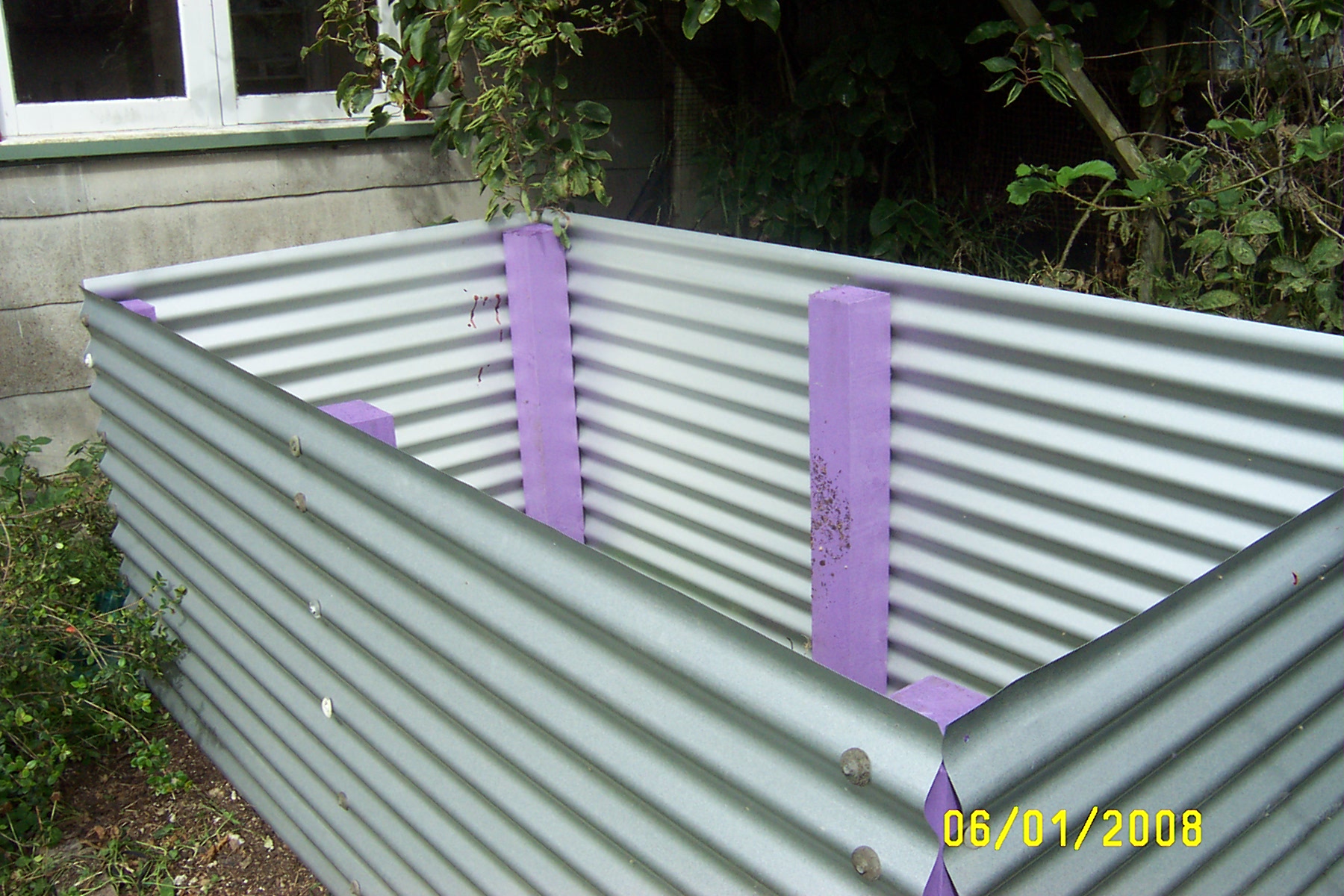
April 3rd ends daylight saving and we will notice the earlier sunset time giving us less time after work to do a few things before dusk.
It is only our clocks that change, the clock that guides our plants keeps rolling on and they (the plants) started adapting to the less hours of daylight a while back.
Deciduous plants started to show signs of leaf colour change and dropping, autumn diseases such as powdery mildew started covering susceptible foliage.
On deciduous plants and annuals finishing for the season there is little point in trying to put the brakes on nature by using remedial sprays.
That is unless you are trying to squeeze out a bit more time on pumpkins, cucumbers and zucchini so you have a few more mature fruit to harvest.
Spraying the foliage with Wallys Neem Tree Oil cleans off the mildew and allows the leaves to function fully gaining energy from the sun to ripen the last fruit.
Alternative is to mix a table spoon of baking soda into a litre of warm water with one mil of Raingard and spray that.
Those that are concerned that diseases are creating spores that will lay dormant and then attack your plants in the spring can use potassium permanganate (Condys Crystals) at ¼ a teaspoon per litre of water to spray plants and the soil beneath.
This inexpensive treatment can be repeated during the winter and spring and can make a big difference to the diseases on your roses and other plants in the new season.
Potassium permanganate is available from many gardening outlets and by mail order for those that cant find a retail shop.
During the week I read an article that used the phase, “Nutrient Dense” in reference to growing health giving produce. I like that and so expect to hear me use it when trying to convince people to grow their own produce for taste and health.
The taste of food you eat will tell you how healthy that produce is.
We are talking about raw or just cooked without smothering it with ketchup or spices. For instance this season I grew a French Heirloom pumpkin that gets warts on the skin as it reaches maturity.
You have to harvest it before the whole outside becomes warty.
The flavour is so good that I have roasted pieces of the pumpkin and with a little butter had that as a evening meal on its own.
The taste is naturally sweet and no problem eating a plate full in fact feeling a little disappointed there was not more when the last bit was consumed.
Now that is Nutrient Dense for you, grown without chemicals, using only natural things along with Rok Solid and Ocean Solids for the minerals and elements.
Some of you may have grown or purchased a plant called Cat Grass; it is a grass that animals including cats and dogs love for their digestion and health.
We have a cat that has never been outside for over 4 years now and she loves her pot of grass which we have placed on the floor in her living area to nibble on as required or to eat larger amounts so she can bring up fur balls.
A few more pots of Cat Grass are kept outside freshening up. The bowls are changed about once a week as the grass needs to be re-freshened out in the sunlight.
It is very important to have fresh grass for your cat and ours becomes agitated when we take her grass away and when we bring in the new bowl she becomes very excited.
Keep your cat grass healthy by watering it with Magic Botanic Liquid every 2 weeks for the extra minerals and elements.
Dogs also love cat grass which is available from some retail garden shops or as seeds to grow your own.
Even if your cat or dog have access to the outdoor grasses it still is a good healthy principal to have some cat grass by your back door for them to nibble on.
Last month the Food & Agriculture Organization of the United Nations release the results of a study in regards to pollination of crops and plants.
In the field study coordinated by FAO, scientists compared 344 plots across Africa, Asia and Latin America and concluded that crop yields were significantly lower in farming plots that attracted fewer bees during the main flowering season than in those plots that received more visits.
When comparing high-performing and low-performing farms of less than 2 hectares, the outcomes suggest that poorly performing farms could increase their yields by a median of 24 percent by attracting more pollinators to their land.
It is good to have a study that shows common sense is correct and another good reason to ban all bee harming insecticides.
Reuters reported on 18th March: French lawmakers approved plans for a total ban on some widely used pesticides blamed for harming bees, going beyond European Union restrictions in a fierce debate that has pitched farmers and chemical firms against beekeepers and green groups.
The EU limited the use of neonicotinoid chemicals, produced by companies including Bayer CropScience and Syngenta , two years ago after research pointed to risks for bees, which play a crucial role pollinating crops.
The French outright ban on neonicotinoid pesticides was adopted by a narrow majority late on Thursday by France's National Assembly as part of a draft bill on biodiversity that also contains an additional tax on palm oil.
New Zealand being very dependent on agriculture should be looking to the same objectives.
I noticed at the beginning of the season a few bumble bees and the odd honey bee working my bee friendly plants but now in the autumn instead of seeing much more activity, as it used to be in the past as hive numbers increase over the summer months, I am now lucky to see any at all.
This is likely due to the fact that residential houses a few hundred yards away have been using bee killing insecticides such as the neonicotinoid, Confidor.
Now that the soil has cooled down and a bit of rain has started to happen you can now safely plant your spring bulbs.
Bone flour used to be the special food to use with your bulbs but that is hard to come by these days.
Instead a little gypsum and some blood & bone would be good value and for protection against soil insects damaging the bulbs use a little of Wally Neem Tree Granules.
Moisture means weed seeds germinating slice them off at soil level while they are small and easy to do.
TO THE LIST OF ARTICLES
Autumn is a great time to garden, the temperatures have lessened making for a pleasant time to do those end of the season jobs.
An email from a gardener this morning asked how do you get the black sooty mould off a citrus tree and said that copper sprays were not working.
Black sooty mould on plants is caused by insects that feed on the plant and pee out honey dew which is from the plant's sugars. This honey dew forms a mould which we call black sooty mould.
It is sticky and can take a long time to weather off after the insects that originally caused the problem have gone.
If the insects are still present the mould will build up into thicker layers.
First action then is to get rid of the insects and on a citrus tree all you need to do is sprinkle Wallys Neem Tree Granules under the tree from trunk to drip line. Lightly water and after about 6 weeks all the pests should have gone including any borer in the tree.
The sooty mould can be treated at the same time by spraying a new product call Wallys Karbyon.
50 grams of the powder is dissolved into a litre of water then another 4 litres added before spraying the foliage with the mould. Spray till run off so the mould gets a good soak.
Leave for 48 hours to soak into the mould and then with a jet of water from the hose blast the mould off. In cases of thick layers of mould you will need to repeat the Karbyon spray until the leaves are clean.
Those leaves that have a layer of mould over them can not gain energy from the sun which does effect the health of the tree through reduction of performance.
Bit like having dirt over your solar panels, you are not going to generate the electricity the panels are capable of in sunlight.
Sooty mould on your plants not only looks unsightly it does affect the well being of the plant as well; so should be removed. If the insects that pee out the honeydew are also feeding on the plant you have a double whammy, energy sucked out and less energy created from the sunlight.
So get rid of the insects causing the problem with sprays of Wallys Neem Tree Oil and in the case of citrus the Neem Tree Granules.
While on the subject of Honeydew; Manuka honey does not come from the manuka flowers it comes from scale insects that feed on the manuka shrubs and pee out honeydew.
I always wondered when I had bee hives near my manuka plants that when it flower the bees were not interested.
As the original native manuka had white flowers, which were pollinated by native moths at night time, attracted to the reflected light from the moon shining off the white petals. There was no need for nectar production in the flowers.
Autumn is a prime feeding time for your citrus and the best foods by far are natural such as Blood & Bone, chicken manure, sheep manure pellets, BioBoost, Neem Tree Granules, Rok Solid and Fruit & Flower Power.
Sprinkle as many of the above as you like under the tree or on top of the mix for container grown and then cover with a layer of compost. Avoid manmade fertilisers as they harm the soil life and can lead to disease problems.
Not only is this the right time of the year for planting the last crops of winter vegetables it is also the time for planting or sowing winter flowering plants to brighten up those weary winter days.
It has been many years since I have grown sweet peas for their beauty and perfume in winter.
While looking at a mail order web site in NZ for information on the spring bulb article I wrote recently I found that the company had an excellent range of sweet pea seeds.
Some modern hybrids and many heirloom varieties which tempted me to purchase 5 different varieties, some for their colour and the rest for their fragrance. I will place netting along a wooden retaining wall that has good morning sun.
Sweet peas, like snow peas and vegetable peas love a good natural diet and ample lime to do well.
I plan to sow them this weekend as its a nice day outside.
Lawn sowing, repair and maintenance time is now that we are getting some autumn rains.
If sowing a new lawn the biggest concern is not to sow the seeds too soon before you allow most of the weed seeds in the ground to germinate.
Prepare the area up to the point of sowing and then keep moist to germinate the weed seeds present.
When these show and grow about 10 to 20mm tall, slice them off with a sharp Dutch hoe. Preferably do not use a weed killer as it can have a detrimental effect on the young grasses when they try to grow.
Yellowing of the new grasses can be a result of Roundup or other weed killers been used prior to sowing.
Repeat the weed slicing/watering weed seed germinating more than once so you have less weeds competing with your new grasses.
Suggested type of lawn seed is Super Strike unless you have other preferences. Also can be used for patching unless you have other varieties of grasses growing.
BioBoost is a natural slow release prill that is inexpensive and a good food for your lawns. Available through some garden centres or Farmlands.
Thatch is the layer of debris that builds up on the soil in your lawns. It weakens the grasses, interferes with watering, feeding and aids the establishment of diseases and moss.
It can be removed with a scarifying rake or machine but the easy and very effective way is to apply Thatch Busta to the lawn. 100 mils into 10 litres of water to cover a 100 SqM.
According to the manufacture in NZ it will eat up an inch of thatch in one month given average conditions of moisture and warmth.
Moss in lawns can be safely controlled with Moss & Liverwort Control jetted into the moss (or liverwort etc) at the recommended rates.
I had a farmer present a problem to me this week of a 700 metre griselinea hedge that was turning yellow.
As he is not living too far away he brought me a sample of the foliage which he was concerned about.
The sample showed some herbicide damage to the new growth so the question was asked do you spray herbicides?
The reply was yes regularly to control weeds under the hedge using Roundup and sometimes Tordon.
I then explained how these chemical get into the soil and last for long periods of time.
They are taken up by the roots of the plants in parts per million which does not kill the plants outright but over prolong period will affect growth, turning foliage to yellow (Termed the Yellows caused by herbicides such as Glyphosate) and affecting new growth with curled/distorted/feathery and strange foliage.
Eventually over the years the plants will succumb to the continued dosing of herbicides and die.
TO THE LIST OF ARTICLES
An email which I will share with you later about Comfrey stimulated my interest in this herb/weed and how it can be used to advantage in your garden.
Comfrey is also a menace in your gardens as it will spread rapidly and takes a lot of work to remove.
Leave a small bit of root behind and Comfrey is back in business.
If you are interested after reading this article to obtain and grow this amazing plant then only grow it where it will be confined.
A tub or trough would be ideal sitting above the soil or on concrete and keeping an eye on the plants, preventing them from seeding by removing the flowers.
I have seen it contained between a building and a concrete path where it will fill all the available soil area.
Comfrey is a remarkable plant and it has gone by many synonyms over the ages such as ; Knitbone, Blackwort, Bruisewort and Boneset. Wort is a common old name for a plant or herb.
A member of the borage and Forget-me-not family of plants it will grow in any soil but prefers to be under trees in the shade. Not only does it spread making a pest of itself like convolvulus, it can grow from a little bit of root left in the ground.
The chief and most important constituent of Comfrey root is mucilage which it contains in great abundance. Also 0.6 to 0.8 per cent of Allantoin and a little tannin.
The roots have in the past been used for a number of remedies and made into concoctions for taking internally. The leaves have been used externally for a number of conditions such as; sprains, swellings, bruises, poultice, to severe cuts, boils, abscesses, and applied to inflamed parts where bones have fractured to reduce swelling and assisting in the reunion.
Comfrey contains high concentrations of nitrogen and phosphorous equal to that of farm manure which makes it great for use as or with compost tea.
The leaves are also high in vitamins B, C and E and beta-carotene. With those high levels of potassium it makes an ideal fertiliser for any fruiting plant which at this time of year that means tomatoes, peppers, cucumber, melons, potatoes - in fact, any other plant you can think of that bears fruit.
The leaves can be used directly on the garden as mulch or you could add them to your compost or liquid manure barrel.
It is best to harvest the leaves just prior to flowering as this is when the nutrient levels are at their highest.
A plastic rubbish tin with lid is ideal for making brews of liquid compost. Harvest the leaves of Comfrey prior to flowering and chop up a bit and place them in the container along with water and a little Mycorrcin or Thatch Buster to help with the fermentation.
Animal manure can also be added along with urine.
Keep the lid on and as it will smell so have it far away from your home, down the back of the section.
The email from a friend mentioned earlier told the following story:
COMFREY: The miracle Healing Herb
Today I saw a 67-year-old friend who a few weeks ago was clinically diagnosed following a biopsy by her GP family doctor with a large (about 20 mm dia.)
Squamous cell carcinoma (cancer) on top of her hand and was quoted about $1600 to have it cut out. I saw it myself at that time, and thought it looked quite nasty.
She followed her dear husband's recommendation to use the herb COMFREY on it which he had in his vegetable garden.
To this point I had never even heard of COMFREY!
She then made a paste up of chopped/ground up fresh Comfrey leaves mixing it with coconut oil with a few drops of lemon juice, and then applied it to the lesion.
That was probably 4 or 5 weeks ago. Today I saw her and incredibly, the cancerous lump is all gone and her hand has healed up beautifully! Simply miraculous!
So when I got home I thought I would do some further research on the web about it. As usual, similar to Black Salve, Comfrey has miracle healing power which is simply mind boggling!
Like all the best natural supplements and remedies known to our fore fathers they can be very effective and save you a bundle of money.
All in all a great healing option, which proves, if you have an open mind you learn all the time!
End
Apparently it is magic on hemorrhoids and varicose veins as well.
The active ingredient in Comfrey is allantoin, which repairs tissue, and reputedly has anti-inflammatory properties. If you keep chickens then Comfrey is said to be a good natural worming remedy and conditioner for the girls.
Care should be exercised if taken internally can lead to problems as reports of the toxic effects of pyrrolizidine alkaloids in Comfrey can lead to liver damage when taken in large amounts or over a long period of time.
From what I have read of old remedies for internal use did not have more than small amounts of the plant material and as I have found in folk lore medicine the cures are usually very quick.
After reading the email about the Comfrey paste I thought it would be a good idea to obtain a plant to have on hand when needed.
It was only a few hours later a local lady phone asking about how to get rid of a Comfrey problem without using chemicals. I said no problem as long as you drop off a plant or two for me to grow..
Sometimes you may find Comfrey plants in garden centres otherwise if you contact your local Herb Society you should find someone who can supply you a plant or two.
Do not plant in any garden instead into a container or trough where you can harvest without have a big problem.
WATERING: this time of the year we are in the change of seasons and the amount of water you have being giving to your gardens and container plants has changed.
It is easy to over water and cause problems.
Some days you will need to water well and other days none at all.
Overcast days that are not windy means the water needs are reduced. Sunny or windy days will suck moisture out of growing medium and plants meaning they will need watering.
Plants will start to go into stress with dropping leaves when their growing medium starts to dry out. Watch for that sign and then give them a drink...
TO THE LIST OF ARTICLES
Weeds are plants that are growing where you do not want them. Some weeds are the result of plants that we have grown and cultivated for either food or pleasure; then these have gone to seed and their off spring have become a nuisance.
That garden pest oxalis was I believe, introduced by the settlers for its flowers. They also introduced gorse and a number of other plants which were not indigenous to NZ.
Some of the plants we call weeds are very beneficial to your health and are cultivated for their benefits by those that have the knowledge. (Such as Comfrey)
I n fact over the years I have come to the conclusion that all health issues that we may have, that there is a remedy or relief in the world of plants, that will fix the condition or give relief from the side effects.
Most of our original medicines are from different plants that we learnt about from folk law or shaman.
I have during my life gone through a weed cycle starting off when I was young where weeds were removed by hand while they were small growing in our vegetable or flower gardens.
Placed into a bucket as one weeded and either emptied into a compost bin or placed as a stack where it was convenient for them to break down into compost. In waste areas, paths and drives where you did not want weeds to grow you treated with boiling water, salt or oil.
When scientists invented herbicides many of us turned to them for convenience, you could spray your lawn to kill broad leaf weeds without killing the grasses which was much quicker that spending most of the day on hands and knees weeding out the lawn.
Then along came glyphosate discovered in 1950 and patented by Monsanto in the early 1970s as the active ingredient in the herbicide Roundup®. In agriculture, glyphosate was first developed for weed control in crops.
Here was a supposed magic bullet against weeds, non-selective it would kill most weeds through its action and was originally considered safe to the environment and our health.
I know I used Roundup a lot in the past around the section and in my nurseries and garden centre, it killed the weeds and as long as one was careful it did not appear to effect other preferred plants.
Then after realising the the health risks of these chemical herbicides I stopped using them about 20years ago and returned back to the old methods.
One of the problems with herbicides is the damage that they do to the soil life which is the beneficial microbes and fungi. If you are still using chemical herbicides you can off set this damage by adding Mycorrcin to the weed killer for less damage.
The chemical knocks back the soil life while the Mycorrcin helps to restore it quickly back to normal.
This is important for the health of our plants and gardens as the length of time that Glyphosate (for instance) stays active in the soil can be a lot longer that previously thought. The following extract from Internet:
The widely used weedkiller glyphosate persists in water and soil longer than previously recognised, and human exposures to glyphosate-based herbicides (GBHs) are rising, experts from various universities as well as environmental health and consumer groups have concluded in a new scientific review.
Field studies cited in the report show the half-life of glyphosate in soil ranges between a few days to several months, or even a year, depending on soil composition.
The authors say the research demonstrates that soil sorption and degradation of glyphosate vary significantly depending on the soil’s physical, chemical, and biological properties.
The authors suggest that considerable work is needed to better understand glyphosate and GBH toxicity, mechanisms of action, and exposure levels before the EPA can credibly conclude that GBH uses and exposures are consistent with the US Food Quality Safety Act’s basic safety standard, namely that there is
a 'reasonable certainty of no harm' from ongoing, chronic exposures to GBHs across the US population.
This I found interesting as here is a local scientist in the International scene:
Dr Kerry Harrington, a weed science lecturer at Massey University in New Zealand, agrees. 'I don’t think there should be knee-jerk banning of the herbicide, but we do need to find out exactly what the issues are, and perhaps we need to go back to using glyphosate for the jobs it was originally designed for:
preparing seed-beds for planting crops and controlling weeds around the streets, and stop applying it over the top of foodstuffs, especially fairly close to harvest time,' he tells Chemistry World. 'But more research is needed before we can be sure of that.'
I totally agree that Glyphosate should never be sprayed over food crops prior to harvest such as carrots, wheat, potatoes and cereals.
Pre-harvest means a far greater concentration of glyphosate in the food you eat when compared to what plants may take up from residues left in the soil after killing weeds before planting.
There is some discussion that gluten problems of wheat is really glyphosate intolerance.
I also looked up Dr Kerry Harrington on the Massey University web site and found a great table of 70 common, troublesome weed database. See
http://www.massey.ac.nz/massey/learning/colleges/college-of-sciences/clinics-and-services/weeds-database/weeds-database_home.cfm
Information about each weed and controls that can be used (most of which are commercial)
Great to help identify many common weeds.
An email this week was: Hi Wally, I’ve just read your article at http://www.gardenews.co.nz/oxalis.htm Last year, for about 12 months, I let my garden go completely... so I had weeds as tall as I am...
This year I want to “reclaim the territory” but have found that the small amount of oxalis I had, has multiplied considerably.
Oxalis is a new arrival in my garden, having only been in it for about 5 years. So I am determined to eradicate it. I grow vegies, so any chemical intervention is out for me.
My strategy, starting in about December 2015 has been to completely clear the garden of all plants except for my Loveridge and Rhubarb plants.
Then to dig out as many oxalis plants as I have found, and where there was evidence of bulblets, I’d pour 2 litres of boiling water into the hole and mix it well. Having done that for a 6 weeks, I dug the patch over to give myself what I call "the gardeners advantage" i.e. Loose soil.
Then watered it well to create ideal “oxalis growing” conditions. Now a further 3 weeks on I monitor the garden every 2 or 3 days and dig out any that pop up. ( 30 today after a week of little attention to it - plot size 2 x 4m).
It seems to me that this strategy must work, because eventually all of the bulbs will produce a plant and then be dug out. But I am interested in what you say about “Not disturbing the soil” which is advice that I have seen given elsewhere.
To me that doesn’t make sense but it is entirely possible that there is something that I don’t know. I seem to have about 3 different species present with the longest one having a "stem that was 220mm long" ( That is deep...).
Would you care to educate me a bit more on why not disturbing the soil is the advise you have given. Is it possible that the strategy I’ve taken will backfire?
Your thoughts are welcome...Cheers Frank.
My reply: Hi Frank
The problem with digging out is, the bulbs have bulblets which are very small and fall off the parent then disturbed. These will overtime become large enough to throw up a set of leaves and by that time they have bulblets.
So every disturbance increases the number of future bulbs.
If left alone as you did for a year the bublets grow attached to the parent and also produce foliage and more bulblets.. Chickens are the only ones capable of seeing and eating all the bulblets.
By burying the problem such as a layer of card board over area after cutting foliage to ground level and the placing a good layer of clean purchased compost over the cardboard which you can plant into.
Later on oxalis foliage will start to appear and you simply cut the leaves off, weakening the bulb, preventing it to gain energy from the sun. It will send up more foliage which is cut off as soon as it appears. No energy from sun, bulb runs out of puff and rots in soil.
TO THE LIST OF ARTICLES
The first of the spring bulbs are starting to arrive in garden centres.
Each year there are a few new interesting specimens in many of the traditional spring bulb types, to wet your appetite. I personally enjoy planting a few types of spring bulbs such as daffodils, tulips and freesia so that in the spring the flowers will herald the beginning of a new season.
Back in days when I had a garden centre (over 20 years ago) it was a big event in February and March as stocks of the new seasons spring bulbs arrived.
Back then most of the bulbs were sold loose with hundreds of some types sitting in boxes with header cards for customers to help themselves to the types and colours they preferred. Some of the most popular were the anemones and ranunculus followed by freesia and daffodils.
Now days with bar coding and convenience for the stores the spring bulbs are prepacked with a header card and culture information.
This is likely one of the reasons why far less bulbs are sold these days as the packaging increases the price and one cant obtain just a few of several different types and colours of a variety.
Like a lolly shop its neat to get one of that, two of another and half a dozen of the frilly one etc.
Its not so much fun sorting through packets to see which one has the best bulbs in it compared to having a box full to hand pick your preferences. With some types big is not best where with others big is better and gardeners that like their spring flowers are very discerning about what they buy to plant.
A general rule of thumb is that you do not plant your spring bulbs until the soil temperature drops to about 10 degrees or lower and the autumn rains have started to moisten the soil.
March is the first month of autumn and I noticed the other day that dew is forming now in my part of the world so likely elsewhere also. That means two things, less watering is needed, so start to be careful on how much water you apply.
The other is leaf diseases such as powdery mildew which you can control with the simple use of baking soda. One level tablespoon of baking soda to a litre of water with one mil of Raingard added.
If spraying for insects then Wallys Neem Tree Oil will also help arrest mildews.
If you are planting your spring bulbs into pots then use a good compost such as Daltons or Oderings place a little Blood & Bone and Rok Solid into the compost and plant the bulbs as to the instructions.
Place the containers in a shaded situation which gets only morning sun or late afternoon so the bulbs will not bake. This can be done now; just keep the mix a little moist and later on when the weather cools the pots can be moved into full sun.
When you plant your bulbs in the garden I like to make a hole deeper than needed, sprinkle a little Blood & Bone and Rok Solid into base of the hole cover with a little soil and then your bulb.
Bulbs such as daffodils and freesia which can be left in the ground for a few seasons do need to be lifted and divided about every 3-4 years. Now is a good time to do so while they are dormant.
Be careful not to damage the bulbs and once lifted they can be separated and placed on a tray in an airy situation out of sunlight. Plant out the better sized bulbs and if you want some in the future place the small bulbs into a nursery tray with compost to grow on.
Seeds of all spring bulbs can also be planted in nursery trays for the future. The seeds will likely produce some different flowers dependent on parents.
Xmas lilies and other lilies will be in foliage at this time and it is important to leave them till the foliage dies down. If the clump has not been lifted for 3 or more years then they can be lifted while dormant, separated and planted back into gardens or containers.
Smaller bulbs treated as above. Lily bulbs must not be allowed to dry out so while out of the ground keep in moist sawdust, sphagnum moss or straw.
Dahlias are going to die back as winter creeps in and can be lifted (best) or left in the soil to take their chances in winter.
Allow to dry in a airy situation out of direct sunlight and store safely dry till the spring.
You can plant the whole tuber but it is better to layer them in a tray with compost and let them sprout by keeping moist. You do the same as you do with kumera, when you have sprouts that are about 8cm tall lift the tuber and you should find that at the base of the sprout some roots have formed.
With a sharp knife par the sprout away from the tuber without damaging the roots.
It is best to place these new plants into small pots with compost to grow on and develop more roots before planting out. Once you have all the plants you want you can trow the old tuber away.
Do this and you will have better dahlias each year.
Now to strawberries, some of you have had a great season but others like myself not so good.
The weather in spring through to summer was the problem I believe and the plants did not like the cold winds reducing the amount of berries and their size.
Once the weather settled they produced better but now the plants are generating lots of runners.
My strawberries are in troughs hanging off a fence and a raised walkway.
The amount of runners these plants are producing is far more than I have ever seen previously and if they all root in I would have enough plants to cover the needs of half the country. This is likely due to the spring conditions which put a damper on the plants.
So what to do with your runners? Simply ensure that they are running across soil so that they can take root. Spray them every couple of weeks with Mycorrcin.
In May you can lift the runners and replant or give to friends. Older parent plants that are thick clumps will not do so well and can be discarded and replaced with your own free runner plants.
I was asked an interesting question this week which maybe of interest to those that have the problem of Sheep Sorrel. (Look it up on the net it has many health benefits as well as being a pest weed.)
Hello Wally
I am having a terrible experience with trying to eradicate sheep Sorell from my flower garden. Please could you give me some suggestions.
I found an article on the internet about it and they said to deal with the soil by applying sulphate of ammonia which I applied two or three weeks ago.
This perhaps has helped a tiny bit but I need to know how often I can do this..
I have always used natural weed killers and hours and hours of hand weeding and I don't really want to use chemical systemic sprays but perhaps this might be the only way to go. Please can you help.
This problem has only arrived in my garden since we had a row of trees removed. I wouldn't wish it on my worst enemy. Any other suggestions to help would be most appreciated.
I look forward every week to your articles they are just so good and helpful. I live in New Plymouth. I would be be grateful for your suggestions. Regards Robyn
Hi Robyn
Sheep Sorrel is not a very competitive weed but it will thrive in dry acidic soils.
The problem is its root system and any little bit left forms a new plant.
Your information on treating the soil with Sulphate of Ammonia is in correct, the nitrogen onto the soil will only make it grow.
Sulphate of ammonia can be applied to the foliage dry and then a little moisture from dew will burn the foliage.
Give the area that it is living in a heavy dose of garden lime which will weaken the plant.
Rather than dig it out with hand weeding simply cut off foliage where ever it appears.
That with the lime should in time do the trick and not create more plants from damaged roots...
TO THE LIST OF ARTICLES
I read recently with interest the amount of food that is condemned to landfills every year in NZ.
From the Waitaki food waste web site:
The average New Zealand household throws out $563 worth of food a year which is equivalent to 79 kilos. Nationally this adds up to 122,547 tonnes of food annually, enough to feed 262,917 people or double the population of Dunedin for a year.
New Zealanders spend $872 million a year on food that will be thrown away uneaten.
This statement made me stop and have a think about how much food our household throws out each week and with the exception of a few lemon peels it turns out to be zero.
The reason for the lemon or citrus skins is that they are acidic and not something that you would put into your worm farm as worms do nto like an acid environment.
I think that a number of gardeners should have near zero food waste but this will depend on a few factors, some of which you may have or could obtain.
There is a food pecking order that we have in our household starting off with us two legged (humans) next we have several dogs and one cat so any tidbits suitable for these four leggeds go to them.
What they may leave plus suitable scraps go out to our chickens (two legged with wings) otherwise all vegetable off cuts not suitable for the chickens go into our two worm farms. (legless and wriggly)
A plastic pail with a lid is kept in the kitchen for putting scraps in for the worms.
Two bowls are also kept one for bits suitable for the chickens and the other for the dogs.
(Our cat is too fussy to eat any thing not on her menu which is raw veal meat, cat biscuits and cat grass)
Interestingly anything she leaves the dogs devour.
The worm farm gives us worm pee for the garden along with vermicasts and lots of worms to populate our raised gardens and container plants.
The chickens give us the best garden fertiliser going every time I muck out their hen house. (Along with eggs you would die for)
They also get edible weeds from the gardens and we grow heaps of silverbeet for them also.
The dog manure goes into a tumbler compost bin along with green material not suitable for the chickens and a good batch of tiger worms.
This manure/compost is tipped into a raised garden along with garden lime and covered with compost.
Heavy feeding plants such as silverbeet are planted for winter use and currently pumpkins are growing
from the last lot and doing exceptionally well.
There is no reason that gardeners cant have a worm farm and a compost tumbler or bin.
Between the two items you can reduce your household food waste to the tip to Zero and have free products for your gardens.
If you have a good size area for your vegetable garden you can use one of the old methods we used to use in the country. You dig a trench across your vegetable garden too about two spade depths.
Scraps are collect in a bucket and then emptied into the trench at one end and lightly covered with soil.
More scraps go on top of this first pile and also covered with a layer of dirt until that bit is filled level with surrounding soil.
Next lot goes into the trench beside the first pile and so on till the trench is full.
Then along side of this trench another is dug and so on till there has been a trench over every part of the garden which then you start again.
The goodness that is put into the soil and the thousands of earth worms that work your garden is amazing.
That is as long as you do not stuff it up by watering with chlorinated water, use manmade fertilisers and chemical sprays including herbicides.
Treat the soil with Rok Solid, Mycorrcin and Magic Botanic Liquid also apply ample Wallys Calcium & Health. Your plants will grow so well you will be over the moon.
It has become fairly well known that science these days is for sale and companies that require studies which allow them to obtain the permits they need to market products can be obtained by direct or indirect payments to the scientists and even Universities.
It has been found also that some studies have been Peer reviewed by students in China for a fee. Of course these students only qualifications are an empty wallet.
Take for instance a number of gardening chemicals that were originally deemed safe to use and then years later the honest science condemns them and they are banned.
In my simple logical mind science should be fairly accurate, not as accurate as mathematics but close.
Yet we see scientists poles apart over some issues with each side discrediting the other in their endeavor to make their studies accepted.
I can think of two chemicals that fall into this complex; fluoride and glyphosate. In both cases the anti-camp is making good progress in showing the dangerous health issues of these chemicals.
Thus when one reads a scientific report you need to look at who benefits from the report? A company that makes a product and will make money from it or a study that is actually to the benefit of mankind and the environment.
In the past numerous studies have been done comparing conventionally grown produce (using all manner of chemicals) to organic grown produce (without chemicals as most gardeners, garden)
The results of these have in the past only shown a slight edge to organic grown and more often than not they compare the two types as not being 'significantly different' (Another smart phase scientists use)
I am pleased to see a recent study has found the following:
Source: Science Daily
In the largest study of its kind, an international team of experts led by Newcastle University, UK, has shown that both organic milk and meat contain around 50% more beneficial omega-3 fatty acids than conventionally produced products.
Analyzing data from around the world, the team reviewed 196 papers on milk and 67 papers on meat and found clear differences between organic and conventional milk and meat, especially in terms of fatty acid composition, and the concentrations of certain essential minerals and antioxidants.
Publishing their findings today in the British Journal of Nutrition, the team say the data show a switch to organic meat and milk would go some way towards increasing our intake of nutritionally important fatty acids.
Chris Seal, Professor of Food and Human Nutrition at Newcastle University explains:
Omega-3s are linked to reductions in cardiovascular disease, improved neurological development and function, and better immune function.
Western European diets are recognised as being too low in these fatty acids and the European Food Safety Authority (EFSA) recommends we should double our intake.
But getting enough in our diet is difficult. Our study suggests that switching to organic would go some way towards improving intakes of these important nutrients.
My take on this is that the same or similar applies to your naturally home grown produce.
Take the taste tests if it tastes great it is healthy just like the stuff you grow.
If its tasteless or bland like conventionally grown produce then it aint doing a lot for your well being.
By the way Organic Raw milk is best by far rather than Organic processed milk.
TO THE LIST OF ARTICLES
I like to consider gardening as an activity that mankind does to grow plants for either food or pleasure.
It can be on a very small scale such as a few pot plants you tend, too a few thousand acres or more of a crop grown for its food value or for a purpose like trees for wood.
Gardening or if you prefer agriculture, started about twelve thousand years ago and triggered such a change in society and the way in which people lived that its development has been dubbed the “Neolithic Revolution”
Prior to this tribes were hunters and food gatherers, roaming in bands over the land hunting, fishing and gathering from the edible parts of plants sustenance to survive.
When pickings got low just move on to a better hunting ground or to have seasonal camping areas where past experience dictated where to be at different times of the year.
At some time in the distant past it was discovered that some seeds or tubers could be planted and grow and be harvested for food. Areas were cleared often by burning off the vegetation and crops planted in the ashes.
This was a great beginning, slash and burn with the ashes being rich in potash and virgin soil that was rich in goodness.
The following season when crops were planted into the same area they did well but not like the first crop and so it was discovered in time that the same soil would not produce good crops. It was time to move on and start a new planting area by slash & burn.
There were exceptions to this such as the Nile River mouth in Egypt which would flood bringing rich sediment from Africa to restore goodness in the flood planes each year. The bigger the flood the greater the harvest as more land could be cultivated.
Sometime in the distant past, possibly by accident and observation we learnt to re-fertilise the land so good crops could be grown season after season for hundreds even thousands of years, by putting back the goodness we took out.
Also leaving the land fallow for 7 years is the time it took nature to return the goodness to a plot of land.
How did we discover that we needed to feed the soil? Maybe when we domesticated animals and had them confined to a area so their manure and urine would invigorate the soil and plants that grew there subsequently would flourish.
As soon as we found that out we could garden the soil and maintain a healthy soil food web. We did not have to move around, we could settle and build villages, towns and cities. Civilization was underway.
According to records wheat and Barley was first cultivated about 9000 BC.
8000BC saw potatoes in South America, 7500BC goats and sheep in Middle East. 7000BC Rye in Europe and 6000BC chickens in South Asia.
In counties like China, Asia, India etc the people became experts in re-fertilising their lands to such an extent that the land often would become more fertile year after year, richer in humus and nutrients that they could over crop successfully. (Planting a second crop when the first is coming towards maturity)
Here is an example from an extract from a article.: Consider that India had for generations sustained one of the highest densities of population on earth, without any chemical fertilisers, pesticides, exotic dwarf strains of grain or ‘bio-tech’ inputs.
And it did it without degrading the soil. That is according to the evidence provided by a Mr Arun Shrivastava. What is truly impressive, however, is he then goes on to demonstrate that in the 18th and 19th centuries India achieved better productivity levels with organic methods than those of the ‘green revolution’. End.
Which simply means that working with Nature rather than against it using harmful chemical fertilisers and Chemical sprays.
Hundreds of scientific studies now demonstrate that organic farming should play a greater role in feeding our planet.
Thirty years ago, there were only a handful of studies comparing organic and conventional agriculture. In the last 15 years the number of studies has massively increased.
The results of which show that by building the soil rather than depleting it is sustainable and our health is greatly improved as a result.
I am often asked the question from gardeners about their concerns of growing the same crop in the same location year after year because of the possibility of disease build up in the soil.
As I understand it if you are gardening the soil, replenishing the goodness using natural materials then you can successful grow the same or a variety of crops in the same garden indefinitely.
But if you are applying man made fertilisers for the nutrients, watering with chlorinated water and using chemical sprays including herbicides then diseases will build up in the soil causing harm to future crops and low natural fertility.
I have known of in the past, gardeners that have grown their tomato plants in the same garden for 25 years or more. The spot is sunny and sheltered and the plants thrive year after years outside of seasonal weather problems some years.
If gardeners have concerns about possible diseases in a garden soil then we have the new natural way of suppressing pathogens with Wallys Terracin soil drench then three weeks after applying a follow up drench of Mycorrcin is applied.
A spray over moist soil in gardens with Mycorrcin every month to start with for a season will build up the populations of beneficial microbes and fungi in the garden making for healthier plants.
Do not destroy your efforts by applying quantities of man made fertilisers, chemical sprays and chlorinated water.
Conventional Farming/gardening is a term that pro-chemical companies adopted some years ago which is a false flag to make it appear that their destructive methods are normal and acceptable (To make them money is closer to the truth)
Their other spin is 'Best Farming Practice' which is also destroying the fertile soil of the planet. (But its alright cause its the best practice)
Soil scientists tell us that half of the top soil of the planet has been lost over the last 150 years.
We now have only 60 years left of top soil to sustain all the plants/crops and terrestrial life forms depended on it and for 99.7% of the calories humans need. (.3% comes from the Oceans)
If you treat your gardens right your soil could become more valuable than gold by weight.
Upon this handful of soil our survival depends. Husband it and it will grow our food, our fuel and our shelter and surround us with beauty. Abuse it and the soil will collapse and die, taking humanity with it. - From Vedas Sanskrit Scripture 1500 BC
TO THE LIST OF ARTICLES
Weed barriers are a means of preventing weeds from growing in gardens or the roots of certain weeds or plants invading into your property from next door.
The most common barrier is weedmat and it is a woven plastic mat which is spread over the surface of the soil that stops all weeds (with the exception of one or two types of grasses) from emerging in the garden.
This is a very effective barrier that works where there is a reasonable area covered with the mat.
Where the mat is cut to allow preferred plants to grow or around the edges weeds will still appear.
Because the mat is woven it allows moisture and some water carried plant foods to pass through the mat to the soil below. It also allows the soil to breathe, preventing an anaerobic situation occurring.
Senior gardeners will likely remember in the past that black plastic film was laid down in gardens and scoria (volcanic rock, reddish in colour) was laid over the plastic.
Gardens that were treated as such, over time, became anaerobic (lacking in oxygen) and the plants growing there would eventually die. People that lifted the scoria and plastic film would be greeted with a horrible smell.
Gardeners that like the scoria look can safely apply the rocks to cover weedmat.
Weedmat only works in one direction, preventing weeds from growing upwards. Weed seeds that land on the mat or in whatever material that is used to cover the mat, may germinate and their roots will penetrate the mat downwards and thus the weeds can grow.
These weeds are easy to pull out as they cannot establish a secure root system.
The weedmat should be covered with material such as bark or stones so it is not exposed to UV and by covering you should find that the life of the mat is very long. (Likely over 25 years)
You must be careful about what you use to cover the mat if you do not want birds flicking lighter material off the mat. To prevent this bark nuggets (large bark pieces) or even better some suitable stones would be best used.
Gardens such as vegetable and flower beds are not so practical for weedmat and on these I would suggest that a number of sheets of newspaper be laid and soaked with water and then a purchased (weed free) compost be placed as a cover over the paper.
Cardboard can be used instead of newspaper if you have a good source of this material.
Either method will create a nice temporary weed barrier and you can plant your seedlings directly into the compost. Three other advantages of using cardboard or newspaper are; the worms love it, moisture is retained better and you are putting carbon into the soil.
One of the worst problems is when you have an invasive weed such as convolvulus or twitch (Couch) grass coming through from next door into your gardens.
You can repeatedly eradicate your side of the fence of the invading roots only to find more emerging sometime later. Unless the weed is also cleaned up next door, you have many years of weeding till you move house.
The long term solution is to dig a trench along the fence line about 20 to 30 cm deep and line the fence side of the trench with sheets of galvanised iron.
Back fill the trench so that the iron is deep in the ground and protruding a few cm above the soil level (if it is safe to leave it so) don't leave the iron above ground if there is any possibility of feet or hands being cut on the metal.
You could however place a row of old bricks along the side of the protruding iron sheet.
If because of the construction of the fence you cannot get the iron flush with the fence and there is a bit of a gap between fence and iron then the weed is going to appear in this gap. Simply pour salt down the gap whenever you spot the weed appearing.
Talking about salt it is excellent way to control weeds growing between pavers or in cracks in drives or paths. The salt will prevent weeds reappearing for sometime.
Using the above methods for reducing your weed problems will make your gardening more pleasurable.
Ooooo
TO THE LIST OF ARTICLES
I have, like yourself, a number of favourite plants that I enjoy growing and maybe if you do not have these growing already, you may like to give them a shot.
Thyme is a great container plant or hanging basket plant to grow.
I placed on of these into a pot some years back and when it was well established I placed the pot on top of the mix of a large container that I was growing a Persimmon in.
The thyme soon rooted itself through the drainage holes into the larger container’s mix and it grew prolifically. The thing I like about the thyme is that it flowers for a good part of the year with the best displays through spring and autumn.
The plant has a natural cascading habit so it flows all over the place making for an excellent display. Handy too when you require some fresh thyme for the kitchen. Bees love thyme and thyme honey is something to die for.
Petunias have been a favourite of mine for many years and some of the newer types have really spectacular flowers. I grow mine in 15-20cm containers using purchased compost and add in a little extra food such as Bio Boost or Sheep Manure Pellets.
When the plants get a bit scraggly simply trim them back a bit to tidy up and they will produce new growth and a lot more flowers.
When winter starts to set in give them a cut back and spray the remaining foliage with Vaporgard and move the pots to a more protected spot where they are not going to get rained on or frosted.
Every so often in winter, you will need to give them a little drink but you can keep them going for years if you wish. Too much water in winter and you are likely to lose them, losses can occur also if not protected from frost.
Another family of plants you can keep for several years is chilli peppers or capsicum that you grow in pots.
Once again always use compost (potting mix is useless) and keep them protected and dry in the winter.
Feijoa ‘Unique’ is an excellent variety of feijoa to grow either in open ground or for a smaller specimen in a large container. This variety produces large fruit, does not need a pollinator and you are likely to obtain a small crop within one to two seasons of planting.
I have three growing, all in 100 litre containers.
Surplus fruit can be made into relish or chutney and this also applies to your surplus of tomatoes at this time of the year.
Often when one has a well established fruiting tree or bush, you have more fruit than you can easily use. The answer is to make some jam.
Jam is easy to make and tastes far better than the chemically flavored jams that have become common in the supermarket.
Times are a changing and we will need to get back to doing some of the things our parents or grandparents used to do, in our gardening and dealing with surplus at harvest.
It is a great savings, better for your health and something to fall back on for a rainy day.
ooooo
TO THE LIST OF ARTICLES
Looking after house plants and container plants during the summer can be a daily activity.
This is particularly so when it comes to the potted plant’s water needs.
Outdoors container grown plants, once their roots fill the pot, will likely need watering every day and on some days, twice. Hanging baskets of plants outdoors are heavy users of water as they lose more moisture than containers sitting on the ground.
On the other hand indoor potted plants will likely need watering once or twice a week and in some cases even more frequently.
Outdoor container plants where a potting mix has been used as the growing medium, dry out quicker than ones that you have used compost as the growing medium.
This still applies if wetting agents have been applied to the potting mix.
Potting mix these days is mostly bark fines with slow release fertilisers added along with some lime and maybe other additives. Some potting mixes may still be peat based or have peat moss added.
Potting mixes are ideal for indoor plants but in my opinion a waste of money and time for outdoor use.
The problem occurs when the potting mix drys out it creates a surface tension which does not allow water to penetrate. Thus when you water, the water tends to go to the sides of the pot and then run out the drainage holes, on the way through the plant is only able to gain a little moisture.
The water is not able to penetrate into much of the mix, leaving areas of the mix and roots bone dry.
The result of this is that in next to no time the plant is drooping through lack of moisture and often parts of the plant’s foliage will wither and die.
When a friable purchased compost are used as the growing medium they retain water far better and will accept water much more readily than a pile of bark fines which are called potting mix or shrub & tub.
Even using a good compost mix on a hot day a plant may need two waterings dependent on the size of the plant and the size of the container.
There is a danger of over watering when using compost in a larger container with a young plant that is still establishing. Care must be taken.
When you notice that the water you apply to a container runs out the drainage holes quickly and the plant’s mix soon drys out again, then you can do one of two things to thoroughly moisten all the mix.
The first and the best method is to fill a large tub or bath with water and plunge the containers into the water and watch them bubbly away. The more bubbles the more dry areas.
When it stops bubbling then the mix is wet right the way through, lift and allow excess water to drain out and then place back in the original spot. Next time you come to water the water will stay in the mix.
(Note punnets of seedlings should also be plunged before separating them for planting out)
After a period of time, especially if the mix has dried out too much you will need to plunge again.
Hanging baskets outdoors will fare better with a weekly plunge.
Being summer it is not a bad idea to treat all your indoor plants in the same manner. Do not do it in direct sunlight. Afterwards leave them in a shaded area to drain.
They will likely only need one treatment if you are consistent with supplying their moisture needs.
If you have very large containers that cannot be plunged then fill a bucket with warm water and add a good squirt of dish washing liquid to it.
Agitate the water to make it soapy right through then slowly pour the contents over the top of the mix ensuring that all surface areas are covered.
The soapy water breaks the surface tension and allows water to penetrate.
This same method can be used on gardens and lawns for dry spots. (Bare spots of dried grass on lawns with a ring of healthy grasses around is often ‘Dry Spot’.)
You can also reduce your potted plants water needs by spraying Vaporgard over and under the foliage.
One spray will last for about 3 months on foliage sprayed. It will also help reduce disease and insect damage.
Most disease damage to container plants is caused by over watering. You need to be aware as we head into autumn that the need to water is reduced. Do not carry on watering on the same frequency as you had to do in summer.
Powdery mildew can also be a problem as the weather cools and sprays of baking soda and Raingard will protect foliage from this problem.
Insects can get indoors and attack pot plants. Sometimes insect pests will get indoors when bringing cut flowers inside.
Always check the flowers you bring inside for pests.
The following applies to containers both inside and out.
One of the worst pests would be mealy bugs. These inhabit the root zone and then move up into the foliage.
If you lift your plants out of their containers and notice white cotton wool like wisps on the inside of the container and on the outside of the growing medium then that plant has mealybugs.
Neem Tree Granules can be scattered over the top of the mix to assist in control.
A solution of Neem Tree Oil at 25mils per litre of warm water can be watered over the granules when the medium is moist to strengthen the amount of Neem getting into the roots.
Indoors you may not like the sight or smell of the granules breaking down so you can cover them with additional mix or just water the Neem Oil in, without the granules.
Any of the pests in the foliage and stems should be sprayed with Neem Tree Oil at 15mil per litre of warm water. Do this outside in a shaded area such as in a garage, then leave to dry before returning to their spot.
The same spray treatment can be applied to any other insect pests such as scale, thrips, aphids etc.
If the plant has mites then a spray of Liquid Sulphur will deal to them. Do not use in conjunction with Neem Oil or if Neem Oil is present on the plant.
(Thats Liquid Sulphur NOT Lime Sulphur a totally different spray that burns)
Plants that have filled their containers can either be re-potted into larger pots or alternatively lifted out of the pot and the bottom third of roots cut off.
Place fresh mix back into the base of the pot to fill the third that has been removed and pop the plant back in.
With shrubs and fruiting plants this should be done every two years.
The plant will come away nicely after treatment and make new growth.
You can mix some Rok Solid into the bottom third of new mix to great advantage.
TO THE LIST OF ARTICLES